 ProMapRanker
Best Rural Internet Service in 2026

Key takeaways
- Starlink is the best fallback when no ground-based service reaches a home, thanks to low-orbit satellite coverage and lower delay than older satellite.
- T-Mobile and Verizon fixed wireless can beat satellite on price and delay, but only where a strong cell signal reaches the address.
- Hughesnet and Viasat cover almost any US address, yet high delay and data policies make them a weaker fit for video calls and gaming.
- Availability varies by exact address, so confirm coverage, speeds, and equipment costs for a specific home before signing a contract.
Quick comparison
| Pick | Great for | Pricing starts at | Free tier | |
|---|---|---|---|---|
 Starlink | Remote homes with clear sky | See website | No | Visit |
 Hughesnet | Budget satellite coverage | $39.99 per month | No | Visit |
 Viasat | Widest satellite choice | $39.99 per month | No | Visit |
 T-Mobile Home Internet | Best value fixed wireless | $50 per month | No | Visit |
 Verizon Home Internet | 5G bundles | See website | No | Visit |
 AT&T Internet Air | AT&T wireless households | $60 per month | No | Visit |
 Rise Broadband | Rural fixed wireless | $29.99 per month | No | Visit |
 CenturyLink | Rural DSL and fiber | $50 per month | No | Visit |
 Kinetic | Rural DSL and fiber | $44.99 per month | No | Visit |
The best rural internet services
These are the best rural internet service providers we found, covering satellite, 5G fixed wireless, local fixed wireless, and DSL or fiber where it still reaches rural homes. Availability varies by exact address, so confirm coverage for a specific home before ordering.

Starlink, operated by SpaceX, uses low Earth orbit satellites to reach homes where fiber, cable, and fixed wireless do not. That coverage is the main reason to choose it: a home with a clear sky view can get service even miles from the nearest town. Residential plans carry no contract in recent listings, which helps a household that wants to test service without a two-year lock-in.
The costs are equipment and variability. A Starlink kit costs several hundred dollars upfront, and the monthly price has varied by plan and location in recent listings, so we list See website and recommend checking the Starlink site for the current residential price at a specific address. Trees, hills, and roof obstructions can also reduce performance, so use the Starlink app sky check before ordering, and plan for a roof or pole mount where the sky view is partial.
- Near-national satellite coverage
- Lower delay than older satellite
- No contract on residential plans
- Equipment cost is high
- Needs a clear sky view
- Speeds vary by location and congestion
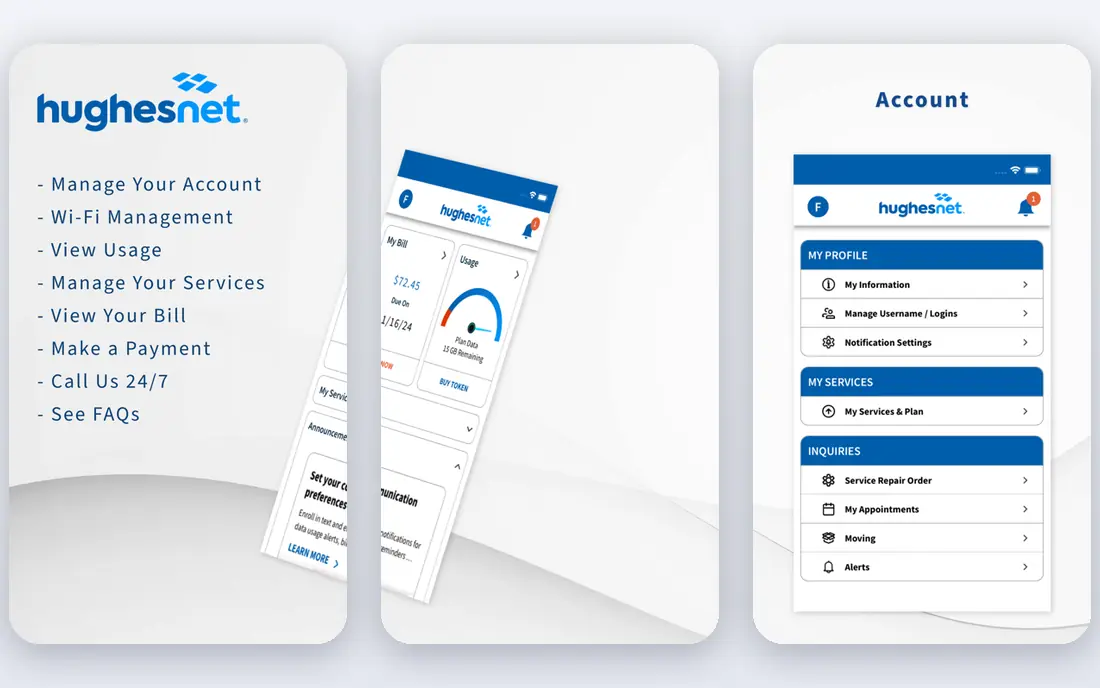
Hughesnet is a geostationary satellite service that reaches homes where no other provider does, with entry plans listed at $39.99 per month in recent comparisons. For basic browsing and light streaming, that coverage at a low entry price can be enough. Equipment can be rented monthly or purchased, which keeps the upfront cost lower than Starlink for some plans.
The trade-offs are delay and data. Geostationary delay of roughly 600 to 800 milliseconds makes video calls feel laggy and fast gaming difficult, and plans carry data allotments after which speeds are reduced or deprioritized. Many plans also carry a 24-month contract, so a household should confirm the full term, equipment fees, and data policy before signing, and should test whether its main uses fit within the plan's data allowance.
- Covers almost any US address
- Low entry price in recent listings
- Professional installation available
- High delay for video calls
- Data allotments and deprioritization after use
- 24-month contract on many plans
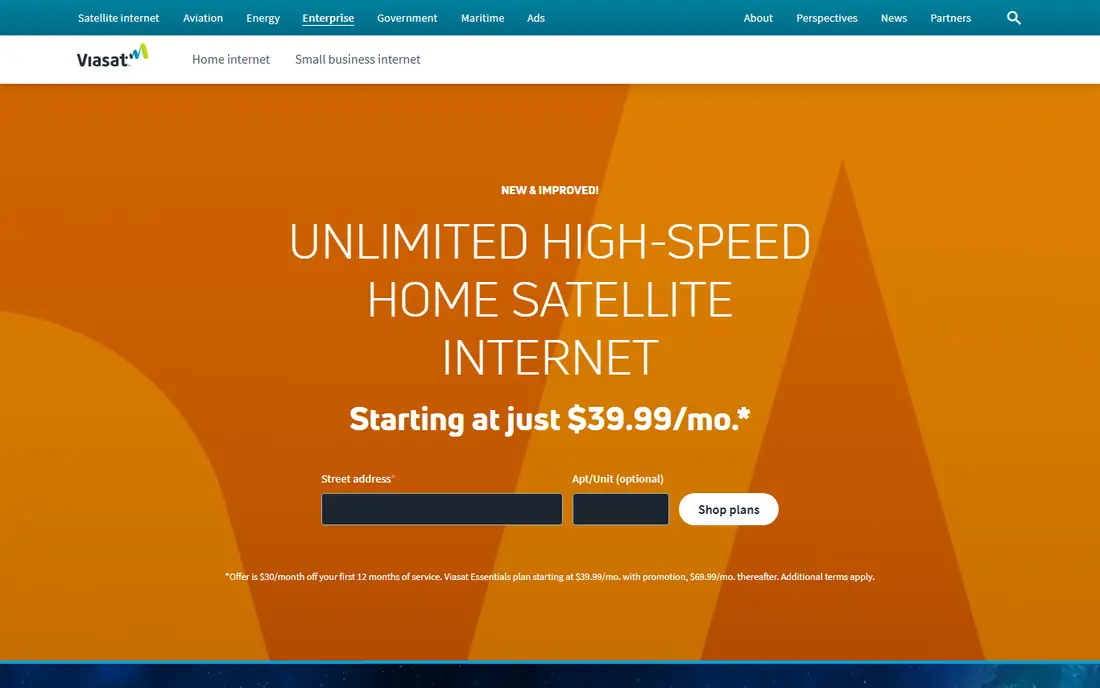
Viasat is the other major geostationary satellite provider for rural homes, with entry plans listed at $39.99 per month in recent comparisons and speeds up to 150 Mbps on higher tiers. Coverage is near-national, so Viasat is often available where fixed wireless is not.
The same satellite limits apply. Delay remains high, around 600 to 700 milliseconds, which hurts live video calls and gaming, and unlimited wording usually means deprioritization after a data allotment rather than full-speed unlimited use. Promo pricing can also rise after an initial period, so confirm the post-promo monthly price, contract length, and equipment cost in writing before comparing Viasat with Starlink or a fixed wireless option.
- Wide satellite coverage
- Plans up to 150 Mbps in recent listings
- More plan choices than Hughesnet entry tiers
- High delay like other geostationary satellite
- Prices rise after promo periods
- Data deprioritization applies
T-Mobile Home Internet is our pick for rural households that have a good T-Mobile signal, because it combines a simple price with strong speeds for the cost. The plan is $50 per month in recent listings, with equipment included, no annual contract, and no data cap, while typical speeds in recent comparisons range from about 87 to 498 Mbps depending on location and network. Setup is usually a gateway plugged in near a window, with no outdoor antenna or professional install in most cases.
The limit is coverage. T-Mobile Home Internet is not available at every rural address, even where T-Mobile phones work, since home internet capacity depends on tower load and fixed wireless availability at that address. Households should check availability by exact address on the T-Mobile site, test speeds during the return window, and keep a backup plan if the signal weakens at peak times or in bad weather.
- $50 per month in recent listings
- No equipment fee
- No contract and no data cap on home plans
- Only where T-Mobile signal is strong
- Speeds vary by tower load and distance
Verizon Home Internet covers both 5G Home and LTE Home options, which helps rural households where 5G has not yet reached the area but LTE is strong. Equipment is included on home plans, and households with an eligible Verizon mobile plan can save on the monthly bill. Typical speeds vary widely, from LTE-level speeds to several hundred Mbps on 5G, depending on the exact service at the address.
The catch is availability and price variation. Verizon 5G Home is less widely available in rural areas than its LTE option, and the monthly price depends on mobile plan, autopay, and promotions, so we list See website rather than a single figure. Check availability by address, confirm whether the offered service is 5G or LTE, and test real speeds during the trial period before canceling another provider.
- 5G and LTE fixed wireless options
- Equipment included on home plans
- Bundle savings with Verizon mobile
- 5G availability is limited in rural areas
- Price varies with mobile plan and autopay
AT&T Internet Air is a 5G fixed wireless service for homes where AT&T wireless coverage is strong but wired broadband is limited. The plan is $60 per month in recent listings, with speeds up to 300 Mbps in ideal conditions, no data cap, and no contract, plus a discount for households that bundle with an eligible AT&T wireless plan. A self-install gateway keeps setup simple, with no outdoor antenna in most cases.
The limit is the same as other fixed wireless services: availability depends on the exact address, and real speeds can fall well below the headline maximum when signal is weak or the tower is busy. Households should check AT&T availability by address, test the gateway in different rooms and near windows, and confirm the bundled price and any autopay requirements before relying on Internet Air for work calls or school use.
- 5G fixed wireless with no data cap
- Simple self-install gateway
- Bundle savings with AT&T wireless
- Limited rural availability
- Speeds vary by signal and congestion
Rise Broadband, now branded as Rise Internet in some listings, is a fixed wireless provider focused on rural and small-town communities, especially in the Midwest, Texas, and Rocky Mountain states. Entry plans are listed at $29.99 per month in recent comparisons, with speeds that vary by plan and location, and delay far lower than satellite, which makes video calls and remote work more practical. A small outdoor antenna on a roof or pole connects the home to a nearby tower.
The trade-off is geography. Rise Broadband only serves areas near its towers, and hills, trees, and distance can block the signal, so a neighbor a few miles away may have service while a specific home does not. Households should request a site check, confirm the speed tier available at their address, and ask about installation fees, equipment rental, and data policies before ordering, since those details vary by location.
- Low entry price in recent listings
- Fixed wireless with lower delay than satellite
- Rural and small-town focus
- Requires line of sight to a tower
- Coverage is regional, not national
- Speeds vary by distance and terrain
CenturyLink still serves many rural homes with DSL, and fiber where it has been built, with entry prices around $50 per month in recent listings. A wired connection can be more stable than wireless, and many plans carry no data cap. For light to moderate use, DSL at 30 to 100 Mbps can be enough, while fiber tiers, where available, reach far higher speeds.
The limit is distance and build-out. DSL speeds fall as distance from the exchange grows, so two homes on the same road can get very different speeds, and fiber is not available in most remote areas. Households should check the exact speed offered at their address, not just the provider's headline range, and confirm taxes, fees, and whether paperless billing or autopay is required for the listed price.
- DSL and fiber options where available
- No data cap on many plans
- Stable wired connection
- DSL speeds vary widely by distance
- Fiber is limited in rural areas
- Price varies by location
Kinetic, by Windstream, provides DSL and fiber internet to rural communities, with DSL plans listed at $44.99 per month in recent comparisons and fiber plans reaching much higher speeds where built. Unlimited data on many plans and no contract on many plans make Kinetic a practical choice for a household that streams, works from home, and does not want a long commitment. Equipment rental is often optional, which keeps the monthly bill closer to the headline price.
The same rural caveat applies: fiber is available only in parts of the footprint, while DSL speeds depend on line quality and distance. Households should enter their exact address on the Kinetic site, confirm the speed tier and price for that address, and test the connection during any trial or early cancellation window before dropping a satellite or wireless backup.
- DSL and fiber in rural areas
- No contract on many plans
- Unlimited data on many plans
- Speeds vary by location
- Fiber footprint is smaller than DSL footprint
How we picked these
We compared official provider pages and recent provider comparisons for satellite, 5G fixed wireless, local fixed wireless, and DSL or fiber, and we favored providers that are still sold in the US in October 2026, publish a starting price or a clear address check, and serve rural homes specifically. We left out resellers that only repackage another carrier's service with no clear support route, and we wrote See website where monthly prices varied widely by plan, location, or bundle, rather than publishing a single figure as if it applied everywhere.
What to check before you buy
Check availability by exact address first, not by town or ZIP code. A provider can serve one side of a road and not the other, and fixed wireless and DSL both depend on distance, terrain, and tower or line capacity. Use the provider's address checker, the FCC National Broadband Map, and neighbors' experience as three separate checks, and do not cancel an existing service until the new service has been tested at the home for at least a week.
Test the uses that matter most. Run video calls, stream on two devices at once, upload a large file, and check speeds at peak evening times, since headline speeds are maximums, not guarantees. For satellite, check the sky view and weather effects. For fixed wireless, test gateway placement near different windows. For DSL, check the actual speed at the address, since distance from the exchange can cut the headline figure sharply.
Contracts, equipment, and data
Read contract length, equipment fees, installation fees, and post-promo pricing before signing. Hughesnet plans often carry a 24-month term, Starlink requires a large equipment purchase, and fixed wireless plans may require autopay for the listed price. Also check data policies: unlimited often means deprioritization after an allotment on satellite, while fixed wireless and DSL plans more often offer truly unlimited use, but the exact wording should be confirmed in the plan terms.
Backup and future options
Rural households should keep a backup in mind, such as a phone hotspot for outages, and should recheck options yearly, since fiber builds, fixed wireless expansion, and satellite plan changes can alter the best choice. A service that is best today may not be best in a year if a local provider builds fiber to the road, so avoid a long contract unless the price and speed advantage is clear for the full term.
Frequently asked questions
What is the best rural internet service?
Starlink is our pick for the most remote homes, while T-Mobile Home Internet is our pick for value where a strong cell signal exists. The best rural internet service provider for a specific home depends on exact address coverage, since a provider that is best in one county may not serve the next county at all.
What is the best rural internet service provider for gaming?
Fixed wireless and fiber, where available, suit gaming better than geostationary satellite, because delay is far lower. Starlink also suits gaming better than Hughesnet or Viasat, thanks to low-orbit satellites, though speeds and delay still vary by location and congestion.
How much does rural internet cost?
Entry prices in this list range from $29.99 per month for Rise Broadband, to $39.99 per month for Hughesnet and Viasat entry plans, $44.99 per month for Kinetic DSL, $50 per month for T-Mobile Home Internet and CenturyLink, and $60 per month for AT&T Internet Air. Starlink and Verizon prices vary by plan and location, so check the vendor site for the current price at a specific address.
Is satellite internet good for working from home?
Starlink can work well for remote work, thanks to lower delay and higher speeds than older satellite, while Hughesnet and Viasat are weaker for live video calls because of high delay. For work that depends on daily video calls, fixed wireless or DSL, where available, will usually feel more reliable than geostationary satellite.
Can I get internet in a very remote area?
Yes, satellite is the most reliable option for very remote homes, since it only needs a clear sky view, not a tower or wired line nearby. Starlink, Hughesnet, and Viasat all cover almost any US address, though equipment, delay, data policies, and contract terms differ sharply between them.
Should I check coverage before ordering rural internet?
Yes, always check by exact address, not just by town or ZIP code. Availability varies by exact address for fixed wireless, DSL, fiber, and even satellite installation, and speeds, equipment needs, and prices can all change once a provider checks a specific home.
Sources
See where you really rank - block by block
ProMapRanker scans Google Maps across a grid of your service area. Simple monthly plans from $19, white-label on every plan.
Start freeKeep reading
 zscaler alternatives
Best Zscaler Alternatives in 2026
Looking for zscaler alternatives? We compare 9 SASE and zero trust platforms on architecture, data protection, pricing, and fit for your network and team.
Read → zapier alternatives free
Best Zapier Alternatives Free in 2026
Nine automation tools for zapier alternatives free in 2026, all with genuinely free tiers, plus free plan limits, starting prices and upgrade paths explained.
Read → which platform is best for online reputation
Which Platform Is Best for Online Reputation in 2026
Wondering which platform is best for online reputation? We compare 8 review, listing, and response tools for small and multi-location businesses and agencies.
Read →