 ProMapRanker
Best Runtime Application Security Tools in 2026


teams that want runtime detection plus accurate vulnerability detail · Pricing starts at: See website
Key takeaways
- Contrast, Datadog, and Dynatrace are the strongest in-app options, and the best pick usually follows the observability platform a team already uses.
- Waratek suits Java-only estates, while Appdome suits mobile apps that cannot take an SDK, so neither is a general server replacement.
- Fastly, Akamai, and F5 cover edge and API protection well, but edge controls do not see inside an application process in the same way as an agent.
- Language coverage, agent overhead, and blocking behaviour in production matter more than a long feature list.
- Start in monitor mode, tune alerts, and only then move to blocking, so a false positive does not break a live service.
Quick comparison
| Pick | Great for | Pricing starts at | Free tier | |
|---|---|---|---|---|
| Contrast Security | teams that want runtime detection plus accurate vulnerability detail | See website | Free trial | Visit |
 Datadog App and API Protection | teams already using Datadog for observability | See website | Free trial | Visit |
 Dynatrace Application Security | teams that want security inside observability | See website | Free trial | Visit |
 Waratek | Java teams that cannot rewrite legacy apps | See website | No | Visit |
 Fastly Secure | teams that want WAF plus runtime signals at the edge | See website | Free trial | Visit |
 Akamai App and API Protector | large web and API estates at the edge | See website | No | Visit |
 F5 Distributed Cloud WAF | teams that need consistent policy across cloud and on-prem | See website | Free trial | Visit |
 Appdome | mobile teams that need runtime protection without an SDK | See website | Free trial | Visit |
The best runtime application security tools
We compared runtime tools on in-app detection, blocking in production, language coverage, and how well each one fits teams that already use observability or a WAF.
Contrast Security
Great for: teams that want runtime detection plus accurate vulnerability detail
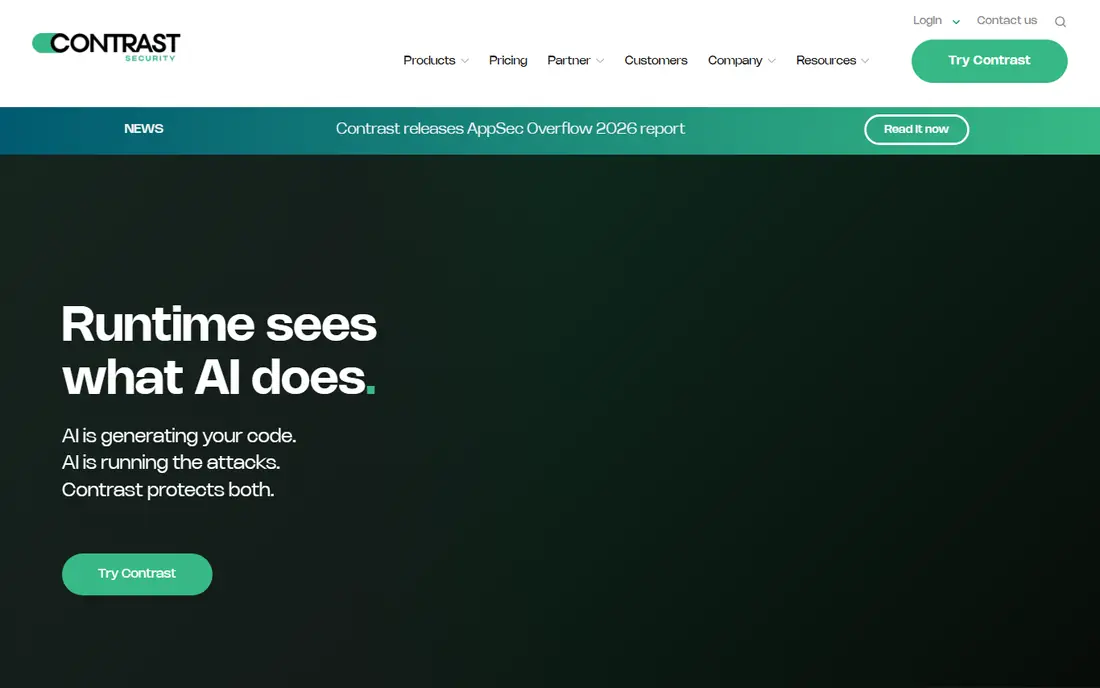
For security and development teams, Contrast Security is a practical starting point because it keeps the core workflow in one place. It is built around runtime detection and blocking inside the running application. The design favours routine use over occasional use, which matters when a tool only helps if people return to it every week. What stands out in Contrast Security is detailed vulnerability paths that help developers fix the right code. It also helps a team keep one version of the truth, instead of keeping the same detail in email, chat, and a spreadsheet at the same time. The catch is language coverage should be checked for every service before buying. A short trial with real data gives a clearer answer than a feature list alone.
- Runtime sensors that see real data flow inside the app
- Accurate vulnerability detail with code location
- Blocking for production attacks
- Instrumentation needs planning for each language and framework
- Pricing is often quote-based for larger estates
Datadog App and API Protection
Great for: teams already using Datadog for observability
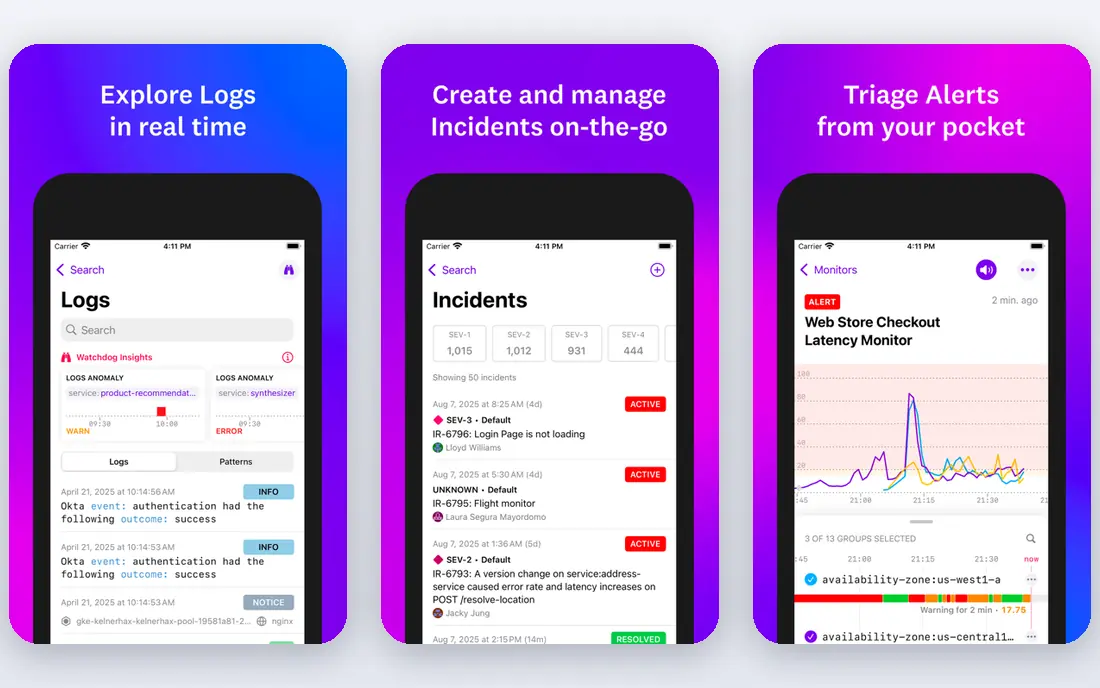
If Datadog users need a tool that is easy to explain to a new team member, Datadog App and API Protection deserves a close look. It is built around in-app protection linked to Datadog traces, logs, and metrics. The design favours routine use over occasional use, which matters when a tool only helps if people return to it every week. What stands out in Datadog App and API Protection is one console for performance and security signals. It also helps a team keep one version of the truth, instead of keeping the same detail in email, chat, and a spreadsheet at the same time. The catch is teams outside Datadog gain less from the integration. A short trial with real data gives a clearer answer than a feature list alone.
- Code-aware runtime protection tied to traces and logs
- API discovery and blocking in the same console
- Built on the Sqreen approach in published guides
- Cost can be hard to predict at scale
- Setup and tuning take care for a first rollout
Dynatrace Application Security
Great for: teams that want security inside observability
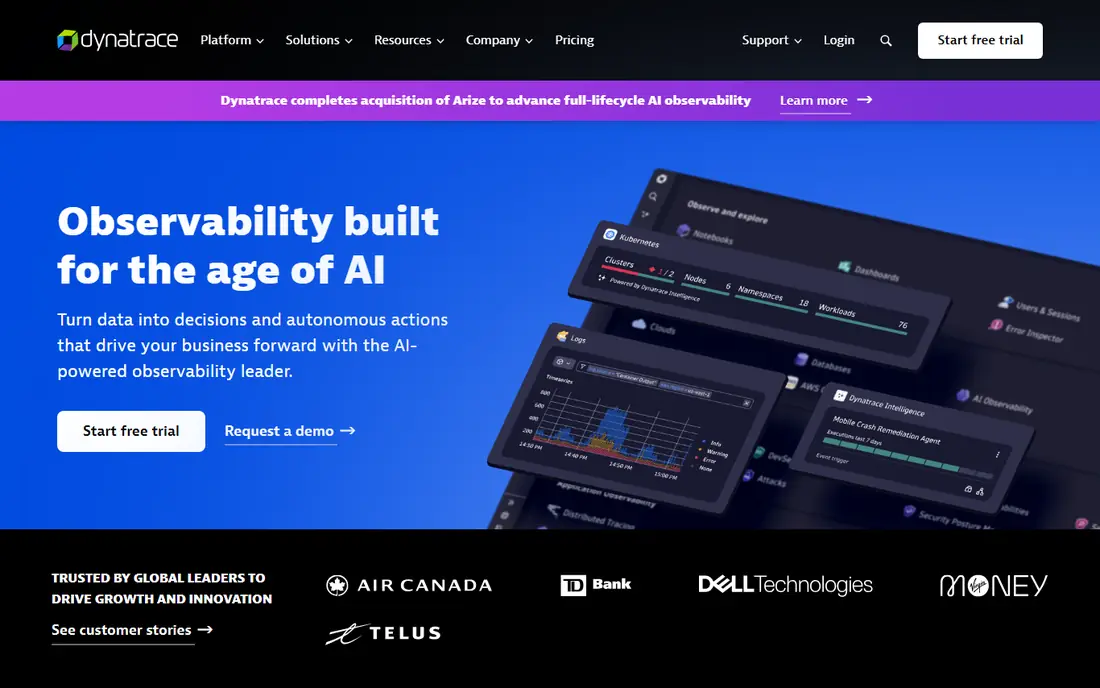
A good fit when enterprise platform teams want depth without a long setup, Dynatrace Application Security focuses on the work that matters most. It is built around runtime attack detection tied to full-stack observability. The design favours routine use over occasional use, which matters when a tool only helps if people return to it every week. What stands out in Dynatrace Application Security is risk ranking that helps teams fix the most exposed services first. It also helps a team keep one version of the truth, instead of keeping the same detail in email, chat, and a spreadsheet at the same time. The catch is small teams may find the platform larger than they need. A short trial with real data gives a clearer answer than a feature list alone.
- OneAgent-based detection with blocking and AI risk ranking
- Runtime detail linked to service topology
- Broad platform coverage
- Licensing can feel complex
- Learning curve for teams new to Dynatrace
Teams that value clarity over a long feature list often settle on Waratek after a short trial. It is built around JVM runtime protection without rewriting application code. The design favours routine use over occasional use, which matters when a tool only helps if people return to it every week. What stands out in Waratek is protection for legacy Java apps that are hard to patch quickly. It also helps a team keep one version of the truth, instead of keeping the same detail in email, chat, and a spreadsheet at the same time. The catch is mixed-language teams will need another tool beside it. A short trial with real data gives a clearer answer than a feature list alone.
- Specialist JVM protection that works without code changes in published guides
- Runtime patching for known Java issues
- Focus on Java workloads
- Java only, so it does not cover a mixed-language estate on its own
- Specialist pricing needs a sales check
When web platform teams need to move from scattered files to one shared record, Fastly Secure makes that shift plain. It is built around edge and runtime-aware protection for web apps and APIs. The design favours routine use over occasional use, which matters when a tool only helps if people return to it every week. What stands out in Fastly Secure is decision data that shows why a request was blocked. It also helps a team keep one version of the truth, instead of keeping the same detail in email, chat, and a spreadsheet at the same time. The catch is buyers should confirm which runtime signals are covered for their stack. A short trial with real data gives a clearer answer than a feature list alone.
- WAF and runtime-aware protection built from the Signal Sciences approach
- Fast edge deployment
- Clear request data for security teams
- Edge controls do not see inside every application process in the same way as an in-app agent
- Tuning still takes time
For large web teams who want a clear daily routine, Akamai App and API Protector puts the next step in front of the user. It is built around edge protection for web apps and APIs at scale. The design favours routine use over occasional use, which matters when a tool only helps if people return to it every week. What stands out in Akamai App and API Protector is a single service for WAF, bot, and API protection. It also helps a team keep one version of the truth, instead of keeping the same detail in email, chat, and a spreadsheet at the same time. The catch is teams that need in-app blocking should pair it with an agent. A short trial with real data gives a clearer answer than a feature list alone.
- Adaptive protection at CDN scale
- Bot, API, and DDoS controls in one service
- Automated rule updates in published guides
- Configuration and tuning time for large estates
- Edge focus means in-app detail is limited compared with an agent
F5 Distributed Cloud WAF
Great for: teams that need consistent policy across cloud and on-prem
A steady choice for hybrid cloud teams, F5 Distributed Cloud WAF balances useful controls with a layout that stays readable. It is built around consistent application protection across hybrid deployments. The design favours routine use over occasional use, which matters when a tool only helps if people return to it every week. What stands out in F5 Distributed Cloud WAF is one policy model for apps in different clouds. It also helps a team keep one version of the truth, instead of keeping the same detail in email, chat, and a spreadsheet at the same time. The catch is tuning time should be planned before blocking mode. A short trial with real data gives a clearer answer than a feature list alone.
- Consistent WAF policy across cloud, edge, and on-prem deployments
- Signature plus behavioural detection
- AI risk scoring in published guides
- Default settings can create false positives until tuned
- Log experience varies by deployment
If mobile app teams care most about follow-through, Appdome is built to turn a plan into visible progress. It is built around mobile runtime protection built without code changes. The design favours routine use over occasional use, which matters when a tool only helps if people return to it every week. What stands out in Appdome is a build-time step that fits mobile release cycles. It also helps a team keep one version of the truth, instead of keeping the same detail in email, chat, and a spreadsheet at the same time. The catch is server teams will need a separate runtime tool. A short trial with real data gives a clearer answer than a feature list alone.
- No-code mobile protection for Android and iOS apps
- Anti-tamper, anti-debugging, and runtime defence in one build step
- Fast setup for mobile releases
- Mobile only, so it does not protect server apps
- Feature depth varies by mobile platform
How we picked these
We compared official feature pages, pricing pages, app store listings, privacy policies, and public reviews for each product in this guide. We checked whether each product exists and works in October 2026, whether it fits the topic, and whether its price, free tier, and plan limits could be confirmed from a vendor source or a recent published guide. We did not claim hands-on testing, and we did not invent awards, user counts, ratings, or features. Where a price could not be confirmed from a vendor page at the time of writing, we wrote See website, so a reader can check the live price before buying. Prices and plan limits change, so the vendor page remains the final source.
How to buy runtime protection without breaking production
Runtime tools sit close to live traffic, so a bad rollout can hurt more than a missed alert. Buy for the runtimes you actually ship, test in monitor mode first, and agree on who can switch a rule to blocking.
Name the runtime you are protecting
List every language, framework, and deployment type first. Java and .NET have the broadest agent coverage in published guides, while Node.js and Python coverage varies and Go or Rust options are narrower. A tool that covers one service well may not cover the next service at all.
Test blocking behaviour in stages
Start with detection only, review alerts against real traffic, and tune rules for your busiest endpoints. Move to blocking for one service, then expand. Keep a rollback path and a named owner for each rule, so a bad block can be undone quickly.
Check the cost model and the alert path
Confirm whether pricing is per host, per app, or per request, and how alerts reach the on-call team. Runtime alerts should flow into the same incident workflow as performance alerts, or they will be ignored during a busy release.
Frequently asked questions
What are the best runtime application security tools?
Contrast Security, Datadog App and API Protection, and Dynatrace Application Security are the strongest in-app options in this guide. The best pick follows your observability platform, your languages, and whether you need blocking inside the app or at the edge.
What is the difference between runtime security and a WAF?
A WAF sees the request at the edge, while a runtime tool sees what the application does with that request inside the process, such as a database query or a deserialisation step. That inside view gives more accurate blocking for some attacks, but it needs an agent in the app.
Do runtime tools slow down applications?
Agent overhead varies by language, traffic, and rule set. Vendors publish guidance, but the only reliable check is a load test on your own service in monitor mode before you turn on blocking.
Can a runtime tool replace a WAF?
Usually not on its own. Many teams use both: an edge WAF for broad request filtering and bot control, and a runtime agent for accurate in-app blocking. The mix depends on traffic shape and risk.
Is Imperva RASP still a good buy?
Published guides in 2026 note an end-of-life announcement for Imperva RASP, so we did not include it for new buying. Teams already on it should check the vendor timeline and plan a move to a supported runtime tool.
Sources
See where you really rank - block by block
ProMapRanker scans Google Maps across a grid of your service area. Simple monthly plans from $19, white-label on every plan.
Start freeKeep reading
 zendesk alternatives
Best Zendesk Alternatives in 2026
Compare the best Zendesk alternatives in 2026, from budget help desks to AI-first support tools, with current pricing, free plans, and honest trade-offs.
Read → wordpress alternatives
Best WordPress Alternatives in 2026
Looking for the best WordPress alternatives? We compare 8 free and paid options for blogs, business sites, stores, and developer-led projects in 2026.
Read → which real estate company has the best training
Best Real Estate Company Training in 2026
Compare which real estate company has the best training, from Keller Williams and eXp to Compass and Coldwell Banker, by program, mentor, and fit in 2026.
Read →