 ProMapRanker
Best Route Planner Apps for Delivery Drivers in 2026

Key takeaways
- Spoke suits solo drivers best, with a free tier for short routes and simple paid plans.
- OptimoRoute and Upper offer strong per-driver planning, tracking and proof of delivery for small teams.
- Routific and Zeo suit order-based and budget-conscious operations with free or low-cost starts.
- Onfleet and Route4Me suit larger fleets that need dispatch, APIs and customer experience tools.
- Price by your peak team size and stop count, because per-driver, per-order and flat plans behave very differently.
Quick comparison
| Pick | Great for | Pricing starts at | Free tier | |
|---|---|---|---|---|
 Spoke | Solo drivers and small courier teams | Free | Yes | Visit |
 Route4Me | Fleets needing power and integrations | See website | Free trial | Visit |
 OptimoRoute | Field service and delivery teams with time windows | $35.10 per driver per month | Free trial | Visit |
 Routific | Local delivery fleets with recurring routes | See website | Yes | Visit |
 Upper | Growing fleets needing tracking and proof | $40 per user per month | Free trial | Visit |
 Onfleet | Last-mile dispatch teams at scale | See website | Free trial | Visit |
 Zeo | Budget drivers and small teams | Free | Yes | Visit |
 WorkWave Route Manager | Service and delivery fleets with vehicles | See website | No | Visit |
 RoadWarrior | Solo drivers wanting a simple mobile app | See website | Free trial | Visit |
 Shipday | Restaurants and local delivery startups | Free | Yes | Visit |
The best route planner apps for delivery drivers
A route planner for delivery drivers does more than put stops in order. It balances loads across drivers, respects time windows and vehicle limits, sends customers an arrival estimate, and collects proof of delivery at the door. A solo driver needs a simple app with a fair price, while a fleet needs dispatch, tracking and reporting in one place.
We compared route planners that are live in October 2026, using official pricing and feature pages. We focused on stop limits, pricing model, driver apps, proof of delivery, customer notifications and how well each tool handles re-planning when a stop changes mid-route. Note that Circuit for Teams rebranded to Spoke in 2026, so we list it under its current name.
Our pick for solo drivers is Spoke Route Planner, because the free tier covers short routes and paid plans stay simple. For small teams, OptimoRoute and Upper offer strong planning and tracking, while Onfleet and Route4Me suit larger last-mile operations with dispatch and API needs.
Spoke is the current name for the former Circuit route planner, and Spoke Dispatch is the successor to Circuit for Teams. The free Spoke Route Planner suits solo drivers with short routes, offering stop ordering, a driver-friendly mobile view and basic proof of delivery without a complex setup. Paid dispatch plans add team management and higher limits.
The free plan caps stops per route, so drivers with long multi-stop days will need a paid plan. Spoke is also simpler than OptimoRoute or Onfleet for fleet analytics and integrations, which suits small teams but limits larger operations. For a solo driver starting out, that simplicity is a strength.
- Free route planner for short routes
- Simple driver app
- Proof of delivery
- Free plan caps stops per route
- Larger teams need the paid dispatch platform
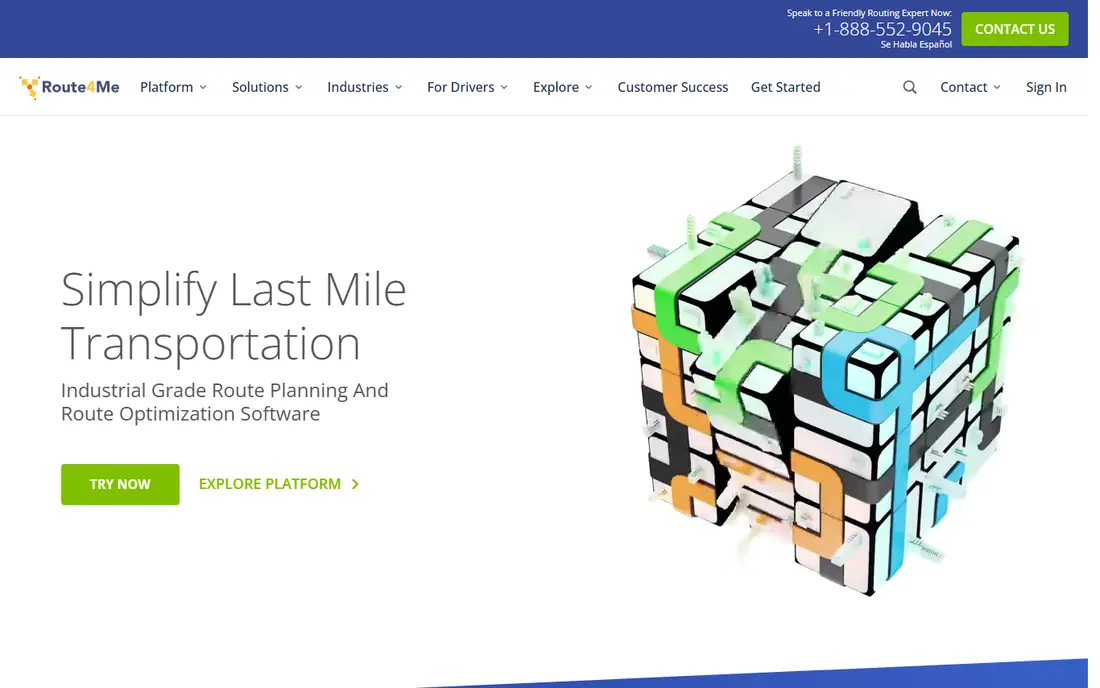
Route4Me is a long-running route planning platform with deep multi-stop optimization, territory tools, marketplace add-ons and an API for e-commerce and fleet systems. It suits mid-size and larger fleets that need custom workflows, such as recurring routes, driver territories and detailed reporting. The driver app covers navigation, proof of delivery and status updates.
Pricing is often quoted rather than a simple public per-driver price, which makes budgeting harder for small teams. Setup also takes more time than Spoke or Zeo, because the platform offers many options. Fleets that need that depth will value it, while solo drivers should start with a simpler tool.
- Multi-stop optimization
- Marketplace add-ons
- API and integrations
- Pricing is often quoted
- Setup can be complex for small teams
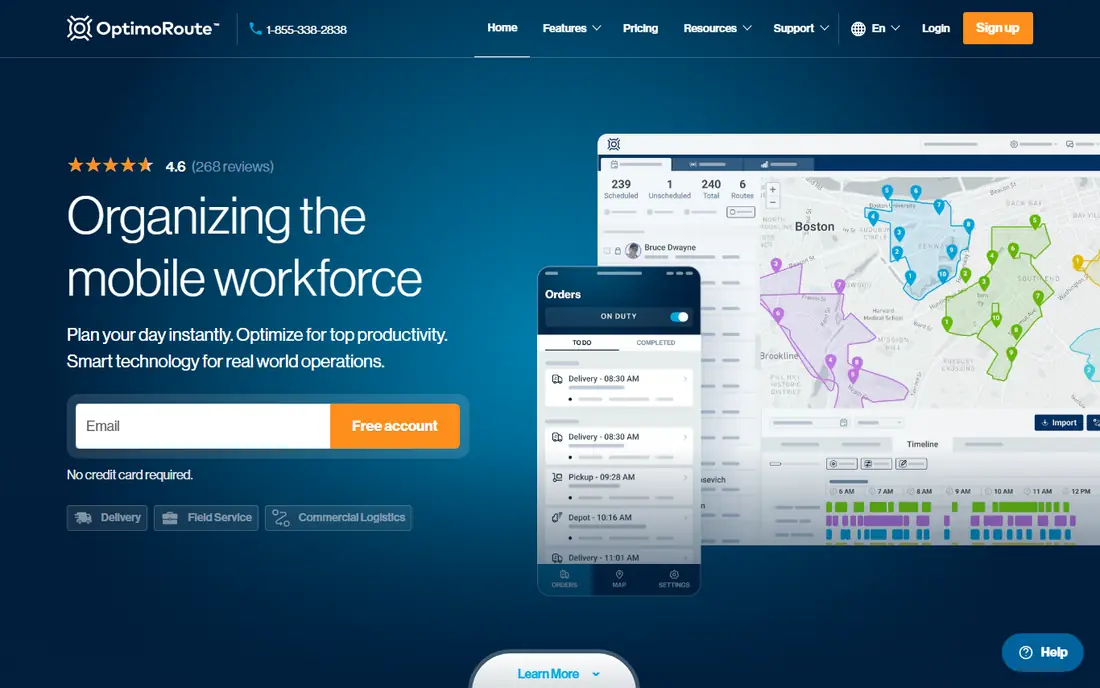
OptimoRoute plans routes by driver, vehicle, time window and workload, and it supports weekly planning for teams with recurring schedules. Live tracking, customer notifications and proof of delivery help dispatchers see progress and handle changes during the day. The per-driver price is published, which makes budgeting clear for small teams.
The per-driver model grows with headcount, so a large fleet may pay more than on a flat or per-order plan. Plans also carry order limits, so high-volume teams should check caps before committing. For planning-heavy teams with appointments and time windows, OptimoRoute remains one of the strongest route planning apps available.
- Workload balancing
- Weekly planning
- Live tracking and proof of delivery
- Per-driver price adds up for large teams
- Order limits by plan
Routific optimizes delivery routes from orders, with support for recurring routes, driver apps, proof of delivery and customer notifications. A free tier covers small order volumes, which helps a new local delivery business test the tool before paying. Paid plans scale by order count, so costs track volume rather than headcount.
Order-based pricing can rise fast in a busy month, and some features such as SMS notifications are add-ons. Routific also focuses on local delivery rather than long-haul trucking, so firms with truck constraints should compare other tools. For Shopify and local delivery fleets, it is a practical and easy-to-learn pick.
- Free tier for small order volumes
- Recurring route tools
- Driver app
- Order caps by plan
- SMS and some features are add-ons
Upper combines multi-stop route optimization with dispatch, live GPS tracking, proof of delivery and reporting in one platform. It suits growing fleets that want to see drivers on a map, share ETAs with customers and review performance after the route. The published per-user price makes it easy to compare with OptimoRoute.
Tracking and SMS features can cost extra on some plans, so the total bill may exceed the base price. Upper also suits fleets with many stops per route, which means solo drivers may not need its full depth. For teams moving from spreadsheets to a real dispatch system, Upper offers a clear step up.
- Multi-stop optimization
- Live GPS tracking
- Proof of delivery and reporting
- Tracking and SMS can cost extra
- Price rises with users
Onfleet is a last-mile delivery platform with auto-dispatch, a polished driver app, customer tracking pages and a strong API for e-commerce and logistics systems. It suits dispatch teams that handle thousands of tasks, because automation, barcode scanning and proof of delivery are built for volume. Customer experience tools, such as live tracking links, are a clear strength.
Onfleet is priced by task, so a high-volume month costs more than a flat plan, and small teams may find it expensive. It is also more than a solo driver needs. For mid-size and large last-mile operations, the dispatch automation and API depth justify the price, while smaller fleets should compare Upper or OptimoRoute.
- Auto-dispatch and driver app
- Customer tracking pages
- Strong API
- Priced by task, so high volume costs more
- Overkill for solo drivers
Zeo offers a free basic plan for short routes, which makes it one of the easiest ways for a solo driver to test route optimization without paying. The mobile app covers stop ordering, navigation and basic route sharing, and paid plans lift stop limits and add team features. It suits couriers, food delivery drivers and small service teams.
The free plan caps stops per route, and Zeo offers fewer fleet analytics, integrations and dispatch tools than OptimoRoute, Upper or Onfleet. Drivers with complex time windows or large teams will outgrow it. For budget-conscious drivers with straightforward routes, Zeo is a strong free start.
- Free basic plan for short routes
- Simple mobile app
- Low-cost paid plans
- Free plan caps stops
- Fewer fleet analytics than larger platforms
WorkWave Route Manager serves service and delivery fleets with route planning, a driver app, customer alerts and API options for larger systems. It suits firms with several vehicles that need a stable, support-backed platform rather than a solo driver app. Bundles cover planning alone or planning plus GPS tracking and customer communication.
Some plans carry a minimum vehicle count, and pricing is often quoted, which makes it harder for a one-driver business to buy. WorkWave is best for established fleets that want a vendor with service-industry depth. Smaller teams should compare Upper, OptimoRoute or Routific first.
- Route planning plus driver app
- Customer alerts
- API options
- Minimum vehicle count on some plans
- Pricing by quote
RoadWarrior is a mobile route planner app for delivery drivers who want to import stops, order them efficiently and navigate the route without a dispatch dashboard. It suits solo drivers, couriers and gig drivers who plan their own day and need a fast, phone-first workflow. The app focuses on the driver view rather than back-office tools.
RoadWarrior lacks the dispatch, live fleet tracking and customer notification depth of Upper, Onfleet or OptimoRoute. Teams that need a dispatcher to watch many drivers should pick a fleet platform instead. For a single driver who plans routes on a phone, RoadWarrior is a simple and focused choice.
- Simple mobile route planning
- Stop reordering
- Driver-friendly design
- Fewer dispatch and tracking features than fleet platforms
Shipday offers dispatch, a driver app and customer tracking for restaurants and local delivery businesses, with a free tier for small order volumes. It suits food delivery and local shops that need to assign orders, track drivers and share ETAs without buying a large fleet platform. Setup is aimed at non-technical owners.
Shipday has order limits by plan, and its planning depth is lighter than OptimoRoute or Route4Me for complex time windows and vehicle constraints. High-volume fleets will need a paid plan or a larger platform. For a local business starting delivery, the free tier makes Shipday an easy first test.
- Free tier for small volumes
- Dispatch and driver app
- Customer tracking
- Order limits by plan
- Fewer advanced planning features
How we picked these
We compared official pricing and feature pages for route planners live in October 2026, and we noted the Circuit to Spoke rebrand so readers find the current product. We kept only tools with a driver app or dispatch workflow, not just a map that draws a line. We checked pricing models, stop and order limits, proof of delivery, tracking and customer notifications.
We weighed ease of use for drivers, planning depth for dispatchers and total cost at solo, small-team and large-fleet sizes. We did not claim hands-on testing. Instead we compared published plans and features, and we flagged where pricing is quoted, where free plans cap stops, and where tracking or SMS costs extra.
Choosing the right option for you
Start with your route shape. Count stops per driver per day, note time windows and vehicle limits, and decide if one person plans routes or a dispatcher does. Solo drivers should pick a simple app with a free tier, such as Spoke or Zeo, and upgrade only when stop limits bite. Small teams should test OptimoRoute or Upper for tracking and proof of delivery.
Compare pricing models at peak volume, not at today's volume. Per-driver plans suit high order counts with few drivers, per-order plans suit low volumes, and flat plans suit steady teams. Check proof of delivery options, customer ETA messages, offline navigation and how the tool re-plans when a customer cancels or a road closes. A two-week trial with real routes will reveal more than a feature list.
Keep driver safety in mind. A route app should not demand constant phone interaction while driving, and navigation should work with voice prompts. Train drivers on proof of delivery, failed delivery steps and customer contact rules before rollout, and review route times each week to spot unrealistic schedules.
Frequently asked questions
What is the best route planner app for delivery drivers?
Spoke suits solo drivers with short routes, while OptimoRoute and Upper suit small teams that need tracking and proof of delivery. Onfleet and Route4Me suit larger fleets with dispatch and API needs. Pick by team size, stop count and whether a dispatcher manages routes.
What is the best software for route planning for a small delivery business?
OptimoRoute and Upper are strong small-business picks because they combine planning, tracking and proof of delivery at a published per-user price. Routific suits order-based local delivery, while Zeo and Shipday offer free starts for very small volumes.
Is there a free route planner app for delivery drivers?
Yes. Spoke, Zeo, Routific and Shipday all offer free tiers, but each caps stops or orders per route or month. Solo drivers with short routes can often stay free, while drivers with long days will need a paid plan for higher limits.
How much does route planning software cost?
Costs vary by model. Per-driver plans in this list start around $35 to $40 a month, per-order plans scale with volume, and larger platforms such as Onfleet price by task. Always check stop limits, tracking costs and SMS add-ons before comparing headline prices.
Can route planner apps handle time windows and proof of delivery?
Yes, most fleet tools in this list support time windows, vehicle limits, customer ETAs and photo or signature proof of delivery. Solo apps may offer simpler versions of these features, so check the exact plan if proof of delivery is required for your deliveries.
Sources
See where you really rank - block by block
ProMapRanker scans Google Maps across a grid of your service area. Simple monthly plans from $19, white-label on every plan.
Start freeKeep reading
 zoho inventory alternatives
6 Alternatives to Zoho Inventory, Compared on Price and Fit
Zoho Inventory alternatives: 6 tools compared on price, free plans and fit. Katana leads the list for manufacturers. Fit and flaws are laid out for each entry.
Read → zoho crm alternatives
Best Zoho CRM Alternatives (2026)
Need Zoho CRM alternatives? We compare 7 tools on cost, free access and who each suits. Every pick gets a straight assessment. Built for quick decisions.
Read → zelle alternatives
Best Zelle Alternatives in 2026
Compare the best Zelle alternatives for sending money to friends, paying sellers and moving funds abroad, with honest notes on fees, speed and safety in 2026.
Read →