 ProMapRanker
Best RFID Software in 2026: 8 Tools Compared

Key takeaways
- RFID software is only as good as its reader and tag setup, so budget for hardware, tags and integration together.
- Impinj and Zebra suit large enterprises with mixed readers and sites, while SimplyRFID suits retail inventory counts.
- Most enterprise RFID pricing is quote based, since site count, reader count and integration drive cost.
- Check support for RAIN RFID, EPC standards and your ERP or warehouse system before you buy.
- Run a pilot in one aisle, warehouse zone or store before you roll out across a whole operation.
Quick comparison
| Pick | Great for | Pricing starts at | Free tier | |
|---|---|---|---|---|
 Impinj Platform | Large RAIN RFID deployments | See website | No | Visit |
 Zebra MotionWorks | Enterprise location tracking | See website | No | Visit |
 SimplyRFID Wave | Retail inventory counts | $995 per year | No | Visit |
 Mojix | Supply chain event tracking | See website | No | Visit |
 GAO RFID | Asset and inventory systems | See website | No | Visit |
 Alien Technology | Reader-based deployments | See website | No | Visit |
 Asset Infinity | Asset lifecycle tracking | See website | Yes | Visit |
 Barcodes Inc RFID Software | Barcode plus RFID integration | See website | No | Visit |
The best RFID software
We compared official product pages, documentation and pricing information for RFID platforms live in October 2026. The list covers infrastructure platforms, location tracking, retail inventory and asset management, since RFID software means different things in a warehouse, a store and a hospital.
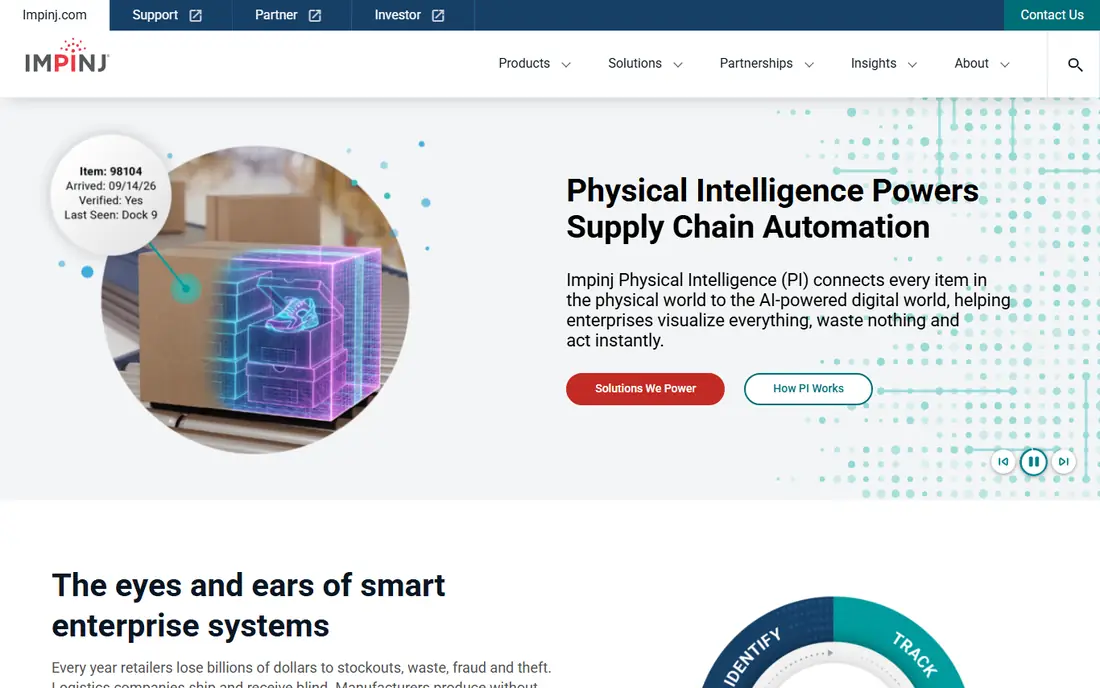
Impinj builds the core of many large RAIN RFID systems: readers, reader chips, tags and the platform software that turns reads into item data. ItemSense helps teams track individual items through stores, warehouses and supply chains, with reads tied to locations and events. That item-level view is what makes RFID different from barcode scanning, since many items can be read at once without line of sight.
The platform is enterprise grade, so pricing is quote based and scoped to readers, sites and integration needs. Smaller teams may find the full platform more than they need for a single store. For a retailer or logistics operator planning RFID at scale, Impinj is the infrastructure choice most integrators know well.
- RAIN RFID readers, tags and platform in one ecosystem
- ItemSense for item-level visibility
- Wide partner and integrator network
- Pricing is quote based
- Full deployments need integrator help
Zebra MotionWorks turns location data from RFID and other sensors into operational views for large sites. It tracks assets, products, devices and people across warehouses, yards and factories, so managers can see where things are and where bottlenecks form. For operations that already run Zebra readers and printers, it slots into the existing hardware base.
MotionWorks is not a self-serve app for a small shop. Pricing is scoped by site size, sensor count and integration, and deployment usually involves Zebra or a partner. If your need is one store inventory count, look at SimplyRFID first. If your need is live location across a large operation, MotionWorks is built for that scale.
- Central view across RFID and other location sensors
- Enterprise scale for large sites
- Fits teams already using Zebra hardware
- Pricing is quote based
- Setup is heavier than a single-site app
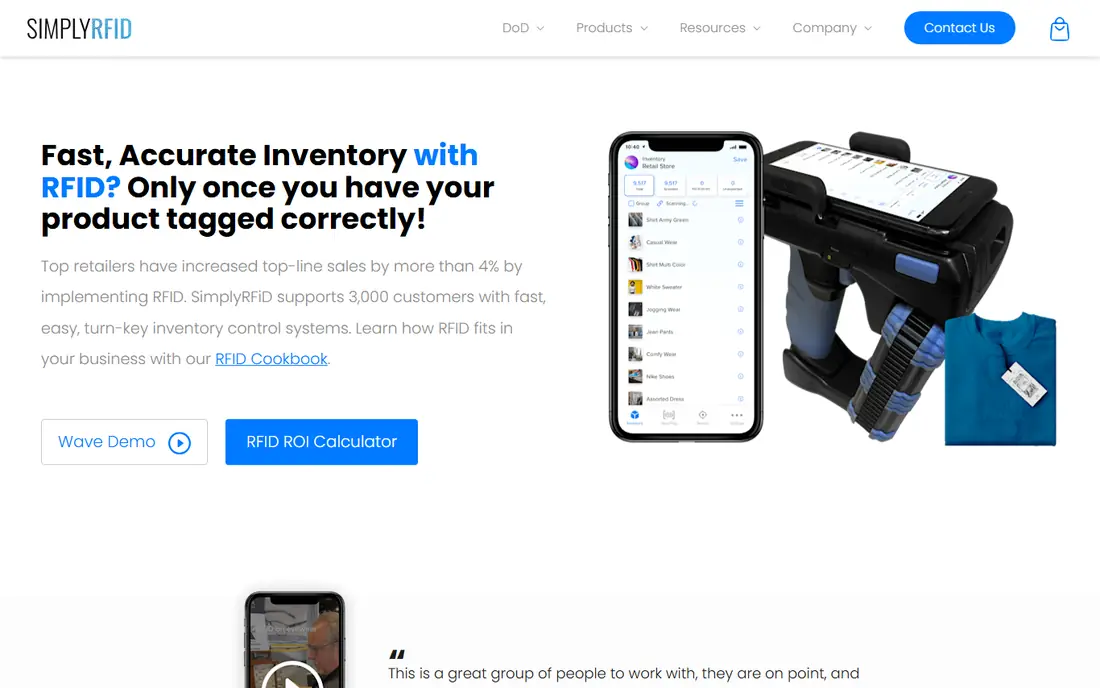
SimplyRFID Wave is the most approachable tool here for retail inventory. A store worker uses a handheld RFID reader and an iOS device to count a whole shop floor in minutes, with accurate counts published for reconciliation. The Wave yearly subscription is $995 per handheld per year, which makes budgeting simple compared with quote-based enterprise platforms.
The trade is scope. Wave is built for inventory accuracy in stores, not for deep warehouse automation or multi-sensor location tracking. You also need the right handheld hardware, so check compatibility before you buy. For a retailer that wants fast, accurate counts without an enterprise project, Wave is a strong pick.
- Turnkey inventory counts with a handheld reader
- Wave yearly subscription at $995 per handheld per year
- Works with standard RAIN RFID tags
- Needs a compatible handheld and iOS device
- Less suited to complex warehouse automation
Mojix focuses on supply chain visibility: turning RFID reads into business events such as shipped, received, packed or sold. Its platform handles reader areas and event rules so that a read in a dock door or packing station becomes a meaningful update, not just a raw tag ID. That event focus suits manufacturers, logistics providers and retailers tracking goods across sites.
Pricing is quote based and depends on readers, sites and integration. Deep custom filtering beyond built-in workflows can need extra engineering, so scope that work early. If your main need is inventory counts, a simpler tool may fit better. If your main need is automated supply chain events, Mojix belongs on the shortlist.
- Event-level processing for supply chain visibility
- Reader-area configuration for automation
- Connects RFID events to business systems
- Pricing is quote based
- Advanced filtering may need vendor engineering help
GAO RFID offers a wide range of RFID readers, tags and software for asset tracking, inventory, access control and personnel tracking. That breadth helps a buyer who needs hardware and software from one source, with support for choosing tags and readers for metal, liquid or harsh environments. Its systems can be tailored to warehouses, hospitals, schools and offices.
The catalog is large, so a first-time buyer may need help narrowing it down. Pricing for full systems is quote based, since hardware choice drives cost. If you want a single vendor for hardware and software and you value guided selection, GAO is worth talking to. Compare its total system quote with an Impinj or Zebra platform quote before deciding.
- Broad catalog of RFID hardware and software
- Asset tracking, access control and inventory options
- US-based support and integration help
- Product range can be hard to navigate
- Pricing is quote based for systems
Alien Technology is best known for RFID readers and tags, and its products appear in many enterprise deployments through integrators and software partners. Its fixed readers suit dock doors, portals and conveyor lines, while handheld options suit cycle counts and asset checks. That hardware depth matters when read range, antenna ports and environment are critical.
Alien is less of a standalone software purchase than Impinj Platform or MotionWorks. Most buyers will get Alien readers as part of a wider system, with software from a partner or platform vendor. If you are building a system with an integrator, ask whether Alien readers fit your read points and tag types. For a software-only buyer, start with a platform vendor first.
- Long-standing RFID reader and tag maker
- Fixed and handheld reader options
- Works with major RFID software platforms
- Software is often delivered through partners
- Pricing is quote based
Asset Infinity is an asset management platform that supports RFID alongside QR codes and barcodes. It tracks asset location, ownership, movement, maintenance history and utilization from a central dashboard. That makes it a good fit for IT, facilities and operations teams that need to know what they own, where it is and when it needs service.
It is not a pure RFID infrastructure platform. Teams that need high-volume item tracking in retail or supply chains may need Impinj, Mojix or Zebra instead. For asset lifecycle work, where RFID is one way to identify an asset among others, Asset Infinity gives you a complete record system with a free tier to test.
- Tracks assets with RFID, QR codes and barcodes
- Lifecycle, maintenance and location records
- Central dashboard for asset records
- RFID is one tracking method, not the whole product
- Paid tiers needed for larger asset counts
Barcodes Inc, also known as Barcodes, Inc., helps warehouses and businesses move from barcode-only tracking to RFID, or run both together. It supplies readers, printers, tags and software, with integration help for warehouse and ERP systems. That combined approach suits a team that already uses barcodes and wants to add RFID where it helps most, such as bulk counts or portal reads.
Pricing is quote based, since hardware and integration vary by site. The right product depends on your current barcode setup and your target RFID use cases, so expect a guided sale. If you want one partner for the transition from barcode to RFID, Barcodes Inc is a practical choice to compare with GAO RFID.
- Combines barcode and RFID expertise
- Hardware, software and integration services
- Suits warehouses moving from barcode to RFID
- Pricing is quote based
- Product choice depends on integrator advice
How we picked these
We checked official product pages, documentation and pricing information for RFID platforms live in October 2026. We kept products that clearly support RFID tracking, that work with standard RAIN RFID or EPC tags, and that serve inventory, asset or supply chain use. Where a vendor quotes rather than publishes a price, we wrote See website.
What to check before you buy
Start with a pilot, not a purchase order. Pick one zone, one store or one asset class, tag it properly and measure count accuracy, read rates and time saved. Tag choice matters: metal, liquid and dense packing all affect reads, so test with your real products, not only demo tags. A pilot also reveals whether your Wi-Fi, power and reader placement work.
Check integration next. RFID data is only useful when it reaches your inventory, warehouse or asset system without manual retyping. Ask how reads flow to your ERP, WMS or asset platform, how duplicates are handled and how exceptions are flagged. Also check reader and tag costs per site, since hardware often costs more than software in year one.
Finally, plan for privacy and process change. RFID can track items, and in some settings people, so set clear rules on what is tracked and who can see location data. Train staff on tagging, counting and exception handling. A good RFID system changes daily work, so budget time for that change, not only for licenses and readers.
Frequently asked questions
What is RFID software?
RFID software collects reads from RFID readers, matches tag IDs to items or assets, and turns those reads into inventory, location or event records. It usually works with readers, tags and a business system such as a warehouse, ERP or asset platform. Without software, reader data is just a stream of tag numbers.
How much does RFID software cost?
Costs vary widely. SimplyRFID Wave is $995 per handheld per year, while Impinj, Zebra MotionWorks, Mojix and most enterprise platforms are quote based. Total cost includes software, readers, tags, installation and integration, so get a full system quote, not only a license price.
Is RFID better than barcode scanning?
RFID can read many tags at once without line of sight, which makes bulk counts and portal reads much faster. Barcodes are cheaper per label and simpler for single-item scans. Many warehouses use both: barcodes for individual picks and RFID for bulk counts, receiving and asset checks.
What is RAIN RFID?
RAIN RFID is an industry alliance and standard for passive UHF RFID, based on EPC Gen2 and related standards. It covers the tags and readers used for item-level tracking in retail, logistics and manufacturing. When a vendor says RAIN RFID, it means its tags and readers follow those common standards.
Do I need special hardware for RFID software?
Yes. You need RFID readers, antennas and tags that match your use case, plus a device or server to run the software. Handheld readers suit counts, fixed readers suit portals and dock doors, and tag type depends on material, range and environment. Check hardware compatibility before you buy software.
Can RFID software work with my ERP or warehouse system?
Most enterprise platforms offer integrations or APIs for ERP, warehouse and asset systems. Ask the vendor for a specific integration example with your system, including how exceptions and duplicates are handled. A pilot with your real data is the best way to confirm the integration works.
Sources
See where you really rank - block by block
ProMapRanker scans Google Maps across a grid of your service area. Simple monthly plans from $19, white-label on every plan.
Start freeKeep reading
 zscaler alternatives
Best Zscaler Alternatives in 2026
Looking for zscaler alternatives? We compare 9 SASE and zero trust platforms on architecture, data protection, pricing, and fit for your network and team.
Read → zapier alternatives free
Best Zapier Alternatives Free in 2026
Nine automation tools for zapier alternatives free in 2026, all with genuinely free tiers, plus free plan limits, starting prices and upgrade paths explained.
Read → which platform is best for online reputation
Which Platform Is Best for Online Reputation in 2026
Wondering which platform is best for online reputation? We compare 8 review, listing, and response tools for small and multi-location businesses and agencies.
Read →