 ProMapRanker
Best Review Request Software for Bike Shops in 2026

Straightforward email and SMS review requests · Pricing starts at: See website
Direct answer
Whitespark is my top pick for bike shops because its review request tools are built around a simple customer list and a clean request link, which fits the way a workshop collects emails at drop-off and phone numbers at pickup. It has no free plan stated, so check its pricing page. GatherUp suits shops that want automated follow-ups, and NiceJob fits shops that want review requests tied to job completion.
I put this list together from vendor documentation and public sources rather than hands-on tests. I looked at how each tool handles the specific rhythm of a bike shop: a repair ticket opened on Tuesday, a bike collected on Friday, and a customer who is happy but will never remember to leave a review on their own. The order below reflects how well each one fits that pattern.
Key takeaways
- Bike shops send review requests at two very different moments: at pickup after a repair, and days after a new bike sale, so timing control matters more than fancy templates.
- A request link that opens straight into a Google review form gets far more completions than an email that asks the customer to search for your shop.
- Service tickets in a bike shop rarely have a clean email address, so any tool you pick must work with phone numbers and SMS as well as email.
- Review software should never filter customers by asking "are you happy?" first, because that breaks Google's review policies.
- The tool has to plug into whatever you already use for booking, whether that is a paper job book, a POS or a workshop system.
Quick comparison
| Pick | Great for | Pricing starts at | Free tier | |
|---|---|---|---|---|
| Whitespark | Straightforward email and SMS review requests | See website | Not stated | Visit |
 GatherUp | Automated follow-up sequences | See website | Not stated | Visit |
 NiceJob | Requests tied to completed jobs | See website | Not stated | Visit |
 Birdeye | High-volume shops managing many channels | See website | Not stated | Visit |
 Podium | Text-first customer communication | See website | Not stated | Visit |
 Semrush Local | Shops already doing local SEO | See website | Not stated | Visit |
 Grade.us | Agencies managing several shop clients | See website | Not stated | Visit |
The best review request software for bike shops compared

Whitespark is a Canadian local SEO company known for citation building and its local ranking tools, and its review request feature sits alongside that work. For a bike shop, the appeal is that you do not need to learn a big CRM to use it. You keep a list of customers, paste in names and contact details after a busy Saturday, and send requests in batches.
The workflow suits a workshop that collects details at the counter. When a customer picks up a repaired bike, you add their name, email and mobile to the list, then send a request the same evening while the good feeling about the repair is fresh. The request link goes straight to your Google Business Profile review form, so the customer does not have to search for your shop name and risk clicking the wrong listing.
The limit is scale and automation. If you want multi-step sequences that chase a customer three times over two weeks, or a request triggered automatically when a job is marked complete, Whitespark expects you to do more of that by hand. A single-location shop with a few dozen tickets a week will not mind; a busy multi-site retailer should look further down this list.
- Clean request link that opens the Google review form
- simple customer list you can build from a spreadsheet
- strong local SEO tooling alongside reviews
- Less marketing automation than larger suites
- no built-in workshop or POS integration
GatherUp is a review management platform built around collecting feedback and reviews in one place. It is a good fit for a bike shop that knows its problem is follow-through: the mechanic finishes the job, the customer rides away happy, and nobody remembers to ask for a review three days later.
You set up a campaign once, then let it run. A typical setup for a shop might be an SMS the evening of pickup, an email two days later if there is no response, and a final nudge after a week. GatherUp also gives you a private feedback inbox, which matters for bike shops because a customer unhappy about a wheel build will often tell you privately before posting publicly, and that gives you a chance to fix it.
The trade-off is setup time. Campaigns, templates and contact imports all need configuring before anything useful happens, and the platform is priced for businesses sending steady volume. A tiny shop doing ten repairs a week may find it is more machinery than the job needs.
- Multi-step email and SMS campaigns
- feedback inbox that collects private comments
- reporting across several review sites
- Sequence setup takes thought
- pricing scales with volume
NiceJob is designed around the idea that a review request should go out when a job is done, not on a fixed calendar schedule. That maps well onto bike shop work, where the natural trigger is the moment a bike is collected after a service or a build.
In practice, you add a job, mark it complete when the customer takes the bike, and the request goes out. For a shop with a service writer at the counter, that is a short step in an existing routine. The dashboard is easy enough for staff who are not marketers, which matters in a workshop where the person at the counter is also answering the phone and finding a 700c tube.
One limitation is that NiceJob bundles review requests with a wider set of small-business marketing tools, so you are paying for more than the review feature alone. Shops that want a single narrow tool may prefer Whitespark, while shops that also want help with repeat-customer marketing will get more out of it.
- Job-based request flow that matches service work
- simple dashboard for a small team
- includes other marketing tools
- Review requests are bundled with features you may not use
- less control over sequence timing
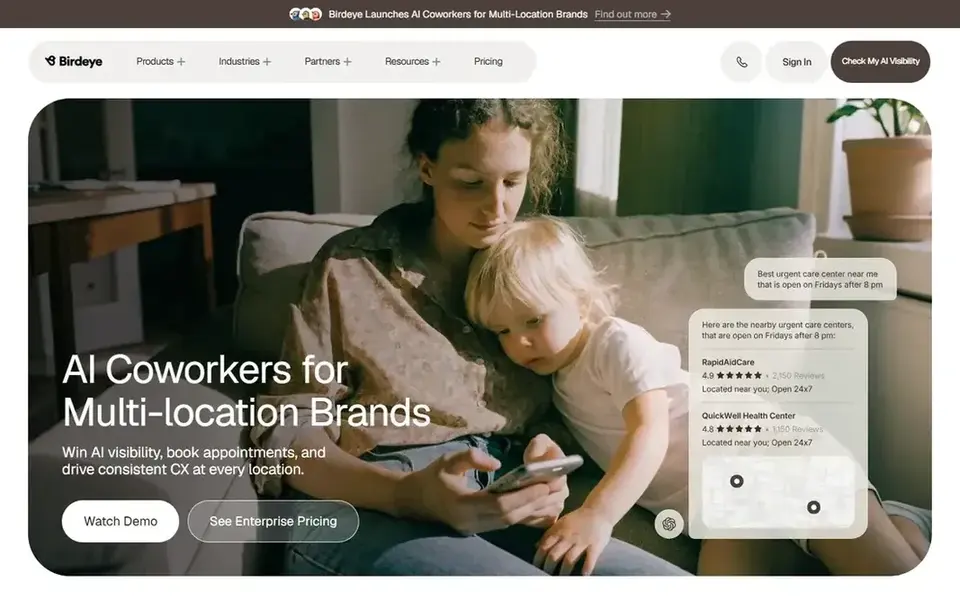
Birdeye is a reputation and customer experience platform used by businesses with a lot of customer contact. For a bike shop it makes most sense if you run a larger store or a small chain, where reviews, messages and business listings all need to be managed by more than one person.
The review request side works through templates and automation, and the platform can route requests across Google and other review sites. Where it earns its place in a bike shop is the inbox: messages from customers asking about a repair status, a warranty question or stock of a specific part all land in one place, and staff can respond without switching apps.
The honest limit is size. A single-location shop with two mechanics will spend more time learning Birdeye than it saves. It is also priced for businesses with real volume, so treat it as an option for a growing retailer rather than a first purchase.
- Handles reviews, messaging and listings in one place
- good reporting for multi-location retailers
- supports SMS and webchat
- Large product with a learning curve
- more than a single workshop needs
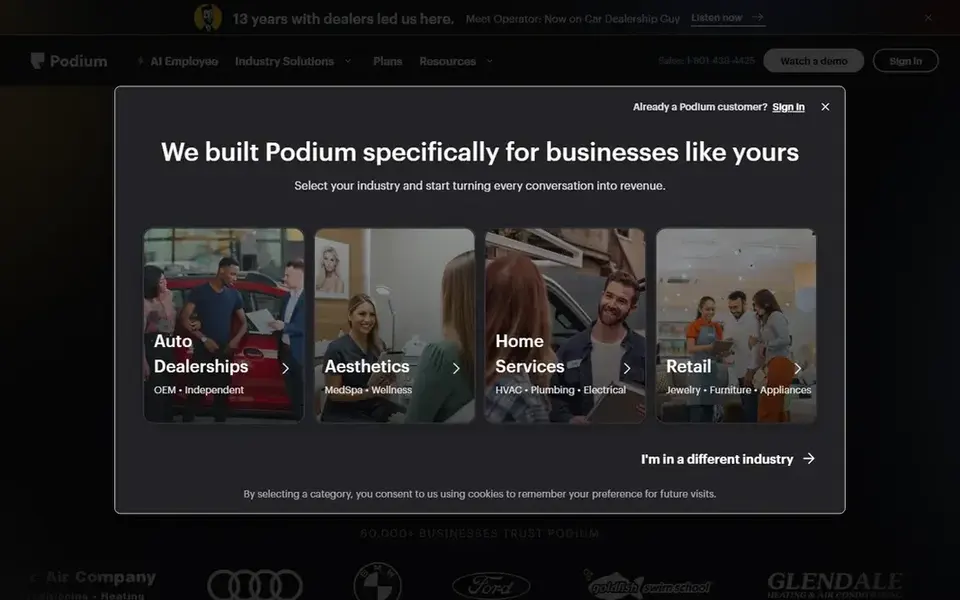
Podium built its name on text messaging for local businesses, and that is exactly the channel that works for bike shops. Most customers will reply to a text about their repair; far fewer will open an email from a shop they visited once.
The review request is a natural extension of that conversation. After a service, you send a text, the customer replies, and the platform can follow with a review invitation. Because the customer is already in a text thread, the click-through tends to feel less like marketing and more like a normal follow-up. The shared inbox also helps when several staff answer messages from one number.
One limitation is cost and fit. Podium is priced for businesses that handle a real volume of messages, and a small workshop that sends a handful of texts a day may not justify it. If your main need is review requests and nothing else, a narrower tool is cheaper and quicker to set up.
- Strong SMS workflow that fits how customers actually reply
- review invites built into messaging
- inbox for webchat and texts
- Priced for businesses with steady message volume
- overkill for a quiet shop
Semrush Local bundles listing management, review tracking and local rank tracking. For a bike shop that already uses Semrush for its website or its local search work, adding review requests here keeps everything in one login and one report.
The review tools let you send requests, monitor new reviews across sites and reply from a single dashboard. That is useful for a shop that wants to see how its Google Business Profile is performing next to its review activity, because the two are connected: more reviews with real detail about repairs and fitting tend to help local visibility over time.
The limit is focus. Semrush is a broad marketing platform, and a shop owner who only wants to ask customers for reviews will spend time on features they never touch. It suits a shop that already has someone doing SEO, not one buying its first review tool.
- Review management sits beside listing management and local rankings
- useful if you already pay for Semrush
- good reporting on local visibility
- Review requests are one feature in a large platform
- not the simplest starting point for a shop with no SEO background
Grade.us is a review management tool aimed at agencies and consultants rather than single businesses. I include it because plenty of bike shops do not buy review software directly; their web person or local SEO consultant manages it for them, and this is one of the tools those consultants use.
For a shop, the practical effect is that your agency can run review campaigns across your Google listing and other sites from one account, with reporting you can look at. Campaigns can be templated, so a request sequence built for one shop can be reused for another with small edits.
The limit is that it is not really built for a shop owner to run alone. The interface is functional rather than friendly, and the value shows up when someone is managing several locations. If you are doing this yourself, start with Whitespark or GatherUp instead.
- Built for agencies with multiple client accounts
- campaign templates you can reuse
- white-label options
- Interface feels dated
- less polished than newer platforms
How I chose
I compared these tools using vendor documentation, public help pages and product descriptions, and I did not run hands-on tests of any of them. My starting point was the bike shop workflow: a customer drops off a bike, a mechanic works on it, the customer collects it, and somewhere in that sequence someone has to ask for a review without annoying the customer or breaking Google's rules.
From there I weighed four things: whether the tool can send by SMS as well as email, whether it can tie a request to a completed job, whether it lets you see and reply to reviews in one place, and whether it stays usable for a shop with no marketing staff. I also checked that each vendor is a real, currently operating company with a public product page, and I left out anything I could not confirm.
I did not rank on price, because pricing for these tools depends on volume and contract length and is best checked directly. I also did not credit any tool for review gating or filtering happy customers first, since those practices conflict with Google's review policies and put a listing at risk.
What to check before you buy
- Confirm the request link opens your Google Business Profile review form directly, not a search results page where the customer might pick a competitor.
- Check that SMS is included or available, because bike shop customers often give a mobile number at drop-off and nothing else.
- Ask whether requests can be triggered by a completed job or service ticket, or whether you have to send them manually in batches.
- Make sure the tool lets you reply to reviews from one inbox, including Google and any other sites that matter to you.
- Check how contacts are imported, since your customer details may live in a POS, a booking system or a paper job book.
- Read the vendor's own documentation on review policy and confirm it does not encourage filtering customers by satisfaction before sending a request.
Frequently asked questions
Do bike shops really need review request software?
Not strictly, but it helps. Most shops rely on a mechanic remembering to ask, and that stops happening on a busy Saturday. Software keeps a list, sends the request at the right moment and gives you one place to reply. For a shop competing on local search, a steady flow of recent reviews with real detail about repairs and fitting is one of the few things you can control.
Should I ask for reviews by text or email?
Text generally gets more replies for service work, because the customer gave you a mobile number at drop-off and checks it. Email works better for new bike sales, where the customer may want to think about it and reply later. Many shops use both: a text on pickup day and an email a few days later if there is no response.
Can I ask only happy customers for a review?
No. Asking customers how they feel and only sending the review link to the happy ones is review gating, and it goes against Google's review policies. Send the request to every customer, deal with complaints privately through your normal service process, and let the reviews reflect real experience.
How soon after a repair should the request go out?
Same day or the next morning works well for repairs, while the customer is still pleased with how the bike rides. For a new bike, a few days gives them time to ride it. Avoid sending during the first hour after pickup, when they are loading the bike into a car or riding home.
Will review software connect to my shop's booking or POS system?
Some will, some will not. Podium and Birdeye are built to sit alongside business messaging and customer records, while Whitespark and GatherUp lean on imported contact lists. Check for a direct integration with whatever you use for workshop bookings before you commit, and ask the vendor to show you the import step.
Sources
See where you really rank - block by block
ProMapRanker scans Google Maps across a grid of your service area. Simple monthly plans from $19, white-label on every plan.
Start freeBrowse all guides
← Best Review Request Software for Appliance Repair Companies (2026)Best Review Request Software for Carpet Cleaners (2026) →
 best review management software for veterinarians
Best Review Management Software for Veterinarians in 2026
A practical guide to the best review management software for veterinarians in 2026, compared from vendor documentation and public sources.
Read → best review management software for tree service companies
Best Review Management Software for Tree Services in 2026
A practical guide to the best review management software for tree service companies in 2026, compared from vendor documentation and public sources.
Read → best review management software for tattoo shops
Best Review Management Software for Tattoo Shops in 2026
A practical guide to the best review management software for tattoo shops in 2026, compared from vendor documentation, with review requests, replies and listings.
Read → local seo agency
Local SEO Agency: A Complete Guide
Everything you need to know about local seo agency: what it is, why it matters for local SEO, and exactly how to act on it.
Read → google maps ranking checker
Google Maps Ranking Checker: How to Check Where You Really Rank
Stop guessing your Maps rank. Learn why a geo-grid ranking checker shows your true position across every neighborhood.
Read → google my business categories
Google My Business Categories: How to Choose the Right Ones
How to choose the right Google My Business categories to maximize relevance and rankings.
Read →More in Local SEO & Google Maps · All guides A to Z by date · Latest guides