 ProMapRanker
Best Reverse Logistics Companies in 2026

Key takeaways
- Happy Returns, through UPS, offers the largest US box-free drop-off network for high-volume e-commerce returns, while Optoro focuses on disposition and recommerce value.
- ReverseLogix, Loop Returns and ReturnGO suit brands that want returns software first, with portals, exchanges and automation rather than a physical network.
- goTRG, GXO Logistics and DHL Supply Chain suit larger or cross-border operations that need physical processing, warehousing and freight at scale.
- Returns cost is not just shipping: receiving, grading, repair, restocking, resale and disposal all need a clear owner and price.
- A pilot with real return volumes, product categories and exchange rates reveals more than a demo portal.
Quick comparison
| Pick | Great for | Pricing starts at | Free tier | |
|---|---|---|---|---|
 Optoro | Disposition and recommerce recovery | See website | No | Visit |
 Happy Returns | Box-free drop-off returns at scale | See website | No | Visit |
 goTRG | Physical returns processing and resale | See website | No | Visit |
 ReverseLogix | End-to-end returns management software | See website | No | Visit |
 GXO Logistics | Enterprise retail returns operations | See website | No | Visit |
 DHL Supply Chain | Global and cross-border returns | See website | No | Visit |
 Loop Returns | Exchange-led consumer returns | See website | No | Visit |
 ReturnGO | Returns automation for online brands | See website | No | Visit |
The best reverse logistics companies
We compared official company pages, service descriptions and public reviews for reverse logistics providers that operate in October 2026. All prices are project or subscription based, so See website is used throughout rather than invented per-unit figures.
Optoro focuses on what happens after a return arrives, which is where most value is won or lost. Its platform routes returned goods to the most profitable next step, whether that is restock, refurbishment, resale or responsible disposal, using data on condition, category and channel demand. For retailers with high return rates, that disposition logic can recover far more value than a simple refund-and-discard process.
The main limit is volume and integration. Optoro value grows with return volume and data quality, and connecting it to warehouse, order and inventory systems takes planning. Smaller brands with few returns may get more immediate value from a portal-only tool. For large retailers and brands focused on circular commerce and recovery value, Optoro is a strong, specialist pick.
- AI-assisted disposition and routing
- Recommerce and resale channels
- Retail returns expertise
- Best value needs sufficient return volume
- Integration scope varies by retailer system
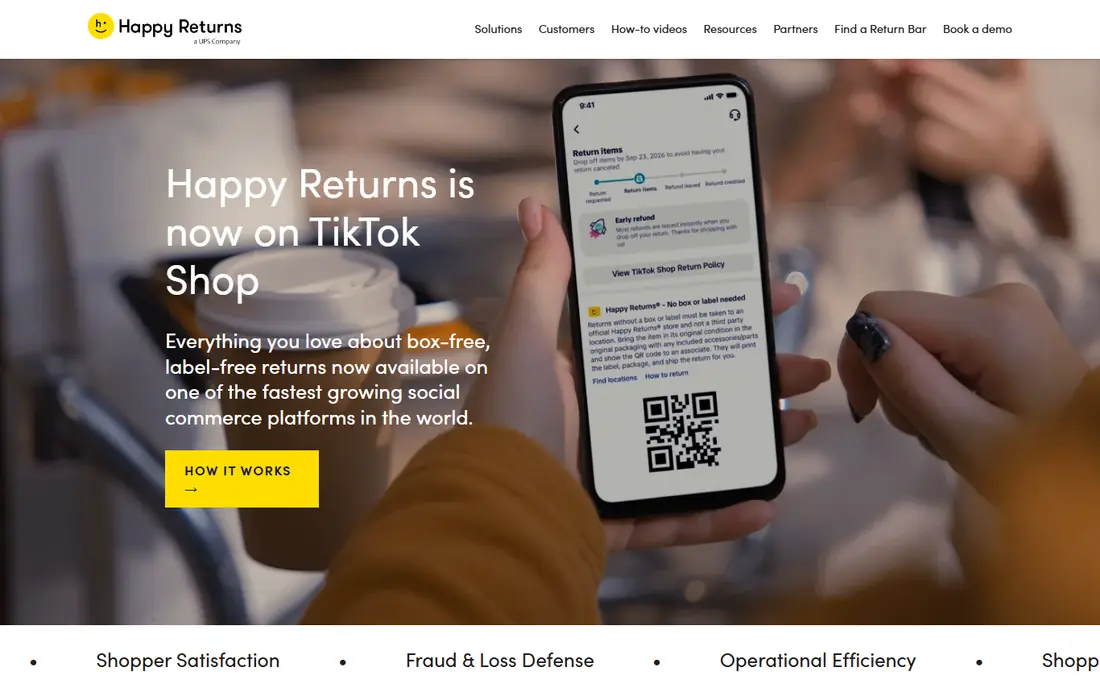
Happy Returns, a UPS company, is the default pick for US consumer returns at scale. Shoppers can drop off returns without a box or label at thousands of locations, and returns are consolidated for onward shipping, which reduces packaging and pickup trips per item. Immediate refund options and a portal-agnostic approach help brands offer a smoother post-purchase experience without building their own drop-off network.
The honest limit is scope. Happy Returns is primarily a returns front end and network, not a full cross-border processing operation on its own, and deeper grading, repair or recommerce work sits with other partners or the wider UPS supply chain operation. Brands that need full physical processing should pair it with a processing partner or choose an integrated operator. For high-volume US e-commerce, Happy Returns is hard to beat on shopper convenience.
- Large US box-free drop-off network
- Returns consolidation reduces shipping cost
- Immediate refund options for shoppers
- Mainly a returns front end and network
- Physical processing depth depends on the wider UPS operation
goTRG operates at the physical end of reverse logistics, with facilities and processes for receiving, grading, refurbishing and reselling returned and excess goods. That physical capability matters for retailers and manufacturers whose returns include electronics, appliances and general merchandise that cannot be handled by software alone. goTRG can also manage resale channels for recovered goods, turning returns into a revenue stream rather than a cost centre.
The model suits larger volumes and established return flows, so a small brand with few returns may not need a full processing partner. Service scope, facility location and category expertise also need a detailed proposal, because not every facility handles every product type. For brands and retailers with significant physical return volumes, goTRG is a practical, large-scale processing option.
- Large-scale returns processing facilities
- Grading, refurbishment and resale
- Experience with retail and manufacturer returns
- Physical model suits larger volumes
- Service scope needs a detailed proposal
ReverseLogix is a purpose-built returns management system for companies that need more than a consumer portal. It covers end-to-end returns, warranty claims, repair depot work and recommerce, with bulk return flows for B2B and dealer returns as well as consumer returns. ERP integrations with systems such as SAP, Oracle, NetSuite and Dynamics 365 help operations teams keep returns, inventory and finance data aligned.
Implementation is the main effort. ReverseLogix works best when return reasons, grading rules, warranty workflows and disposition paths are designed in advance, rather than copied from a generic template. Physical receiving and grading still depend on the warehouses connected to the platform. For mid-market and enterprise companies that want one returns system across B2B and B2C, ReverseLogix is a strong software-first pick.
- Purpose-built returns, warranty and repair platform
- B2B and B2C return flows
- ERP integrations including SAP and Oracle
- Implementation needs process design
- Physical processing depends on warehouse partners
GXO Logistics is a large contract logistics provider, and its returns strength comes from operating returns inside wider warehouse and fulfilment networks. Enterprise retailers can combine forward fulfilment, returns receiving, grading and restocking in the same facilities and systems, which reduces handoffs and gives a single view of inventory. That integrated model suits omnichannel retailers with many stores, warehouses and return channels.
GXO is an enterprise partner, so contracting, implementation and minimum volumes reflect that scale. Small direct-to-consumer brands will usually find a portal or network provider faster and cheaper. For large retailers that already use contract logistics, or plan to, GXO returns capability inside a broader logistics relationship is a compelling option.
- Large contract logistics network
- Retail and omnichannel fulfilment expertise
- Returns handling inside wider warehouse operations
- Enterprise scale and contracting complexity
- Less suited to small direct-to-consumer brands
DHL Supply Chain suits companies whose returns cross borders or involve regulated goods. Its global warehousing, transport and customs experience helps retailers and manufacturers manage international returns, compliance and product handling that a domestic-only provider cannot cover. Healthcare and pharmaceutical returns, where handling and compliance rules are strict, are a particular area of experience.
Global scope brings complexity. Cross-border returns need customs, tax, product and carrier planning by country, and a small brand with only domestic returns will not need that depth. DHL Supply Chain is also an enterprise-scale partner, so proposals and timelines reflect that. For international, regulated or large-scale returns, DHL Supply Chain is a strong, credible choice.
- Global network and cross-border expertise
- Regulated and healthcare returns experience
- Integrated warehousing and transport
- Global projects need detailed scoping
- Smaller brands may find enterprise scope heavy
Loop Returns focuses on the shopper experience and on exchanges rather than refunds alone. Its branded portal lets customers start returns and exchanges, with smart eligibility rules, instant exchange options and automation that reduces manual refund work. For direct-to-consumer brands, keeping a customer through an exchange, rather than losing the sale to a refund, is a clear commercial advantage.
Loop is a software and portal provider, not a physical returns processor, so receiving, grading and restocking still happen in the brand warehouse or with a 3PL partner. It also fits best on supported e-commerce platforms, so platform compatibility should be checked first. For Shopify and direct-to-consumer brands that want exchange-led returns, Loop Returns is a strong, focused pick.
- Branded self-service returns portal
- Instant exchanges to retain revenue
- Automation and eligibility rules
- Mainly a consumer portal, not physical processing
- Best fit is direct-to-consumer brands on supported platforms
ReturnGO offers returns automation for online brands, with a branded portal, exchange and refund workflows, and analytics that show why customers return products. That return-reason data helps brands fix sizing, product descriptions or quality issues, rather than only processing refunds faster. Automation rules can also route returns by product, reason or customer segment, which reduces manual handling for growing brands.
As with Loop, ReturnGO does not itself receive and grade physical goods, so warehouse partners remain essential. Feature depth also varies by plan, so buyers should check which automation, exchange and analytics features are included. For online brands that want a modern, automated returns portal with useful analytics, ReturnGO is a practical alternative to Loop Returns and ReverseLogix.
- AI-assisted returns automation
- Branded portal with exchanges and refunds
- Analytics on return reasons
- Physical processing still needs a warehouse partner
- Feature depth varies by plan
How we picked these
We compared official company pages, service descriptions and public reviews for providers with live reverse logistics products or services in October 2026. We included software platforms, drop-off networks and physical processors, because reverse logistics spans all three. We excluded providers whose retail returns business had moved to another operator, and we used See website for all prices because returns pricing depends on volume, category and service scope.
How to choose a reverse logistics partner
Start with the return journey, not with a vendor category. A brand that needs a better shopper portal, a retailer that needs physical grading and a global company that needs cross-border compliance need different partners.
Map the full return journey
List every step from portal request to refund, exchange, grading, repair, restock, resale or disposal, and assign an owner and a cost to each step. Gaps usually appear at grading and disposition, where goods sit without a decision. A partner that covers the weak steps in your journey is more valuable than a partner with the longest feature list.
Pilot with real categories and volumes
Run a pilot with real return volumes across your main product categories, including damaged, worn and high-value items. Measure refund time, exchange rate, restock rate, recovery value and customer complaints. A portal demo with clean test data will not reveal grading, fraud or carrier problems that appear in real returns.
Check fraud, data and sustainability
Ask how the provider handles return fraud, how return data flows back to merchandising and quality teams, and how disposal and recycling are handled. Returns data should reduce future returns, not just process current ones. Sustainability claims should also be specific: consolidation, refurbishment and resale rates matter more than a general green statement.
Frequently asked questions
What is reverse logistics?
Reverse logistics is the process of moving goods from customers back through the supply chain, including returns, exchanges, warranty repairs, refurbishment, resale and responsible disposal. It also covers the software, transport and warehouse work needed to grade, route and account for those goods.
How much does reverse logistics cost?
Costs depend on volume, product category, service scope and geography, covering receiving, grading, repair, storage, outbound shipping and disposal. Software platforms may charge a subscription, while physical processors and networks price by volume and service. Ask for a full cost breakdown by stage before signing.
Should a small brand use a returns platform or a 3PL?
A returns platform usually comes first, because it improves the shopper experience, automates refunds and exchanges, and gives return data. A 3PL or physical processor becomes important when return volumes, grading or warehousing exceed what the brand can handle in-house.
What is the difference between returns software and a returns network?
Returns software provides the portal, rules and data for managing returns, while a returns network provides physical drop-off locations and consolidated shipping. Some providers offer one, some offer both, and many brands combine a portal with a network or warehouse partner.
How can returns be made more sustainable?
Consolidating shipments, grading goods for resale or refurbishment, restocking usable items and recycling only what cannot be sold all reduce waste. Box-free drop-off, fewer pickup trips and better product information can also cut return rates and packaging, but the biggest gain usually comes from disposition decisions after arrival.
Sources
See where you really rank - block by block
ProMapRanker scans Google Maps across a grid of your service area. Simple monthly plans from $19, white-label on every plan.
Start freeKeep reading
 worlds best local seo company
8 Worlds Best Local SEO Companies for Map Pack Growth in 2026
Compare the worlds best local seo company options for Google Business Profile work, citations, reviews, and multi-location rankings and reporting in 2026.
Read → world's best web hosting company
World's Best Web Hosting Company in 2026
Searching for the world's best web hosting company? We compared 10 hosts on price, renewal rates, speed, and support to help you choose well today in 2026.
Read → who's got the best nanny tax services
Who's Got the Best Nanny Tax Services in 2026
We answer who's got the best nanny tax services, comparing full filing, back taxes, software, and pricing so families can handle nanny taxes correctly.
Read →