 ProMapRanker
Best Retargeting Companies in 2026

Key takeaways
- Start retargeting where your customers already are: Google for search and video, Meta for social, and a specialist for open-web display.
- Audience quality matters more than audience size, so segment by product viewed, cart stage, and time since visit.
- Dynamic product ads work best for stores with a clean product feed, while lead businesses need form and page-based audiences.
- Privacy rules and cookie limits affect retargeting reach, so check first-party data options and consent setup before scaling spend.
- Measure retargeting with holdouts or clean attribution where possible, because platform-reported conversions often overlap.
Quick comparison
| Pick | Great for | Pricing starts at | Free tier | |
|---|---|---|---|---|
 Google Ads | Broad search and display reach | See website | No | Visit |
 Meta Ads | Social retargeting | See website | No | Visit |
 Criteo | Ecommerce dynamic ads | See website | No | Visit |
 AdRoll | Cross-channel small teams | See website | No | Visit |
 LinkedIn Ads | B2B retargeting | See website | No | Visit |
 The Trade Desk | Programmatic at scale | See website | No | Visit |
 StackAdapt | Programmatic native and display | See website | No | Visit |
 Amazon DSP | Retail and product sellers | See website | No | Visit |
 ReTargeter | Transparent display retargeting | See website | No | Visit |
The best retargeting companies
We compared retargeting platforms on audience building, channels, creative options, integrations, and measurement, using platform pages and published retargeting guides. Prices are largely spend-based and quoted, so we list starting price as See website and focus on fit by business type.
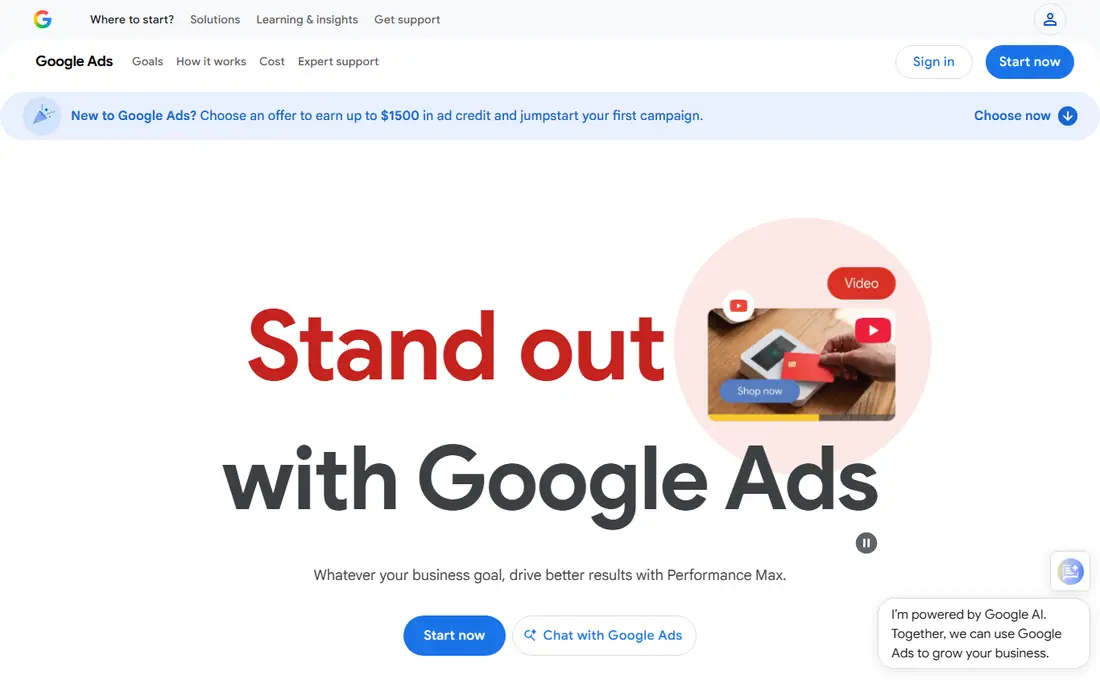
Google Ads is the default retargeting starting point for most businesses, because it covers display, YouTube, Gmail, and search in one account. Audiences can be built from site behaviour through Google Tag and Analytics, from customer lists through Customer Match, and from app activity. That breadth means a business can retarget a cart abandoner on YouTube, a product viewer on display, and a past buyer on search, without a second platform.
The risk is measurement overlap. A user who sees a Google display ad, then clicks a search ad, may be counted in more than one place, so platform totals should not be added together blindly. Set frequency caps, exclude converted users where appropriate, and use a clean attribution check before scaling budget.
- Display Network, YouTube, and Gmail reach
- Google Tag and Analytics audiences
- Search retargeting in one account
- Platform-reported conversions can overlap with other channels
- Setup needs careful audience and exclusion work
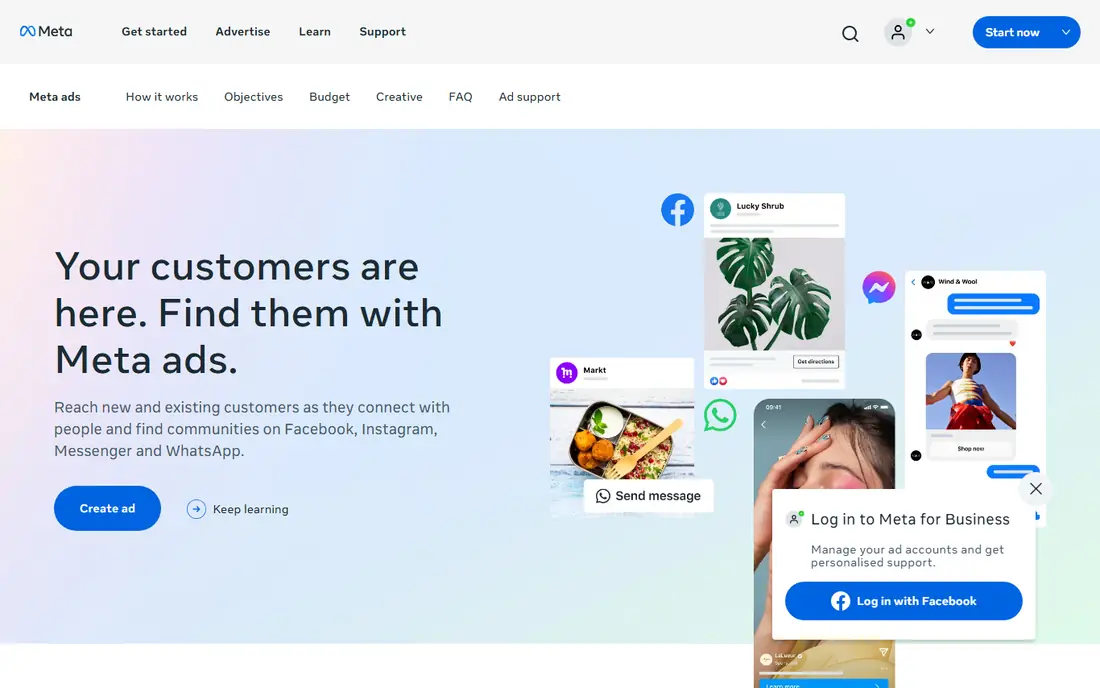
Meta Ads retargets people across Facebook and Instagram using the Meta Pixel, Conversions API, and customer lists. Custom audiences can target site visitors, cart abandoners, video viewers, and past buyers, while dynamic product ads show the exact products a shopper viewed. For direct-to-consumer and ecommerce brands, social retargeting often sits close to purchase, which makes it a strong second channel after Google.
Creative fatigue is the main drawback. Feed ads wear out faster than display ads, so a retargeting campaign needs fresh creative and frequency control. Consent and privacy changes also affect audience size, so check Pixel and Conversions API setup, and build first-party lists from email and checkout data alongside pixel audiences.
- Facebook and Instagram custom audiences
- Meta Pixel and Conversions API options
- Dynamic product ads for stores
- Social reach depends on consent and platform changes
- Creative fatigue arrives quickly in feeds
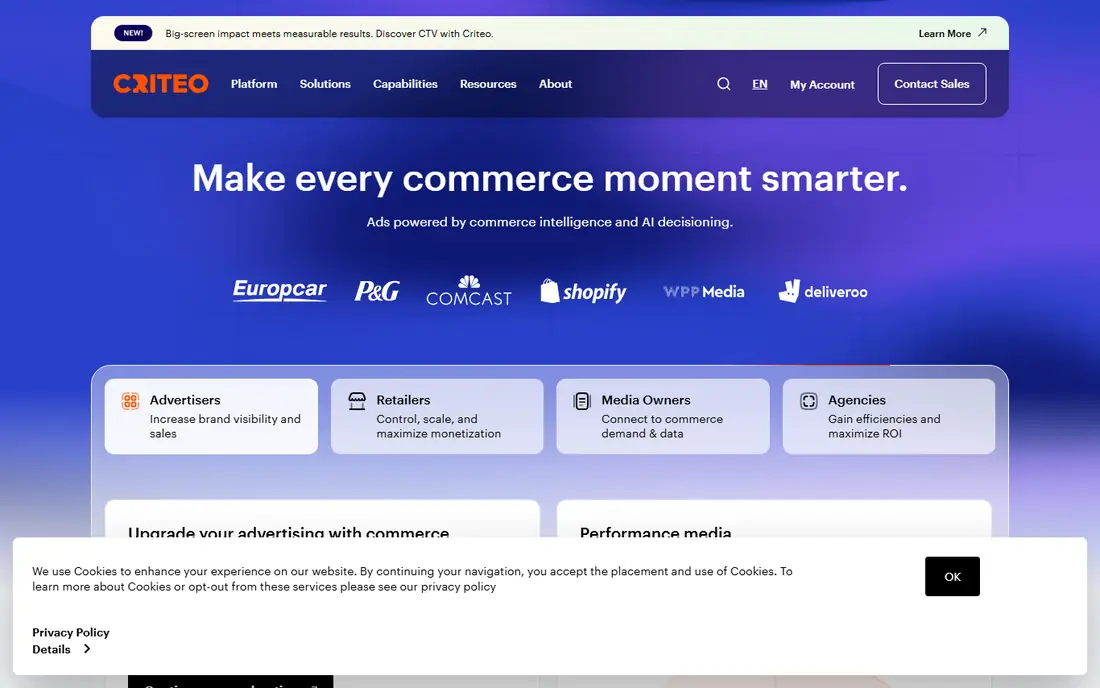
Criteo evolved from a retargeting specialist into a commerce media platform, with dynamic ads that recommend products based on shopper behaviour and catalogue data. Its retail media network gives ecommerce sellers reach across publisher and retailer inventory beyond a single social feed. For a store with a large catalogue, dynamic creative that updates with product, price, and availability can save a large amount of manual ad work.
Criteo pricing is quoted rather than published as a self-serve rate, and published guides note that its default attribution can be aggressive on view-through claims. Pair Criteo reporting with an independent attribution check, and confirm minimum spend before shortlisting. For large-catalogue ecommerce, though, it remains one of the strongest open-web options.
- Dynamic commerce ads at scale
- Product recommendation engine in published material
- Retail media network
- Pricing is quoted, not self-serve published
- Reporting needs independent attribution checks in published guides
AdRoll, part of NextRoll, is built for direct-to-consumer and midsize ecommerce brands that want retargeting across web, social, and email from one platform. It integrates with Shopify and other commerce tools, offers dynamic product ads, and describes AI-powered bidding and connected TV retargeting alongside display and social. For a small team without an agency, that single-platform approach reduces the number of dashboards to learn.
The trade-off is control. Native platforms such as Google and Meta offer deeper targeting and bidding options than a cross-channel wrapper, and AdRoll fees sit on top of ad spend in published guides. If your team is comfortable running Google and Meta directly, AdRoll may add cost without adding reach. If you want one place for several channels, it is a practical choice.
- Display, social, and email retargeting in one platform
- Shopify and commerce integrations
- Unified reporting described
- Less granular control than native platforms
- Platform fees sit on top of ad spend in published guides
LinkedIn Ads retargets website visitors and known contacts through the Insight Tag, with targeting by company, job title, seniority, and industry. That account-level view suits B2B businesses selling to buying committees, where several people from one company research a purchase over weeks. Retargeting on LinkedIn can keep a brand visible to those committees between sales calls and email follow-ups.
Costs run higher than open-web display, and niche audiences can be too small to deliver at scale. Use LinkedIn retargeting for high-value B2B audiences, not for broad consumer reach, and pair it with a cheaper display or search retargeting layer for wider coverage. Check Insight Tag setup and audience size before launching.
- Insight Tag audiences
- Account and job-based targeting
- Strong fit for B2B buying committees
- Higher costs than display retargeting in published guides
- Audience sizes can be small for niche roles
The Trade Desk is a programmatic platform for buying display, video, audio, and connected TV ads across the open web, with retargeting built from first-party data, pixels, and partner identity options. It suits enterprises and agencies that need scale, frequency control, and measurement across many publishers from one buying platform. Privacy-focused identity tools help where third-party cookies are limited.
Complexity is the drawback. The Trade Desk is not a simple self-serve tool for a small business, and most smaller advertisers will access it through an agency. If your budget is modest, Google or AdRoll will likely deliver retargeting more simply. At enterprise scale, The Trade Desk offers control that smaller platforms cannot match.
- Programmatic display, video, audio, and connected TV
- First-party data and identity options
- Enterprise measurement tools
- Enterprise scale and complexity
- Usually run through an agency or trained in-house team
StackAdapt is a programmatic platform covering native, display, video, and connected TV, with retargeting audiences built from site visits, lists, and contextual signals. It is often shortlisted alongside The Trade Desk for enterprise media operations, but with a positioning that also suits mid-market teams. Native formats can work well for content-led retargeting, where a display banner alone feels too direct.
Pricing and minimums are quoted, so a small team should confirm onboarding, support, and budget requirements before committing. Also check how StackAdapt reporting separates retargeting from prospecting, since blended reporting can hide weak retargeting performance. For a team ready for programmatic buying, it is a strong alternative to The Trade Desk.
- Programmatic native, display, video, and connected TV
- Self-serve and managed options described
- Audience and contextual tools
- Pricing is quoted
- Smaller teams should confirm onboarding and minimums
Amazon DSP lets advertisers buy display, video, and audio ads on Amazon properties and across the open web, using shopping and purchase behaviour audiences. That data suits brands that sell on Amazon, or that want to retarget shoppers who viewed a product category, even if they did not buy. For product sellers, Amazon DSP connects retargeting closely to purchase intent.
Access is the main hurdle. Amazon DSP is often run through Amazon Ads managed service or an approved partner, with minimums that vary by route. Small sellers may do better with Amazon Sponsored Products and Google Shopping first. Larger sellers should ask about audience options, reporting, and whether Amazon DSP retargeting overlaps with Sponsored ads.
- Amazon properties plus open-web reach
- Shopping and purchase behaviour audiences
- Strong fit for product sellers
- Access often runs through Amazon Ads or a partner
- Minimums and managed service terms must be confirmed
ReTargeter is a display retargeting specialist, described in published guides as focused on transparent metrics and ethical standards. It suits businesses that want open-web display retargeting without the breadth of a full programmatic platform or the social focus of Meta. Site visitor audiences and CRM list audiences cover the main retargeting use cases for a display-first campaign.
The limit is channel range. ReTargeter will not replace Google, Meta, or a programmatic platform for video, social, or connected TV retargeting. Use it as a display layer, or as a specialist alternative to a larger platform, and confirm current inventory, frequency controls, and reporting before launching. For a business that values clear display reporting, it is worth a conversation.
- Display retargeting focus
- Transparent metrics positioning in published guides
- Site and CRM audience options
- Narrower channel range than cross-channel platforms
- Confirm current inventory and reporting
How we picked these
We compared retargeting platforms on audience building, channel coverage, creative options, integrations, and measurement, using platform pages and published retargeting guides. We included search, social, ecommerce, B2B, and programmatic options, so different business types are covered. We excluded Perfect Audience after a published October 2026 check found its site did not load and older material showed the product moving under SharpSpring, so we could not verify it as a live standalone option. We did not invent prices, minimums, or performance claims.
What to check before you launch retargeting
Start with audiences and consent. Build segments by behaviour, such as product viewed, cart abandoned, and time since visit, and exclude people who already converted. Check consent banners, privacy policies, and platform settings, especially for customer list uploads. A retargeting campaign that ignores consent risks complaints and account problems, even if the ads perform well.
Next, set frequency and creative rules. Cap how often a person sees the same ad, refresh creative regularly, and test dynamic product ads against static ads for stores. For lead businesses, test page-based audiences and form audiences separately, since a pricing page visitor and a blog reader are not equally valuable. Small audience tests will teach more than a large launch with one creative.
Finally, measure honestly. Use holdout groups where possible, compare platform conversions with analytics and sales data, and watch for overlap between channels. Retargeting often looks strong in platform reports because it targets people who were already close to buying. A clean measurement plan will show whether retargeting adds sales, or only takes credit for sales that would have happened anyway.
Frequently asked questions
What is the best retargeting company?
It depends on your business. Google Ads suits broad reach, Meta Ads suits social retargeting, Criteo suits large-catalogue ecommerce, and LinkedIn Ads suits B2B. Small teams that want several channels in one place should also look at AdRoll, while enterprises should compare The Trade Desk and StackAdapt.
How does retargeting work?
Retargeting places a pixel or tag on your website, builds audiences from visitor behaviour, and shows ads to those audiences on other sites, apps, or social feeds. Customer lists can also be uploaded to build audiences from known contacts, subject to platform rules and consent. Dynamic ads can show the exact products a visitor viewed.
How much does retargeting cost?
Most platforms in this guide charge on ad spend, with management or platform fees on top in some cases, so we list starting price as See website. Costs per click or impression vary by industry, audience, and competition. Start with a test budget, measure cost per result, and scale only the audiences that add sales.
Is retargeting still effective without third-party cookies?
Retargeting reach has changed as browsers and platforms limit third-party cookies, but first-party data, customer lists, and platform identity tools still support retargeting. Google, Meta, and programmatic platforms all offer first-party and contextual options. Check each platform current audience options before assuming old cookie-based reach still applies.
What is the difference between retargeting and remarketing?
The terms are often used interchangeably. Retargeting usually means showing paid ads to past site visitors, while remarketing often means email follow-up to known contacts, especially in Google Ads email lists. In practice, most guides use retargeting for paid ads and remarketing for email, but the audience idea is the same.
Should a small business use a retargeting company or run ads directly?
A small business can run Google and Meta retargeting directly if it has time to learn the platforms and a modest budget. A cross-channel platform such as AdRoll or an agency makes sense when several channels are needed and the team lacks time. Start direct with one platform, learn what works, and add channels only when measurement is clear.
Sources
See where you really rank - block by block
ProMapRanker scans Google Maps across a grid of your service area. Simple monthly plans from $19, white-label on every plan.
Start freeKeep reading
 zoro.to alternatives
Best Zoro.to Alternatives in 2026
We compare the best zoro.to alternatives in 2026, listing only legal licensed anime streaming services, from Crunchyroll to free options for fans today.
Read → zip alternatives
Best Zip Alternatives in 2026
We compare the best zip alternatives for buy now, pay later in 2026, covering pay-in-4 plans, fees, spending limits, and credit reporting options today.
Read → yesware alternatives
Best Yesware Alternatives in 2026
Compare the best yesware alternatives for sales email tracking, templates, and sequences, with current pricing and honest tradeoffs for small sales teams.
Read →