 ProMapRanker
Best Retail Management System Software in 2026


Inventory-heavy multi-location retail · Pricing starts at: $89 per month
Key takeaways
- Our pick for most readers is Lightspeed Retail, because it covers the core job well without a steep learning curve.
- Square for Retail is a strong second choice when you need more control or a different way of working.
- Prices and free tiers change often, so check the vendor pricing page before you pay for a plan.
- The right choice depends more on your workflow and budget than on any single headline feature.
Quick comparison
| Pick | Great for | Pricing starts at | Free tier | |
|---|---|---|---|---|
| Lightspeed Retail | Inventory-heavy multi-location retail | $89 per month | Free trial | Visit |
 Square for Retail | Small shops starting with POS | Free | Yes | Visit |
 Shopify POS | Online-first retailers adding stores | See website | Free trial | Visit |
 Clover | Busy counters with hardware bundles | See website | No | Visit |
 Erply | Retail chains with central control | See website | Free trial | Visit |
 Cin7 | Inventory-led retail and wholesale | See website | Free trial | Visit |
 KORONA POS | Retail POS with flexible processing | $59 per month | Free trial | Visit |
 Heartland Retail | US retailers with payment services | See website | No | Visit |
 RetailEdge | Independent retailers on Windows POS | See website | Free trial | Visit |
The best retail management system software
We compared retail systems on inventory depth, POS hardware, online selling, multi-location tools, and total cost, so retailers can pick a system that fits store size and catalogue.
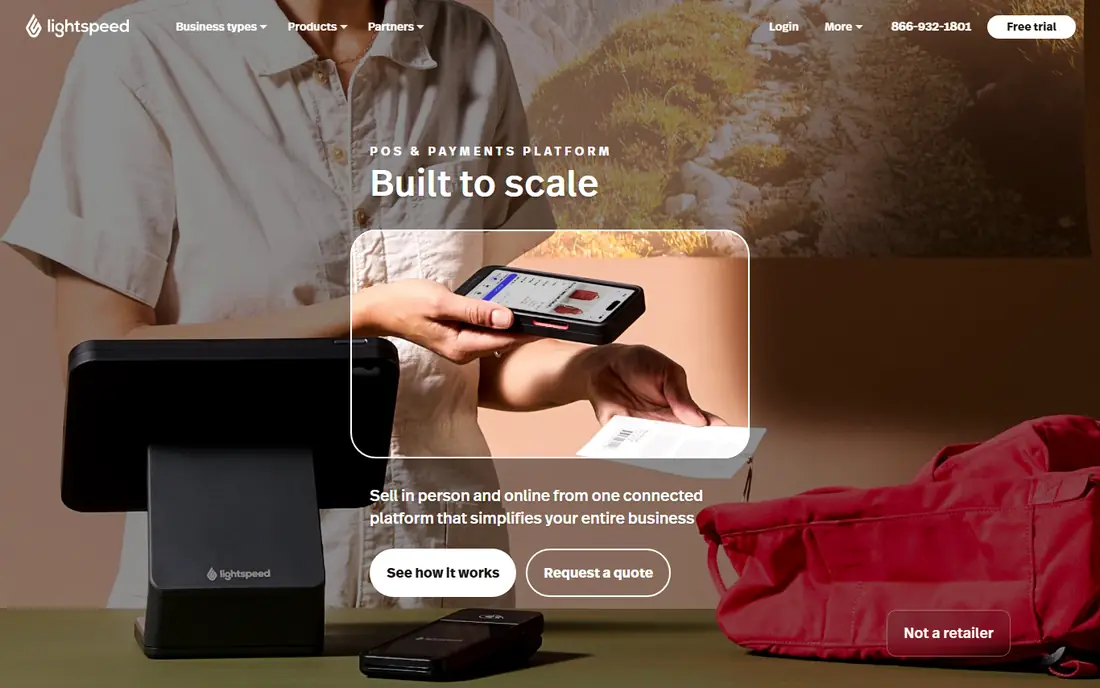
Lightspeed Retail suits retailers with large catalogues, variants, and several locations that need stock control across stores.
Its strength is inventory depth, with matrix variants for size and colour, purchase orders, and transfers between locations. That helps apparel, sporting goods, and specialty stores where stock accuracy drives sales and reduces stockouts.
The honest catch is price and setup, since the entry plan costs more than a simple POS, so it fits retailers who will use the inventory tools daily. Before you commit, try the free tier or trial on a small real project and check export, sharing, and billing terms.
- Advanced inventory and variants
- Multi-location tools
- Detailed reports
- Higher entry price
- Setup takes time

Square for Retail suits new shops, pop-ups, and small retailers that want to start selling with low upfront software cost.
Its strength is the low barrier, because the free plan covers basic selling, and hardware starts with simple readers and terminals. Square Online adds a web store, which helps shops that sell in person and online from one catalogue.
The honest catch is depth, since advanced inventory, purchase orders, and multi-location tools need paid plans, so check the plan that matches your catalogue. Before you commit, try the free tier or trial on a small real project and check export, sharing, and billing terms.
- Free starting plan
- Easy hardware
- Online store tools
- Advanced inventory needs paid plans
- Per-location pricing applies

Shopify POS suits online-first brands that open physical stores and want one inventory and customer system.
Its strength is unified selling, because website, store, and social orders share inventory, customers, and fulfilment. That reduces overselling and double entry, which matters when the same stock sells through several channels.
The honest catch is plan stacking, since POS Pro adds cost per location on top of a Shopify plan, so model total cost for each store. Before you commit, try the free tier or trial on a small real project and check export, sharing, and billing terms.
- Unified online and in-store inventory
- Customer profiles
- POS Pro tools
- Needs a Shopify plan
- POS Pro adds per-location cost
Clover suits busy counters that want an integrated touchscreen register, payment terminal, and app marketplace in one bundle.
Its strength is hardware, with compact and full counter setups that suit high-volume checkout lines. The app marketplace adds loyalty, reporting, and other tools, which helps shops extend the system without switching hardware.
The honest catch is terms, since prices and contracts vary by seller, so read hardware, processing, and cancellation terms before signing. Before you commit, try the free tier or trial on a small real project and check export, sharing, and billing terms.
- Touchscreen hardware bundles
- App marketplace
- Payment processing
- Hardware and reseller terms vary
- Inventory depth is basic
Erply suits retail chains and franchises that need central inventory, pricing, and customer data across stores.
Its strength is back-office control, with central product, stock, and customer tools that keep stores in step. That helps chains that run promotions, loyalty, and reporting from head office rather than store by store.
The honest catch is usability, since the interface can feel dated, so allow training time for staff who will use it daily. Before you commit, try the free tier or trial on a small real project and check export, sharing, and billing terms.
- Central inventory and CRM
- Multi-store tools
- POS and back office
- Interface feels dated
- Setup needs training
Cin7 suits retailers and wholesalers that need deep inventory, warehouse, and order management behind the POS.
Its strength is inventory operations, with stock, warehouse, and order tools that cover retail and wholesale in one system. That helps businesses that sell to consumers and trade customers from the same stock pool.
The honest catch is implementation, since quote-based pricing and setup need planning, so it fits larger operations rather than a single small shop. Before you commit, try the free tier or trial on a small real project and check export, sharing, and billing terms.
- Strong inventory and warehouse tools
- B2B and retail in one system
- Integrations
- Pricing is quote based
- Implementation takes planning
KORONA POS suits retailers that want per-terminal pricing and a choice of payment processor rather than a locked-in rate.
Its strength is flexibility, because the system works with selected processors and covers retail, ticketing, and service sales. That helps shops that want to negotiate processing or keep an existing processor relationship.
The honest catch is add-ons, since optional modules add cost, so price the full setup, not only the base terminal price. Before you commit, try the free tier or trial on a small real project and check export, sharing, and billing terms.
- Per-terminal pricing
- Processor choice
- Retail and ticketing tools
- Hardware and modules add cost
- Support hours vary by plan
Heartland Retail suits US retailers that want POS, inventory, and payment processing from one provider.
Its strength is the combined offer, with retail software and payment services that can simplify billing and support. Inventory and customer tools cover everyday retail needs, while integrated payments keep checkout and reporting together.
The honest catch is pricing, since plans are quote based, so get a written quote for software, hardware, and processing before deciding. Before you commit, try the free tier or trial on a small real project and check export, sharing, and billing terms.
- Retail POS
- Inventory tools
- Heartland payment processing
- Pricing varies by quote
- Ecosystem is US focused
RetailEdge suits independent retailers who want a Windows-based POS with inventory and customer tools and a licence model.
Its strength is the licence option, which appeals to shops that prefer a one-time purchase over a monthly subscription for core software. Inventory, purchasing, and customer tracking cover the daily needs of a single store or small chain.
The honest catch is platform, since it is Windows based and has a smaller app ecosystem, so check hardware and integration needs first. Before you commit, try the free tier or trial on a small real project and check export, sharing, and billing terms.
- One-time licence option
- Inventory and customer tools
- Local POS
- Windows based
- Smaller app ecosystem than cloud leaders
How we picked these
We compared official pricing pages, feature pages, and POS guides for retail systems live in October 2026. We checked software price, card processing where published, hardware needs, and inventory depth, since software price alone does not show total cost. Where pricing was quote based or varied by reseller, we wrote See website.
How to choose retail management software
Start with inventory reality, not checkout speed alone. A shop with hundreds of variants needs matrix inventory, purchase orders, and transfers, while a small shop may only need basic stock counts. Buy for the catalogue you will have in two years.
Price the full system, not only the monthly fee. Add hardware, card processing, POS Pro or add-on modules, and any online store plan, then test with your average ticket and monthly volume. A low software price can still cost more if processing is high.
Test the daily workflow with real staff. Run a sale, a return, a stock count, and a transfer during a trial, and check reporting for best sellers and low stock. If staff find the flow slow, that cost appears every day.
Frequently asked questions
Which retail management software is the best?
Lightspeed Retail suits inventory-heavy and multi-location stores, Square suits small shops starting out, and Shopify POS suits online-first brands. The best choice depends on catalogue size and channels.
What is the best software for a retail shop?
For a single small shop, Square for Retail or Shopify POS is a practical start. For larger catalogues, Lightspeed Retail, Erply, or Cin7 offer deeper inventory and multi-store control.
How much does retail POS software cost?
It ranges from free basic plans to $89 per month or more for inventory-led systems, plus hardware and card processing. Quote-based systems need a written quote for a fair comparison.
Do I need separate software for online and in-store sales?
Not with unified systems such as Shopify POS, Lightspeed, or Square, which share inventory across channels. Separate systems raise the risk of overselling and double entry.
What is the best retail management app for small shops?
Square for Retail is the simplest low-cost start, with easy hardware and an online store option. Check paid plan limits if your catalogue or staff count grows.
Sources
- https://www.lightspeedhq.com/pos/retail/
- https://squareup.com/us/en/point-of-sale/retail
- https://www.shopify.com/pos/pricing
- https://www.clover.com/pos-systems
- https://erply.com/pricing
- https://www.cin7.com/pricing
- https://www.koronapos.com/pricing
- https://www.heartland.us/retail
- https://www.retailedge.com/pricing
See where you really rank - block by block
ProMapRanker scans Google Maps across a grid of your service area. Simple monthly plans from $19, white-label on every plan.
Start freeKeep reading
 zscaler alternatives
Best Zscaler Alternatives in 2026
Looking for zscaler alternatives? We compare 9 SASE and zero trust platforms on architecture, data protection, pricing, and fit for your network and team.
Read → zapier alternatives free
Best Zapier Alternatives Free in 2026
Nine automation tools for zapier alternatives free in 2026, all with genuinely free tiers, plus free plan limits, starting prices and upgrade paths explained.
Read → which platform is best for online reputation
Which Platform Is Best for Online Reputation in 2026
Wondering which platform is best for online reputation? We compare 8 review, listing, and response tools for small and multi-location businesses and agencies.
Read →