 ProMapRanker
Best Restaurant Delivery Service in 2026

Key takeaways
- DoorDash, Uber Eats, and Grubhub give restaurants the largest marketplace reach, but commissions of 15 to 30 percent are common on delivery orders.
- ChowNow, Slice, Owner.com, and direct ordering tools help restaurants keep more margin and own customer data, once direct demand exists.
- DoorDash Drive and Uber Direct let restaurants use large courier networks for their own website orders, with a flat fee per delivery and no marketplace commission.
- Availability, fees, and coverage vary by location, so confirm the exact plan and delivery area for your address before you sign.
Quick comparison
| Pick | Great for | Pricing starts at | Free tier | |
|---|---|---|---|---|
 DoorDash | Largest marketplace reach | Free | Yes | Visit |
 Uber Eats | Global marketplace reach | Free | Yes | Visit |
 Grubhub | Campus and corporate reach | See website | Yes | Visit |
 ChowNow | Commission-free direct ordering | $229 per month | No | Visit |
 Slice | Pizza shops | $2.25 per order | Yes | Visit |
 Toast | POS plus ordering | See website | Yes | Visit |
 DoorDash Drive | Courier service for own orders | See website | No | Visit |
 Uber Direct | Courier service for own orders | See website | No | Visit |
 Delivery.com | Marketplace with merchant delivery options | See website | Yes | Visit |
 Owner.com | Branded ordering for busy restaurants | $499 per month | No | Visit |
The best restaurant delivery service
We compared marketplace reach, commissions, direct ordering, courier options, customer data ownership, and pricing for restaurants. These ten are genuinely operating services in the United States, covering marketplaces, direct ordering, and on-demand courier delivery. For restaurants, the best choice often combines one marketplace for discovery with a direct channel for regulars.
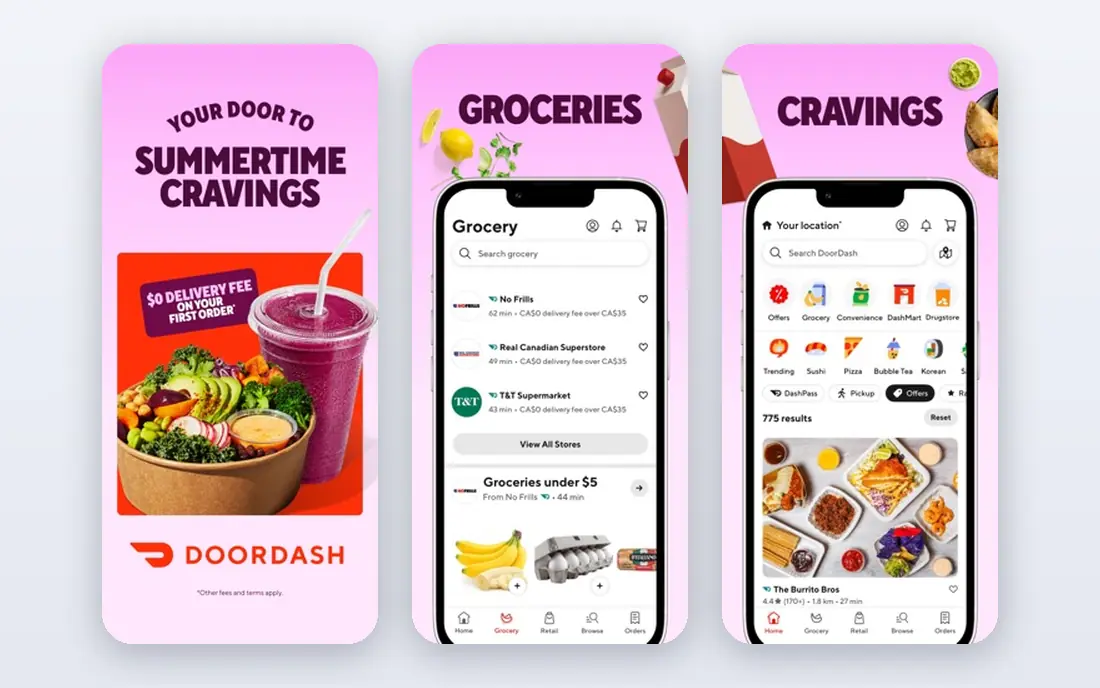
DoorDash is the first marketplace most US restaurants consider, because it offers the largest pool of delivery customers and a familiar app for diners. Restaurants can join free and choose tiered plans, commonly listed at 15, 25, or 30 percent for delivery orders, with a lower rate for pickup, plus optional paid promotions for better placement. DashPass subscribers also bring repeat order demand that smaller marketplaces cannot match.
The cost is the catch. A 30 percent commission can erase margin on a typical restaurant order, so many operators use DoorDash for discovery and steer regulars to direct ordering over time. Restaurants also have limited access to marketplace customer data. For reach alone, DoorDash remains the top pick, but it should be one channel, not the whole strategy.
- Largest US marketplace reach
- Tiered plans for pickup and delivery
- DashPass subscriber demand
- Delivery commissions of 15 to 30 percent by plan
- Restaurants do not own marketplace customer data
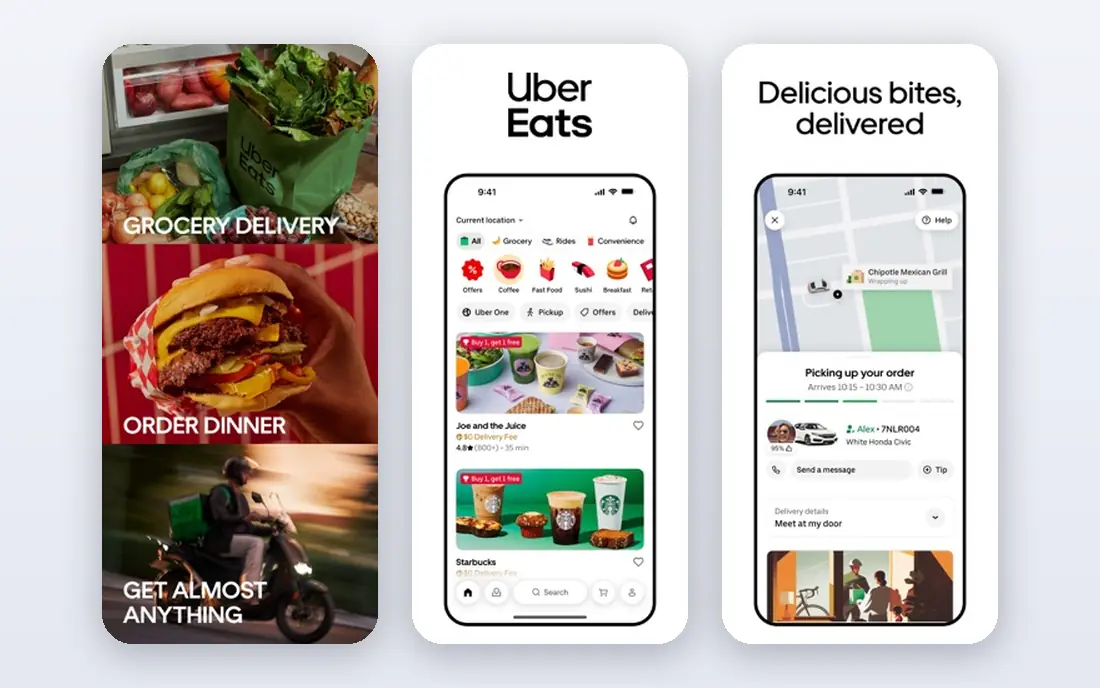
Uber Eats is the second-largest US marketplace and the stronger global option, which matters for restaurants in tourist areas or with international ambitions. Published 2026 comparisons list delivery tiers around Lite at 20 percent, Plus at 25 percent, and Premium at 30 percent on Uber One member orders, with pickup around 7 percent since March 2026. The app also bundles with Uber One, which can drive repeat orders.
As with DoorDash, the marketplace owns much of the customer relationship, and high-tier commissions cut deeply into margin. Uber Eats also integrates with Postmates, which Uber owns, so some diners arrive through that brand as well. For a restaurant that wants broad reach beyond its neighborhood, Uber Eats is a strong second marketplace alongside DoorDash.
- Large US and global reach
- Uber One member demand
- Pickup and delivery plan options
- Delivery commissions of 20 to 30 percent by plan
- Marketplace customer data stays with Uber
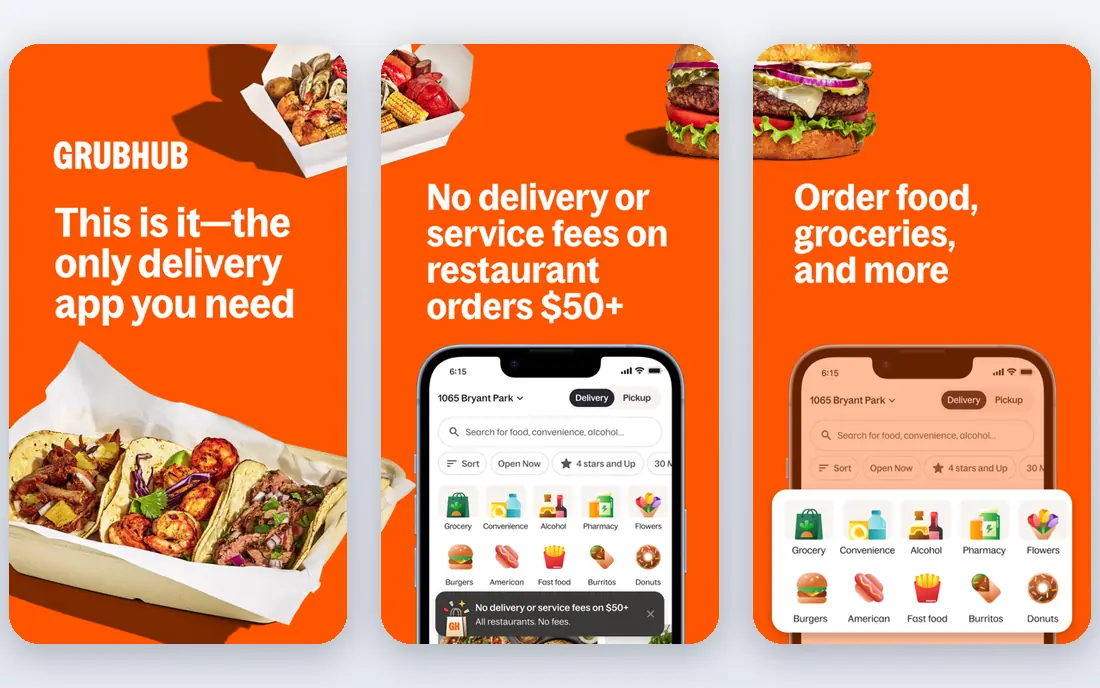
Grubhub, now owned by Wonder Group after its 2025 acquisition, remains a major US marketplace with strengths in campus dining and corporate accounts. Restaurants can choose delivery through Grubhub couriers or deliver orders themselves at a lower cost, and package-based pricing bundles delivery and marketing options. That campus and workplace demand can suit restaurants near colleges and offices.
Pricing is less transparent than a simple tier table, because Grubhub uses package and marketing options that vary by restaurant. Reach is also smaller than DoorDash in many cities, so it works best as an added channel rather than a sole marketplace. For restaurants near campuses or offices, Grubhub is still worth listing.
- Long-running marketplace
- Campus dining and corporate accounts
- Self-delivery options
- Package-based pricing is less transparent
- Smaller reach than DoorDash in many areas
ChowNow replaces marketplace commission with a flat monthly fee, with plans listed from $229 per month on an annual term and card processing around 2.95 percent plus 29 cents. Every plan includes a branded website, mobile app, rewards, and fraud and chargeback coverage, while a discovery network places the ordering link on Google, Yelp, and Apple Maps. Order aggregation also pulls DoorDash, Uber Eats, and Grubhub orders onto one device and into the point of sale system.
Delivery for direct orders uses partner couriers through Flex Delivery, listed at a flat $7.98 per order, which can be split with the diner. The monthly fee means a restaurant needs enough direct orders to beat marketplace commission savings. For an independent restaurant that wants to own its customers, ChowNow is our pick for direct ordering.
- No per-order restaurant commission
- Branded website and app
- Order aggregation for marketplaces
- Monthly fee needs steady direct volume
- Delivery uses partner couriers at a flat fee
Slice is a specialist service for independent pizzerias, offering ordering, a marketplace listing, and marketing tools built around pizza menus and repeat orders. Pricing is commonly cited around $2.25 per order, with the fee waived on small orders in some reports, instead of a percentage commission on every sale. That flat model helps pizza shops keep margin on larger orders.
The obvious limit is category. Slice is not a general restaurant marketplace, so a sushi bar or burger joint gains little from it. For a pizzeria, though, the specialist focus, lower per-order cost, and pizza-specific tools make Slice a better fit than a general marketplace alone.
- Built for pizzerias
- Low flat fee per order
- Ordering and marketing tools for pizza shops
- Narrow category focus
- Not a general restaurant marketplace
Toast is a restaurant point of sale platform that also covers online ordering, which helps restaurants run dine-in, takeout, and delivery from one system. Restaurants can take direct orders through Toast, manage menus and reporting in one dashboard, and pull marketplace orders into the same workflow. Delivery for direct orders can use DoorDash or Uber courier networks through integrations.
Toast is not a marketplace by itself, so it does not bring the same discovery demand as DoorDash or Uber Eats. Pricing also depends on hardware, software plans, and add-ons, so a restaurant should get a full quote. For a restaurant already choosing a point of sale system, Toast ordering is a natural direct channel to add.
- Point of sale plus online ordering in one system
- Marketplace order integration
- Restaurant reporting
- Full system cost depends on hardware and plans
- Delivery still uses partner couriers
DoorDash Drive is a white-label courier service, which means a restaurant takes orders on its own website or phone and DoorDash couriers deliver them. Published reports have cited a flat fee around $7.49 per order, with no percentage marketplace commission on those direct orders. That model suits restaurants that already have direct demand and want delivery without hiring drivers.
The restaurant must still drive its own orders, because Drive brings no marketplace browsing demand. The per-delivery fee also needs checking for distance, volume, and current terms, since it is not a fixed national price for every order. For a restaurant with a working direct channel, Drive is a practical way to add delivery coverage.
- Large courier network for own website orders
- No marketplace commission
- Flat fee per delivery
- Restaurant handles its own marketing and ordering
- Per-delivery fee varies by distance and terms
Uber Direct works the same way as DoorDash Drive: a restaurant takes orders through its own website, app, or phone, and Uber couriers deliver them for a flat, distance-based fee. Published partner reports have cited around $6.99 per order in one integration, with no marketplace commission on direct orders. Diners get tracking, while the restaurant keeps the customer relationship and order data.
As with Drive, Uber Direct does not bring new marketplace customers, so it only helps once direct ordering exists. Fees vary by distance, partner integration, and current terms, so restaurants should confirm the rate for their delivery area. For a restaurant that already uses Uber Eats, Direct is a useful second Uber channel for regulars.
- Uber courier network for own orders
- No marketplace commission
- Delivery tracking for diners
- Restaurant handles its own ordering and marketing
- Per-delivery fee varies by distance and partner
Delivery.com is a marketplace that also supports merchant-fulfilled delivery, which means some restaurants can use their own drivers while still listing for discovery. Published comparisons cite merchant commissions around 15 percent in some arrangements, though terms vary by restaurant and area. The platform covers restaurants and other local food categories, which helps diners who order across types.
Reach is smaller than DoorDash, Uber Eats, or Grubhub in most US cities, so it should be an added channel rather than a sole marketplace. Coverage also varies by location, so a restaurant should confirm local diner demand before investing time in setup. For a restaurant in a covered area, it is a lower-cost extra listing.
- Marketplace listing plus merchant-fulfilled options
- Local delivery focus
- Broad food categories
- Smaller reach than the big three marketplaces
- Commission varies by arrangement
Owner.com, formerly Owner, builds branded ordering websites and apps for restaurants, with a model based on a monthly fee rather than a percentage commission on each order. Published comparisons list pricing from $499 per month, with marketing, customer data, and ordering tools aimed at higher-volume independent restaurants. That flat model can save money once direct order volume is large enough.
The monthly fee is too high for a very small or new restaurant with few direct orders, because the saving per order cannot cover it yet. Owner.com also needs the restaurant to drive traffic to its own site, since it is not a discovery marketplace. For a busy restaurant ready to shift regulars to direct ordering, it is a strong premium direct option.
- Branded website and app
- No per-order commission model
- Marketing and customer data tools
- High monthly fee suits higher-volume restaurants
- Needs existing demand to pay off
How we picked these
We compared official restaurant partner pages, pricing pages, and published fee comparisons checked in 2026, and we kept only services that are genuinely operating in the United States and fit restaurant delivery, direct ordering, or courier delivery. We weighed marketplace reach, commission or flat fee cost, customer data ownership, delivery coverage, and fit for different restaurant sizes. We did not claim hands-on testing, and we used See website where pricing varies by plan, area, or partner terms.
What to check before you choose
Start with your margin math. Take a typical order value, subtract food, labor, packaging, and card fees, then apply each marketplace commission or flat delivery fee to see what is left. A 15 percent plan can work where a 30 percent plan cannot, and a flat monthly fee only pays when direct volume is steady.
Next, check coverage and terms for your address. Confirm delivery zones, courier availability at peak times, menu and price control, and how refunds and missing items are handled. Then decide how you will move regulars to direct ordering, with a clear link on receipts, packaging, and social pages, because direct savings only happen when customers actually use the direct channel.
Finally, test the diner experience yourself. Order from your own listing, check menu accuracy, photos, prep time, and delivery tracking, and fix errors before a busy weekend. A marketplace that lists an outdated menu or wrong prices will cost more in refunds and bad reviews than any commission saving.
Frequently asked questions
What is the best delivery service for restaurants?
DoorDash offers the largest marketplace reach, Uber Eats offers strong global reach, and ChowNow offers the best direct ordering value for independents that want no per-order commission. Most restaurants do best with one marketplace for discovery plus a direct channel for regulars. The winner depends on your area, order value, and margin.
Which delivery service is best for restaurants on cost?
Direct ordering through ChowNow, Slice for pizza, or a flat courier service such as DoorDash Drive or Uber Direct usually costs less per order than a high-tier marketplace commission, once direct volume exists. Marketplace plans at 15 percent can also work for pickup or low-marketing tiers. Model your own orders, because a flat monthly fee only wins above a certain volume.
What commission do DoorDash and Uber Eats charge restaurants?
Published 2026 comparisons list DoorDash delivery tiers at 15, 25, or 30 percent by plan, and Uber Eats delivery tiers around 20, 25, or 30 percent by plan, with lower pickup rates. Exact rates vary by plan, area, and promotions, so confirm the current offer for your restaurant. Optional marketing and placement can add further cost.
Should a restaurant use only direct ordering?
Direct ordering keeps more margin and customer data, but it does not bring new diners the way a marketplace does. Most restaurants need marketplace discovery at first, then shift regulars to direct ordering over time. A direct-only strategy works best for a restaurant with a loyal local following and strong repeat demand.
Do restaurants own customer data on marketplaces?
Restaurants generally get limited customer data from marketplace orders, while direct ordering gives full access to customer names, emails, and order history, subject to privacy rules. That data difference is a major reason to build a direct channel alongside marketplaces. Use it for rewards and repeat offers, not for spam.
Is delivery available in every location?
No. Marketplace coverage, courier availability, and delivery zones vary by city and neighborhood, and some services cover only selected areas. Confirm coverage for your exact address, including peak-time availability, before you promise delivery to customers. Rural and low-density areas may need self-delivery or pickup only.
Sources
See where you really rank - block by block
ProMapRanker scans Google Maps across a grid of your service area. Simple monthly plans from $19, white-label on every plan.
Start freeKeep reading
 zscaler alternatives
Best Zscaler Alternatives in 2026
Looking for zscaler alternatives? We compare 9 SASE and zero trust platforms on architecture, data protection, pricing, and fit for your network and team.
Read → zapier alternatives free
Best Zapier Alternatives Free in 2026
Nine automation tools for zapier alternatives free in 2026, all with genuinely free tiers, plus free plan limits, starting prices and upgrade paths explained.
Read → which platform is best for online reputation
Which Platform Is Best for Online Reputation in 2026
Wondering which platform is best for online reputation? We compare 8 review, listing, and response tools for small and multi-location businesses and agencies.
Read →