 ProMapRanker
Best Requirements Management Tools in 2026


Structured reviews and traceability · Pricing starts at: See website
Key takeaways
- Jama Connect is our pick for structured requirements reviews and traceability in product development.
- IBM DOORS Next suits large engineering programmes with formal governance, baselines, and change control.
- Siemens Polarion and Visure suit regulated and safety-critical teams that need end-to-end lifecycle traceability.
- Modern Requirements4DevOps suits teams already working inside Azure DevOps, since it keeps requirements in that workflow.
- Most enterprise requirements tools are quote-based, so ask for implementation and migration costs as well as the licence.
Quick comparison
| Pick | Great for | Pricing starts at | Free tier | |
|---|---|---|---|---|
| Jama Connect | Structured reviews and traceability | See website | No | Visit |
 IBM Engineering Requirements Management DOORS Next | Formal engineering governance | See website | No | Visit |
 Siemens Polarion ALM | End-to-end lifecycle governance | See website | No | Visit |
 Visure Requirements ALM | Safety-critical compliance | See website | No | Visit |
 Helix ALM | Linking requirements, tests, and defects | See website | No | Visit |
 Modern Requirements4DevOps | Requirements inside Azure DevOps | See website | No | Visit |
 PTC Codebeamer | Configurable lifecycle processes | See website | No | Visit |
 ReqView | Small team requirements docs | See website | Yes | Visit |
 ONES.com | Requirements linked to delivery | See website | Yes | Visit |
The best requirements management tools
Requirements management tools capture what a product must do, link each requirement to design, code, and tests, and track changes through reviews and releases. The tools below suit different levels of formality, from small teams to regulated engineering programmes.
Jama Connect is the tool we recommend first for teams that need clear traceability from requirements to tests. You can author requirements in a structured hierarchy, link them to design items and test cases, run formal reviews with comments and approvals, and baseline a set for a release. That structure helps product and engineering teams answer a simple audit question: which test proves this requirement, and what changed since the last release. Integrations with development and test tools keep those links live.
The trade-off is formality and cost. Jama pricing is quote-based, and implementation and training take time, especially for teams moving from documents or spreadsheets. Agile-only teams that need light backlog tracking may find it heavier than needed. For review-heavy product development, especially in medical, automotive, or industrial products, Jama is a strong fit.
- Strong traceability and review workflows
- Baselines and version history
- Integrations with test and development tools
- Quote-based pricing
- Implementation takes time
- More formal than agile-only teams may need
IBM Engineering Requirements Management DOORS Next
Great for: Formal engineering governance
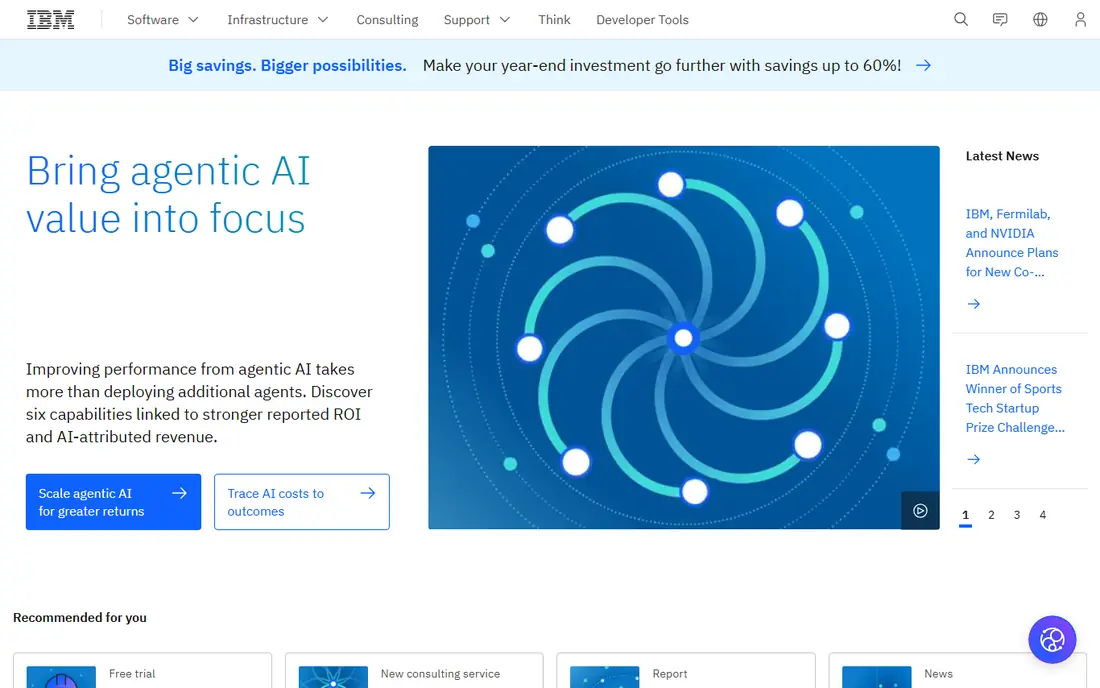
IBM Engineering Requirements Management DOORS Next, often called DOORS Next, suits large engineering programmes with formal processes. It supports structured requirements modules, baselines, traceability, and change control across complex systems. Integration with other IBM engineering tools for design, test, and lifecycle management helps large teams keep a single system of record. For aerospace, defence, automotive, and other regulated programmes, that governance depth matters.
The learning curve is real, and implementation can take months, especially with data migration from older DOORS or document-based processes. Pricing is quote-based, so budgeting needs a vendor conversation. DOORS Next is best when formal governance, audit trails, and large-scale traceability outweigh speed of setup.
- Structured requirements and baselines
- Strong change control
- Broad IBM engineering integration
- Quote-based pricing
- Steep learning curve
- Implementation can take months
Siemens Polarion ALM
Great for: End-to-end lifecycle governance
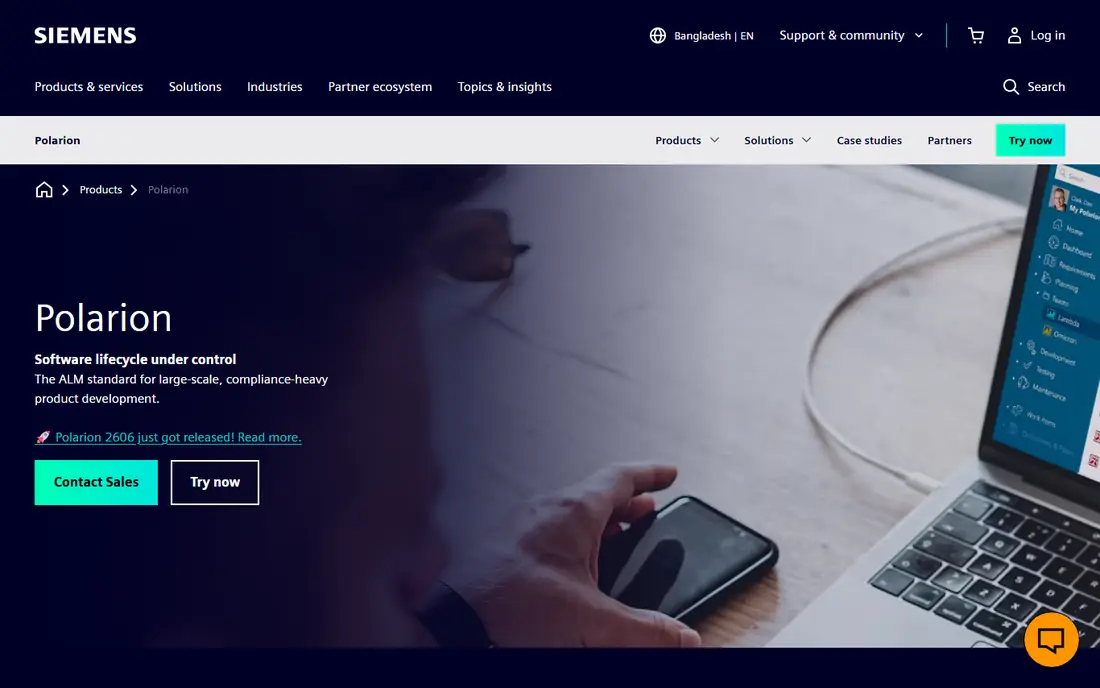
Siemens Polarion ALM covers requirements, test management, and application lifecycle workflows in one platform. Teams can link requirements to work items, test cases, and defects, track changes, and generate traceability reports for audits. Configurable workflows suit organisations that need a consistent process across projects, while still allowing project-level variation. For engineering teams that want lifecycle governance without stitching several tools together, Polarion is a coherent choice.
Configuration and rollout take time, and pricing is quote-based. The broad ALM scope can feel heavy for teams that only need requirements tracking. Polarion suits mid-sized to large engineering organisations that want requirements, testing, and lifecycle control in one governed system.
- Requirements, test, and lifecycle workflows in one platform
- Compliance traceability
- Configurable workflows
- Quote-based pricing
- Configuration takes time
- Broad ALM scope can feel heavy
Visure Requirements ALM is built for safety-critical and regulated programmes, where traceability and compliance evidence are central. It links requirements to risks, tests, and design items, supports baselines and change control, and produces reports that support standards-based audits. Teams in medical devices, automotive safety, aerospace, and similar fields will find its compliance focus useful. The tool is designed around proving that each requirement was tested and that changes were controlled.
Pricing is quote-based, and Visure is more specialised than a general project tool, so teams without regulatory needs may find it heavier than needed. Implementation also benefits from process design work upfront. For safety-critical work, Visure is a strong, focused choice.
- Strong traceability for regulated work
- Risk and test linkage
- Compliance-oriented reporting
- Quote-based pricing
- Specialised focus
- Implementation needs process design
Helix ALM, from Perforce, links requirements to test cases and defects in a single system, which helps teams track whether a requirement is covered and whether related defects are resolved. It supports baselines, traceability matrices, and workflow customisation, with cloud and self-managed deployment options. For software and embedded teams that already use Perforce tools, Helix ALM fits naturally into the development workflow.
Pricing is quote-based, and some users find the interface less modern than Jama or Polarion. Configuration still takes care to match team process. Helix ALM earns its place for teams that want requirements, testing, and defect tracking connected, without adopting a full enterprise ALM suite.
- Requirements, test cases, and issues in one system
- Traceability reports
- Flexible deployment
- Quote-based pricing
- Interface feels dated to some users
- Configuration takes care
Modern Requirements4DevOps, often called Modern Requirements, is the best choice for teams already living in Azure DevOps. It adds structured requirements authoring, diagrams, traceability, and review support inside Azure DevOps Services or Server, so requirements stay linked to backlogs, code, and pipelines. That matters because teams do not need to copy requirements between a separate tool and their delivery system. Reviews and baselines happen where the work already happens.
The obvious limit is platform fit. Teams not using Azure DevOps will get less value, and pricing is quote-based. For Microsoft-centred software teams, however, Modern Requirements avoids a separate requirements silo and keeps traceability close to delivery. It is a practical, focused pick for that audience.
- Requirements authoring inside Azure DevOps
- Traceability to work items and tests
- Familiar Microsoft workflow
- Quote-based pricing
- Needs Azure DevOps
- Less suited to non-Microsoft stacks
PTC Codebeamer covers requirements, risk, quality, and lifecycle processes in a configurable platform. Product engineering teams can define their own workflows, link requirements to tests and risks, and track changes across a programme. That configurability suits organisations with varied product lines or specific quality processes, since the tool can be shaped rather than forcing one fixed process. Traceability reports support audits and release decisions.
Configuration complexity is the trade-off. Codebeamer needs someone to own process design and ongoing administration, and pricing is quote-based. Smaller teams may find a simpler tool faster. For product engineering organisations that need configurable lifecycle control, Codebeamer is a strong contender.
- Configurable requirements, risk, and quality workflows
- Traceability across lifecycle
- Strong for product engineering
- Quote-based pricing
- Configuration complexity
- Broad scope needs ownership
ReqView suits small teams that want structured requirements without an enterprise platform. You write requirements as documents, link them to tests and other items, and generate traceability reports. The interface is simpler than Jama or DOORS Next, and a free tier supports small projects and evaluation. For a startup or a small engineering team moving from spreadsheets, ReqView is a gentle step up.
Enterprise workflow depth is limited compared with the larger tools in this list, and integrations are fewer. Very large programmes with formal governance needs will likely outgrow it. ReqView earns its place as the accessible entry point, especially for teams that need traceability but not a full ALM rollout.
- Simple document-based requirements
- Traceability links
- Free tier for small projects
- Less enterprise workflow depth
- Smaller integration set
- Limited for very large programmes
ONES.com connects requirements to delivery work, including roadmaps, sprints, bugs, and releases, so a requirement does not sit apart from the work that implements it. A free plan covering up to 30 seats makes it easy for R&D teams to test, and deployment options include cloud, on-premise, and private cloud. For teams that want requirements, project management, and knowledge in one place, ONES offers a unified R&D workspace.
Requirements formality is less deep than Jama or DOORS Next, so highly regulated programmes may still need a specialised tool. Paid pricing is tiered, so costs rise with seats and features. ONES suits R&D teams that value the link between requirements and delivery over formal audit workflows.
- Requirements connected to roadmaps, sprints, and releases
- Free plan up to 30 seats
- Multiple deployment options
- Tiered pricing after the free plan
- Requirements depth less formal than Jama
- Newer brand in this category
How we picked these
We compared official product pages, documentation, and current 2026 reporting on requirements tools, and we kept only tools that are live in October 2026 and that support structured requirements, traceability, and change control. We included formal enterprise tools, regulated specialists, a Microsoft-centred option, and two accessible options for smaller teams. Where pricing is quote-based, we used See website rather than inventing a figure, and we noted free plans where a vendor publishes one.
What to check before you buy
Start with your formality level. A regulated programme needs baselines, audit trails, and traceability matrices, while an agile software team may only need linked requirements and reviews. Check how the tool handles imports from your current documents or spreadsheets, since migration quality often decides adoption. Pilot with a real project, not a demo set, and test review, change, and reporting workflows end to end.
Traceability that actually works
Traceability is only useful if links stay current. Check how the tool handles suspect links when a requirement changes, how it reports uncovered requirements, and how it exports a traceability matrix for an audit. A tool that makes linking easy but reporting hard will fail at release time. Ask for a sample audit report during the pilot.
Integrations and deployment
Confirm integrations with your test, development, and document tools, and check deployment options if you need on-premise or private cloud hosting. Some tools are cloud-only, while others offer self-managed deployment. Also check user roles and permissions, since requirements tools often need different access for authors, reviewers, and auditors.
Frequently asked questions
What is the best requirements management software?
Jama Connect is our overall pick for structured reviews and traceability in product development. IBM DOORS Next suits large formal engineering programmes, while Modern Requirements4DevOps suits Azure DevOps teams. The best tool depends on formality, regulation, and your existing development stack.
What is the best software requirements management tool for regulated industries?
Visure Requirements ALM and Siemens Polarion ALM suit regulated and safety-critical work, with traceability, risk linkage, and compliance reporting. IBM DOORS Next also suits regulated programmes with formal governance needs. Always check the tool against your specific standard, since no tool alone guarantees compliance.
Can I manage requirements in Azure DevOps alone?
Yes, for lighter needs, using work items and backlogs. Modern Requirements4DevOps adds structured authoring, diagrams, traceability, and review support inside Azure DevOps, which helps teams that need more formality without a separate system. For highly regulated work, a dedicated tool such as Jama or Visure may still be better.
How much does requirements management software cost?
Most enterprise tools in this list are quote-based, with annual costs that vary by users, deployment, and modules. ReqView offers a free tier for small projects, and ONES.com offers a free plan up to 30 seats. Always ask for implementation, migration, and training costs, since those can be a large part of year one.
What is the difference between requirements management and project management?
Requirements management focuses on what a product must do, with traceability to design and tests and control over changes. Project management focuses on tasks, schedules, and delivery work. Tools such as ONES.com combine both, while tools such as Jama and DOORS Next focus on requirements formality and audit evidence.
Sources
See where you really rank - block by block
ProMapRanker scans Google Maps across a grid of your service area. Simple monthly plans from $19, white-label on every plan.
Start freeKeep reading
 who has the best home internet service
Who Has the Best Home Internet Service in 2026
Who has the best home internet service in 2026? Compare fiber, cable, and 5G providers on speed, price, data caps, and availability at your address today.
Read → visio alternatives
Best Visio Alternatives in 2026
Compare 9 Visio alternatives for flowcharts, org charts, and network diagrams, with free plans, pricing, and the best pick for teams and solo users in 2026.
Read → top 10 logistics software
Top 10 Logistics Software in 2026
We compared the top 10 logistics software tools for transport, warehousing, visibility and shipping, for shippers, carriers and 3PL teams in 2026 today.
Read →