 ProMapRanker
Best Reputation Management Software for Consignment Shops in 2026
Direct answer
Grade.us is my first pick for consignment shops because it focuses on getting reviews from the people who already walked in with a bag of clothes or paid at the counter, and it fits a small resale team. It has no free plan stated, so check its pricing page. Trustmary suits shops that want to show reviews on their website, and Synup fits owners who also need to keep store hours and locations correct across directories.
I compared these tools from vendor documentation and public sources rather than hands-on tests. My focus was on what a consignment shop actually does: taking in items on consignment, paying out sellers, selling secondhand clothing and home goods, and keeping a clean local reputation. I looked at review requests, Google Business Profile support, listings and local rank tracking.
Key takeaways
- Consignment shops live on trust, so review requests should go out right after a payout or a sale, not weeks later.
- A tool that handles both reviews and business listings saves a small shop from fixing wrong hours in several places by hand.
- Review invitations must go to every customer the same way, because choosing only happy customers breaks Google's review rules.
- Most consignment stores do not need call tracking or a heavy enterprise suite, so pay for the features you will actually use.
- Check that the software can handle one store or a few locations, since many consignment shops grow from a single shopfront.
Quick comparison
| Pick | Great for | Pricing starts at | Free tier | |
|---|---|---|---|---|
 Grade.us | Review requests for resale shops | See website | Not stated | Visit |
 Trustmary | Showing reviews on a shop website | See website | Free plan | Visit |
 Synup | Reviews plus local listings | See website | Not stated | Visit |
 Broadly | Review requests and customer messages | See website | Not stated | Visit |
 Localo | Google Business Profile basics | See website | Free trial | Visit |
 SE Ranking | Local rank tracking | See website | Free trial | Visit |
 Places Scout | Local rank tracking at scale | See website | Free trial | Visit |
The best reputation management software for consignment shops compared
Grade.us is a review management tool built around asking customers for feedback and routing them toward public review sites. For a consignment shop, that fits the two moments that matter: when a seller drops off items and when a buyer checks out. You can set up a campaign that sends an invitation after each of those events and keep the request consistent for every customer.
The workflow is straightforward. You add your customer list or connect a point-of-sale export, choose which review sites to point people to, and let the tool send the invitations on a schedule. Because consignment sellers often come back monthly, a steady stream of polite requests builds a review history that reflects real repeat visits. You can also reply to reviews from one inbox instead of logging into each platform.
The limits are on the listings side. Grade.us does not try to be a full local SEO suite, so if you also need to fix store hours across many directories, you will pair it with something else. Shops that only want review requests and replies will find it enough.
- Sends review invitations by email or SMS
- supports multiple review sites
- simple campaign setup
- Fewer local listing tools
- interface is basic compared with larger suites
Trustmary is a review and testimonial platform that helps a business gather feedback and display it on its own site. Consignment shops often have a simple website with a homepage, a "how consignment works" page and store hours. Trustmary lets you place real customer comments on those pages so a first-time seller can see how other people describe the payout process.
The review collection side works through forms and invitations, and you can ask customers for a short testimonial after a sale. That is useful for a shop that wants to explain its consignment terms with proof from real people rather than marketing language. The widget setup takes some time, and you will want someone comfortable editing your site.
Skip it if your main problem is wrong hours on Google Maps or duplicate listings. Trustmary is about reviews and social proof on your own pages, not directory cleanup.
- Collects reviews and testimonials
- embeds reviews on web pages
- supports video testimonials
- Review widgets need design work
- not a full listings manager
Synup combines local listings management with review monitoring and responses. A consignment shop with one store may not need all of it, but a shop that expands to a second location, or one that keeps finding wrong hours on directories, gets value from fixing listings and reviews in the same dashboard.
For reputation work, Synup lets you watch reviews across sites and reply from one place. That matters when a seller leaves a comment about payout timing or a buyer mentions item condition. You can respond quickly and keep the tone consistent. The listing side keeps your address, hours and categories aligned, which reduces the "are they open?" confusion that hurts walk-in resale stores.
The trade-off is complexity. Synup is designed for businesses managing several locations, so a single-store owner may pay for features they never touch. Read the plans carefully before committing.
- Manages business listings and reviews together
- supports multiple locations
- review monitoring in one place
- Priced and built for larger brands
- setup takes more planning
Broadly is a customer interaction platform with review requests, messaging and review monitoring. It was built with service businesses in mind, so a consignment shop should check that the workflow matches a retail counter rather than an appointment-based job.
Where it can help is the follow-up after a transaction. If you collect a phone number or email at checkout, Broadly can send a request for a review and give you a shared inbox for replies. That keeps responses timely when someone comments on a payout or a return policy. The messaging features can also answer common questions about what the shop accepts.
The fit is not perfect for resale. If your main need is directory listings or local rank tracking, Broadly is the wrong shape, and a shop with no staff to manage messages may find it more than needed.
- Sends review requests after a sale
- includes web chat and messaging
- review monitoring
- Built around service businesses
- less focus on retail listings
Localo is a local marketing tool centered on Google Business Profile. For a consignment shop, the profile is often the first thing a seller sees, so keeping photos of the shop floor, correct hours and current categories matters. Localo helps you manage those details and watch reviews in one place.
The review side is more about monitoring and replying than running large invitation campaigns. That suits a shop that asks for reviews at the counter and wants a simple way to keep up with them. You can also check where you appear in local search for terms like "consignment shop near me."
It is a lighter tool. If you need automated review requests at scale or listings across many directories, you will outgrow it quickly.
- Google Business Profile management
- review monitoring
- local rank checks
- Review campaigns are lighter
- smaller feature set than big suites
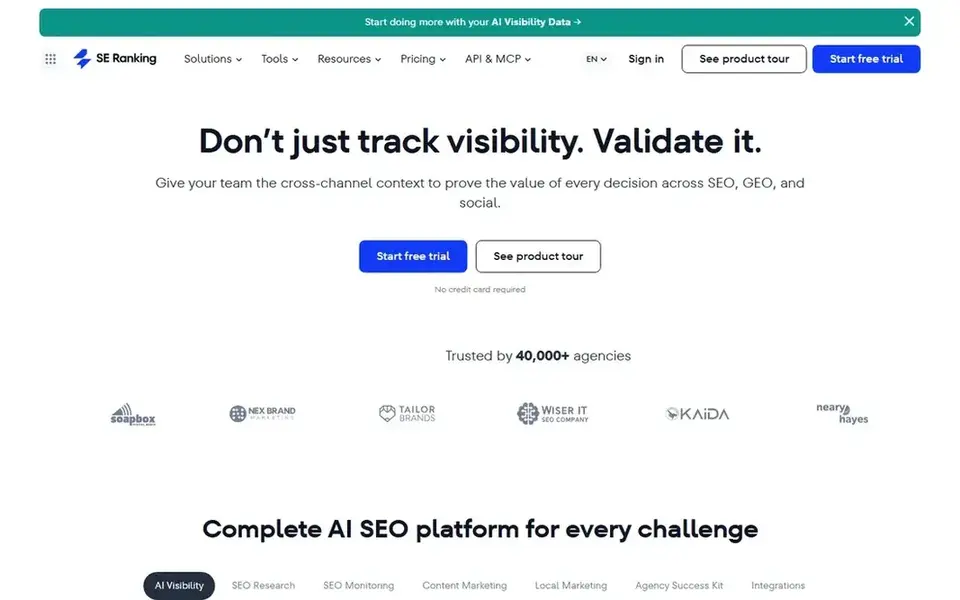
SE Ranking is an SEO platform with local rank tracking and a review management component. A consignment shop can use it to see how it ranks for searches like "secondhand clothing store" in its area and to track whether a competitor down the street is gaining ground.
The review tools let you monitor and respond to reviews, but they are not the core of the product. If your main goal is reputation, this is a heavier purchase than needed. It makes more sense for a shop owner who already does SEO work and wants rankings and reviews in one dashboard.
The platform is broad, so budget time for setup. A single-store resale shop with no marketing help may find it overwhelming.
- Local rank tracking
- competitor checks
- review monitoring add-on
- Reputation features are secondary
- more than a small shop needs
Places Scout is a local SEO and rank tracking tool aimed at agencies and advanced users. It shows how a business ranks across a grid of locations, which is useful if you want to know how visible a consignment shop is in different neighborhoods of a city.
For reputation management, it is not the main event. It does not send review requests or manage listings in the way a review platform does. Its value is measurement: you can see whether changes to your Google Business Profile or website move your local rankings.
Most consignment shops should skip it unless they have an agency or a marketing-savvy owner who wants detailed rank data. The interface assumes some technical comfort.
- Detailed local rank tracking
- grid-based ranking views
- competitor analysis
- Technical interface
- not a review request tool
How I chose
I built this list from vendor documentation and public sources, not from hands-on testing. I read each vendor's own description of its features, checked what the product is designed to do, and matched that against how a consignment shop operates: taking in items, paying out sellers, selling secondhand goods and relying on walk-in trust. I did not run trials or measure results for any shop.
I also weighed limits. A tool that is strong on reviews but weak on listings is a poor fit for a shop with wrong hours across directories, and a heavy enterprise suite is a waste for a single storefront. I left out vendors whose sites I could not verify and kept the list to products that are currently operating, so you can check each one yourself before deciding.
What to check before you buy
- Confirm the tool can send review requests to every customer, not just the ones you expect to be happy, because selective requests break Google's review policies.
- Check whether it supports Google Business Profile directly, since that profile is where most consignment shop searches start.
- Ask how it handles multiple locations if you plan to open a second shop or run a pop-up.
- Look at whether review replies can be managed from one inbox, which saves time at the counter.
- Confirm the tool can import customers from your point-of-sale or consignment software rather than requiring manual entry.
- Read the contract terms for cancellation and data export so you are not stuck if the shop changes direction.
Frequently asked questions
Do consignment shops really need reputation software?
Not always. A single shop with steady foot traffic can ask for reviews at the counter and reply manually. Software helps when you want consistent requests after every payout and sale, when reviews arrive on several sites, or when wrong hours and addresses keep appearing in search results. Start with the problem you have before buying.
Can I ask only happy customers for reviews?
No. Google's review policies prohibit selectively soliciting positive reviews. You should invite all customers the same way and let them decide what to write. A tool that lets you filter who gets an invitation based on expected satisfaction puts your profile at risk, so choose software that sends requests consistently.
Does review software also fix my Google Maps hours?
Some tools do, some do not. Platforms built around listings, like Synup, can correct business details across directories. Review-first tools like Grade.us focus on invitations and replies. If wrong hours are your main issue, pick a tool with listing management or handle the profile directly in Google Business Profile.
What about consignment sellers who leave negative comments about payout timing?
Reply publicly and politely, explain your payout schedule, and move the details to a private conversation if needed. A calm reply shows other sellers how you handle questions. Reputation software helps by putting all reviews in one inbox so you notice them quickly, but the reply itself still needs a human who knows your consignment terms.
Is a free plan enough for a small shop?
It depends on volume. Free plans and trials are useful for testing whether you will actually use the tool. Most shops that send regular review requests and manage listings will need a paid plan, but checking the free option first tells you whether the interface fits how you work before you commit.
Sources
See where you really rank - block by block
ProMapRanker scans Google Maps across a grid of your service area. Simple monthly plans from $19, white-label on every plan.
Start freeBrowse all guides
← Best Reputation Management Software for Bike Rental Shops in 2026Best Reputation Management Software for Drama Schools in 2026 →
 best reputation management software for bagel shops
Best Reputation Management Software for Bagel Shops in 2026
A practical guide to the best reputation management software for bagel shops in 2026, covering review requests, replies, listings and local rank tracking.
Read → best local seo tools for sealcoating companies
Best Local SEO Tools for Sealcoating Companies in 2026
A practical guide to the best local SEO tools for sealcoating companies in 2026, covering listings, reviews, rank tracking and call tracking.
Read → best local seo tools for juice bars
Best Local SEO Tools for Juice Bars in 2026
A practical guide to the best local SEO tools for juice bars in 2026, covering listings, reviews, rank tracking and Google Business Profile management.
Read → done for you local seo service
The Done-For-You Local SEO Service: What You Get and When to Buy
What a done-for-you local SEO service includes, who it's for, and when it beats DIY.
Read → local seo for bail bonds companies
Local SEO for Bail Bonds Companies
A local SEO guide for bail bonds companies: Google Business Profile setup, reviews, and 24/7 urgent-search local SEO for bail bondsmen.
Read → local seo for flooring companies
Local SEO for Flooring Companies
A local SEO guide for flooring companies: Google Business Profile setup, reviews, and showroom and installation local SEO.
Read →More in Local SEO & Google Maps · All guides A to Z by date · Latest guides