 ProMapRanker
Best Rent Apps in 2026: 8 Apps Compared

Key takeaways
- TurboTenant is our pick for independent landlords who want to start free and add leases, screening and rent collection in one place.
- Avail is the strongest free upgrade path for small portfolios, with next-day deposits on its paid tier.
- RentRedi suits landlords who want one flat price no matter how many units they add.
- Tenant fees matter as much as landlord fees, so check who pays for ACH and card payments before you choose.
Quick comparison
| Pick | Great for | Pricing starts at | Free tier | |
|---|---|---|---|---|
 TurboTenant | Free start for independent landlords | Free | Yes | Visit |
 Avail | Free plan with fast paid deposits | Free | Yes | Visit |
 RentRedi | Flat price for unlimited units | $5 per month | No | Visit |
 Baselane | Rent collection plus banking | Free | Yes | Visit |
 Innago | Fully free management tools | Free | Yes | Visit |
 Apartments.com | Free rent collection with listings | Free | Yes | Visit |
 Zillow Rental Manager | Free ACH collection | Free | Yes | Visit |
 DoorLoop | Growing portfolios and accounting | $69 per month | No | Visit |
The best rent apps
We compared official feature pages, pricing pages, app store listings and public reviews, with a focus on rent collection, autopay, late fees, tenant portals and total fees.
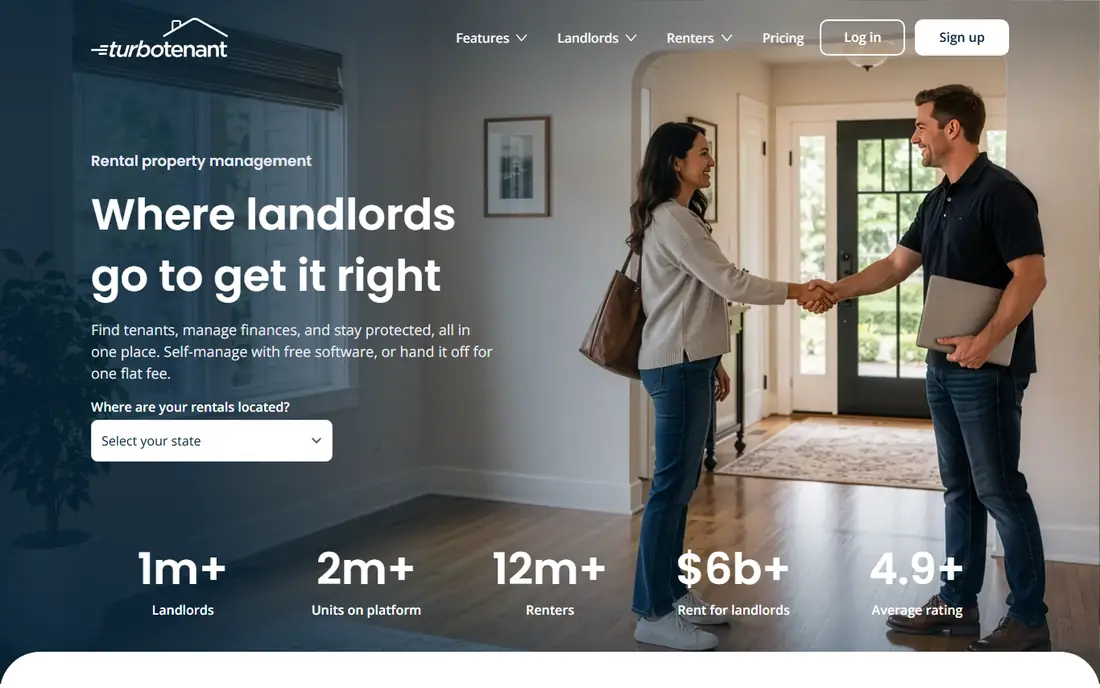
TurboTenant is the easiest free start for a landlord with a few units. The free tier covers listings, rental applications, tenant screening, online rent collection and maintenance requests, which is more than many paid tools offer at entry level. Automated reminders help tenants pay on time without a landlord chasing each payment by hand.
Paid plans add value in steps. Essentials is listed at $12.42 per month billed annually for smaller portfolios, and Pro at $16.58 per month billed annually, with prices rising for larger unit bands. Those tiers add unlimited leases, e-signatures, faster payouts and accounting tools. Tenants pay an ACH fee on the free tier, so check the current fee on the TurboTenant site and decide whether a paid plan that waives it is worth the cost.
- Free listings, applications, screening and rent collection
- Automated reminders
- Lease tools included
- Paid plans rise with unit bands
- Full accounting sits on paid tiers
- ACH fee waiver needs a paid plan
Avail suits landlords who want a guided process from listing to lease to rent collection. The free Unlimited plan covers listings, applications, leases and rent payments, with a clear upgrade path when faster deposits or extra tools matter. Its workflow feels more hand-holding than a bare payment link, which helps a first-time landlord.
Unlimited Plus is $9 per unit per month and adds next business day deposits, waived ACH fees and extra features. That per-unit price is fine for one or two units, but it grows quickly past a handful of doors. Tenants pay $2.50 per ACH payment on the free tier in recent comparisons, so confirm the current fee before you promise tenants a free payment route.
- Free Unlimited plan for landlords
- Guided leasing workflow
- Listings syndication included
- Plus price is per unit, so it adds up fast
- ACH fee on free tier
- Some features need the paid tier
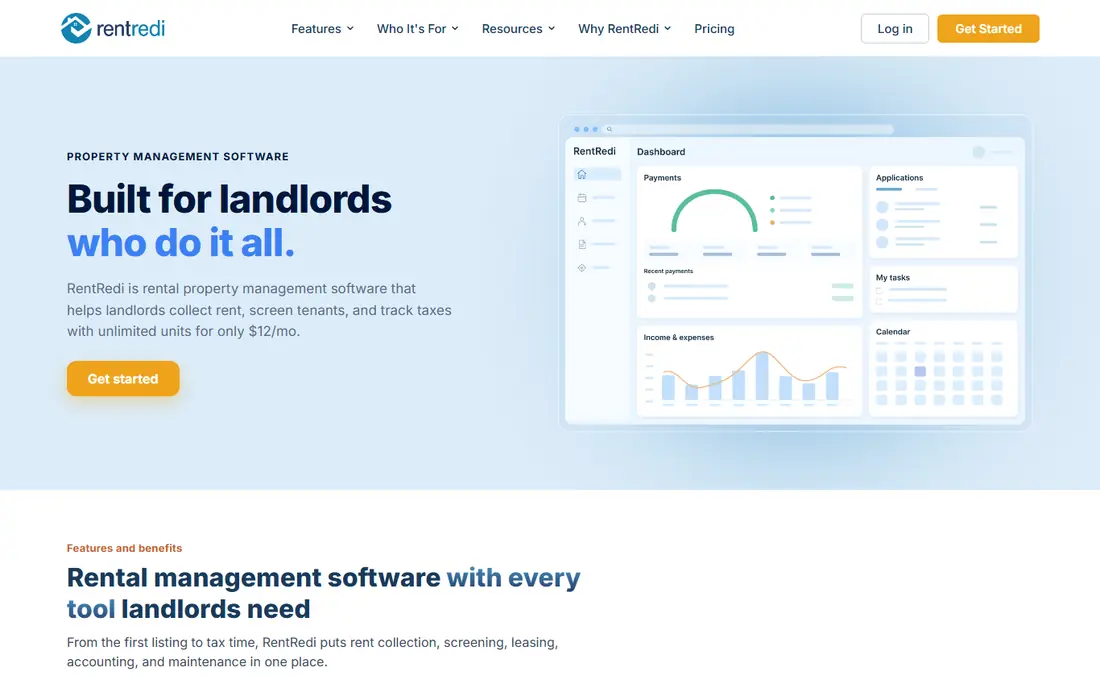
RentRedi appeals to landlords who dislike per-unit maths. One subscription covers unlimited properties and tenants, so the cost stays the same as a portfolio grows from five units to fifty. Its mobile apps are strong, with rent collection, autopay, late fees, maintenance requests and a tenant portal in the core product.
The entry Start plan is listed at $5 per month, with Grow at $12 per month billed annually, or $29.95 month to month, adding screening, leases, listings and maintenance. There is no free forever tier, so budget for a subscription from day one. Cash payments at retail stores are a useful extra for tenants without a bank account, though fees and limits apply.
- Flat pricing with unlimited units
- Mobile apps for landlords and tenants
- Cash payments at retail stores
- No permanent free tier
- Screening and leases sit on higher tiers
- Tenant transaction fees still apply
Baselane is the pick when rent collection and bookkeeping are the same job. It pairs a free banking account with rent collection, so income is tagged by property as it arrives and tax reports are easier at year end. Automated reminders, late fees and a tenant portal cover the collection side, while the banking side handles the record keeping.
The free tier covers the core collection and banking tools, with a Smart plan around $20 per month billed yearly for fuller features in recent comparisons. Card payments still carry a fee, and deposits can take a few business days, so cash flow planning matters. For landlords who dread spreadsheets, Baselane removes a step that other rent apps leave to accounting software.
- Free rent collection with a banking account
- Income tracking by property
- Bookkeeping and tax reports
- Banking features suit US landlords best
- Card fees still apply
- Some advanced tools need a paid Smart plan
Innago is a strong free alternative to TurboTenant and Avail. It offers rent collection, listings, tenant screening, leases and maintenance requests without a landlord subscription, which makes it attractive for a landlord who wants management tools at no monthly cost. The interface is plain and easy to learn, which suits a small portfolio.
The limits appear when a portfolio needs deeper accounting, owner reporting or large portfolio automation. Innago covers the core jobs well, but professional managers will likely outgrow it. Check current tenant payment fees on its site, since those fees, not a landlord subscription, are how the free tier is funded.
- Free rent collection and management tools
- Listings, screening and maintenance included
- No per-unit charge at entry
- Fewer advanced accounting tools than larger platforms
- Support and feature depth vary
- Tenant fees still apply
Apartments.com suits landlords who already list there and want rent collection without another subscription. Landlords pay nothing for basic rent collection, and tenants can pay by bank transfer free in recent comparisons. That simplicity is the point: list the home, collect rent, and track payments in one place.
The trade is management depth. You do not get the full lease, screening, maintenance and accounting suite of TurboTenant or DoorLoop, and automatic late fees are not part of basic collection. Deposit timing can also be slower than paid tools that offer next-day payouts. Use Apartments.com for basic collection, and add a management tool if you need leases and maintenance in the same system.
- Free rent collection for landlords
- Listings reach a large renter audience
- Simple tenant payment flow
- No automatic late fees in basic collection
- Fewer management tools than dedicated platforms
- Deposit timing can be slow
Zillow Rental Manager is a practical free choice for landlords who list on Zillow. Rent collection by bank transfer costs landlords nothing and tenants nothing, which is rare, and the tool also handles deposits, utilities and one-time charges. That makes it useful for a landlord who wants a simple, no-fee ACH route.
Card payments are the exception, with tenants paying a percentage fee and a flat debit fee in recent comparisons, so encourage bank transfer where possible. Payouts can take up to five business days, and there are no automatic late fees, so late payers still need a manual follow-up. For a small landlord with reliable tenants, those limits are easy to live with.
- Free for landlords on ACH
- Tenants pay nothing by bank transfer
- Deposits, utilities and one-time charges supported
- Card payments cost tenants extra
- Money can take up to five business days to arrive
- No automatic late fees
DoorLoop is the step up when free tools stop being enough. It covers rent collection, leasing, maintenance, accounting and owner reporting in one system, with a depth that suits growing portfolios and small property management teams. That accounting strength is the reason to pay, since free tools often leave bookkeeping to another app.
Pricing starts at $69 per month for Starter in recent comparisons, with higher tiers for larger portfolios, and there is no free tier. That cost is hard to justify for a single unit, but it becomes reasonable as units and owner reporting grow. Expect a longer setup than a free tool, and check current plan minimums on the DoorLoop site before signing.
- Strong accounting and owner reporting
- Maintenance and leasing workflows
- Scales to larger portfolios
- No free tier
- Minimum monthly cost is high for one unit
- Setup takes longer than free tools
How we picked these
We compared official feature pages, pricing pages, app store listings and public reviews for rent apps live in October 2026. We favoured apps with a clear rent collection flow, a tenant portal, autopay or reminders, and stated fees for landlords and tenants. We did not claim hands-on testing, and we treated vendor pricing pages as the final authority, since fees and plan minimums change.
What to check before you move tenants to a rent app
Start with total fees, not just the landlord price. A free landlord plan can still charge tenants for ACH or card payments, and those fees affect whether tenants pay on time. Add up landlord subscription, tenant ACH fees, card percentages and any late fee rules, then compare that total across two or three apps for your unit count.
Next, check payout timing and late fee automation. Next-day deposits help cash flow, but they often sit behind a paid tier. Automatic late fees save awkward conversations, yet local rules may limit them, so check your state and lease terms before turning them on. A tenant portal with payment history also cuts down on disputes, since both sides can see the same record.
Finally, test the tenant experience. Ask a tenant to pay a test amount, or at least walk through the signup flow yourself, and check how long it takes and what fees appear. If the flow is confusing or the fee is a surprise at checkout, tenants will delay payment. The best rent app is the one tenants actually use on time, not the one with the longest feature list.
Frequently asked questions
What is the best rent app for a landlord with one unit?
TurboTenant, Avail and Innago all offer free rent collection for a single unit, so start with one of those. TurboTenant is our pick for the broadest free toolset, while Avail adds a clearer upgrade to next-day deposits. Avoid a paid platform like DoorLoop until the portfolio grows enough to need its accounting depth.
Do tenants have to pay to use a rent app?
It depends on the app and payment method. Bank transfer is often free or low cost, while card payments usually carry a percentage fee paid by the tenant or the landlord. Check who pays each fee on the vendor site, and tell tenants the fee before they sign up, so there are no surprises at payment time.
Can a rent app report rent payments to credit bureaus?
Some rent apps and add-ons offer rent reporting, but it is not standard in every free plan, and terms vary by provider. Check the vendor site for current reporting options, fees and which bureaus are covered. Rent reporting can help a tenant build credit, but it can also record late payments, so both sides should understand the terms.
Is online rent collection safe?
Reputable rent apps use bank level payment processing, encrypted connections and tenant portals with payment records. Safety still depends on using strong passwords, two factor authentication where offered, and checking statements. Never send rent by an unprotected link or a payment method a landlord has not confirmed in writing.
Can I collect rent in cash through an app?
RentRedi offers cash payments at retail stores, which is the clearest cash route in this list. Most other apps focus on bank transfer and card payments, with cash handled outside the app. If cash collection matters, confirm store locations, fees and limits on the RentRedi site before relying on it.
Sources
See where you really rank - block by block
ProMapRanker scans Google Maps across a grid of your service area. Simple monthly plans from $19, white-label on every plan.
Start freeKeep reading
 worlds best local seo company
8 Worlds Best Local SEO Companies for Map Pack Growth in 2026
Compare the worlds best local seo company options for Google Business Profile work, citations, reviews, and multi-location rankings and reporting in 2026.
Read → world's best web hosting company
World's Best Web Hosting Company in 2026
Searching for the world's best web hosting company? We compared 10 hosts on price, renewal rates, speed, and support to help you choose well today in 2026.
Read → who's got the best nanny tax services
Who's Got the Best Nanny Tax Services in 2026
We answer who's got the best nanny tax services, comparing full filing, back taxes, software, and pricing so families can handle nanny taxes correctly.
Read →