 ProMapRanker
Best Remote Patient Monitoring Software in 2026

Key takeaways
- The best remote patient monitoring platforms combine cellular devices, a clinician dashboard, alert triage and billing support, not just a device shipment service.
- Cellular devices matter most for older patients, because they transmit readings without home Wi-Fi or smartphone pairing.
- Pricing is usually quoted per patient or per practice, so ask for the full monthly cost including devices, shipping and monitoring staff before signing.
- Software alone does not make a practice HIPAA compliant, and vendors should be asked about their security controls, contracts and data handling in writing.
Quick comparison
| Pick | Great for | Pricing starts at | Free tier | |
|---|---|---|---|---|
 100Plus | Fast setup with no patient cost | Free | Yes | Visit |
 HealthSnap | Chronic care and billing workflows | See website | No | Visit |
 CoachCare | Virtual care plus monitoring | See website | No | Visit |
 CareSimple | Device range and EHR links | See website | No | Visit |
 Optimize Health | Small practices that need billing help | See website | No | Visit |
 Accuhealth | Full-service monitoring support | See website | No | Visit |
 TimeDoc Health | Care management alongside monitoring | See website | No | Visit |
 Rimidi | Clinician dashboard and data trends | See website | No | Visit |
 Biofourmis | Hospital and health system programs | See website | No | Visit |
The best remote patient monitoring platforms
Remote patient monitoring software collects readings from devices at home, such as blood pressure cuffs and scales, and routes them to a care team dashboard with alerts and billing records. We compared device options, EHR integration, alert workflows, billing support and the level of staffing help each vendor offers.
A plain note on privacy: software alone does not make a practice HIPAA compliant. Compliance also depends on the practice's own policies, staff training, access controls and the agreements signed with each vendor, so ask for those details during procurement.
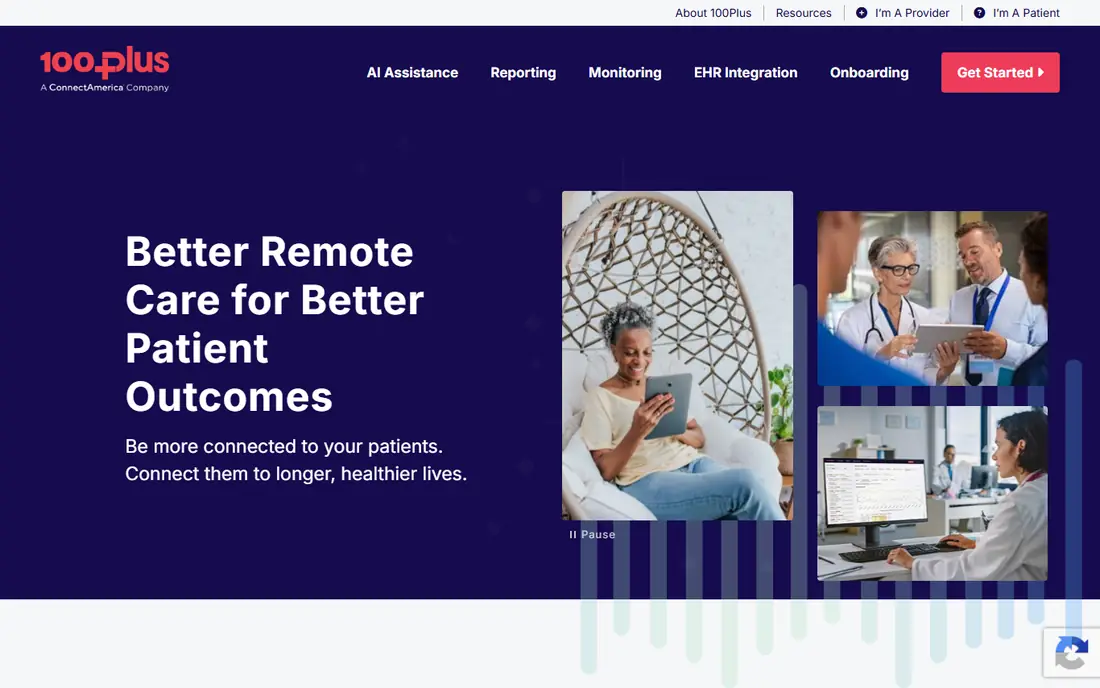
100Plus is our pick for practices that want to start fast without asking patients to pay for devices. The vendor ships cellular blood pressure cuffs, glucose monitors, scales, thermometers and pulse oximeters to patients' homes, and its enrollment service handles outreach and education. Readings flow to a dashboard with alerts when a patient crosses a set threshold.
The catch is control. Practices that want to run every step themselves, or that need unusual device types, may find the packaged model less flexible than a platform they configure alone. For a typical primary care practice tracking blood pressure, weight and glucose, though, the low friction is the point.
- Cellular devices shipped to patients with no monthly device bill stated by the vendor
- White-glove enrollment help
- Alerts for at-risk patients
- Vendor-led model may suit some practices less than a fully self-run dashboard
- Device range is focused on common chronic conditions
HealthSnap suits practices that want monitoring and chronic care management in one workflow rather than two separate tools. It tracks patient readings, logs clinician time for billing, and connects with a wide range of EHR systems. That combination matters because billing documentation is often where monitoring programs lose money.
The trade-off is price transparency. HealthSnap does not publish a standard rate, so a practice must request a quote and ask what is included: devices, shipping, platform fees and any monitoring staff. Get that breakdown in writing before comparing it with a per-patient rival.
- Built around remote monitoring plus chronic care management
- Automated time tracking for billing
- Broad EHR integration claims
- Pricing is quote-based, so total cost is hard to compare upfront
- Setup time varies with EHR complexity
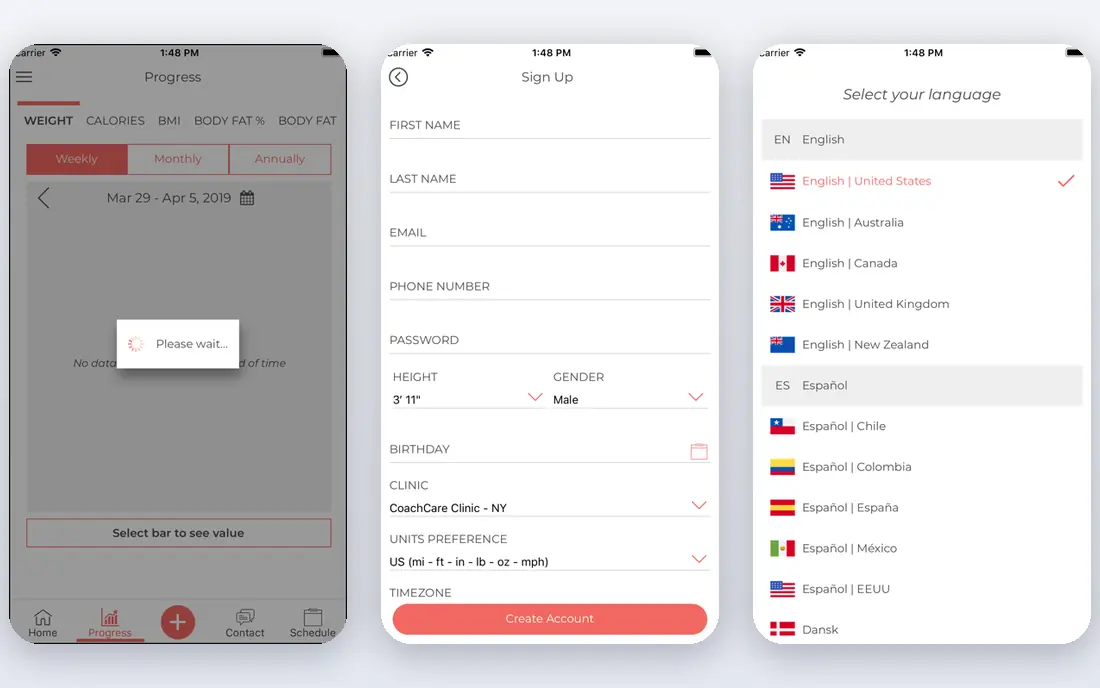
CoachCare is a good fit for practices that already run virtual visits and want monitoring inside the same patient relationship. Patients get devices and an app, clinicians get a dashboard, and the vendor can add coordinator help for outreach and follow-up. That mix suits weight management, hypertension and other programs where coaching matters as much as readings.
The catch is that the full service can cost more than a software-only tool, and the exact split between platform and staffing should be spelled out in the contract. Ask which tasks the vendor's coordinators handle and which tasks stay with your own team.
- Combines remote monitoring with virtual visits and messaging
- Coordinator support available
- Device and app workflows for patients
- Pricing is quote-based
- Some features are sold as added services rather than in the base platform
CareSimple stands out for practices that need more than the standard four devices, or that want readings written back into the patient chart rather than viewed in a separate portal. Its platform supports a broad device set and connects with major EHR systems, which cuts double documentation for clinicians.
The honest catch is integration work. A write-back connection is not a switch you flip, and the timeline depends on the practice's EHR and IT support. Budget time for testing, and confirm exactly which data points flow back into the chart before go-live.
- Wide cellular device range
- EHR integration with write-back in some setups
- Patient app and clinician dashboard
- Quote-based pricing
- Implementation effort depends on EHR and device mix
Optimize Health is aimed at small and mid-size practices that need monitoring to pay for itself through proper billing. It tracks the time and activity needed for remote monitoring codes, helps with device logistics, and gives clinicians an alert dashboard. For a practice without a large billing team, that documentation support is often the deciding factor.
The trade-off is scale and transparency. Pricing is quoted per practice, and a large health system should check whether the platform handles multi-site reporting and governance the way an enterprise tool would. For a single clinic or small group, the fit is strong.
- Strong focus on billing documentation and reimbursement workflows
- Clinician dashboard with alerts
- Device logistics support
- Quote-based pricing
- Smaller vendor than some health-system rivals, so enterprise buyers should check scale
Accuhealth suits practices that want monitoring help beyond software, including staff who review alerts and support patients. That model helps clinics that cannot hire dedicated monitoring nurses, and its billing tools keep an audit trail for claims. Devices cover the common chronic conditions, with cellular connectivity so patients do not need Wi-Fi.
The catch is cost structure. A full-service contract bundles software and staffing, so a practice that already has monitoring staff may be paying twice. Ask for a software-only price alongside the full-service price, then compare like with like.
- Clinical monitoring staff can extend a practice team
- Billing and audit trail tools
- Cellular device options
- Full-service pricing is quote-based
- Practices wanting a software-only tool may pay for staffing they do not need
TimeDoc Health is a good pick for practices that already run chronic care management and want monitoring to feed the same care plans. Its platform links readings, care coordination tasks and billing documentation, so a nurse care manager sees one patient record rather than three tools. That matters when a practice serves many patients with several conditions each.
The trade-off is simplicity. A practice that only wants blood pressure readings and alerts may find the wider care management screens more than it needs. If the practice plans to grow into full care management, though, starting here avoids a later migration.
- Combines remote monitoring with chronic care and principal care management
- Care coordination workflows
- Billing support
- Quote-based pricing
- Dashboard breadth can feel busy for teams that only want simple monitoring
Rimidi suits clinician-led teams that care most about seeing clean patient trends and acting on them. Its dashboard presents readings over time, flags patients who need attention, and connects with EHR systems so data does not sit in a silo. That design fits diabetes, hypertension and cardiometabolic programs where trend lines guide treatment changes.
The catch is staffing. Rimidi is primarily a software platform, so a practice still needs its own team to review alerts and contact patients. Buyers should plan staffing alongside the software, or pair it with a monitoring service if the team is thin.
- Strong clinician-facing dashboard with patient trends
- EHR integration focus
- Supports several device types
- Quote-based pricing
- Less of a full-service staffing offer than some rivals
Biofourmis is the enterprise pick in this list. It is designed for health systems running remote monitoring at scale, including hospital-at-home style programs, with analytics that flag patients whose trends suggest deterioration. Its security and compliance posture is built for large buyers with formal procurement reviews.
The honest catch is fit. A small clinic will likely find Biofourmis too large, too costly and too slow to implement for a simple monitoring program. For a health system that needs governance, scale and analytics across many sites, that same weight becomes an advantage.
- Built for health system and hospital-at-home programs
- Predictive analytics features
- Strong security and compliance focus
- Enterprise pricing and implementation effort
- More than most small practices need
How we picked these
We compared vendor feature pages, device lists, EHR integration descriptions, billing support and staffing models for platforms that actively sell remote patient monitoring in the US. We left out general telehealth tools without a dedicated monitoring dashboard, and we left out consumer wearables that do not feed a clinician workflow. We did not test devices on patients, and we treated vendor claims about outcomes as marketing until a practice can verify them in a pilot.
What to check before you buy
Devices and connectivity
Ask whether devices are cellular, Bluetooth or both, who pays for shipping and replacements, and what happens when a patient has no smartphone or home internet. Cellular devices remove the largest barrier for older patients.
EHR integration depth
Ask whether readings are only viewable in the vendor portal or written back into the chart, and which EHR versions are supported. A read-only link still leaves clinicians copying data by hand.
Alerts and staffing
Ask who reviews alerts, how fast urgent readings are escalated, and what happens overnight and at weekends. A dashboard nobody watches is not a monitoring program.
Billing and total cost
Ask for the full monthly cost per active patient, including devices, shipping, platform fees and any monitoring staff. Then ask how the vendor documents time and activity for billing, and what audit records it keeps.
Frequently asked questions
What is the best remote patient monitoring software for a small practice?
100Plus and Optimize Health are strong starting points for small practices, because 100Plus lowers the setup barrier and Optimize Health focuses on billing documentation. The right choice depends on whether the practice needs enrollment help or billing help more.
What are the best remote patient monitoring platforms for health systems?
Biofourmis and CareSimple suit larger buyers, with Biofourmis aimed at enterprise programs and CareSimple offering broad device and EHR options. Both need a proper procurement review covering security, integration and multi-site reporting.
Does remote patient monitoring software make a practice HIPAA compliant?
No, software alone does not make a practice HIPAA compliant. The vendor's security controls and signed agreements matter, but so do the practice's own policies, staff training, access controls and handling of patient data. Ask vendors for their security documentation and review it with qualified advisers.
How much does remote patient monitoring software cost?
Most vendors quote per patient or per practice and do not publish a standard price, so costs vary widely. Ask for the full cost including devices, shipping, platform fees and staffing, and compare that total rather than the headline platform fee alone.
Do patients need a smartphone for remote patient monitoring?
Not always. Cellular devices transmit readings without a smartphone or home Wi-Fi, which is why they are popular for older patients. Bluetooth devices need a phone or hub nearby, so check the device type before enrolling patients who lack either.
Sources
See where you really rank - block by block
ProMapRanker scans Google Maps across a grid of your service area. Simple monthly plans from $19, white-label on every plan.
Start freeKeep reading
 zscaler alternatives
Best Zscaler Alternatives in 2026
Looking for zscaler alternatives? We compare 9 SASE and zero trust platforms on architecture, data protection, pricing, and fit for your network and team.
Read → zapier alternatives free
Best Zapier Alternatives Free in 2026
Nine automation tools for zapier alternatives free in 2026, all with genuinely free tiers, plus free plan limits, starting prices and upgrade paths explained.
Read → which platform is best for online reputation
Which Platform Is Best for Online Reputation in 2026
Wondering which platform is best for online reputation? We compare 8 review, listing, and response tools for small and multi-location businesses and agencies.
Read →