 ProMapRanker
Best remote medical billing companies in 2026


Independent practices that want EHR plus billing · Pricing starts at: See website
Key takeaways
- athenahealth and Tebra suit independent practices, while R1 RCM and Conifer suit hospitals and health systems.
- Coding depth is the key difference for GeBBS and Omega Healthcare, while Infinx focuses on prior authorisation.
- Remote billing needs a signed business associate agreement, clear data access rules, and US payer call coverage.
- Software alone does not make a practice HIPAA compliant; policies, training, and access controls still matter.
Quick comparison
| Pick | Great for | Pricing starts at | Free tier | |
|---|---|---|---|---|
| athenahealth | Independent practices that want EHR plus billing | See website | No | Visit |
 CareCloud | Practices that want cloud billing and practice tools | See website | No | Visit |
 R1 RCM | Hospitals and large health systems | See website | No | Visit |
 Omega Healthcare | Large providers needing coding and RCM scale | See website | No | Visit |
 Access Healthcare | High-volume claims and denial work | See website | No | Visit |
 GeBBS Healthcare Solutions | Providers needing coding accuracy and RCM depth | See website | No | Visit |
 Conifer Health Solutions | Health systems needing full revenue cycle support | See website | No | Visit |
 Tebra | Small independent and specialty practices | See website | No | Visit |
 Infinx | Practices with prior authorisation and specialty billing needs | See website | No | Visit |
The best remote medical billing companies
We compared remote billing companies on service scope, practice size fit, specialty coverage, denial handling, and contract clarity. Remote does not mean hands-off: you still own coding approvals, payer decisions, and patient billing policy. Ask for a practice-sized quote, a payer sample, and monthly reporting before you sign. Note: software alone does not make a practice HIPAA compliant.
For many readers, athenahealth is the first name that comes up, and the reason is practical rather than flashy. athenahealth offers athenaOne, a cloud EHR, practice management, and revenue cycle service for independent practices. athenahealth suits a practice that wants billing tied closely to scheduling, charting, and patient engagement, rather than a standalone billing vendor. Its network data can help with payer rules and denial patterns. Plan for implementation time, data migration, and staff training, and confirm the billing service scope in writing. Note: software alone does not make a practice HIPAA compliant; your policies, access controls, training, and a signed business associate agreement still matter. Before you commit, confirm the current price, limits, and support terms on the official site, and check the trade-off noted above against your main use for medical billing.
- Cloud EHR and network billing in one system
- Denial and payment tools
- Large provider network
- Full system change can be a large project
- Pricing is custom
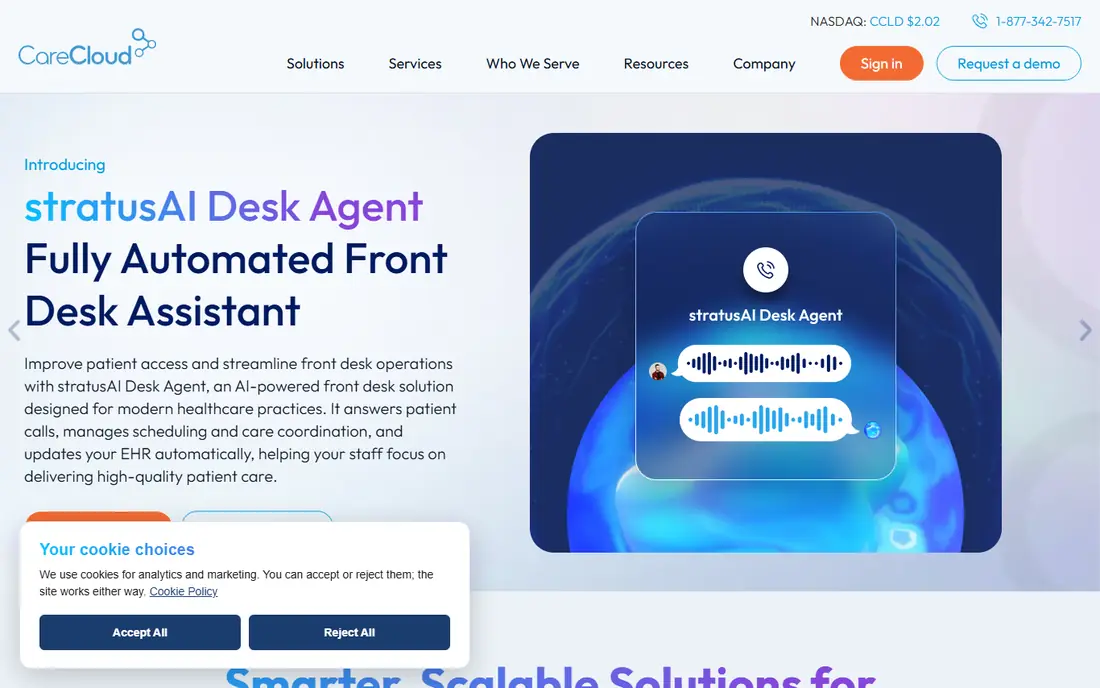
Start with CareCloud if you want a clear, documented way to handle the core job without extra guesswork. CareCloud provides cloud-based medical billing, practice management, and EHR tools for multi-specialty practices. CareCloud is a practical pick when you want a cloud system your remote billing team can use from one place, with claims, payments, and reporting in the same workflow. Its specialty templates help with common visit types. Check the billing service versus software-only options, and confirm who handles denials and patient statements. Before you commit, confirm the current price, limits, and support terms on the official site, and check the trade-off noted above against your main use for medical billing.
- Cloud billing and practice management
- Specialty workflows
- Reporting and patient tools
- Custom pricing
- Some practices need help with migration
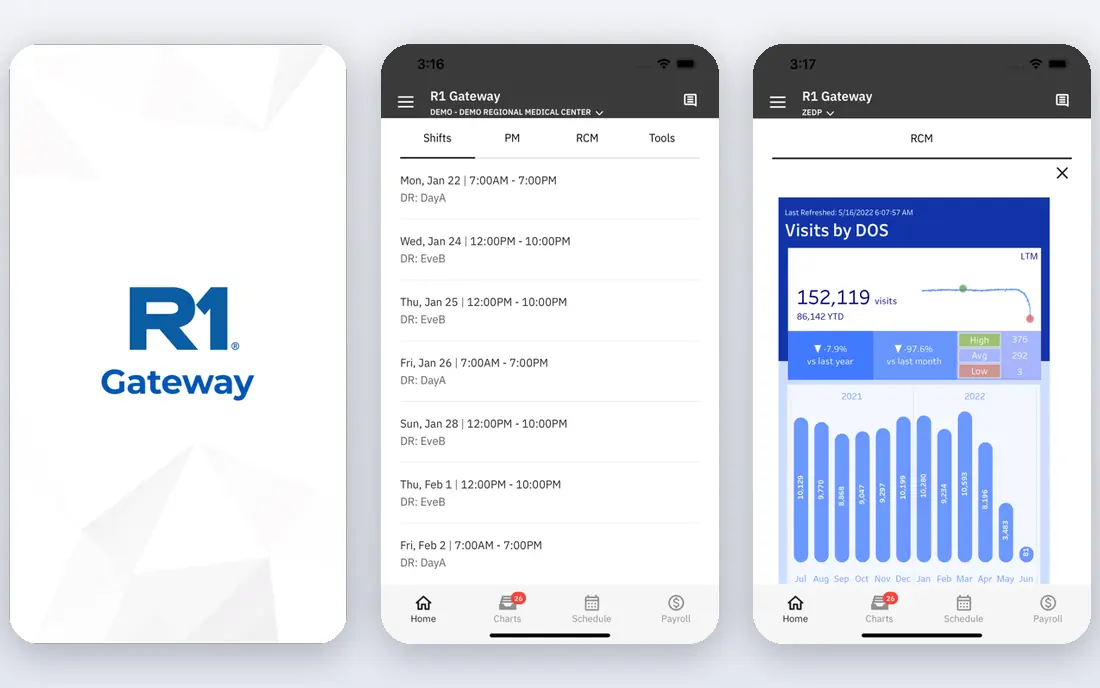
Consider R1 RCM when the main problem is scale, because its setup is built around larger and repeat visits. R1 RCM provides end-to-end revenue cycle management for hospitals and large health systems, including coding, denial management, and analytics. R1 suits a large provider that needs a full revenue cycle partner, not a small billing add-on. Its scale and technology suit complex payer mixes and high claim volumes. Smaller practices should check minimum scale and implementation scope early, since this is not a light-touch service. Confirm governance, reporting, and exit terms in the contract. Before you commit, confirm the current price, limits, and support terms on the official site, and check the trade-off noted above against your main use for medical billing.
- End-to-end revenue cycle for large providers
- Coding, denials, and analytics
- Enterprise scale
- Enterprise focus means a high minimum scale for smaller practices
Look closely at Omega Healthcare if you care more about control and reporting than about a low headline price. Omega Healthcare provides revenue cycle, coding, and analytics services for providers and health plans at large scale. Omega is a strong option for a provider with high coding volume or many specialties, where coding accuracy and throughput matter daily. Its teams cover a wide set of specialties and payer rules. Ask for specialty coverage, quality checks, turnaround times, and how coding questions are escalated to your clinicians. Before you commit, confirm the current price, limits, and support terms on the official site, and check the trade-off noted above against your main use for medical billing.
- Large coding and RCM workforce
- Specialty coding depth
- Automation and analytics
- Large-vendor onboarding can be formal and slower than a boutique firm
A good case for Access Healthcare is a team or household that wants support to be easy to reach when plans change. Access Healthcare provides claims processing, coding, denial management, and revenue cycle automation for providers. Access Healthcare suits a practice or group with steady high claim volume that needs denial follow-up done promptly and reported clearly. Its automation can speed routine steps, while staff handle exceptions. Confirm team locations, US payer call hours, data access, and the business associate agreement before sharing patient data. Before you commit, confirm the current price, limits, and support terms on the official site, and check the trade-off noted above against your main use for medical billing.
- High-volume claims processing
- Denial management
- Automation and reporting
- Global delivery model needs clear data and access controls in the contract
GeBBS Healthcare Solutions
Great for: Providers needing coding accuracy and RCM depth
Turn to GeBBS Healthcare Solutions when you need a familiar, widely used option with a long public track record. GeBBS Healthcare Solutions provides medical coding, clinical documentation improvement, and revenue cycle services for providers. GeBBS is a good fit when coding accuracy is the main risk, such as in surgical, radiology, or multi-specialty groups. Its coding depth can reduce denials linked to code errors. Ask for coding quality metrics, audit methods, and how coder feedback reaches your clinical team. Before you commit, confirm the current price, limits, and support terms on the official site, and check the trade-off noted above against your main use for medical billing.
- Coding, clinical documentation, and RCM services
- Specialty depth
- Quality focus
- Enterprise scale may be more than a very small practice needs
Conifer Health Solutions
Great for: Health systems needing full revenue cycle support
Try Conifer Health Solutions if your shortlist is stuck between a cheap starter option and a full enterprise contract. Conifer Health Solutions provides revenue cycle management, patient access, and related services for health systems and hospitals. Conifer suits a health system that wants patient access, billing, and collections handled under one partner with hospital experience. Its services cover the full cycle from scheduling support to payment follow-up. Confirm the scope for each site, the reporting cadence, and how patient billing questions are handled. Before you commit, confirm the current price, limits, and support terms on the official site, and check the trade-off noted above against your main use for medical billing.
- Patient access, billing, and value-based care support
- Large health system experience
- Health system focus may not suit a solo practice
Put Tebra on the list when integration with tools you already use matters as much as the core feature. Tebra provides a cloud platform for independent practices, with EHR, practice management, and access to managed billing partners. Tebra suits a small practice that wants modern cloud tools and a managed billing option without moving to a large enterprise system. Its partner model can match you with a billing team, but you should vet that partner directly. Ask who handles claims, denials, and patient calls, and what reports you will receive each month. Before you commit, confirm the current price, limits, and support terms on the official site, and check the trade-off noted above against your main use for medical billing.
- Cloud EHR and billing tools for small practices
- Managed billing partner network
- Patient engagement
- Managed billing is via partners, so service quality can vary by partner
We include Infinx because it solves one narrow problem well, even though it is not the cheapest choice. Infinx provides prior authorisation automation, coding support, and revenue cycle analytics for specialty and telehealth providers. Infinx is worth a look when prior authorisations delay care or payment, especially in behavioural health, radiology, or specialty care. Its automation can track authorisation status and reduce manual follow-up. Check integration with your EHR, the payer coverage, and how exceptions are handled by staff. Before you commit, confirm the current price, limits, and support terms on the official site, and check the trade-off noted above against your main use for medical billing.
- Prior authorisation automation
- Specialty billing
- Revenue cycle analytics
- Automation value depends on payer mix and system integration
How we picked these
We compared official feature pages, pricing pages, app store listings where relevant, privacy policies, and public reviews. We kept only companies and services that are live in October 2026 and that fit the topic directly, and we dropped any option whose current price or core offer could not be checked on its own site. Where a price was not published, we wrote See website rather than guessing a figure. We also favoured options with a clear support route, documented limits, and a public track record, and we noted a real weakness for each pick so the list is useful for a shortlist, not just a ranking.
How to Outsource Medical Billing Safely
Check fit before price
Start with the job you must complete in the first 30 days, then match that job to one or two options here. A low price helps only if the plan covers your volume, your locations, and your support needs.
Ask for terms in writing
Get the current price, contract length, cancellation terms, and support hours in writing before you sign. For custom pricing, ask what changes the quote, such as volume, seats, destinations, or extra services.
Run a small test first
Use a trial, a pilot, or a single order or trip to check billing, support response, and reporting. If that test feels slow or unclear, that is useful evidence, even if the sales page looked strong.
Frequently asked questions
How do remote billing companies charge?
Many charge a percentage of collections, often in the range published by industry guides, while others charge per claim or a monthly fee. Ask for the full fee, including setup, software, and patient statement costs, and check what happens in low-collection months.
What should a billing contract include?
It should name the services, the systems used, turnaround times, denial follow-up steps, reporting, data security, team locations, and exit terms. A signed business associate agreement is also needed before patient data is shared.
Who owns coding decisions?
Your clinicians own clinical coding decisions, even when a vendor drafts codes or handles claims. Confirm the approval step for codes, the audit process, and how questions are sent back to your team.
How do I check billing quality?
Ask for clean claim rate, denial rate, days in accounts receivable, and collection rate, with definitions for each metric. Review monthly reports and a sample of denied claims, rather than accepting a single headline figure.
Can I keep my current EHR?
Many vendors work in your existing system, while others require their own platform. Confirm system access, data ownership, and how you get your data back if you leave, before you sign.
Sources
See where you really rank - block by block
ProMapRanker scans Google Maps across a grid of your service area. Simple monthly plans from $19, white-label on every plan.
Start freeKeep reading
 worlds best local seo company
8 Worlds Best Local SEO Companies for Map Pack Growth in 2026
Compare the worlds best local seo company options for Google Business Profile work, citations, reviews, and multi-location rankings and reporting in 2026.
Read → world's best web hosting company
World's Best Web Hosting Company in 2026
Searching for the world's best web hosting company? We compared 10 hosts on price, renewal rates, speed, and support to help you choose well today in 2026.
Read → who's got the best nanny tax services
Who's Got the Best Nanny Tax Services in 2026
We answer who's got the best nanny tax services, comparing full filing, back taxes, software, and pricing so families can handle nanny taxes correctly.
Read →