 ProMapRanker
Best Reliable Database Software in 2026

Key takeaways
- PostgreSQL is our pick for most teams that need proven durability, with ACID transactions, replication and point-in-time recovery.
- Oracle Database and Microsoft SQL Server suit enterprises that need vendor support, advanced recovery and high-availability features in one contract.
- MySQL and MariaDB offer dependable, widely supported relational storage for web and business applications at low cost.
- MongoDB and CockroachDB cover distributed and document workloads where replica sets and multi-region survival matter, while SQLite suits embedded use.
Quick comparison
| Pick | Great for | Pricing starts at | Free tier | |
|---|---|---|---|---|
 PostgreSQL | Proven durability for most teams | Free | Yes | Visit |
 Oracle Database | Enterprise recovery and support | See website | Free trial | Visit |
 Microsoft SQL Server | Enterprise Windows and mixed workloads | See website | Free trial | Visit |
 MySQL | Dependable web and business storage | Free | Yes | Visit |
 MariaDB | Open-source MySQL-compatible storage | Free | Yes | Visit |
 MongoDB | Document data with replica sets | Free | Yes | Visit |
 CockroachDB | Multi-region distributed survival | See website | Free trial | Visit |
 SQLite | Embedded, single-file reliability | Free | Yes | Visit |
The best reliable database software
Reliability here means something specific: a committed transaction stays committed after a crash, a failed server does not lose recent work, and a backup can actually be restored. Speed matters, but it is not the test in this article. The test is whether your data is still there, consistent and recoverable, after power loss, disk failure or a bad deployment.
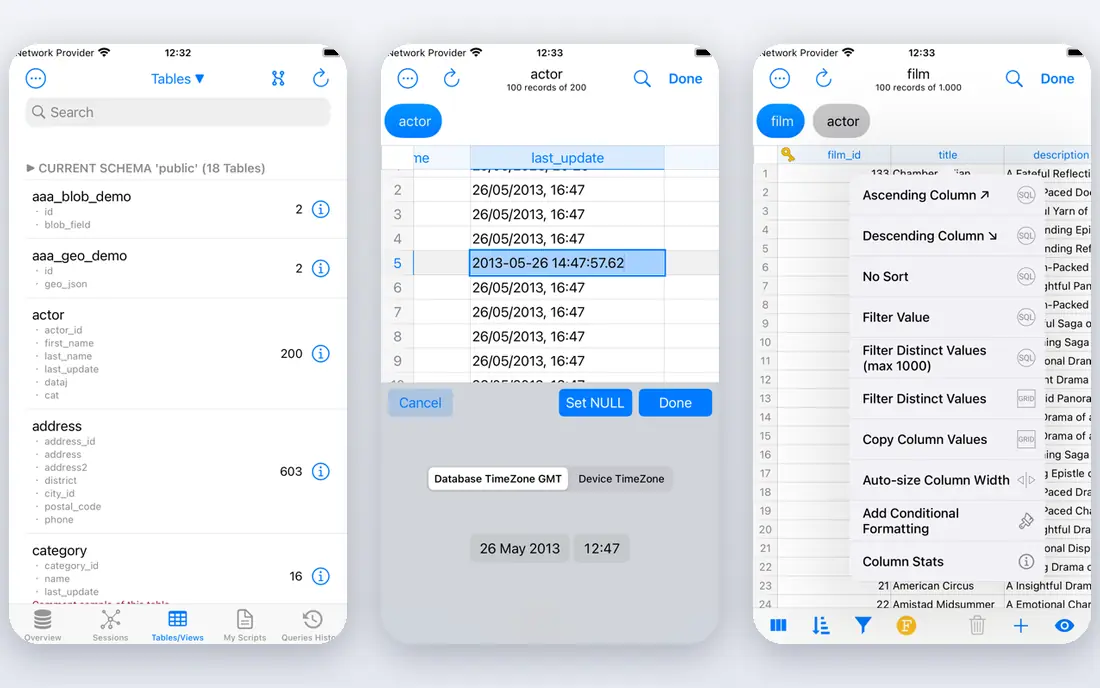
PostgreSQL is the safest default for teams that need a database they can trust with important data. It enforces ACID properties, so a transaction either completes fully or not at all, and its write-ahead log lets a system recover committed work after a crash. Streaming replication copies data to standby servers for failover, while logical replication supports read scaling and upgrades with less downtime.
The work is in the setup, not the theory. Failover, backup testing and replication lag monitoring all need attention, and PostgreSQL does not scale out across many servers as simply as a distributed database built for that job. For a single primary with standbys, though, its track record, tooling and community support make it the reliability pick for most applications, from finance to inventory to customer records.
- ACID transactions
- Streaming and logical replication
- Point-in-time recovery
- High-availability setup needs care
- Horizontal scaling needs extra tooling
Oracle Database is the enterprise choice when recovery guarantees and vendor support are part of the contract, not just a hope. Data Guard maintains standby databases for failover, redo logs protect committed transactions, and flashback tools help recover from logical errors such as a bad update. Partitioning and online redefinition also let large tables change with less disruption.
The cost and complexity are real. Licensing is per core or per user under negotiated terms, and running Oracle well needs experienced database administrators. Smaller teams will get similar durability from PostgreSQL for far less money. Large organisations that already run Oracle, or that need its specific recovery and support terms, will find the premium easier to justify.
- Data Guard for standby protection
- Flashback and recovery tools
- Long enterprise track record
- Licence and support costs are high
- Complexity needs skilled database staff
Microsoft SQL Server suits organisations that already run Microsoft infrastructure and want availability built into a familiar stack. Always On availability groups keep secondary replicas ready for failover, the transaction log supports point-in-time recovery, and SQL Server Management Studio gives administrators one place to watch replication, logs and backup health. That tooling shortens the learning curve for Windows-focused teams.
Edition matters more here than in open-source databases. High-availability features, online operations and advanced recovery options vary by edition, so buyers must check that the edition they price actually includes the features their recovery plan depends on. Licence costs also rise with cores, so model the full server estate, not just one database, before committing.
- Always On availability groups
- Transaction log recovery
- Strong tooling in SSMS
- Licence costs rise with cores
- High-availability features vary by edition
MySQL, with its InnoDB storage engine, is a dependable workhorse for web applications, content systems and business software. InnoDB provides ACID transactions, crash recovery through its redo log, and replication to standby servers for read scaling and failover. Its tooling ecosystem, from MySQL Workbench to managed cloud versions, means most teams can find help, hosting and monitoring without a specialist search.
The limits are edition and planning. Some advanced features, such as enterprise backup and monitoring tools, sit in paid Oracle editions rather than the free community edition, and schema changes on very large tables still need care. For most web and business workloads, though, MySQL with regular, tested backups and a standby replica is a proven, low-cost reliability story.
- InnoDB ACID transactions
- Replication for read scaling and failover
- Huge tooling ecosystem
- Some advanced features sit in paid editions
- Schema changes need planning
MariaDB began as a community fork of MySQL and remains a strong open-source choice for teams that want MySQL compatibility without Oracle licensing. It supports ACID transactions, replication for standby and read scaling, and Galera clustering for multi-primary setups where several servers accept writes. Its open licence and community development appeal to teams that want to avoid vendor lock-in.
Compatibility is close rather than identical. Most MySQL applications move across cleanly, but teams should test stored procedures, specific functions and tooling before migrating a critical system. Support is community-based unless a paid support contract is bought, so organisations that need guaranteed response times should price that support alongside the free software.
- MySQL-compatible
- Open-source licence
- Replication and Galera clustering options
- Compatibility is close, not identical, for every feature
- Support is community or paid
MongoDB is the document database pick for teams whose data fits documents better than rigid tables, such as catalogues, user profiles and content systems. Replica sets keep copies of data on several servers and elect a new primary automatically if one fails, while multi-document ACID transactions, available since version 4.0, let related document changes commit together. Write concern settings let teams choose how many replicas must confirm a write before it is reported as done.
That choice is also the main reliability trap. A low write concern returns faster but risks losing a recent write if the primary fails before replication, so teams that need durability should set write concern explicitly and test failover, not just accept defaults. Sharding adds further complexity for very large data sets. Used with sensible write concern and tested backups, MongoDB is a dependable choice for document workloads.
- Replica sets for automatic failover
- Multi-document ACID transactions
- Flexible document model
- Write concern settings affect durability
- Sharding adds operational complexity
CockroachDB is built for a different reliability problem: surviving the loss of a whole server, zone or region, not just a single disk. It replicates data across nodes using distributed consensus, so a cluster keeps serving reads and writes while failed nodes are replaced. Its PostgreSQL-compatible SQL means many existing drivers and tools work against it without a rewrite, which lowers the migration cost for Postgres teams.
The learning curve is real. Replication, rebalancing and consensus concepts take time to understand, and operational mistakes can be harder to diagnose than in a single-server database. Cloud pricing for new sign-ups also changed in September 2026, with a 30-day trial and $400 in credit replacing the older free tier for new organisations, while self-hosting remains free for companies under $10 million in annual revenue. Teams that need multi-region survival should still shortlist it, but they should trial it with their own failure scenarios first.
- Distributed consensus for survival
- Multi-region replication
- PostgreSQL-compatible SQL
- Learning curve for distributed concepts
- Cloud pricing changed for new sign-ups in 2026
SQLite is the most widely deployed database in the world, precisely because it is not a server at all. It is a library that stores a whole database in a single file, with transactional, crash-safe writes and a design that has been tested in phones, browsers and countless applications. For embedded use, local storage, testing and small applications, its simplicity is its reliability: there is no server to fail, no network to drop and no replication lag to monitor.
That simplicity sets its limit. SQLite is not the right choice for a high-write, multi-user server workload, where concurrent writers and network access matter, and it has no built-in replication for failover. Backups are simple, since the database is a file, but teams should still copy that file safely and test restores. For the embedded and local jobs it is built for, SQLite is one of the most dependable options available.
- Single-file, serverless design
- Transactional and crash-safe
- Public domain code
- Not suited to high-write multi-user servers
- No built-in replication
How we picked these
We compared official documentation and public guides for databases live in October 2026, judging them on durability after crashes, replication and failover, backup and point-in-time recovery, and the maturity of their tooling. We favoured systems with proven recovery stories and clear documentation, and we used See website wherever a vendor did not publish a clear starting price, rather than inventing a figure.
How to prove reliability before you trust a database
Do not take durability on faith. Test it. Kill a test server mid-transaction and check that committed work survives and uncommitted work does not appear. Fail over to a standby and measure how long the application is down, then fail back. Restore a backup to a clean server and check that the application actually runs against it, not just that the restore command finished.
Then write the recovery plan down. Note how often backups run, where they are stored, who can restore them, and how replication lag is monitored. Set write durability settings explicitly, especially in MongoDB and distributed systems, and review them after every major version upgrade. A database is only as reliable as its last tested restore, so schedule that test regularly and keep the result with your incident records.
Frequently asked questions
What makes a database reliable?
Durability after crashes, replication to standby servers, tested backups and point-in-time recovery. A reliable database keeps committed transactions after power loss, survives a failed server, and can be restored to a known point in time.
Is PostgreSQL more reliable than MySQL?
Both are proven for most workloads when set up well. PostgreSQL is often chosen for its strict ACID handling, advanced replication and recovery tooling, while MySQL is widely used for web and business work with InnoDB transactions and replication. The setup, backups and failover testing matter more than the brand alone.
Do I need a distributed database for reliability?
Only if you need to survive the loss of a whole zone or region. Most teams get enough reliability from a primary database with standby replicas and tested backups. Distributed systems such as CockroachDB add multi-region survival, but they also add operational complexity.
How often should I test database backups?
Regularly, and at least after every major change to the database, backup tooling or infrastructure. A backup that has never been restored is an assumption, not a recovery plan, so restore it to a clean server and run the application against it.
Is a free database less reliable than a paid one?
Not necessarily. PostgreSQL, MySQL, MariaDB and SQLite are free and widely trusted, while paid databases add vendor support, advanced recovery tools and enterprise features. Reliability comes from durability features, replication, backups and testing, not from the licence price alone.
Sources
See where you really rank - block by block
ProMapRanker scans Google Maps across a grid of your service area. Simple monthly plans from $19, white-label on every plan.
Start freeKeep reading
 worlds best local seo company
8 Worlds Best Local SEO Companies for Map Pack Growth in 2026
Compare the worlds best local seo company options for Google Business Profile work, citations, reviews, and multi-location rankings and reporting in 2026.
Read → world's best web hosting company
World's Best Web Hosting Company in 2026
Searching for the world's best web hosting company? We compared 10 hosts on price, renewal rates, speed, and support to help you choose well today in 2026.
Read → who's got the best nanny tax services
Who's Got the Best Nanny Tax Services in 2026
We answer who's got the best nanny tax services, comparing full filing, back taxes, software, and pricing so families can handle nanny taxes correctly.
Read →