 ProMapRanker
Best Reimbursement Platforms in 2026

Key takeaways
- Card-first tools such as Ramp and Brex cut receipt chasing by linking spend to a card, while standalone tools suit teams that keep their existing cards.
- Expensify and Zoho Expense fit smaller teams that need receipt capture and approvals without a full finance suite.
- Navan fits teams that book travel and claim expenses in the same flow, which reduces duplicate entry.
- SAP Concur and Emburse fit larger firms with complex policies, audits, and multi-entity reporting.
- Approval rules, accounting links, and reimbursement speed matter more than a long feature list, so test them with a real claim.
Quick comparison
| Pick | Great for | Pricing starts at | Free tier | |
|---|---|---|---|---|
 Ramp | Card-first spend and expenses | Free | Yes | Visit |
 Brex | Startups and global teams | Free | Yes | Visit |
 Expensify | Keeping existing cards | $5 per member per month | Yes | Visit |
 Navan | Travel plus expenses | $15 per user per month | Yes | Visit |
 Zoho Expense | Budget standalone expenses | $4 per active user per month | Yes | Visit |
 SAP Concur | Large enterprise policy | See website | No | Visit |
 Rydoo | Simple mobile expenses | $9 per user per month | No | Visit |
 Spendesk | Controlled team spending | See website | No | Visit |
The best reimbursement platforms
A reimbursement platform should do three jobs well: capture a receipt, route a claim to the right approver, and pay the employee without a spreadsheet detour. We compared official feature pages, pricing pages, app store listings, privacy policies, and public reviews, with attention to cards, approvals, accounting links, and the billing unit behind each price.
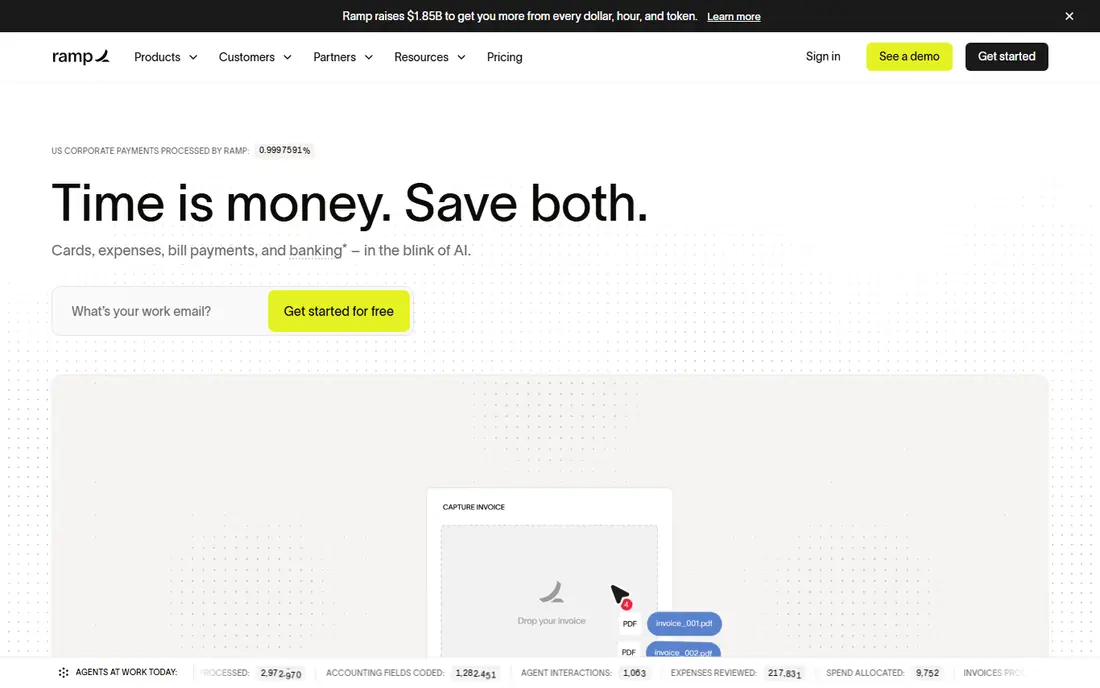
Ramp pairs corporate cards with expense management, so many claims never start as a manual form. Card transactions can match receipts, flag out-of-policy spend, and sync to accounting tools such as QuickBooks, Xero, and NetSuite. That design suits teams that want control before money is spent, not just a report after it. The free tier gives smaller teams a real way to start.
The trade-off is fit. A team that does not want Ramp cards, or that must keep an existing bank relationship, may find the model less flexible. Paid plans also add a platform fee beside per-user pricing in recent comparisons, so the full bill needs a written quote. For a card-first team, Ramp is a strong first test.
- Free tier with cards and expense tools
- Automatic receipt matching
- Strong accounting links
- Card use is central to the model
- Paid tiers add a platform fee on top of per-user pricing
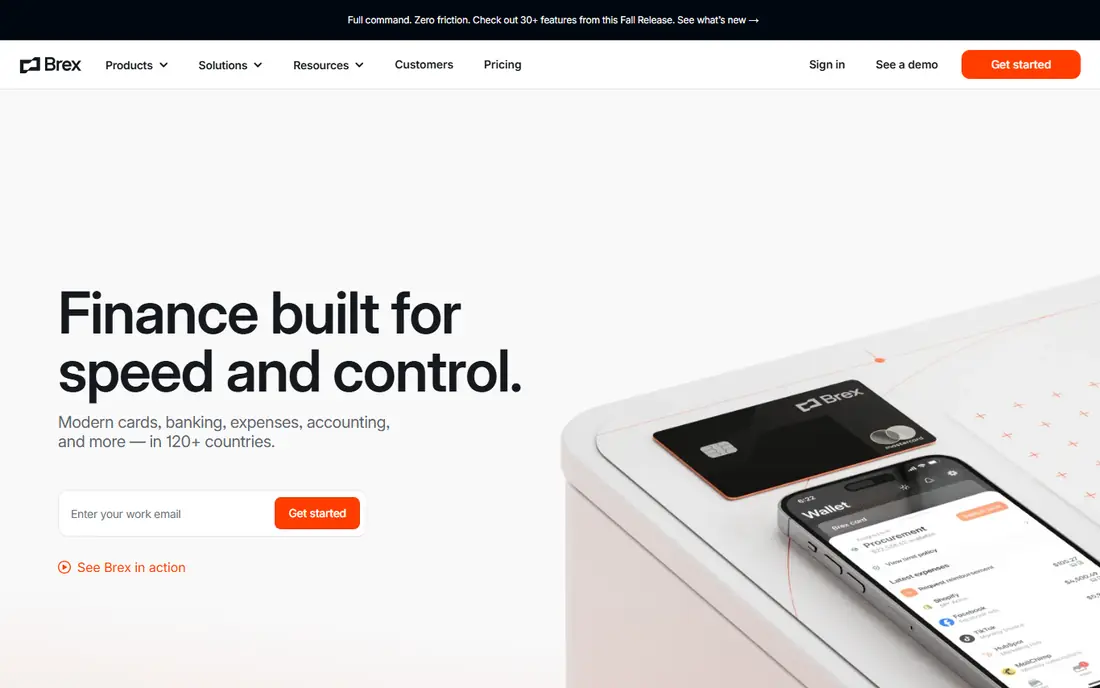
Brex suits startups and distributed teams that want cards, expenses, and travel tools in one account. The Essentials tier is free in recent comparisons, with Premium at $12 per user per month for added features. Receipt capture, approvals, and accounting syncs cover the core reimbursement flow, while global payment features help teams that spend across currencies and countries.
Brex is not a fit for every firm. Card qualification, limits, and eligibility rules can affect approval, and teams should confirm terms before moving spend across. A team that only needs standalone expense tracking, without cards, may also prefer a simpler tool. For a growing team that wants one finance home, Brex is worth a close look beside Ramp.
- Free Essentials tier
- Cards, expenses, and bill pay in one place
- Multi-currency support for global teams
- Eligibility and card qualification rules apply
- Premium features need the paid tier
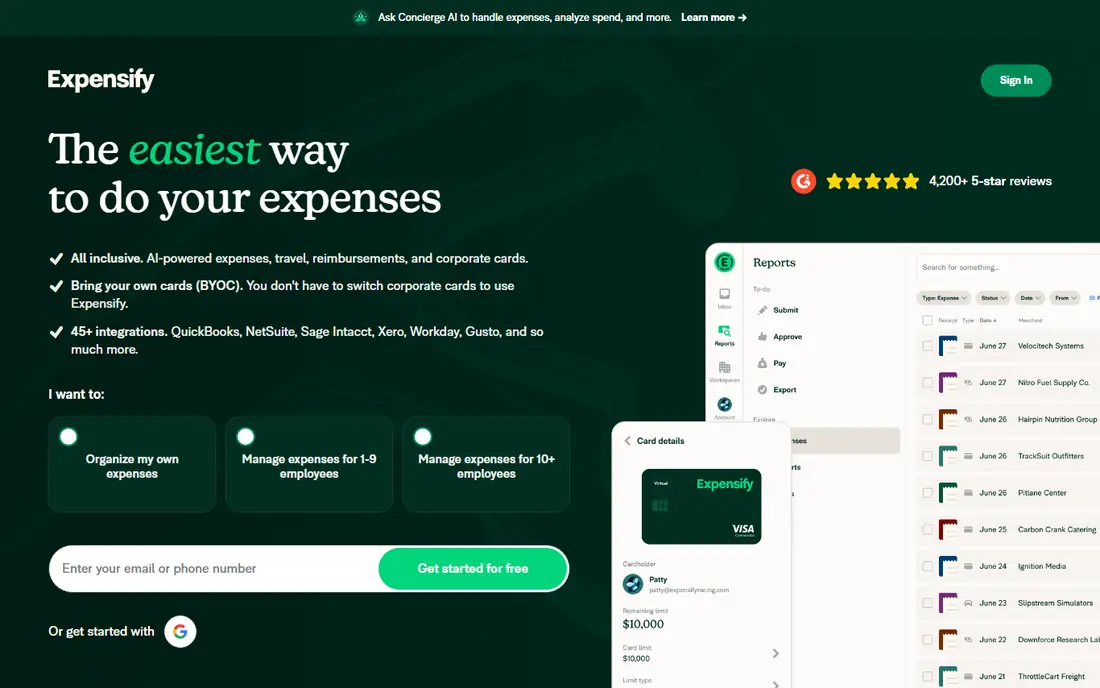
Expensify is the flexible pick for teams that do not want to change cards. Staff can scan receipts, submit expenses from a mobile app, and route claims through approvals, while finance keeps its current bank and card setup. The Collect plan starts at $5 per unique member per month in recent comparisons, with higher tiers for added control and accounting depth. Links to QuickBooks, Xero, NetSuite, and Sage help close the loop to the ledger.
Expensify pricing needs care, because member types and plan features affect the bill. A team should confirm who counts as a billable member and which approval and audit features each tier includes. For a team that values card freedom and fast receipt capture over a card-first suite, Expensify remains a dependable choice.
- Works with existing cards
- Strong receipt scanning and SmartScan features
- Broad accounting links
- Pricing varies by plan and member type
- Advanced controls sit on higher tiers
Navan fits teams where travel is the main source of claims. Booking a flight or hotel in Navan can flow into the expense record, which cuts duplicate entry and makes policy checks easier. The expense plan is listed at $15 per user per month in recent comparisons, with travel booking free for eligible users and the first five expense users free in some listings. That mix suits a team that travels often and claims often.
A team with little travel may not need the booking side, and should compare Navan on expense features alone. Large teams should also model per-user costs across the whole staff, not just frequent travellers. For travel-heavy firms, the single flow from booking to reimbursement is a clear advantage.
- Travel booking and expenses in one flow
- Card and receipt tools
- Clear policy controls for travel spend
- Expense plan pricing adds up for large teams
- Some features need the travel suite to shine
Zoho Expense is the budget pick for teams that want a standalone expense tool. Receipts can be scanned, expenses grouped into reports, and approvals routed by policy, all at a low entry price. A free version covers small teams, and paid plans start at $4 per active user per month in recent comparisons, with some listings showing $3 on annual billing. Zoho users get a natural link to Zoho Books and other Zoho apps.
Zoho Expense does not try to be a full card and banking suite, so teams that want card controls and bill pay in one place should look at Ramp or Brex. Its reporting and audit depth is also lighter than enterprise tools. For a small team that needs clean claims and fast approvals at a low cost, Zoho Expense is hard to beat.
- Low entry price and a free version
- Receipt scanning and approvals
- Strong Zoho Books link
- Card features are lighter than Ramp or Brex
- Advanced audit tools need higher tiers
SAP Concur is built for large firms with complex travel and expense rules. It can enforce policy by category, approver, and entity, support audits, and link to SAP and other ERP systems. Travel booking, expense claims, and invoice tools can sit in one suite, which helps finance teams that manage spend across countries and business units. For a large, regulated firm, that depth matters more than a low entry price.
The cost is opacity and effort. Pricing is quote-based, and implementation takes more planning than a small-team tool. A team under fifty people will likely find Zoho Expense, Expensify, or a card tool faster to run. Choose SAP Concur when policy complexity, audit needs, and scale make a simple tool risky.
- Deep policy, audit, and multi-entity support
- Travel and expense in one enterprise suite
- Broad ERP links
- Quote-based pricing
- Setup and admin effort is higher than for small-team tools
Rydoo focuses on a clean mobile expense flow. Staff can photograph receipts, log mileage, and submit claims from a phone, while managers approve on the go. Per diem support helps teams that travel under fixed daily rates, and accounting links keep finance work in order. The entry price in recent comparisons is $9 per user per month, which is easy to model for a mid-size team.
Rydoo is not a full spend platform. It lacks the card-first controls of Ramp and Brex and the enterprise audit depth of SAP Concur. A team that needs those features should shortlist accordingly. For a team that wants a simple, mobile-first way to claim expenses without a heavy suite, Rydoo is a solid option.
- Clear mobile-first expense flow
- Receipt scanning and approvals
- Per diem and mileage features
- No free plan on current listings
- Finance suite depth is lighter than enterprise tools
Spendesk gives finance teams control over team spending before it happens. Managers can set budgets, issue virtual cards for subscriptions and one-off purchases, and route approvals by amount and team. Expense claims, invoices, and card spend can then sync to accounting tools, which reduces month-end chasing. That control suits mid-market firms with many spenders and a need for clear limits.
Pricing is quote-based, so a small team cannot judge it from a list price alone. Spendesk also works best when finance owns the rollout and sets budgets by team. A tiny team with few claims will likely do fine with Zoho Expense or Expensify. For a growing firm that needs budget control across teams, Spendesk is a strong enterprise-leaning pick.
- Virtual and physical cards with budgets
- Approval workflows
- Accounting and ERP links for finance teams
- Quote-based pricing
- Best fit is mid-market and larger teams, not tiny startups
How we picked these
We compared official feature pages, pricing pages, app store listings, privacy policies, and public reviews. We favoured tools that are sold and supported now, in October 2026, and that handle real reimbursement work, from receipt capture to payment and accounting sync. We included card-first suites, standalone tools, and enterprise suites, so a reader can match the model to the firm, not just the price. Where a vendor did not publish a simple entry price, we marked it as See website rather than guessing.
What to check before you pay
Start with a real claim from each common case: a meal, a hotel, mileage, and a subscription paid on a card. Check how long each takes from photo to approval to payment, and where it stalls. Then check the accounting link with your own chart of accounts, since a tool that syncs badly will create manual work at month end. Ask about card eligibility, fees, and what happens when a receipt is missing or a claim is rejected.
Next, check policy handling in practice. Can you set limits by category, route by amount, and require extra approval for travel? Can finance see spend by team and project without exporting to a spreadsheet? Finally, confirm the full bill, including per-user fees, platform fees, card fees, and any charges for extra entities or currencies. A pilot with one team for a month will reveal more than a sales demo.
Frequently asked questions
What is the cheapest way to start?
Zoho Expense and the free tiers of Ramp and Brex are the lowest-cost starts here. Zoho Expense suits standalone claims, while Ramp and Brex suit teams that want cards included.
Do card tools replace expense claims?
Partly. Card spend can sync and match receipts, which cuts manual claims, but cash and out-of-pocket costs still need a claim flow. Keep both paths in any tool you choose.
How fast should reimbursement be?
That depends on approval steps and payroll timing, not just the tool. Ask vendors how approvals, payment runs, and accounting syncs work in your setup, and test with a real claim.
Is SAP Concur worth it for a small firm?
Usually not. Its strength is complex policy, audit, and multi-entity work at scale. Small firms will move faster with Expensify, Zoho Expense, Ramp, or Brex.
What about mileage and per diem?
Rydoo, Expensify, and Navan cover mileage and per diem in various forms. Check the exact rates, rules, and reporting for your country before you buy, since tax rules vary.
Can I keep my existing cards?
Yes, with Expensify, Zoho Expense, Rydoo, and SAP Concur, among others. Ramp, Brex, and Spendesk are stronger when you adopt their cards as part of the model.
Sources
See where you really rank - block by block
ProMapRanker scans Google Maps across a grid of your service area. Simple monthly plans from $19, white-label on every plan.
Start freeKeep reading
 worlds best local seo company
8 Worlds Best Local SEO Companies for Map Pack Growth in 2026
Compare the worlds best local seo company options for Google Business Profile work, citations, reviews, and multi-location rankings and reporting in 2026.
Read → world's best web hosting company
World's Best Web Hosting Company in 2026
Searching for the world's best web hosting company? We compared 10 hosts on price, renewal rates, speed, and support to help you choose well today in 2026.
Read → who's got the best nanny tax services
Who's Got the Best Nanny Tax Services in 2026
We answer who's got the best nanny tax services, comparing full filing, back taxes, software, and pricing so families can handle nanny taxes correctly.
Read →