 ProMapRanker
Best Referral Program Software in 2026


Online stores that want a dedicated referral program · Pricing starts at: $39 per month
Key takeaways
- The right tool depends on where referrals happen, in a store checkout, inside a product, or through a service team.
- Dedicated store tools tend to launch fastest, while B2B tools give more control over lead approval and payouts.
- Watch the full cost, not only the monthly fee, because success fees, per-participant charges and reward costs add up.
- Fraud checks, clear tracking and simple sharing links matter more than a long feature list.
Quick comparison
| Pick | Great for | Pricing starts at | Free tier | |
|---|---|---|---|---|
| ReferralCandy | Online stores that want a dedicated referral program | $39 per month | Free trial | Visit |
 Referral Rock | B2B and service firms that need lead approval | See website | Free trial | Visit |
 Friendbuy | Larger consumer and subscription brands | See website | No | Visit |
 GrowSurf | SaaS and app companies | $179 per month | Free trial | Visit |
 Yotpo Loyalty and Referrals | Shopify brands that want loyalty and referrals together | See website | Yes | Visit |
 Smile.io | Stores starting with loyalty and referrals | Free | Yes | Visit |
 LoyaltyLion | Established stores scaling loyalty-led referrals | $199 per month | Yes | Visit |
 Referral Factory | Teams that want a fast no-code launch | See website | Free trial | Visit |
 Viral Loops | Launches, waitlists and giveaway campaigns | $35 per month | Free trial | Visit |
The best referral program software
We compared tools that run real referral programs, not only affiliate add-ons. Our picks cover stores, software teams and service businesses, with clear notes on where each one fits and where it falls short.
ReferralCandy
Great for: Online stores that want a dedicated referral program
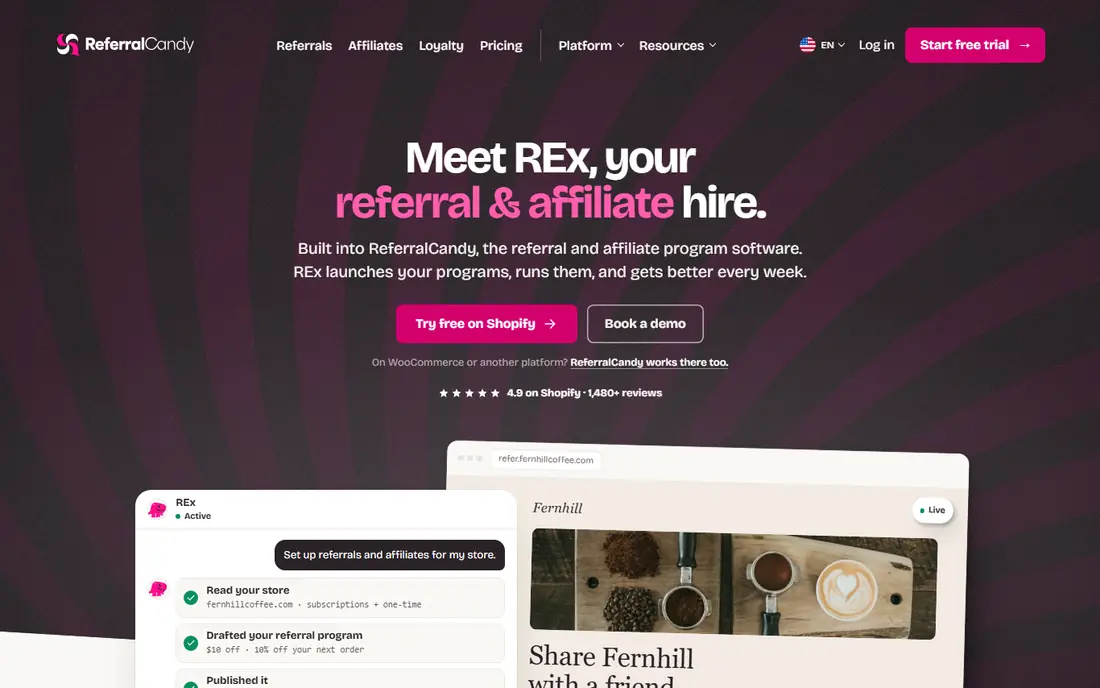
ReferralCandy is a good starting point for a store that wants referrals without building a custom system. It gives each customer a personal link, tracks referred purchases, and sends rewards automatically when a referral converts. The setup is mainly about choosing the reward, adding the widget, and connecting the store.
The catch is cost at scale. The monthly plan is only part of the bill, because a success fee is charged on referred sales as well. That can still be good value if referred orders are profitable, but a store with thin margins should model the total cost before launch. It is less flexible for service firms that need staff approval before a reward is paid.
- Simple setup for Shopify and WooCommerce
- Automated reward delivery
- Built-in fraud checks
- Success fee applies on top of the monthly plan
- Less suited to complex B2B lead approval
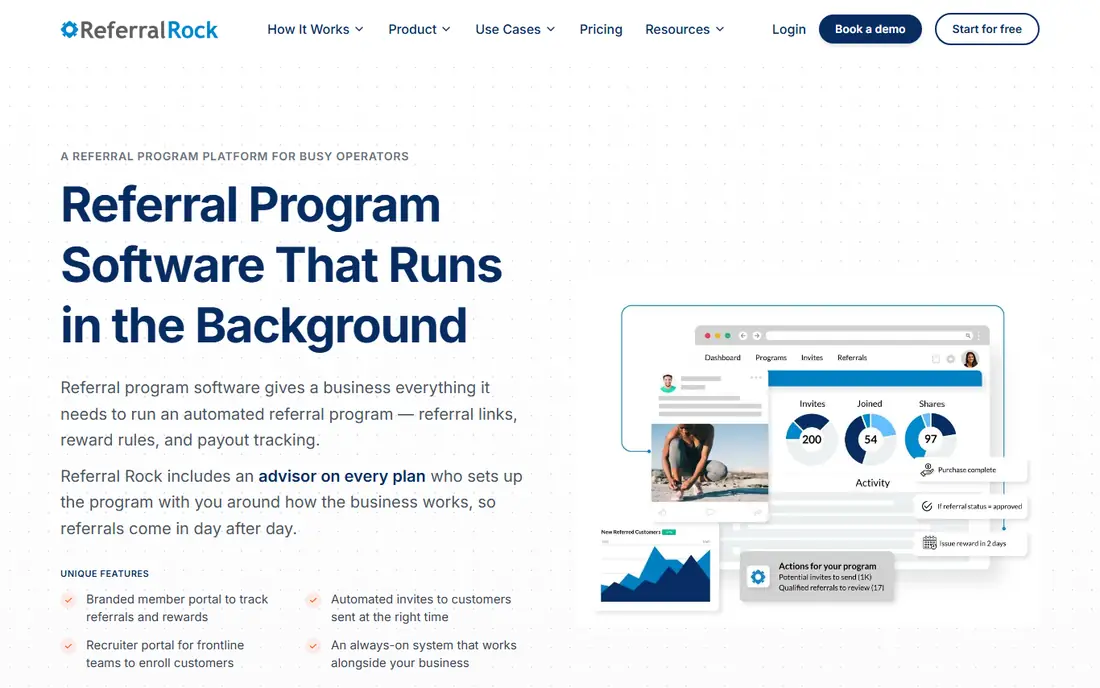
Referral Rock fits businesses where a referral is a lead, not an instant purchase. A client, partner or employee can submit a referral through a hosted portal, and the team can track it from submission through to a closed deal. That structure helps firms that pay only after a sale, or that need to check a lead before rewarding it.
The trade-off is that it feels heavier than a store plugin. Small teams may not need a full portal, and the price reflects a business tool rather than a simple app. For a consultancy, agency or home services firm, though, the approval workflow is often the reason to choose it over a checkout-focused tool.
- Member portal for referrers
- Rewards for leads or closed sales
- Strong tracking for offline referrals
- Higher starting cost than store-only tools
- Setup takes more planning for small teams
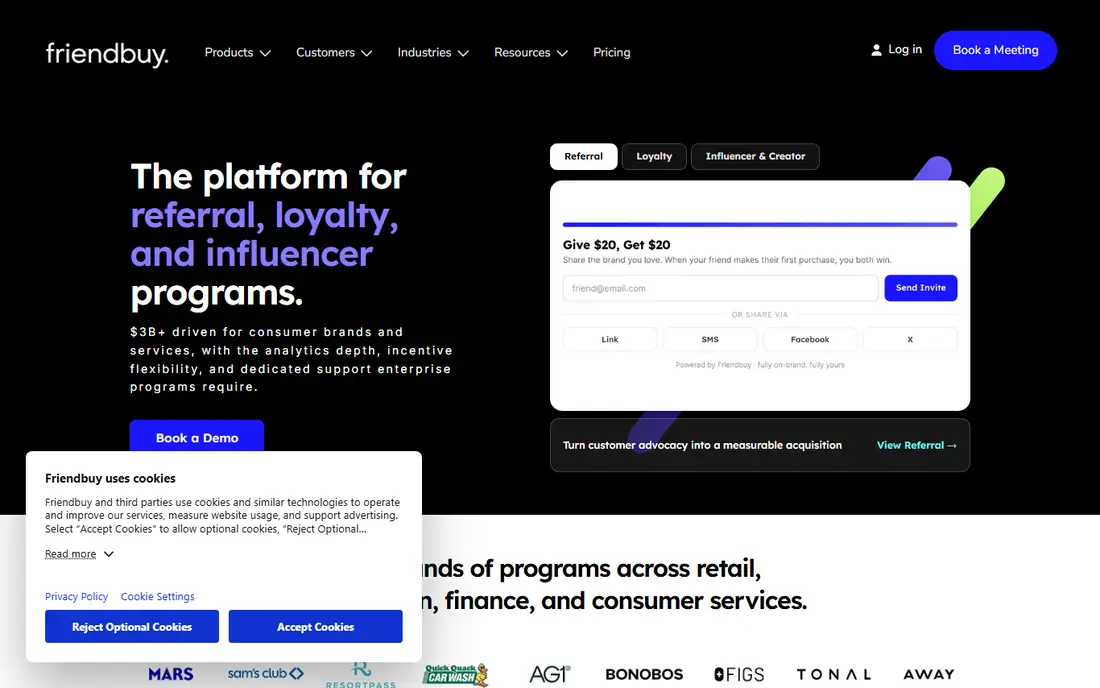
Friendbuy is built for brands that already have steady traffic and want referrals tied into a wider retention plan. It supports refer-a-friend offers, loyalty-style rewards and affiliate-style tracking, and it connects with common store and email platforms. Reporting is a clear strength, with referral revenue and advocate activity easy to follow.
The main drawback is access. Pricing is not published as a simple starter plan, so a small store cannot just sign up and compare the cost in minutes. It makes most sense when referral volume is high enough to justify a sales conversation and a larger contract.
- Referral, loyalty and affiliate features in one platform
- Strong integrations
- Detailed reporting
- Pricing is quote-based
- More than a small store usually needs
GrowSurf is made for software teams that want referrals inside the product experience. Users can share a link, invite friends and track progress without leaving the app, and the team can see which participants drive signups. That fit matters, because a store plugin often feels awkward inside a SaaS onboarding flow.
The price is the hurdle. At $179 per month, it is a serious commitment for a product that is still finding its first users. Teams with a working signup flow and a clear reward, such as extra credits or a discount, will get more from it than teams that are still testing their core offer.
- Designed for in-product referrals
- Participant tracking
- Clean dashboards
- Price is high for an early-stage startup
- Store checkout features are not the focus
Yotpo Loyalty and Referrals
Great for: Shopify brands that want loyalty and referrals together
Yotpo suits a brand that wants one retention system rather than several small apps. Customers can earn points for purchases, reviews and referrals, and the program can be shaped around tiers and repeat buying. For a Shopify store, that combined approach reduces the number of tools to manage.
The risk is scope creep. Each added module can raise the bill and add settings to maintain, so a brand that only needs referrals may pay for more than it uses. It is best for stores that already plan to run loyalty properly, with regular campaigns and clear rewards.
- Loyalty points and referrals in one system
- Strong Shopify fit
- Useful analytics
- Costs can rise as modules are added
- Setup is broader than a referral-only tool
Smile.io is one of the easiest ways for a small store to test referrals without a large upfront cost. The free plan covers basic referral links and rewards, and the loyalty side lets customers earn points for orders and other actions. Setup is guided, and the customer-facing widget looks clean on a storefront.
Growth brings limits. Deeper reporting, more customisation and larger order volumes push a store toward paid plans. That is normal, but a store should check which features it needs before it grows attached to a free setup. For a first program, though, the low barrier is a real advantage.
- Free plan to start
- Simple referral links
- Points, VIP tiers and rewards in one app
- Advanced features sit on paid plans
- Reporting is limited on lower plans
LoyaltyLion is aimed at stores that already have repeat buyers and want referrals to grow from that base. Customers earn points, reach tiers and share referral links, while the store can send reminders to advocates who have not shared recently. The result is a program that feels like part of the brand, not a bolt-on coupon.
The price sets the audience. At $199 per month for paid plans, it is not a casual experiment for a new store. It fits better when loyalty is already driving repeat orders and referrals can add to that flow, rather than when the store is still building its first customer base.
- Strong loyalty and referral combination
- Branded referral links
- Automated reminder emails
- Starting paid price is high for small stores
- Best value needs an active loyalty program
Referral Factory is useful when speed matters more than deep integration. Templates cover common program types, and a team can launch a branded referral page, share links and track signups without coding. It also supports offline referrals, which helps service firms that meet customers in person.
The limits show up in the details. Some payout and integration features sit on higher plans, so a team should read the plan comparison before assuming a feature is included. For a launch, a waitlist or a simple customer program, the template approach still saves a lot of time.
- Template-based setup
- Works online and offline
- Built-in rewards and payouts on higher plans
- Pricing varies by plan and volume
- Advanced customisation needs higher tiers
Viral Loops is different from the store tools above, because it is built around campaigns. A startup can run a waitlist where early signups move up the list by referring friends, or run a giveaway with milestone rewards. That structure creates urgency and gives each participant a clear reason to share.
It is not the best choice for a permanent, quiet referral program that runs for years. Its strength is a defined campaign with a start and an end, and teams should plan what happens after the campaign closes. For a product launch, that focus is exactly the point.
- Campaign templates for launches and contests
- Referral milestones
- Simple tracking
- Less suited to ongoing B2B lead programs
- Campaign focus can feel narrow for stores
How we picked these
We compared official feature pages, pricing pages and app store listings, and we favoured tools that are live in October 2026, that clearly explain how referrals are tracked, and that fit a real use case rather than a vague promise. We checked whether rewards are automated, whether fraud checks are mentioned, and whether the tool fits stores, software products or service firms. We did not claim hands-on testing, and we left out tools that only offer affiliate tracking with no customer referral flow.
What to check before you launch
Start with the reward, because it decides whether people share at all. A double-sided reward, where both the referrer and the new customer get something, often works better than a one-sided discount, but it costs more per order. Check the margin on a referred sale after the reward and any success fee, and set a cap if needed.
Next, check tracking and fraud controls. Ask how the tool handles self-referrals, duplicate accounts and cancelled orders, and whether rewards can be held until a return window passes. Clear rules protect the budget and keep honest advocates from feeling cheated.
Finally, plan the sharing moment. Referrals work best right after a good experience, such as a completed purchase, a helpful support reply or a product milestone. Put the link where customers already are, in order emails, account pages or the product itself, and keep the message short and personal. Test the full flow yourself, from link to reward, before you promote it widely.
Frequently asked questions
What is the best referral program software for a small online store?
ReferralCandy and Smile.io are strong starting points, because both are built for stores and can launch without a large project. Smile.io is the lower-cost way to test the idea, while ReferralCandy gives more dedicated referral automation. Check the total cost, including any success fee, before you choose.
What is the best referral software for B2B companies?
Referral Rock fits B2B firms best in this list, because it tracks referrals as leads and supports approval before a reward is paid. Friendbuy can also work for larger brands, but it is priced by quote. A B2B team should confirm how offline referrals and partner submissions are handled.
Do referral programs need a free plan to work?
No. A free plan helps a small team test the setup, but the program itself works on paid plans too, and many strong tools offer only a trial. The key costs are the monthly fee, any success fee and the reward itself, so compare those together.
How do you stop referral fraud?
Look for tools that check for self-referrals, duplicate accounts and cancelled orders, and that let you hold rewards until a purchase is confirmed. Clear terms, one reward per new customer and a manual review step for large rewards also help. No tool removes fraud entirely, so monitor early results closely.
Can referral software work for service businesses?
Yes, if the tool supports lead submissions rather than only checkout purchases. Referral Rock and Referral Factory both handle referrals that are not instant sales. Service firms should confirm that staff can approve leads and that rewards can be tied to a closed job, not just a form fill.
Sources
See where you really rank - block by block
ProMapRanker scans Google Maps across a grid of your service area. Simple monthly plans from $19, white-label on every plan.
Start freeKeep reading
 zscaler alternatives
Best Zscaler Alternatives in 2026
Looking for zscaler alternatives? We compare 9 SASE and zero trust platforms on architecture, data protection, pricing, and fit for your network and team.
Read → zapier alternatives free
Best Zapier Alternatives Free in 2026
Nine automation tools for zapier alternatives free in 2026, all with genuinely free tiers, plus free plan limits, starting prices and upgrade paths explained.
Read → which platform is best for online reputation
Which Platform Is Best for Online Reputation in 2026
Wondering which platform is best for online reputation? We compare 8 review, listing, and response tools for small and multi-location businesses and agencies.
Read →