 ProMapRanker
Best Recurring Payment Platform in 2026


Stripe-native SaaS teams · Pricing starts at: 0.7% of billing volume
Key takeaways
- Stripe Billing is the simplest default for teams already on Stripe, while Chargebee and Recurly give non-technical teams more control over subscription logic.
- Zuora and Maxio suit larger, contract-heavy businesses, while Paddle and FastSpring suit software sellers that want tax and compliance handled for them.
- Recurring billing pricing mixes flat fees and a share of billing volume, so compare total cost at your actual monthly volume, not just the headline rate.
- Failed-payment recovery, proration, trials and tax handling are where platforms differ most in daily use.
- GoCardless is the strongest pick here for bank-debit recurring payments, while Square suits small businesses that already use Square for sales.
Quick comparison
| Pick | Great for | Pricing starts at | Free tier | |
|---|---|---|---|---|
| Stripe Billing | Stripe-native SaaS teams | 0.7% of billing volume | Free trial | Visit |
 Chargebee | Subscription lifecycle management | See website | Free trial | Visit |
 Recurly | Retention and high-volume subscriptions | $249 per month | Free trial | Visit |
 Zuora | Enterprise monetization complexity | See website | No | Visit |
 Paddle | SaaS sellers wanting tax handled | See website | No | Visit |
 Maxio | B2B SaaS finance teams | $599 per month | Free trial | Visit |
 GoCardless | Bank-debit recurring payments | See website | No | Visit |
 Square Subscriptions | Small businesses on Square | See website | No | Visit |
 FastSpring | Global SaaS billing with compliance | See website | No | Visit |
The best recurring payment platform
These platforms all handle repeat charges, but they differ in who controls billing logic, how taxes are handled and how much engineering time they need.
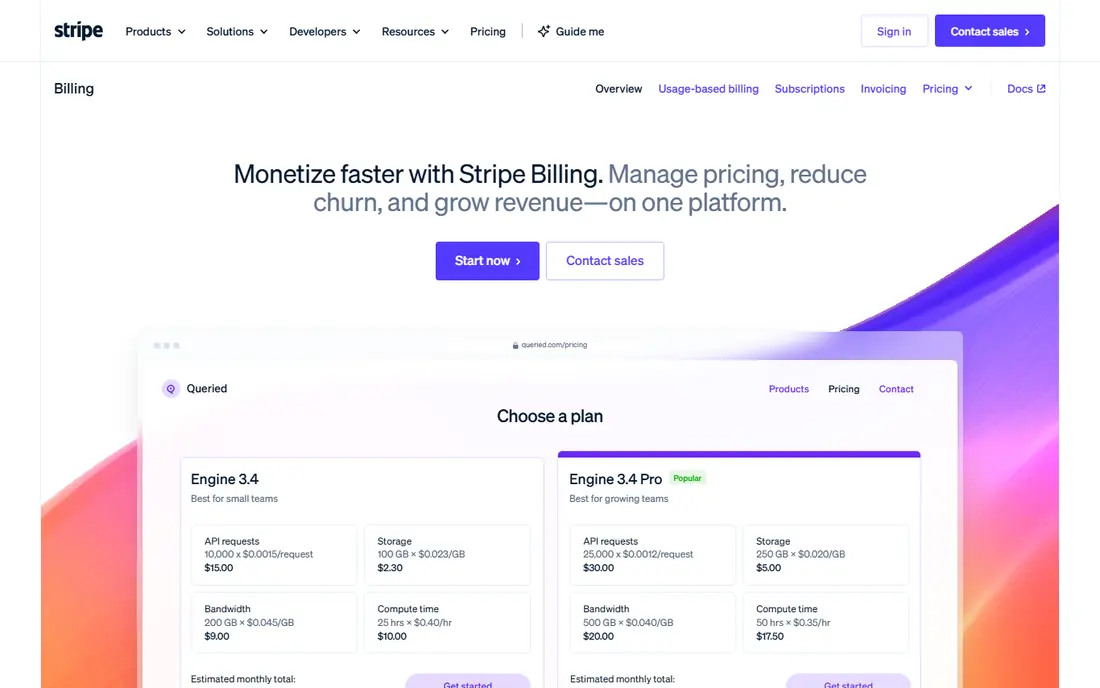
Stripe Billing is the natural choice for a SaaS team that already takes payments through Stripe. Subscriptions, invoices, metered usage, trials and proration live in the same system as payment processing, which reduces reconciliation work between tools. Its customer portal also lets subscribers change plans and payment methods without custom code.
The catch is dependence. If you later switch payment processors, billing logic, customer records and portal flows need a plan to move. We would pick Stripe Billing when developer control and a single payments stack matter more than processor independence.
- Deep integration with Stripe payments
- Strong API and customer portal
- Usage-based and subscription billing in one stack
- Leaving Stripe later means a migration project
- Billing add-on cost sits on top of payment processing fees
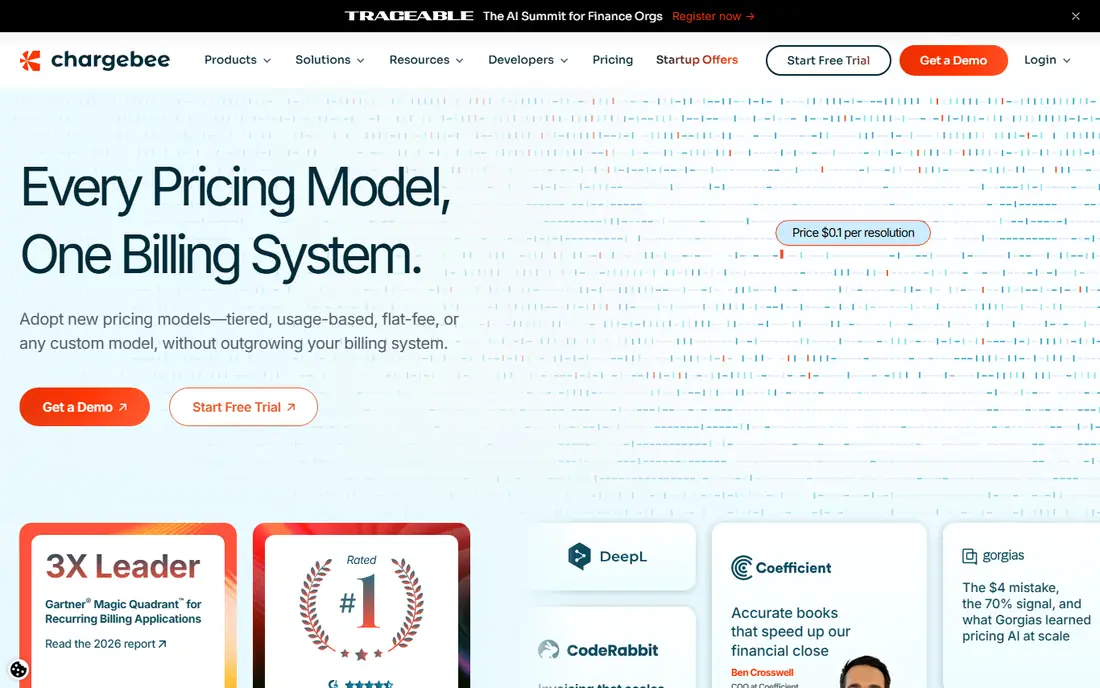
Chargebee suits teams where product, finance or operations staff need to manage billing, not just engineers. It handles trials, upgrades, downgrades, add-ons, coupons and dunning workflows with prebuilt tools, and it connects to multiple payment gateways. That independence from one processor is a real advantage for companies that want gateway choice.
Buyers should confirm the current pricing model on a demo, since Chargebee has revised plans and billing-volume fees in recent years. We would shortlist Chargebee for SaaS and digital subscription businesses that need flexible pricing without building billing logic from scratch.
- Flexible subscription models without heavy code
- Built-in dunning and revenue recovery
- Revenue recognition tools
- Pricing and plan structure have changed over time, so confirm the current plan
- Advanced setups still need careful configuration

Recurly focuses on keeping subscribers paying, which is why it appeals to media, consumer SaaS and other high-volume subscription businesses. Its retry logic, payment-update flows and reporting help teams recover failed payments and spot churn patterns early. It also handles metered billing, hierarchical accounts and contract-style billing for larger customers.
The entry cost means it is not the best first pick for a tiny side project. We would pick Recurly when failed payments and retention are already costing real revenue, and when the team wants a dedicated subscription platform rather than a payments add-on.
- Strong dunning and decline management
- Good for high-volume consumer subscriptions
- Detailed subscription reporting
- Entry price is higher than simple tools
- Gateway and processing fees are separate
Zuora is the platform for companies whose pricing is genuinely complex: multiple products, usage tiers, ramped contracts, global entities and hybrid models. It gives finance and revenue teams control over catalogs, orders, invoicing and revenue recognition in one system. Large SaaS, media and telecom-style businesses use it for that reason.
Smaller teams will find Zuora too large and too costly. We would shortlist it only when simpler platforms cannot model your pricing, and budget for implementation and ongoing administration alongside the licence.
- Built for complex, global and hybrid pricing
- Strong order-to-cash controls
- Handles usage, subscriptions and one-time charges together
- Quote-only pricing
- Implementation and admin effort are enterprise scale
Paddle acts as merchant of record, which means it handles sales tax, VAT, invoicing and compliance for software sales in many countries. For a small SaaS team selling worldwide, that removes a large compliance burden that would otherwise need tax tools and local advice. Checkout, subscriptions and payment handling sit in one flow.
The trade-off is control. Paddle sits between you and the customer payment, which some finance teams dislike. We would pick Paddle for independent software sellers and small SaaS teams that want global tax handled without building a tax operation.
- Merchant-of-record model handles sales tax and VAT
- Checkout, billing and payments in one flow
- Good for global SaaS sales
- You give up some direct payment control
- Pricing is quote or revenue based, so confirm fees at your volume
Maxio combines subscription billing with revenue recognition and SaaS metrics, which appeals to B2B finance teams that need board-ready reporting. It handles contract billing, usage, renewals and metrics such as recurring revenue and churn in one place. Teams that report to investors or auditors value that combined view.
The starting price puts it above simple billing tools, so it fits companies with real finance needs rather than a first subscription test. We would pick Maxio for B2B SaaS companies where billing, recognition and metrics must agree, and where finance leads the buying decision.
- Billing plus revenue recognition and SaaS metrics
- Strong for contract-led B2B
- Formed from Chargify and SaaSOptics
- Entry price suits funded or growing B2B teams more than tiny startups
- Implementation needs finance input
GoCardless is the specialist for recurring payments by bank debit rather than card. It suits memberships, rent-style payments, B2B invoices and subscriptions where customers prefer direct debit and where card fees or card expiry cause churn. Its dashboard and API handle mandates, collections and failure handling for bank payments.
It is not a full replacement for card billing in the United States, where direct debit adoption is lower. We would pick GoCardless for UK and European recurring revenue, or as a second payment method alongside cards, and confirm country coverage before committing.
- Strong direct-debit coverage in the UK, EU and other markets
- Lower failure rates for bank payments in some cases
- Good for memberships and invoices
- Card-first businesses may need another tool alongside it
- Coverage varies by country
Square Subscriptions suits small businesses that already use Square for point of sale, online sales or invoicing. A salon, gym, studio or local service business can sell a monthly plan, manage subscribers and take repeat payments without adopting a SaaS billing suite. Setup is faster than enterprise platforms, and staff training is minimal.
Larger SaaS companies will hit limits on pricing models, revenue recognition and multi-gateway needs. We would pick Square Subscriptions when simplicity and one vendor for sales and billing matter more than advanced subscription logic.
- Simple setup inside Square
- Good for services, memberships and retail add-ons
- No separate billing system to learn
- Less depth than dedicated SaaS billing platforms
- Complex usage or contract billing may outgrow it
FastSpring, like Paddle, acts as merchant of record for software sellers, handling tax, compliance and payment collection across countries. That helps small and mid-size software companies sell worldwide without building local tax and entity structures. Its checkout, subscriptions and licensing tools fit downloadable and SaaS products.
The compromise is the same as with any merchant-of-record model: you trade some payment control for compliance coverage. We would shortlist FastSpring for global software sales, and compare it directly with Paddle on fees, payout terms and checkout experience before choosing.
- Merchant-of-record handling for global tax and compliance
- Checkout and subscription billing together
- Good for software sellers
- Less direct control than a gateway-plus-billing stack
- Fees and terms need confirmation at your sales volume
How we picked these
We compared official pricing pages, product documentation and recent independent comparisons for platforms that handle recurring payments in October 2026. We favored platforms with live subscription billing, clear dunning or tax features, and a defined audience, from small businesses to enterprise SaaS. Where a vendor does not publish a flat price or charges a share of volume, we stated that model or wrote See website rather than inventing a total cost.
How to choose a recurring payment platform
Start with your payment method and your tax footprint. If most customers pay by card in the United States, Stripe Billing, Chargebee or Recurly are natural starting points. If you sell software worldwide, compare Paddle and FastSpring on tax coverage and fees. If bank debit is central, add GoCardless to the shortlist.
Next, model total cost at three volumes: today, in twelve months and at double your current billing. Include gateway fees, billing-volume fees, flat monthly charges and any revenue recognition add-ons. Finally, test the failure path: run a failed card, an expired card, a plan change mid-cycle and a refund, and check what the customer sees and what finance sees. The platform that handles those moments cleanly will save the most support time.
Frequently asked questions
What is the best recurring payment platform?
The best recurring payment platform depends on your stack. Stripe Billing leads for Stripe-native SaaS, Chargebee leads for flexible subscription management without heavy code, and Recurly leads for retention-focused high-volume subscriptions. Compare total cost and failure handling, not just headline fees.
What is the best recurring billing service for a small business?
Square Subscriptions suits small businesses already on Square, while Stripe Billing suits small SaaS teams with developer help. Chargebee can also work for small SaaS teams that need trials and coupons without custom code. Keep the setup simple and avoid enterprise platforms until volume justifies them.
What is the best recurring payment software for SaaS?
Stripe Billing, Chargebee, Recurly, Zuora and Maxio all serve SaaS, with different strengths. Stripe suits developer-led teams, Chargebee suits operations-led teams, Recurly suits retention work, and Zuora or Maxio suit complex or finance-led B2B models. Shortlist by pricing model, gateway needs and revenue recognition requirements.
What is the best platform for recurring payments by bank debit?
GoCardless is the strongest bank-debit specialist on this list, especially for UK and European recurring payments. It handles direct-debit mandates and collections that card platforms do not cover as deeply. Confirm country coverage and payout timing for your markets before switching.
What is the best app for recurring payments for a membership business?
Square Subscriptions works well for local memberships tied to Square sales, while Chargebee or Recurly suit online memberships with trials, tiers and dunning needs. Choose based on how members join, whether you need a customer portal, and how failed payments should be handled.
What is the best tool for recurring payments with global tax handled?
Paddle and FastSpring are the strongest merchant-of-record options here, because they handle sales tax and VAT for software sales across many countries. Compare fees, payout schedules and checkout control, since both trade some payment control for compliance coverage.
Sources
See where you really rank - block by block
ProMapRanker scans Google Maps across a grid of your service area. Simple monthly plans from $19, white-label on every plan.
Start freeKeep reading
 zoho inventory alternatives
6 Alternatives to Zoho Inventory, Compared on Price and Fit
Zoho Inventory alternatives: 6 tools compared on price, free plans and fit. Katana leads the list for manufacturers. Fit and flaws are laid out for each entry.
Read → zoho crm alternatives
Best Zoho CRM Alternatives (2026)
Need Zoho CRM alternatives? We compare 7 tools on cost, free access and who each suits. Every pick gets a straight assessment. Built for quick decisions.
Read → zelle alternatives
Best Zelle Alternatives in 2026
Compare the best Zelle alternatives for sending money to friends, paying sellers and moving funds abroad, with honest notes on fees, speed and safety in 2026.
Read →