 ProMapRanker
Best Recurring Billing Software in 2026


Teams already using Stripe · Pricing starts at: 0.7% of billing volume
Key takeaways
- Percentage pricing suits early-stage companies, while flat monthly pricing suits companies with larger, steadier billing volume.
- Stripe Billing and Chargebee lead for teams that already run on Stripe or need deep subscription logic.
- Paddle and FastSpring are the merchant-of-record options, which matters most for companies selling software worldwide.
- Zoho Billing and ChargeOver are worth a look for smaller teams that want predictable monthly costs.
- Always check dunning, tax handling, and gateway support before you commit, because those three items cause most billing pain later.
Quick comparison
| Pick | Great for | Pricing starts at | Free tier | |
|---|---|---|---|---|
| Stripe Billing | Teams already using Stripe | 0.7% of billing volume | No | Visit |
 Chargebee | Growing SaaS with complex plans | 0.80% of monthly billing value | No | Visit |
 Recurly | Subscription businesses needing dunning | $249 per month | Free trial | Visit |
 Paddle | Software sold worldwide | 5% + $0.50 per transaction | No | Visit |
 Zoho Billing | Small teams on a budget | See website | Yes | Visit |
 Maxio | SaaS needing revenue recognition | $599 per month | Free trial | Visit |
 FastSpring | Software with global tax needs | See website | No | Visit |
 ChargeOver | Flat-fee billing without revenue share | See website | Free trial | Visit |
The best recurring billing software
These eight tools cover the main ways to bill customers again and again, from developer-friendly platforms to hands-off merchant-of-record services.
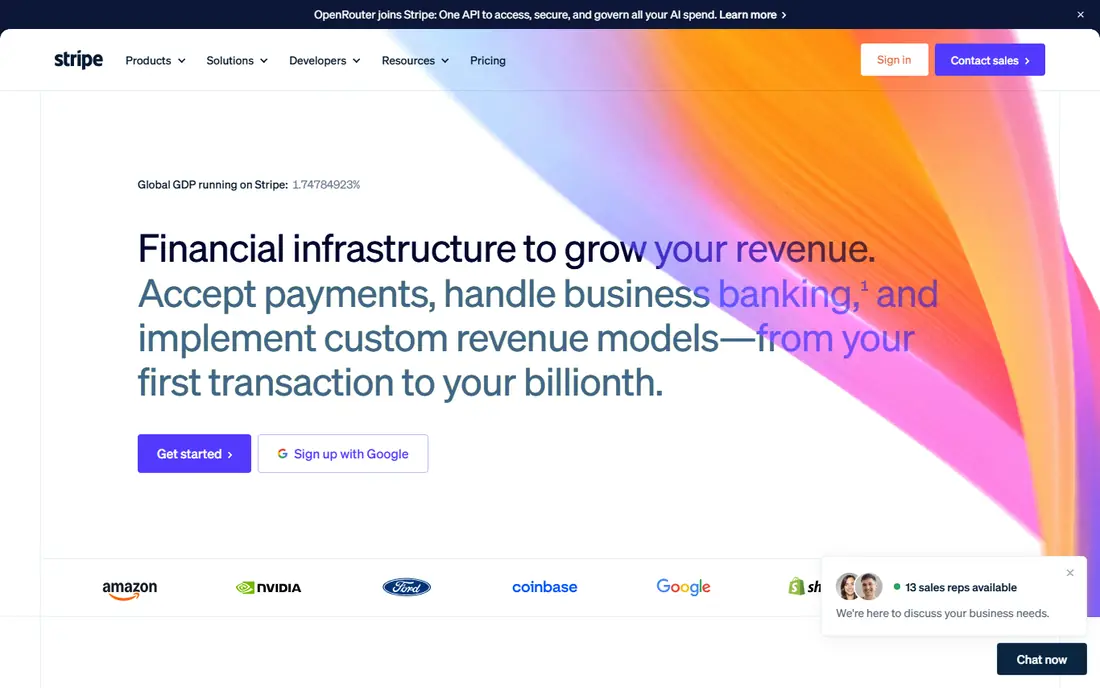
Stripe Billing fits companies that already accept payments through Stripe and want billing built on the same system. It handles trials, prorations, coupons, usage-based charges, and metered billing, and its API gives developers fine control over subscription changes. The pay-as-you-go option charges 0.7% of billing volume on top of normal card processing, which keeps the entry cost low for a new product.
The catch is that the percentage model gets expensive as revenue grows, and larger companies usually move to one of the annual tiers or negotiate custom terms. Stripe also sells tax, revenue recognition, and reporting tools as separate pieces, so the full stack can cost more than the headline billing rate suggests. Still, for a team that values developer control and a huge integration library, this is our pick for most software companies starting out.
- Deep subscription logic
- Strong developer tools
- Wide gateway and payment method support
- Percentage fees grow with volume
- Tax and revenue tools cost extra in many setups
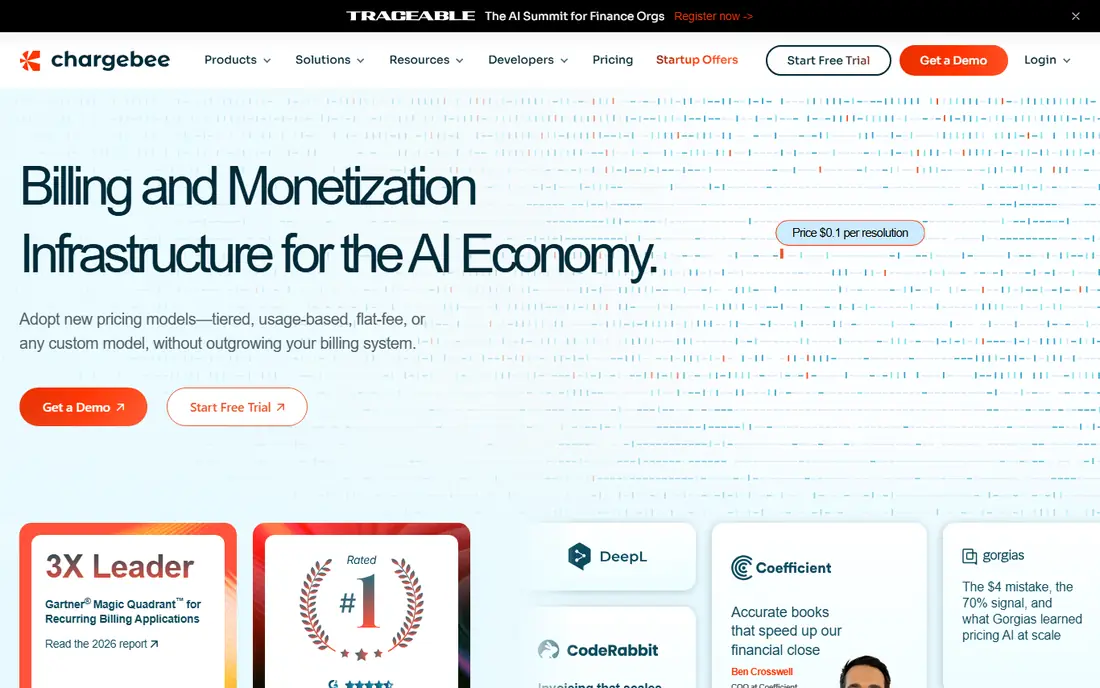
Chargebee suits SaaS companies whose pricing has grown past a single monthly plan. It supports tiered pricing, add-ons, usage charges, ramp deals, and multi-entity billing, and it includes both basic and smart dunning to chase failed payments. The Flow pay-as-you-go option charges 0.80% of monthly billing value with no platform fee, while a commit-monthly option pairs a 0.65% rate with a 99 dollar monthly platform fee.
That flexibility is the appeal, and the risk is that a company with rising volume pays more each month without a clear ceiling. Chargebee also runs a startup program that lets qualifying startups use the platform free until their first 1 million dollars in cumulative billing, though acceptance is application based. For teams that need subscription logic without building it themselves, Chargebee is a strong second choice behind Stripe Billing.
- Strong plan and coupon logic
- Smart dunning included
- Connects to 40 plus gateways
- Percentage pricing adds up at scale
- Enterprise tier is quote only
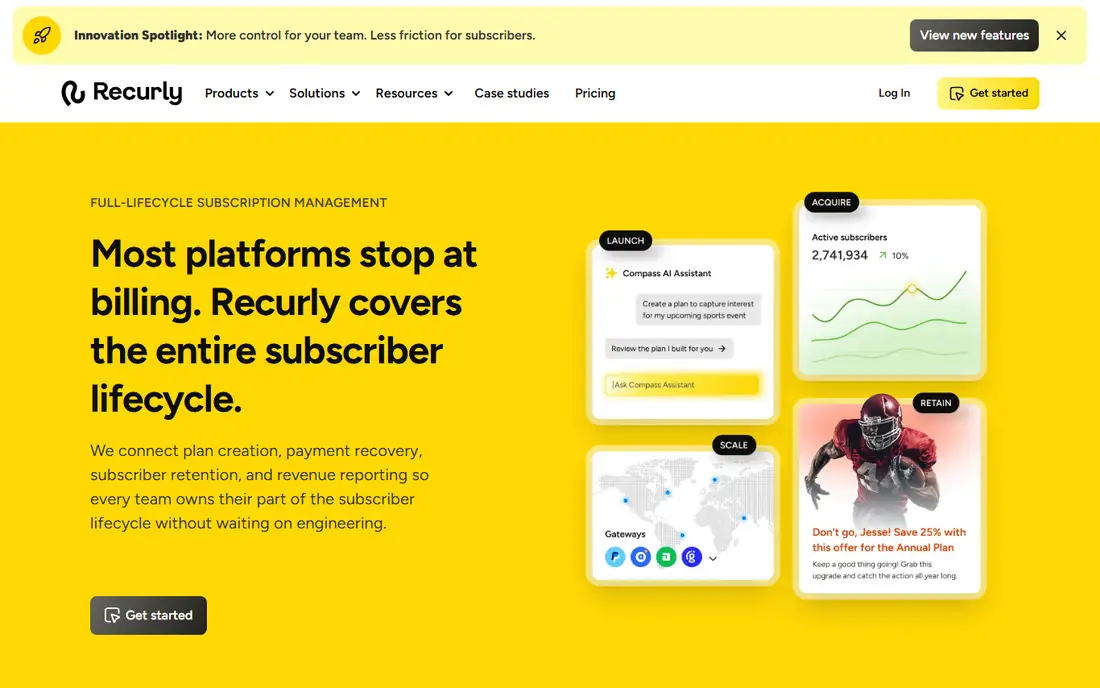
Recurly has been in subscription billing for a long time, and that shows in its dunning and recovery features. The Starter plan costs 249 dollars per month plus 0.9% of billing volume, with the first 40,000 dollars of monthly billings included, and a 90-day free trial lets teams test it properly. It also offers separate products for engagement and revenue recognition, priced from 1,600 dollars and 850 dollars per month respectively when billed annually.
The main trade-off is that Recurly is not a merchant of record, so you still need your own payment gateway and you stay responsible for tax in the places you sell. All-Access pricing sits under 1% when billed annually but carries a 1 million dollar billing volume minimum, which puts it out of reach for small teams. For a subscription business that loses real money to failed payments, Recurly earns its place on this list.
- Mature dunning and recovery tools
- Clear starter tier
- Strong analytics
- You bring your own gateway
- Higher tiers are quote based
Paddle takes a different job from the tools above: it sells your software as the merchant of record, which means it handles payments, billing, global tax compliance, fraud protection, chargebacks, and buyer support. Pricing is 5% plus 50 cents per checkout transaction, with no monthly fees, and products priced under 10 dollars are directed to bespoke pricing. That single rate replaces a stack of separate vendors.
The trade-off is cost and control. Five percent is steep once volume grows, and you give up the direct gateway relationship that Stripe or Recurly users keep. Invoicing is also quoted separately rather than bundled in the headline rate. For a small software team selling to customers in many countries without a tax or finance team, that trade is often worth it, and Paddle is our pick for that situation.
- Merchant of record with global tax handled
- No monthly fees
- Fraud and chargeback help included
- Percentage fee is high at volume
- Less control than a direct gateway setup
Zoho Billing, formerly Zoho Subscriptions, targets small businesses that want subscription billing without a large monthly bill. Recent comparisons list Standard at 39 dollars per month and Premium at 79 dollars per month billed annually, while older material lists different tiers and a free tier with a small subscription limit. Because those figures conflict, we list the starting price as See website and suggest checking the live pricing page before you buy.
What makes Zoho Billing appealing is its place inside the wider Zoho suite, which many small businesses already use for accounting, CRM, and email. The billing features themselves are straightforward rather than deep, so companies with usage-based pricing, complex ramp deals, or multi-entity needs will likely outgrow it. For a small team that bills simple monthly plans and wants to keep costs down, it is a sensible shortlist option.
- Low entry cost
- Fits the wider Zoho suite
- Simple subscription and invoice handling
- Pricing details have changed over time
- Less depth for complex SaaS pricing
Maxio was formed from the merger of Chargify and SaaSOptics, and it pairs subscription billing with revenue recognition and reporting. The Grow plan costs 599 dollars per month for up to 100,000 dollars in monthly billings, while Scale is quote only for larger volumes. A free developer sandbox called Build lets teams test without paying, and annual payment is standard on Grow.
That combination matters for SaaS finance teams, because recognizing revenue correctly under subscription contracts is a real headache once deferred revenue grows. The downside is the entry price, which rules Maxio out for very small companies, and monthly or quarterly payment on Grow is a paid add-on rather than standard. For a funded SaaS company that needs billing and revenue recognition to agree, Maxio is a strong fit.
- Billing plus revenue recognition in one place
- Solid reporting
- Free developer sandbox
- High starting price
- Scale tier is quote only
FastSpring, like Paddle, acts as merchant of record for software sellers, handling payments, global tax, fraud screening, and checkout. Its pricing is quote based rather than published as a flat rate, and third-party reports for 2026 cite figures around 5.9% plus 95 cents per transaction or around 8.9% flat, with lower rates at volume or on longer commitments. Because those reports disagree, we list the starting price as See website.
The value here is the same as with Paddle: a small team can sell worldwide without building tax and compliance handling itself. FastSpring also provides storefront and checkout tools, which suit companies that sell direct rather than through an app store. The honest catch is that you cannot compare it on price without a quote, so get one early and compare it against Paddle on the same sales volume before deciding.
- Merchant of record with global tax included
- Checkout and storefront tools
- Fraud protection
- Pricing is quote based
- Third-party rate reports vary widely
ChargeOver appeals to companies that dislike percentage billing on principle. Its vendor pricing page describes flat monthly pricing with no percentage of revenue, no annual contracts, and unlimited invoices, with a starting figure of 229 dollars per month shown in vendor material. Other directory listings show different tiers, including a lower starter figure, so we list the starting price as See website until the live page confirms the current plan.
The product itself covers recurring invoices, dunning, customer portals, and integrations with QuickBooks, Xero, HubSpot, and Salesforce, which fits service businesses and B2B companies that invoice rather than charge cards alone. The smaller ecosystem is the trade-off: fewer third-party integrations and less community material than the big platforms. For a company that bills a few hundred customers and wants a predictable monthly fee, ChargeOver deserves a trial.
- Flat monthly pricing with no revenue percentage
- Unlimited invoices
- QuickBooks, Xero, HubSpot and Salesforce integrations
- Published pricing figures conflict across sources
- Smaller ecosystem than Stripe or Chargebee
How we picked these
We compared official feature pages, pricing pages, app store listings, and public reviews for the tools above, and we kept only tools that exist and work in October 2026 and truly handle recurring billing. We favored tools with clear pricing, real dunning features, and a track record with subscription businesses, and we mixed large platforms with smaller options so small teams and larger SaaS companies both find a fit. Where sources disagreed on a price, we wrote See website instead of picking the most flattering figure.
What to check before you choose
Start with how you charge, not with the feature list. A company with one monthly plan and card payments needs far less than a company with usage metering, annual ramps, and multi-currency invoicing, and buying the bigger tool early wastes money every month.
Match the pricing model to your volume
Percentage pricing feels cheap at launch and expensive at scale, while flat pricing feels expensive at launch and cheap at scale. Run your expected billing volume through both models for 12 months, and include card processing, tax tools, and dunning add-ons in the total. If your volume is lumpy or seasonal, a flat fee may still win, because percentage fees rise with your best months.
Check dunning, tax, and gateway support
Failed payments are lost revenue, so ask how each tool retries cards, updates expired cards, and reports recovery. Tax is the second trap: if you sell across states or countries, confirm who calculates, collects, and files it, and get that answer in writing. Finally, confirm gateway support, because switching gateways later is painful, and some tools lock you to one provider.
Run a real billing cycle before you commit
Use the trial or sandbox to run a full cycle: sign up a test customer, apply a coupon, upgrade mid-cycle, fail a card, and refund. That single exercise reveals prorating quirks, invoice formatting, and dunning behavior that no feature page explains. It also shows if your finance team can reconcile the reports without a spreadsheet workaround.
Frequently asked questions
What is the best recurring billing software?
The best recurring billing software depends on your setup. Stripe Billing suits teams already on Stripe, Chargebee suits SaaS companies with complex plans, and Paddle or FastSpring suit software sellers that want tax handled for them. Shortlist two or three tools, run a trial billing cycle on each, and pick the one your finance team can actually operate.
Which recurring billing tool is best for a small business?
For a small business, Zoho Billing and ChargeOver are worth a first look because their monthly costs stay predictable and their features cover simple subscriptions well. Stripe Billing pay-as-you-go also works for small teams, since there is no monthly platform fee, though processing and percentage fees still apply. Avoid quote-only enterprise tiers until your volume justifies them.
What are the best SaaS billing automation tools?
The best SaaS billing automation tools in this list are Stripe Billing, Chargebee, Recurly, and Maxio. Stripe Billing and Chargebee cover subscription logic and dunning, Recurly adds mature recovery tools, and Maxio adds revenue recognition for finance teams. The right choice depends on your pricing complexity and whether revenue recognition matters to your reporting.
What is the best subscription invoicing software?
The best subscription invoicing software is the one that matches how you bill. ChargeOver and Zoho Billing suit companies that send recurring invoices, while Stripe Billing and Chargebee suit companies that charge cards automatically. If you sell software worldwide and want invoicing plus tax handled, ask Paddle and FastSpring for quotes and compare their invoicing terms.
Do I need a merchant of record for recurring billing?
You need a merchant of record only if you want someone else to handle tax, fraud, and compliance for worldwide sales. Paddle and FastSpring take that role, while Stripe Billing, Chargebee, Recurly, and Maxio leave tax and gateway responsibility with you. Merchant-of-record pricing is higher per transaction, so weigh it against the cost of handling tax yourself.
Sources
See where you really rank - block by block
ProMapRanker scans Google Maps across a grid of your service area. Simple monthly plans from $19, white-label on every plan.
Start freeKeep reading
 outreach alternatives
Outreach Alternatives in 2026
Compare outreach alternatives for 2026, from Salesloft and Apollo to HubSpot and Lemlist, with pricing, channels, features, limits, and honest trade-offs.
Read → best web conference tools
Best Web Conference Tools in 2026
Compare the best web conference tools for meetings, webinars and team calls, with current pricing, free plans and honest limits for each option here today.
Read → best voice cloning tools
Best Voice Cloning Tools in 2026
Compare the best voice cloning tools in 2026, from ElevenLabs and Descript to Resemble and Cartesia, with consent rules, pricing, licenses, and limits.
Read →