 ProMapRanker
Best Recruiting Automation Tools in 2026

Key takeaways
- Greenhouse and Lever suit structured, larger hiring teams, while Workable, Ashby, and Zoho Recruit cover smaller teams with clearer published pricing.
- Automation value comes from scheduling, screening, outreach sequences, and scorecards, not from a long feature list alone.
- Manatal and Zoho Recruit offer the lowest entry prices, but check user limits, job slots, and automation caps before you commit.
- High-volume hourly hiring needs a different tool, such as Paradox, than a salaried professional hiring workflow.
Quick comparison
| Pick | Great for | Pricing starts at | Free tier | |
|---|---|---|---|---|
 Greenhouse | Structured enterprise hiring | See website | No | Visit |
 Lever | Pipeline and CRM hiring | See website | No | Visit |
 Workable | Small and mid-size teams | $299 per month | Free trial | Visit |
 Ashby | Data-driven scaling teams | $400 per month | No | Visit |
 Zoho Recruit | Budget teams and Zoho users | Free | Yes | Visit |
 Manatal | Agencies and small teams | $15 per user per month | Free trial | Visit |
 JazzHR | Small teams on a budget | See website | Free trial | Visit |
 Paradox | High-volume hourly hiring | See website | No | Visit |
 Gem | Sourcing and pipeline automation | See website | Free trial | Visit |
 SmartRecruiters | Large global hiring | $14,995 per year | No | Visit |
The best recruiting automation tools
We compared applicant tracking, automation, scheduling, sourcing, screening, analytics, and pricing. These ten cover in-house teams, staffing agencies, and high-volume hiring, with automation at the core of each workflow.
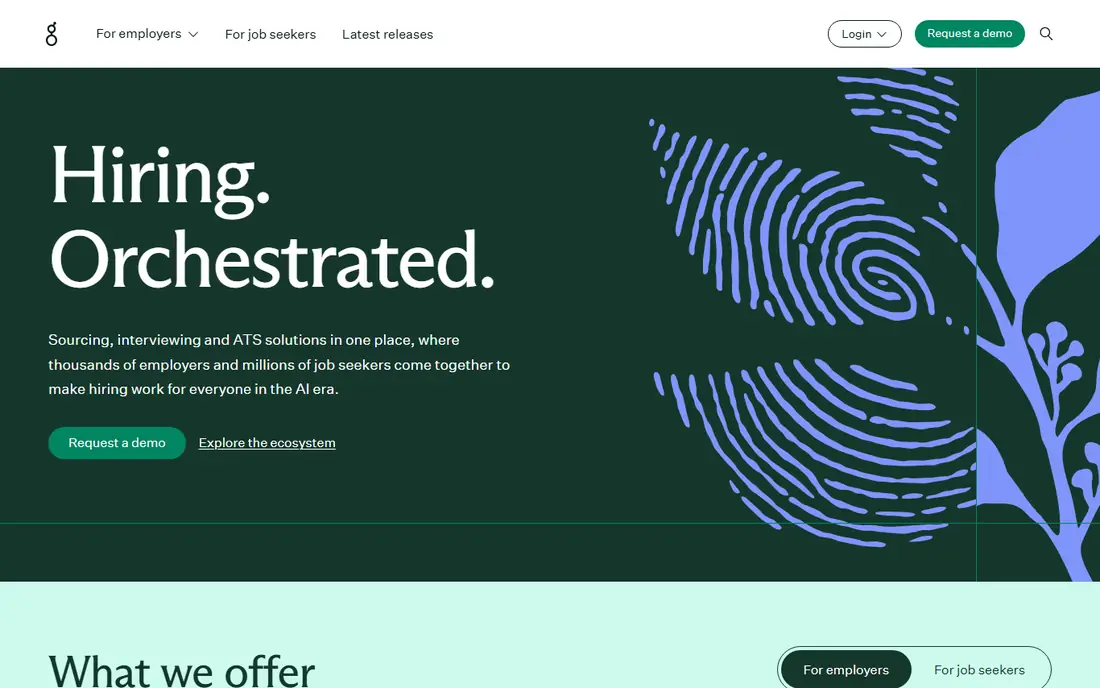
Greenhouse is built for teams that want every hire to follow the same structured process, from job approval to interview scorecards and offer. Automation covers stage moves, reminders, scheduling, and approvals, which reduces manual chasing as headcount grows. The integration range also helps larger teams connect HR, background checks, and job boards without custom work.
The main drawback is price transparency. Greenhouse is quote-only, so a small team cannot compare it quickly to a published plan. It can also feel heavy for a company hiring a few people a year. For a mid-size or enterprise team that values consistency and reporting, it remains a top pick.
- Structured interview kits and scorecards
- Strong automation and approvals
- Wide integration range
- Quote-only pricing
- More system than a tiny team needs

Lever pairs an applicant tracking system with a recruiting CRM, so teams can nurture candidates who are not ready yet, not only those who applied this week. Automation covers outreach sequences, reminders, and pipeline moves, while interview tools help teams capture feedback in a consistent way. That combination suits companies that hire repeatedly for similar roles.
Lever is also quote-only, and the CRM value drops if no one owns pipeline nurture. Teams that only post jobs and wait for applicants may pay for depth they do not use. For proactive hiring teams, though, the combined ATS and CRM saves a separate sourcing tool.
- ATS plus recruiting CRM in one
- Nurture sequences for passive candidates
- Interview intelligence options
- Quote-only pricing
- CRM depth needs disciplined use

Workable covers the full hiring cycle in one tool, from job posting and sourcing to screening, scheduling, offers, and optional HR features. Published pricing starts around $299 per month for smaller companies on annual billing, which makes it easier to compare than quote-only rivals. Automation includes AI screening, candidate messaging, and interview scheduling, plus an agent-style shortlisting feature on newer plans.
The price scales with company size, so a fast-growing team should model the next headcount band, not only the entry band. Workable is still a strong default for small and mid-size teams that want one system, clear pricing, and automation without enterprise complexity.
- Published pricing by headcount
- Job board distribution
- AI screening and scheduling automation
- Price rises with headcount
- Advanced HR features need higher plans
Ashby suits startups and scaleups that want hiring data without bolting on a separate reporting tool. Its analytics cover pipeline speed, source quality, interviewer load, and offer outcomes, while automation handles scheduling, reminders, and workflow moves. The combined ATS, CRM, and analytics design reduces the need for three separate vendors.
Entry pricing is listed around $400 per month for smaller companies, with custom pricing as headcount grows, so larger teams need a quote. There is no free plan, only a demo path. For a data-driven team that hires often, Ashby is worth that premium over a basic tracker.
- Native analytics
- Scheduling automation
- ATS, CRM, and analytics in one system
- No free plan
- Price rises with company size
Zoho Recruit is the budget pick in this list, with a free plan and a paid Standard plan commonly listed at $25 per recruiter per month on annual billing. It covers job posting, candidate tracking, workflow automation, resume parsing, and AI matching, plus a CRM view for staffing agencies. Teams already using Zoho apps get shared login and billing benefits.
The trade-off is polish and depth. Some workflows need more clicks than a premium ATS, and the best automation features sit on higher plans. For a solo recruiter, a small agency, or a Zoho-first company, Zoho Recruit gives real automation at a price few rivals match.
- Free plan
- Low paid entry price
- Workflow automation and AI matching
- Interface feels dated in places
- Depth varies by plan
Manatal is priced for agencies and small teams, with a Professional plan commonly listed at $15 per user per month on annual billing. It combines applicant tracking with a candidate CRM, AI scoring, social profile enrichment, and job board distribution. That mix suits recruiters who manage many clients or many open roles on a tight budget.
Enterprise reporting and compliance depth are thinner than Greenhouse or SmartRecruiters, so regulated large teams should test those needs carefully. For a small agency that needs sourcing, automation, and client tracking in one affordable tool, Manatal is a strong value pick.
- Low per-user price
- AI scoring and social enrichment
- Agency CRM features
- Smaller integration range than enterprise ATS tools
- Reporting is less deep
JazzHR has long appealed to small teams because its plans historically offered unlimited users for a flat monthly fee, which helps when many hiring managers need access. It covers job posting, a visual pipeline, candidate messaging, scheduling, and basic automation, without the complexity of an enterprise suite. The free trial lets a team test the workflow before paying.
Published pricing has varied, so we list it as See website rather than repeat an outdated figure. Automation is also lighter than Greenhouse or Ashby, especially for advanced analytics. For a small team that wants a simple, affordable tracker with room for many users, JazzHR remains worth a trial.
- Flat-rate style plans
- Unlimited users on some plans
- Simple visual pipeline
- Pricing has changed over time
- Automation depth is lighter than enterprise tools
Paradox, now linked with Workday, is built for high-volume hourly hiring in retail, hospitality, healthcare, and logistics. Its conversational assistant, Olivia, can screen candidates, answer questions, and schedule interviews by text or chat, which cuts time-to-hire when hundreds of applicants apply for similar roles. ATS integrations keep that flow connected to the system of record.
The price is quote-only, and the product is more than a small professional hiring team needs. If you hire a handful of salaried roles a year, a standard ATS is simpler and cheaper. If you hire frontline staff at scale, Paradox automation can remove the manual screening bottleneck that slows most teams.
- Conversational AI assistant for screening and scheduling
- Built for hourly and frontline volume
- Strong ATS integrations
- Quote-only pricing
- Overkill for low-volume professional hiring
Gem focuses on the top of the funnel: finding candidates, running outreach sequences, and tracking pipeline health. It suits teams that already have an ATS but need stronger sourcing automation, because it layers prospecting, messaging, and analytics on top of the existing system. Startup pricing has been listed around $130 per month for very small teams on annual billing, with custom pricing beyond that.
Gem is not the best first system for a team with no ATS at all, because it works best as a sourcing layer. For a growing team that struggles to fill pipelines rather than to track applicants, Gem automation can be the missing piece. Confirm ATS integration before you buy.
- Sourcing automation and sequences
- Pipeline analytics
- Works alongside many ATS tools
- Not a full ATS replacement for every team
- Pricing is custom for larger teams
SmartRecruiters suits larger enterprises that hire across countries, brands, and high volumes. Its Essential plan is published around $14,995 per year, with higher tiers quoted for larger needs. The platform covers job distribution, screening, collaboration, and a marketplace of integrations, plus AI matching on suitable plans.
The entry price alone rules it out for most small teams, and setup needs more planning than a simple tracker. For a global company that needs consistent hiring across regions, compliance support, and high-volume workflows, SmartRecruiters is a credible enterprise alternative to Greenhouse and Lever.
- High-volume global hiring platform
- Marketplace integrations
- AI matching options
- High entry price
- More system than a small team needs
How we picked these
We compared official feature pages, pricing pages, and public reviews, and we kept only tools that are live and fit recruiting automation, applicant tracking, or hiring workflow automation in October 2026. We weighed automation depth, scheduling, screening, sourcing, analytics, integration range, and price transparency. We did not claim hands-on testing, and we used See website where pricing is quote-only or has varied recently.
What to check before you choose
Start with your hiring volume and role type. A team hiring salaried professionals needs structured interviews and scorecards, while a team hiring hourly staff needs fast screening and scheduling. Buying the wrong type wastes money even when the feature list looks long.
Next, test the automation that saves the most time for your team: interview scheduling, candidate messaging, resume screening, offer approvals, and reminders. Run a real job through a trial, from posting to offer, and count the manual steps left. Then check job board distribution, ATS or HR integrations, and reporting, because a tool that cannot share data with payroll or HR creates new manual work.
Finally, model total cost for your actual team size. Some tools price by recruiter seat, some by headcount, and some by active jobs, so the cheapest entry plan can become costly as you grow. Pick the tool that automates your bottleneck at a price that still works at the next hiring band.
Frequently asked questions
What is the best recruiting automation software for small teams?
Workable, Zoho Recruit, Manatal, and JazzHR are strong small-team picks, because they combine tracking with scheduling and screening automation at lower prices. Workable is the simplest all-in-one choice, while Zoho Recruit and Manatal win on entry price. Test one real job before you commit.
What is the top recruiting software for automation?
Greenhouse and Lever lead for structured automation at larger scale, with approvals, scorecards, scheduling, and pipeline workflows. Ashby adds strong analytics for data-driven teams, while Paradox leads for high-volume hourly automation. The best choice depends on role type and hiring volume, not on feature count alone.
Do recruiting automation tools replace recruiters?
No. Automation handles scheduling, reminders, screening steps, and outreach sequences, but recruiters still judge fit, build relationships, and make final decisions. The best tools give recruiters more time for conversations by removing repetitive admin. Treat AI scores as a shortlist aid, not a hiring decision.
How much does recruiting software cost?
Entry prices range from free on Zoho Recruit to $15 per user per month on Manatal, $299 per month on Workable, and $400 per month on Ashby, while enterprise tools are quote-only or start near $14,995 per year on SmartRecruiters. Pricing models differ by seat, headcount, or active jobs, so compare total cost for your team size.
What automation features matter most?
Interview scheduling, candidate messaging, resume parsing, screening questions, stage reminders, and offer approvals save the most time for most teams. Sourcing sequences matter when pipelines are thin, while scorecards and analytics matter when hiring quality is the goal. Prioritize the bottleneck your team feels every week.
Is a recruiting CRM different from an ATS?
An ATS tracks applicants for open jobs, while a recruiting CRM nurtures candidates for future roles. Lever, Ashby, and Gem blend both, which helps teams that hire repeatedly for similar roles. A team that only fills occasional roles may not need CRM depth, while a proactive team will use it daily.
Sources
See where you really rank - block by block
ProMapRanker scans Google Maps across a grid of your service area. Simple monthly plans from $19, white-label on every plan.
Start freeKeep reading
 zscaler alternatives
Best Zscaler Alternatives in 2026
Looking for zscaler alternatives? We compare 9 SASE and zero trust platforms on architecture, data protection, pricing, and fit for your network and team.
Read → zapier alternatives free
Best Zapier Alternatives Free in 2026
Nine automation tools for zapier alternatives free in 2026, all with genuinely free tiers, plus free plan limits, starting prices and upgrade paths explained.
Read → which platform is best for online reputation
Which Platform Is Best for Online Reputation in 2026
Wondering which platform is best for online reputation? We compare 8 review, listing, and response tools for small and multi-location businesses and agencies.
Read →