 ProMapRanker
Best Reconciliation Software in 2026

Key takeaways
- Bank reconciliation and full account reconciliation are different jobs, so a small-business accounting tool may not replace a dedicated close tool.
- BlackLine and Trintech Cadency lead for enterprise teams with high volume, while FloQast and Numeric fit mid-market teams that need a faster close.
- QuickBooks Online and Xero cover bank reconciliation well for small businesses, but they lack close checklists, auto-certification, and intercompany matching.
- Most dedicated tools are quote-based, so get a written quote tied to entity count, account count, and modules before you compare prices.
- This is not financial advice, and audit rules still apply, so involve your auditor early to confirm evidence, approvals, and audit trail requirements.
Quick comparison
| Pick | Great for | Pricing starts at | Free tier | |
|---|---|---|---|---|
 BlackLine | Enterprise account reconciliation | See website | No | Visit |
 FloQast | Mid-market close management | See website | No | Visit |
 Trintech Cadency | Complex multi-entity close | See website | No | Visit |
 Adra by Trintech | Mid-market automation | See website | No | Visit |
 ReconArt | High-volume transaction matching | See website | No | Visit |
 Numeric | Modern close for growing teams | $30 per user per month | No | Visit |
 AutoRek | Financial services matching | See website | No | Visit |
 QuickBooks Online | Small-business bank reconciliation | $38 per month | No | Visit |
 Xero | Small-business bank reconciliation | $27 per month | Free trial | Visit |
The best reconciliation software
We compared official feature pages, pricing pages, and public pricing information for reconciliation tools that serve US finance teams. Here are nine that cover the main team sizes, from a solo bookkeeper to a multi-entity enterprise. Note the distinction used throughout: bank reconciliation matches bank feeds to the books, while account reconciliation ties balance-sheet accounts to supporting detail with preparer and reviewer sign-offs.
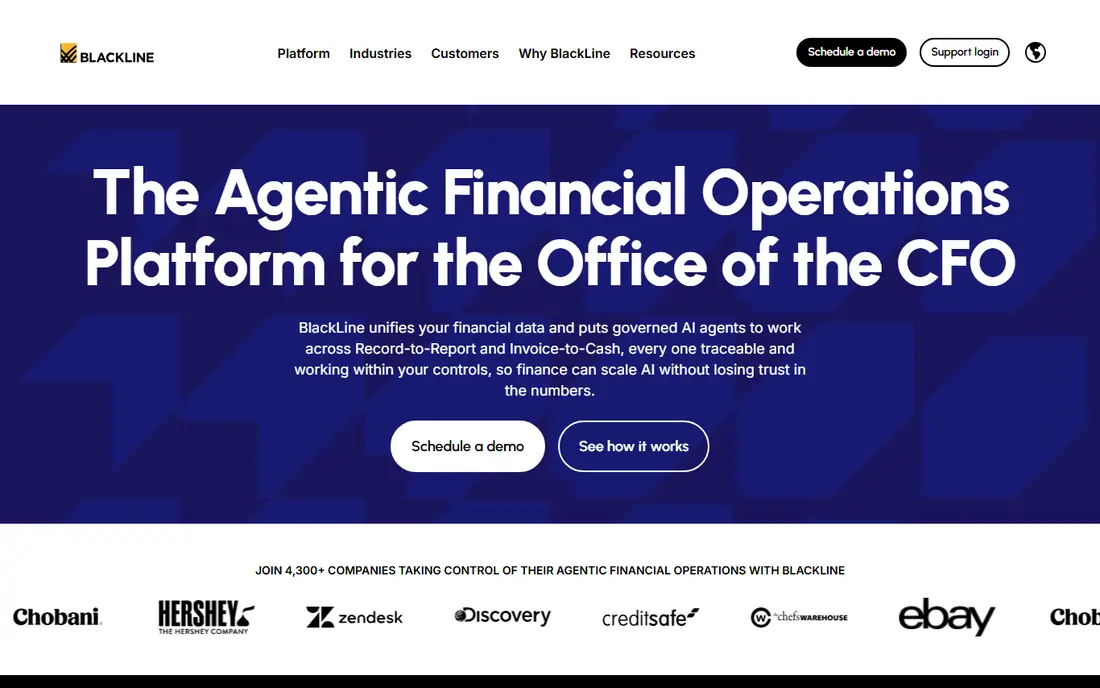
BlackLine suits a large finance team that reconciles many accounts each month and must prove controls to auditors. Its auto-certification feature certifies clean, low-risk accounts that meet set rules, so reviewers focus on exceptions instead of every account. Intercompany matching, journal automation, and close task tracking sit in the same platform, which helps multi-entity teams.
The cost and setup are the trade-offs. Pricing is module-based and quote-based, implementation often runs for months, and partner services can add a large sum on top of the subscription. Choose BlackLine when volume, entity count, and audit scrutiny already outgrow mid-market tools, not as a first step for a small close.
- Deep account reconciliation and close tools
- Auto-certification for clean accounts
- Strong SAP, Oracle, and NetSuite links
- Quote-based enterprise pricing
- Implementation takes months and often needs partner help
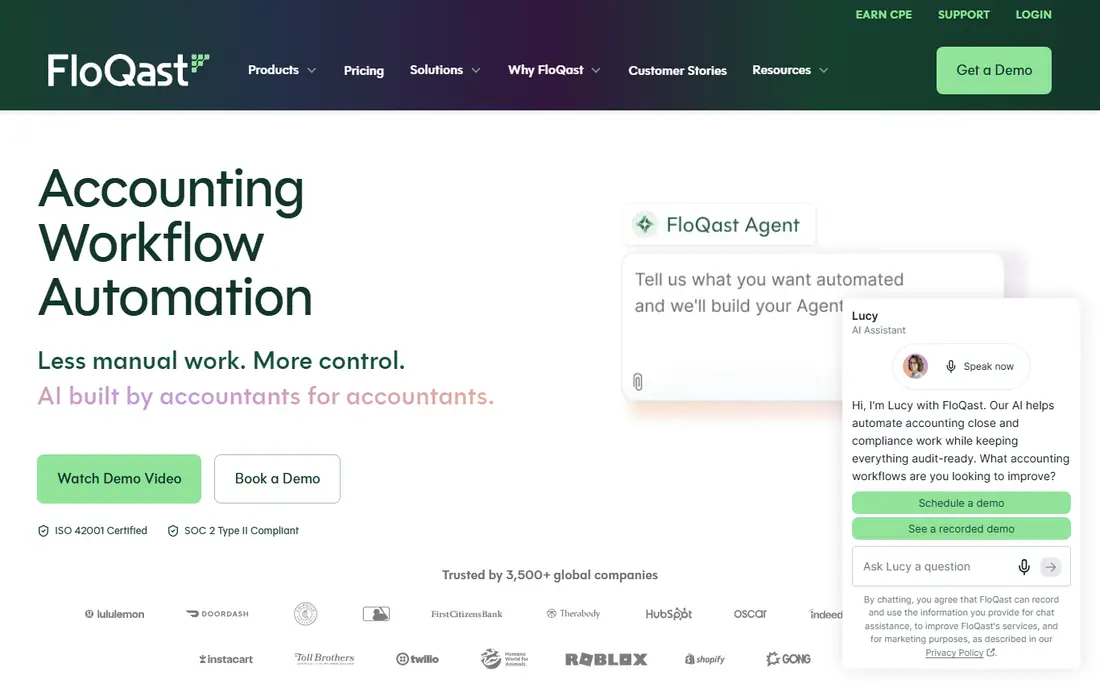
FloQast fits a mid-market accounting team that wants a faster, more visible close without redesigning its whole process. It pulls balances from the ERP, organizes close tasks with preparer and reviewer steps, and shows close progress in one dashboard. Teams often go live in weeks rather than months, which is fast for this category.
The limit is transaction detail. Core FloQast handles account-level tie-out, while transaction-level matching for bank accounts sits in the separately licensed AutoRec module. Confirm whether your quote includes AutoRec, and check data refresh timing, since ERP-to-FloQast updates are not always near-real-time.
- Accountant-friendly close checklists
- ERP balance tie-out
- AutoRec transaction matching as a separate module
- Quote-based pricing
- Core platform is not transaction-level matching without AutoRec

Trintech Cadency suits a complex, multi-entity organization that needs reconciliation, close tasks, journals, and reporting in one enterprise platform. Its matching engine handles high volumes and varied account types, and its exception tools help teams focus on items that need human review. For groups with many entities and currencies, that breadth matters.
Enterprise scope brings enterprise cost and setup time. Pricing is quote-based, implementation can take months, and configuration needs a clear close design before the tool feels useful. Choose Cadency when entity count, volume, and audit demands already exceed what mid-market tools handle well.
- End-to-end close for complex groups
- AI exception prediction
- Strong SAP, Oracle, and Workday links
- Quote-based enterprise pricing
- Implementation and configuration take time
Adra by Trintech fits a mid-market team that wants Trintech matching and automation without Cadency enterprise scale. It automates reconciliation preparation, flags exceptions, and organizes close work with approvals and audit trails. That balance helps teams that have outgrown spreadsheets but do not need a full enterprise close suite.
The trade-off is ceiling. Very complex multi-entity programs with heavy intercompany work may still need Cadency, and Adra pricing is quote-based, so you cannot compare it on a published list price alone. Get a quote on your account count and entity count, and ask which matching and reporting features sit in your tier.
- Strong automation without enterprise complexity
- Account reconciliation and close tasks
- Trintech matching heritage
- Quote-based pricing
- Less depth than Cadency for very complex groups
ReconArt suits a bank, fintech, payment firm, or large retailer that must match huge transaction volumes from many sources. Its matching engine handles varied file formats, partial matches, and timing differences, and it flags exceptions for investigation in a structured workflow. That specialist depth is why high-volume teams choose it over general close tools.
It is less of a general close manager than FloQast or BlackLine, so teams that also need close checklists, journals, and reporting may pair it with another tool. Pricing is quote-based, so ask for a quote tied to transaction volume and source count, since those drive cost more than seat count.
- Built for banks, fintechs, and large retailers
- High-volume transaction matching
- Flexible matching rules
- Quote-based pricing
- Specialist focus means less general close management than FloQast or BlackLine
Numeric fits a growing team that wants a modern, published-price close tool without enterprise sales complexity. Its starting price is $30 per user per month in public comparisons, and it covers reconciliation, close tasks, and reporting in a clean interface. SaaS and tech teams that already work in modern tools tend to adopt it quickly.
As a newer vendor, Numeric does not yet match BlackLine or Trintech depth for the largest, most complex closes. Test it on your hardest accounts, including intercompany and high-volume bank accounts, before you move a whole close over, and confirm which features sit on the $30 tier versus higher tiers.
- Published per-user starting price
- Modern close and reconciliation workflow
- Good for growing SaaS and tech teams
- Newer vendor than BlackLine or Trintech
- Depth for very large enterprises is still proving out
AutoRek suits a financial services firm that must reconcile complex, high-volume data from many systems with clear controls. It handles transaction matching, exception workflows, and audit trails in a way that fits regulated finance operations. Teams in banking, insurance, and investment operations often choose it for that specialist fit.
Pricing and implementation vary by data complexity, so a simple quote will not capture the full cost without a data review. Ask for a scoped quote that lists source systems, transaction volumes, and implementation steps, and involve your auditors early to confirm the evidence format they expect.
- Strong for financial services data
- Transaction matching and reconciliation workflows
- Audit trail and controls
- Quote-based pricing
- Implementation varies by data complexity
QuickBooks Online fits a small business whose main reconciliation job is matching bank and card feeds to the books. Every plan includes bank reconciliation with daily feeds, suggested matches, and bulk actions, and most US accountants already know the system. Simple Start starts at $38 per month in recent list prices, with higher tiers adding inventory, projects, and advanced reporting.
It will not replace a dedicated close tool. QuickBooks lacks close-management checklists, auto-certification, and intercompany matching, so a team with several preparers, many balance-sheet accounts, or audit scrutiny will outgrow it. Use it while the close is one or two people matching feeds, and move to FloQast, Numeric, or BlackLine when that stops being true.
- Bank reconciliation built into every plan
- Daily feeds and suggested matches
- Wide accountant familiarity in the US
- Bank rec only, not full account reconciliation
- No close checklists or auto-certification
Xero suits a small business with several people who need access, since it does not charge per user on any plan. Bank reconciliation, invoicing, and bills sit in a clean interface, and higher plans add multi-currency, projects, and analytics. Early starts at $27 per month in recent list prices, with Growing and Established tiers adding unlimited invoices and more features.
Like QuickBooks, Xero covers bank reconciliation, not full account reconciliation with close checklists and auto-certification. The lowest plan also caps invoices and bank transactions, so a growing business should price the Growing tier rather than Early. Choose Xero when user access and simplicity matter most, and add a dedicated close tool when the close grows beyond bank feeds.
- Clean bank reconciliation on every plan
- Unlimited users
- Strong multi-currency support on higher plans
- Bank rec only, not full account reconciliation
- Invoice and transaction caps on the lowest plan
How we picked these
We compared official feature pages, pricing pages, and public pricing information for tools that perform bank, account, or transaction reconciliation. We kept only tools that exist and work now and that clearly fit reconciliation work, and we mixed enterprise, mid-market, specialist, and small-business tools, since the right fit depends on volume, entity count, and audit needs. We left out general accounting tools that do not offer structured reconciliation beyond a basic bank feed.
What to check before you pay
Start with the trigger for a dedicated tool. If one person matches bank feeds and the close takes a day, QuickBooks Online or Xero is enough. If two or more people touch the close, if you reconcile dozens of balance-sheet accounts, or if auditors ask for approvals and audit trails, a dedicated tool such as FloQast, Numeric, Adra, BlackLine, or Cadency will pay for itself in the first close cycle.
Quote on accounts, entities, and volume
Ask every dedicated vendor for a written quote tied to your entity count, account count, transaction volume, and modules. Seat count alone does not set price in this category, and AutoRec, intercompany, and reporting modules can change the total sharply. Confirm implementation time, data migration steps, and whether ERP links are included or charged separately.
Test your hardest accounts first
Run a trial or pilot on your hardest accounts, not your easiest ones. Test bank accounts with high volume, intercompany accounts, prepaids, and accruals, and check that matching rules handle partial matches, timing differences, and multi-currency rounding. Involve your auditor in the pilot, so the approval workflow and audit trail match what they will ask for at year-end.
Frequently asked questions
What is the best account reconciliation software for a mid-market team?
FloQast and Numeric are the most practical mid-market picks, since they combine close visibility with reconciliation at a faster implementation pace than enterprise tools. Adra by Trintech is a strong alternative when matching automation matters more than close dashboards.
What are the best reconciliation tools for enterprise teams?
BlackLine and Trintech Cadency lead for enterprise teams, since they handle high volumes, many entities, and audit-grade controls in one platform. ReconArt and AutoRek lead for specialist high-volume matching in financial services, banks, and large retailers.
Can QuickBooks or Xero replace dedicated reconciliation software?
For bank reconciliation alone, yes, since both include bank feeds, suggested matches, and bulk reconciliation. For full account reconciliation with close checklists, preparer and reviewer sign-offs, auto-certification, and intercompany matching, they cannot replace a dedicated tool.
How much does reconciliation software cost?
Small-business accounting tools in this guide start at $27 to $38 per month, Numeric starts at $30 per user per month, and most dedicated tools are quote-based. Mid-market dedicated tools often run into five figures per year, while enterprise tools can reach six figures, so always get a quote on your exact scope.
How long does implementation take?
Mid-market tools such as FloQast and Numeric often go live in weeks, while enterprise platforms such as BlackLine and Trintech often take several months, including data preparation, rule setup, and parallel close testing. Specialist tools such as AutoRek vary by data complexity, so ask for a scoped timeline before you sign.
Sources
See where you really rank - block by block
ProMapRanker scans Google Maps across a grid of your service area. Simple monthly plans from $19, white-label on every plan.
Start freeKeep reading
 zscaler alternatives
Best Zscaler Alternatives in 2026
Looking for zscaler alternatives? We compare 9 SASE and zero trust platforms on architecture, data protection, pricing, and fit for your network and team.
Read → zapier alternatives free
Best Zapier Alternatives Free in 2026
Nine automation tools for zapier alternatives free in 2026, all with genuinely free tiers, plus free plan limits, starting prices and upgrade paths explained.
Read → which platform is best for online reputation
Which Platform Is Best for Online Reputation in 2026
Wondering which platform is best for online reputation? We compare 8 review, listing, and response tools for small and multi-location businesses and agencies.
Read →