 ProMapRanker
Best Real Estate Investment Apps in 2026

Key takeaways
- Fundrise and Arrived are the most accessible starting points, with low minimums and no accreditation needed for core offers.
- Groundfloor suits short-term real estate debt, while EquityMultiple and CrowdStreet suit accredited investors seeking private deals.
- Liquidity is limited on most platforms, so only invest money you can leave untouched for years.
- Fees, lock-ups, and tax reporting vary by platform and deal, so read each offering document before investing.
- This is not financial advice, and real estate investments can lose value.
Quick comparison
| Pick | Great for | Pricing starts at | Free tier | |
|---|---|---|---|---|
 Fundrise | Low-minimum diversified funds | $10 minimum | No | Visit |
 Arrived | Picking individual rental homes | $100 minimum | No | Visit |
 Groundfloor | Short-term real estate loans | $10 minimum | No | Visit |
 Ark7 | Fractional rental shares | $20 minimum | No | Visit |
 EquityMultiple | Accredited private deals | $5,000 minimum | No | Visit |
 CrowdStreet | Accredited individual deals | $25,000 minimum | No | Visit |
 Roofstock | Buying and owning rental homes | See website | No | Visit |
 Yieldstreet | Multi-asset private investments | See website | No | Visit |
 AcreTrader | Farmland investments | $15,000 minimum | No | Visit |
The best real estate investment apps
Real estate investment apps let you buy a share of properties, funds, or real estate loans without buying a whole building. That lowers the entry cost, but it also adds fees, lock-ups, and risks that differ from a savings account or a stock index fund. We compared minimums, fees, accreditation rules, liquidity, and property types, using platform sites and October 2026 comparisons. This article is for information only. This is not financial advice, and you can lose money.
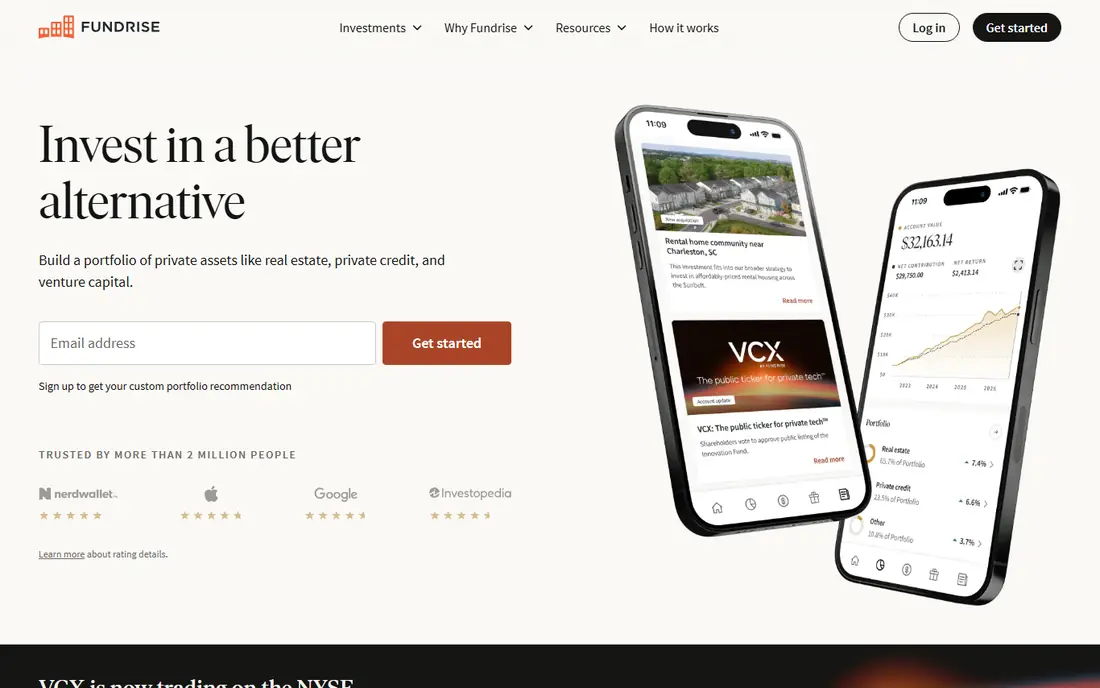
Fundrise is the easiest starting point for most new real estate investors. You choose a strategy, such as income, balanced, or growth, and Fundrise spreads your money across funds holding residential and commercial properties and loans. The $10 minimum makes it possible to start small and learn how the platform reports income, fees, and value changes.
Liquidity is the main limit. Redemptions are generally quarterly and can be limited or suspended, and early withdrawals may carry penalties, so this is long-term money. The annual fee is near 1 percent, split between advisory and management fees. If you want broad diversification with a tiny starting amount, Fundrise is our first pick for beginners.
- Very low $10 minimum
- Diversified fund approach
- No accreditation needed for core funds
- Limited liquidity with quarterly redemptions
- Annual fee near 1 percent
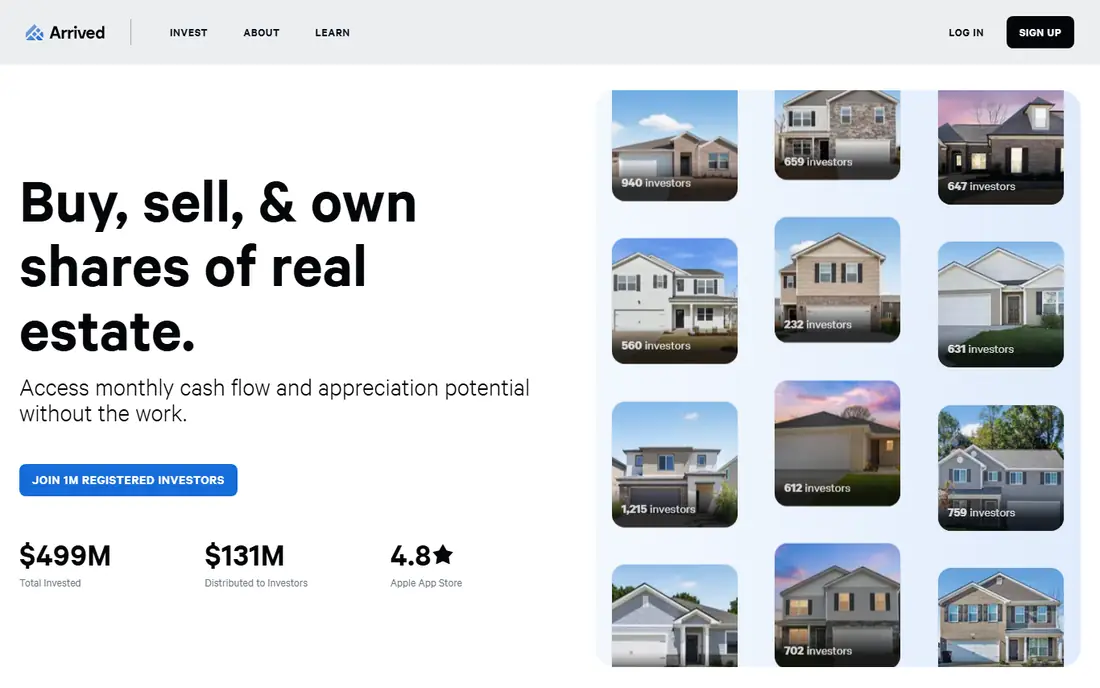
Arrived lets you buy shares in specific single-family rental homes and vacation rentals, starting at $100 per offering. That appeals to investors who want to see the actual property, location, and rent details behind their investment, rather than only a fund strategy. Dividends are generally paid quarterly from rental income, and Arrived manages the property.
The catch is exit. You generally hold until the home sells, or sell shares to other Arrived investors where that market is available, so timing is uncertain. Fees include sourcing and management costs, plus property management costs, so read each offering document carefully. If picking individual homes matters to you, Arrived is a clear, accessible choice.
- Choose specific rental or vacation homes
- Quarterly dividends from rent
- No accreditation needed for core offers
- Limited secondary market
- Property costs and fees affect returns
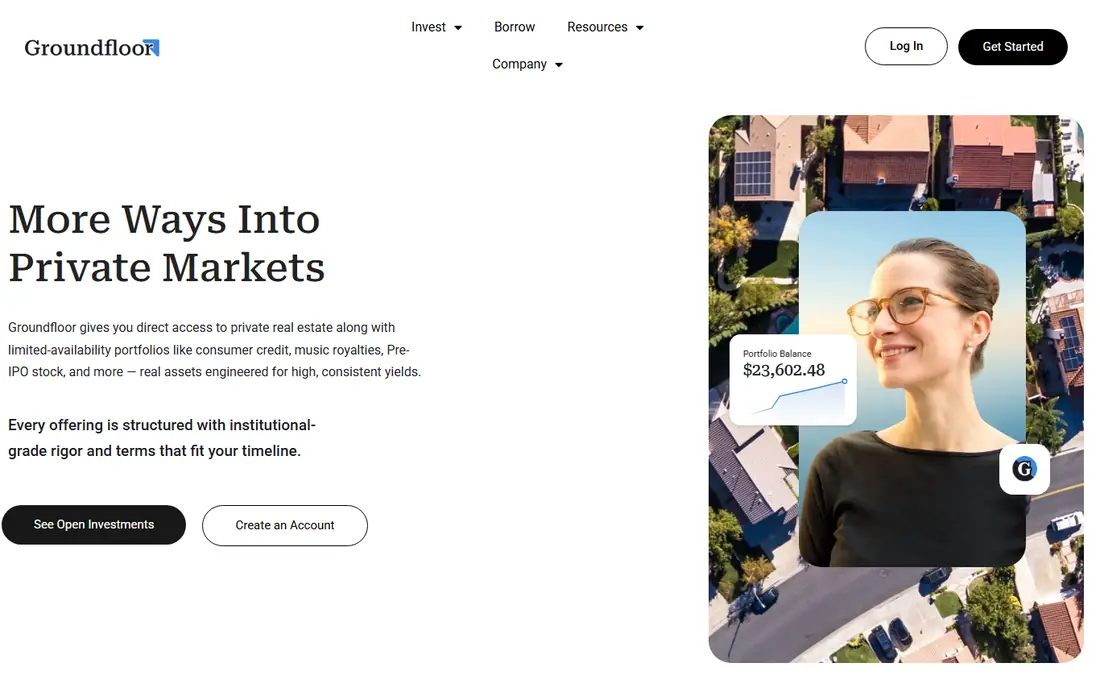
Groundfloor is different from Fundrise and Arrived, because you invest in real estate loans rather than owning property shares. Loans are often short-term, which can mean faster repayment than a multi-year property hold, and the $10 minimum keeps entry low. That structure suits investors who want debt exposure rather than landlord-style equity exposure.
Risk is also different. If a borrower fails to repay, your return can fall, and loan outcomes vary by project and market. Groundfloor does not guarantee returns, and past loan performance does not predict future results. For investors who understand loan risk and want shorter terms, Groundfloor is a useful, low-minimum option.
- Low $10 minimum
- Short loan terms
- Fractional loan investing
- Loan risk if borrowers default
- Returns depend on loan performance
Ark7 lets you buy shares in rental properties starting at $20, with monthly dividend payouts as an aim where properties perform. The app-style browsing feels similar to picking stocks, but the underlying asset is a share in a property company, not a whole home. That makes it easy to start with a small amount and spread across a few properties.
As a smaller platform, Ark7 has less scale and liquidity than larger rivals, so exits depend on property sales or available secondary options. Fees include sourcing costs, so check each property page for the full fee picture. If you want low-minimum, property-specific investing with monthly payouts, Ark7 is worth a look.
- Low $20 minimum
- Choose specific rental properties
- Monthly dividend aim
- Smaller platform than Fundrise
- Limited liquidity and secondary options
EquityMultiple is for accredited investors who want access to individual commercial real estate deals. You can review debt, preferred equity, and equity offers, with deal documents, risk summaries, and fee details for each one. That transparency helps experienced investors compare deals on structure, not just headline terms.
The limits are clear: a $5,000 minimum, accreditation rules, and long holds with little or no early exit. Fees range by deal, often near 0.5 to 1.5 percent annually plus deal-level fees. This is not a beginner platform, but for accredited investors who want deal choice, EquityMultiple is a strong option.
- Access to private debt and equity deals
- Deal-level detail
- Professional underwriting summaries
- Accredited investors only
- Long holds, often five to seven years
CrowdStreet runs a marketplace where accredited investors can browse individual commercial deals and funds from different sponsors. Deal pages include sponsor background, property details, and projected terms, which helps experienced investors do their own checks. Funds offer more diversification than a single deal, at a lower minimum than some individual offers in some cases.
The $25,000 minimum for many individual deals puts CrowdStreet out of reach for beginners, and holds often run three to seven years. There is generally no early exit until a deal sells or refinances. For accredited investors who want a broad deal marketplace, CrowdStreet is one of the main platforms to compare.
- Large marketplace of individual deals
- Detailed sponsor and deal information
- Fund options
- High $25,000 minimum
- Accredited only
- Very limited liquidity until exit
Roofstock is for investors who want to own a whole rental property, not just a share. Its marketplace lists single-family rental homes, often with tenants in place, plus inspection, valuation, and property management services. That suits investors who want direct ownership and are ready for the costs and duties that come with it.
This is a different commitment from fractional apps. You need a full purchase budget, financing if used, and reserves for repairs and vacancies, even with a manager. Roofstock also offers fractional options in some cases, but its core strength is whole-home ownership. If direct ownership is your goal, Roofstock is the most focused marketplace on this list.
- Buy whole rental homes with tenants in place
- Marketplace and management services
- Data on rents and neighbourhoods
- Full purchase cost, not fractional
- Landlord risks remain even with management
Yieldstreet is broader than a pure real estate platform, because it also offers other private assets alongside real estate deals. That can suit investors who want private market diversification in one account, rather than opening a new platform for each asset type. Offerings are curated, with documents and risk disclosures for each one.
Complexity is the trade-off. Minimums, fees, accreditation rules, and lock-ups vary by offering, so you cannot judge Yieldstreet from a single number. Real estate is only part of the story here, and liquidity is generally low. For experienced investors building a private portfolio, Yieldstreet is a useful complement, not a simple starter app.
- Real estate alongside art, legal, and other private assets
- Curated offerings
- IRA options in some cases
- Accreditation rules vary by offering
- Minimums and fees vary widely
AcreTrader focuses on farmland, which is a distinct part of real estate investing. Investors can review individual farms, soil and water details, tenant farmers, and lease terms, rather than only city apartments or offices. That specificity appeals to investors who want land exposure and understand agricultural cycles.
The barriers are high: accreditation, a $15,000 minimum per farm in many cases, and a hold until the farm sells. Fees vary by offering, and farm income depends on leases, crops, and markets. For accredited investors who want farmland specifically, AcreTrader is the clearest dedicated platform. For general real estate exposure, start with Fundrise or Arrived instead.
- Access to farmland deals
- Farm-level detail
- Long-term land and income exposure
- Accredited investors only
- High minimum
- Hold until farm sells
How we picked these
We compared official platform pages, offering documents, and October 2026 crowdfunding comparisons. We favoured platforms that are open to new investors now, with clear minimums, fees, and liquidity terms. We left out platforms that had paused new money or suspended redemptions in 2026, because a platform you cannot enter or exit cleanly is a poor recommendation.
We also kept investor type separate. A platform for accredited investors is not better or worse than a low-minimum platform; it serves a different investor. The list therefore includes accessible, accredited-only, debt, equity, and farmland options, with risks stated plainly.
What to check before you buy
Read the offering, not just the app page
Each fund or property has its own fees, risks, and tax treatment. Read the offering document, check how income is reported, and note whether you will receive tax forms that arrive after the normal filing season. If any term is unclear, ask the platform before investing, and keep the answer in writing.
Plan for illiquidity
Assume your money is locked up for years on most platforms, even where quarterly redemptions exist. Only invest money you will not need for living costs, emergencies, or near-term goals. A diversified portfolio should not depend on selling a fractional property share quickly.
Compare fees on a like-for-like basis
Some platforms charge an annual asset fee, some charge sourcing fees, and some charge property management fees on top. Add those together for a single property or fund before comparing returns. A lower headline fee can hide higher property-level costs, and a higher fee can be fair if management and reporting are stronger.
Frequently asked questions
What is the best real estate investment platform for beginners?
Fundrise is often the best starting point, because the minimum is $10 and the fund approach spreads risk across many properties. Arrived is a good second option if you want to pick individual rental homes starting at $100. Both are long-term, illiquid investments, so start small.
What is the best real estate investment app for $100?
Arrived starts at $100 per offering, while Fundrise starts at $10 and Groundfloor starts at $10. The best choice depends on whether you want a fund, a specific rental home, or a real estate loan. Check fees and liquidity for each option before choosing.
What is the top real estate investment software for accredited investors?
EquityMultiple and CrowdStreet are strong for accredited investors who want individual deals, while AcreTrader suits farmland and Yieldstreet suits multi-asset private investing. Accredited platforms offer more deal choice, but also higher minimums and longer holds.
Are real estate investment apps safe?
They are regulated in various ways, but they are not bank accounts and they are not guaranteed. Property values can fall, tenants can leave, and loans can default. Platform risk also matters: read offering documents, check fee and redemption terms, and only invest money you can afford to lose.
How do I get my money out of a real estate investment platform?
Exits vary: Fundrise offers quarterly redemptions that can be limited, Arrived generally relies on a property sale or a secondary market, and private deals often hold until exit. Some platforms have no early exit at all. Check the exit terms for each offering before investing, not after.
Sources
See where you really rank - block by block
ProMapRanker scans Google Maps across a grid of your service area. Simple monthly plans from $19, white-label on every plan.
Start freeKeep reading
 zoho inventory alternatives
6 Alternatives to Zoho Inventory, Compared on Price and Fit
Zoho Inventory alternatives: 6 tools compared on price, free plans and fit. Katana leads the list for manufacturers. Fit and flaws are laid out for each entry.
Read → zoho crm alternatives
Best Zoho CRM Alternatives (2026)
Need Zoho CRM alternatives? We compare 7 tools on cost, free access and who each suits. Every pick gets a straight assessment. Built for quick decisions.
Read → zelle alternatives
Best Zelle Alternatives in 2026
Compare the best Zelle alternatives for sending money to friends, paying sellers and moving funds abroad, with honest notes on fees, speed and safety in 2026.
Read →