 ProMapRanker
Best Real Estate Crowdfunding Platforms in 2026

Key takeaways
- Fundrise, Arrived, Groundfloor, Ark7, Streitwise, Concreit, and Lofty accept non accredited investors on at least some offerings, while CrowdStreet and EquityMultiple focus on accredited investors.
- Low minimums do not mean easy exits, since most holdings are illiquid and redemptions can be limited, delayed, or suspended.
- Rental platforms, commercial deal platforms, and debt platforms carry different risks, so match the platform type to the risk you can accept.
- Fees, hold periods, and tax forms differ by offering, so read the offering documents before you invest, not only the marketing page.
- This article is general information only and is not financial advice, and no platform here promises a return.
Quick comparison
| Pick | Great for | Pricing starts at | Free tier | |
|---|---|---|---|---|
 Fundrise | Diversified fund investing | $10 minimum | No | Visit |
 Arrived | Single family rental shares | $100 minimum | No | Visit |
 Groundfloor | Short term real estate debt | $10 minimum | No | Visit |
 EquityMultiple | Accredited commercial deals | $5,000 minimum | No | Visit |
 CrowdStreet | Accredited commercial deals | See website | No | Visit |
 Ark7 | Fractional rental homes | $20 minimum | No | Visit |
 Streitwise | Commercial real estate income | See website | No | Visit |
 Concreit | Small balance real estate funds | $1 minimum | No | Visit |
 Lofty | Fractional rental tokens | $50 minimum | No | Visit |
The best real estate crowdfunding platforms
Real estate crowdfunding lets many investors pool money into property funds, single properties, or property loans. The platforms below are not interchangeable. Some run diversified funds, some sell shares in one home, and some sell notes backed by short term loans. That structure decides how your money is used, how long it may be locked up, and how you get paid, if at all.
This article is general information only and is not financial advice. Real estate values can fall, loans can default, tenants can leave, and distributions can stop. Do not invest money you may need soon, and check each offering document for fees, hold periods, and risks before you commit funds.
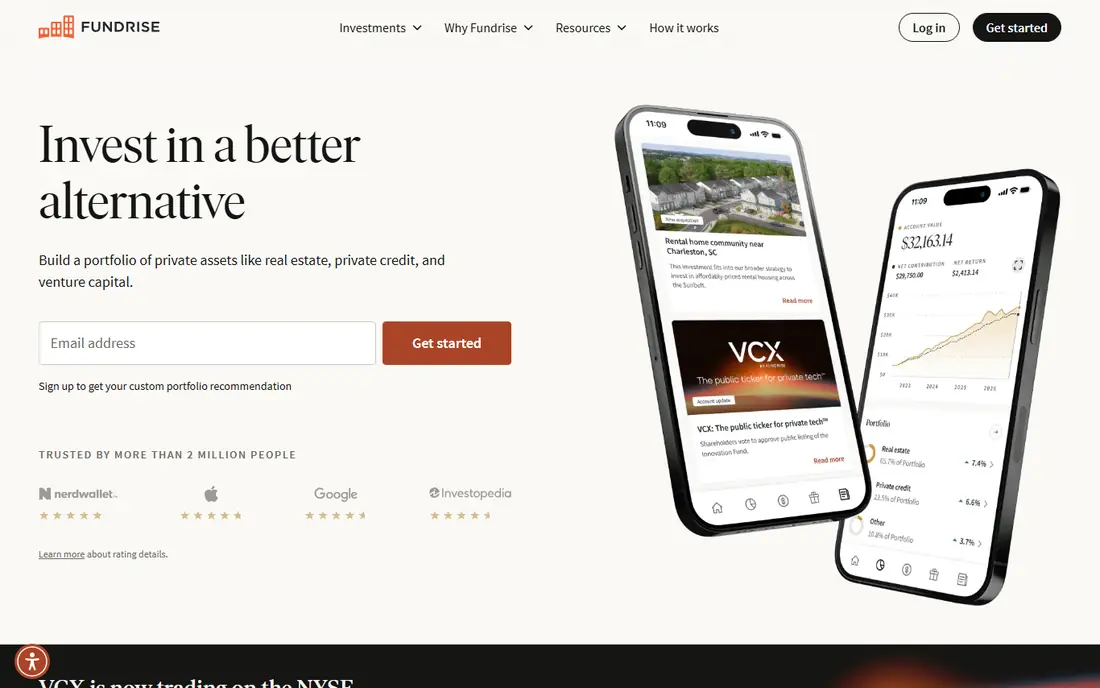
Fundrise is the simplest entry point for a new investor who wants property exposure without picking a single building. Investors buy shares in funds that hold a mix of residential and commercial assets, and the platform manages acquisition, management, and reporting. A $10 minimum keeps the first step small, which helps a beginner learn how fund statements, distributions, and tax documents work.
The limit is liquidity. Fund shares are not traded on a public exchange, and redemption windows are conditional, so you should treat this money as long term capital. Returns are not promised, and past fund results do not guarantee future results. Fundrise suits an investor who wants diversification and can leave money invested through a full market cycle.
- Low minimum on many plans
- Diversified funds across property types
- Simple app based account setup
- Redemptions are limited and can be delayed
- Fund performance varies by market cycle
- Fees apply at fund level
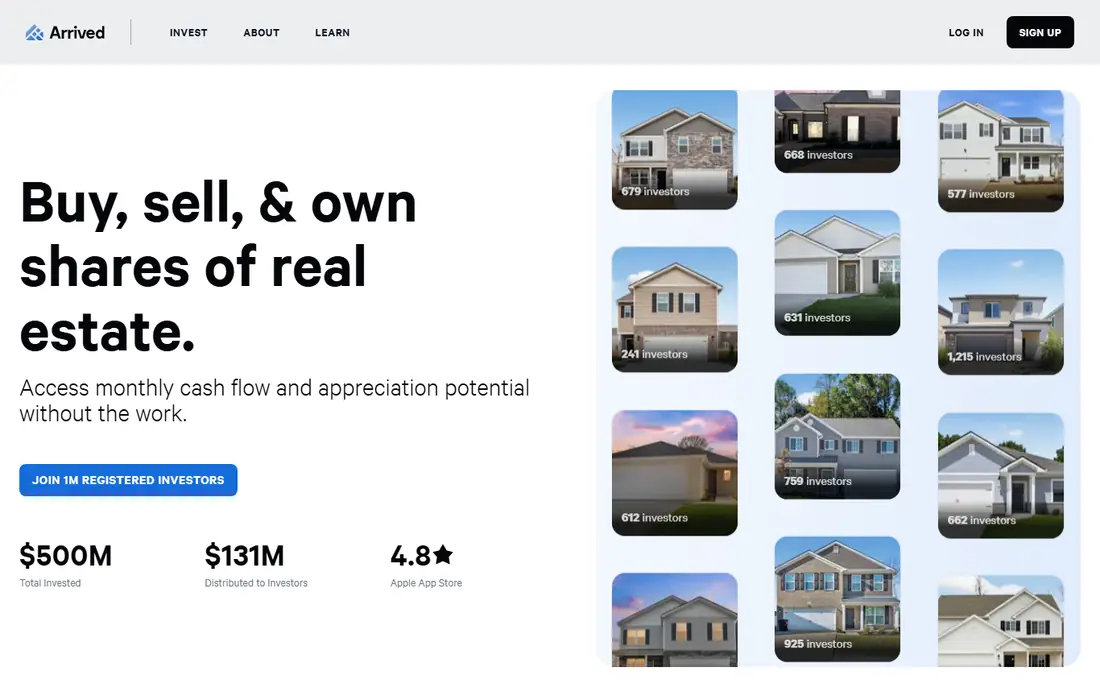
Arrived sells shares in individual single family homes and vacation rentals, so you can review a specific property, its rent estimate, and its market before you invest. That property level choice appeals to investors who like to understand exactly what they own, rather than trusting a broad fund allocation. Rental income, when paid, comes from the home you selected.
Owning a slice of one home also concentrates risk. A vacancy, a major repair, or a weak local market hits that property directly, and there is no broad portfolio to soften the blow. Selling shares before the home sells depends on Arrived resale options, which are not guaranteed. Arrived fits an investor who wants rental exposure and accepts single asset risk in exchange for choice.
- Choose individual rental homes
- Rental income plus potential appreciation
- Clear property level details
- Single property risk is higher than a fund
- Resale options are limited
- Vacancy and repairs affect income

Groundfloor focuses on debt, not ownership. Investors fund portions of short term loans secured by real estate, often for renovation or bridge projects, and are repaid when the loan matures or the property is sold or refinanced. Short terms, often measured in months rather than years, appeal to investors who do not want a five to seven year equity hold.
Debt still carries real risk. If a borrower fails to repay, recovery can take time and may return less than the original amount. Diversifying across many small loans reduces single loan risk, but it does not remove market risk if property values fall across a region. Groundfloor suits an investor who understands lending risk and wants shorter terms than most equity platforms offer.
- Low minimum per loan
- Short loan terms relative to equity deals
- Many loans to review
- Loan defaults are possible
- Returns depend on borrower repayment
- Some offerings have eligibility limits
EquityMultiple serves accredited investors who want direct access to commercial real estate deals, including multifamily, office, industrial, and other property types. Each deal carries its own documents, sponsor, fee structure, and target hold period, so an investor can compare equity upside with debt income and preferred equity positions. That choice is the main draw for experienced investors.
The trade off is access and patience. Most deals require accreditation, minimums start at $5,000 on many offerings, and capital is typically locked until a deal exits, which can take years. Deal quality depends heavily on the sponsor, so read sponsor history, fee layers, and exit assumptions with care. EquityMultiple fits an accredited investor building a private deal portfolio, not a beginner seeking quick liquidity.
- Commercial equity, debt, and preferred equity deals
- Detailed deal documents
- Diversified deal types
- Accredited investors only for most deals
- Long hold periods
- Deal availability varies
CrowdStreet runs a marketplace where accredited investors can review commercial real estate offerings from many sponsors, as well as diversified fund options. The breadth of deals is useful for an investor who wants to compare markets, property types, and sponsors in one place, rather than joining a single sponsor platform. Deal pages typically include financial projections, sponsor background, and fee details.
Single deal minimums are often high, and holds can run several years with no interim exit. That structure rewards an investor who can commit capital for a full cycle and who can assess sponsor risk independently. CrowdStreet is not a liquid savings product, and it is not suited to money needed for a near term goal. Check current minimums on the site, since they vary by offering.
- Large marketplace of commercial deals
- Fund options alongside single deals
- Sponsor and deal screening
- Accredited investors only
- High minimums on many single deals
- Long, illiquid holds
Ark7 offers fractional shares in rental properties, with share prices that start low enough for a new investor to test the model. Investors can pick homes by market and property type, and distributions, when paid, reflect rental performance after costs. The platform also provides a resale feature for some shares, which can help, though it does not guarantee a buyer or a price.
As with Arrived, the key risk is concentration in one property. Rent, vacancy, taxes, insurance, and maintenance all affect cash flow, and a weak property can underperform even when the broader housing market is steady. Ark7 suits an investor who wants to start small, learn property level investing, and accept that distributions can vary or stop.
- Low share prices for rental homes
- Monthly distributions when properties perform
- Property level selection
- Single property risk
- Distributions are not guaranteed
- Resale market is limited
Streitwise operates a real estate investment trust structure focused on commercial properties, with an emphasis on income rather than short term trading. For an investor who wants commercial exposure without selecting individual deals, a REIT style fund is simpler to hold and easier to understand than a set of single deal positions. The platform publishes property and fund details for review.
The limits are the usual ones for private REITs. Shares are not listed on a public exchange, redemptions can be limited, and distributions depend on property income and fund costs. Commercial property also carries tenant and lease risk, since a lost tenant can cut income until space is relet. Streitwise fits a long term income focused investor who accepts illiquidity.
- Focus on income producing commercial property
- REIT structure for eligible investors
- Regular distribution aim
- Distributions are not guaranteed
- Shares are illiquid
- Commercial values move with market cycles
Concreit offers real estate funds with a very low entry point, which makes it useful for an investor who wants to learn the category with a small amount. Some funds aim for regular distributions, and the fund structure spreads money across more assets than a single property share. That combination of low minimum and diversification is rare in this category.
A low minimum does not reduce risk. Read the fund documents for fees, asset types, borrowing, and redemption terms, since those details decide the real return more than the headline distribution aim. Concreit suits a cautious beginner who will start small, read the documents, and treat the position as long term money.
- Very low minimum
- Weekly distribution aim on some funds
- Simple fund based structure
- Distributions are not guaranteed
- Fund fees and terms matter
- Liquidity is limited
Lofty sells fractional interests in rental properties using a token based record system, with listings that show rent, costs, and property details. The low minimum and property level choice resemble other fractional rental platforms, while the token structure is meant to make ownership records and transfers simpler. Rental income, when generated, is shared with fractional owners after costs.
The token label does not remove property risk. Tenants, repairs, local markets, and management costs still decide results, and a resale marketplace does not guarantee a buyer at a given price. Investors should also check how tokens are treated for tax and custody in their state. Lofty fits an investor comfortable with a newer ownership record model who still judges each property on rent and costs.
- Fractional rental ownership from a low amount
- Rental income aim
- Property level listings
- Token model adds complexity
- Resale depends on marketplace demand
- Property risks still apply
How we picked these
We compared official platform pages, offering descriptions, and current eligibility and minimum information from public sources in October 2026. We favored platforms open to new investors with clear offering documents, and we excluded platforms reported as closed to new money or with suspended redemptions at the time of writing. We kept a mix of funds, single property shares, and debt notes, because those structures carry different risks.
What to check before you invest
Start with the offering document, not the homepage. Look for the fee schedule, the hold period, the redemption terms, the sponsor track record, and the tax form you will receive. A platform that hides those details, or that promises a fixed return, should be treated with caution, since real estate returns vary and losses are possible.
Match the hold period to your plans. Money in a commercial deal or a private REIT may be locked for years, while a short term debt note may return capital sooner but still carries default risk. Diversify across deals or funds if you invest a larger amount, keep an emergency fund separate from these illiquid holdings, and consider speaking with a qualified financial professional about how private real estate fits your overall plan.
Frequently asked questions
What is the best real estate crowdfunding platform for beginners?
Fundrise and Arrived are common starting points for different reasons. Fundrise offers diversified funds with a low minimum, while Arrived lets you pick a single rental home. Beginners should start small, read the offering documents, and treat the money as long term capital.
What is the best platform for real estate crowdfunding for non accredited investors?
Several platforms accept non accredited investors on some offerings, including Fundrise, Arrived, Groundfloor, Ark7, Streitwise, Concreit, and Lofty. Eligibility still varies by offering and by state, so check the specific fund or property page before you assume you can invest.
How much money do I need to start real estate crowdfunding?
Minimums range from $1 on Concreit and $10 on Fundrise and Groundfloor to $5,000 or more on many accredited commercial deals. A low minimum is a way to learn, not a sign that the investment is low risk or easy to sell.
Can I sell my real estate crowdfunding investment quickly?
Usually not. Most shares and notes are illiquid, and any redemption or resale program can be limited, delayed, or suspended. Only invest money you can leave in place for the full stated hold period, and longer if an exit is delayed.
Is real estate crowdfunding safe?
It carries real risks, including property value declines, loan defaults, vacancies, sponsor failure, and illiquidity. Diversification, sponsor review, and a long horizon reduce some risks, but they do not remove them. This article is general information only and is not financial advice.
What taxes apply to real estate crowdfunding income?
Tax treatment depends on the structure, since REIT shares, partnership deals, and debt notes report income differently. Some investors receive a Schedule K-1 that can arrive after the normal filing deadline. Check the offering documents and speak with a tax professional about your situation.
Sources
See where you really rank - block by block
ProMapRanker scans Google Maps across a grid of your service area. Simple monthly plans from $19, white-label on every plan.
Start freeKeep reading
 zoro.to alternatives
Best Zoro.to Alternatives in 2026
We compare the best zoro.to alternatives in 2026, listing only legal licensed anime streaming services, from Crunchyroll to free options for fans today.
Read → zip alternatives
Best Zip Alternatives in 2026
We compare the best zip alternatives for buy now, pay later in 2026, covering pay-in-4 plans, fees, spending limits, and credit reporting options today.
Read → yesware alternatives
Best Yesware Alternatives in 2026
Compare the best yesware alternatives for sales email tracking, templates, and sequences, with current pricing and honest tradeoffs for small sales teams.
Read →