 ProMapRanker
Best Reading Apps for 1st Graders in 2026

Key takeaways
- Reading Eggs and Hooked on Phonics give the most structured phonics path for 1st graders, while Khan Academy Kids and Duolingo ABC are the strongest free options.
- A good 1st grade app mixes phonics lessons, decodable practice, and real books, rather than only games or only a library.
- Short daily sessions of about 15 to 20 minutes work better than long, infrequent sessions for most 6 and 7 year olds.
- Check each app for ads, in app purchases, and data collection before you hand it to a child, and prefer apps with a clear kids privacy policy.
Quick comparison
| Pick | Great for | Pricing starts at | Free tier | |
|---|---|---|---|---|
 Khan Academy Kids | Free early learning | Free | Yes | Visit |
 Duolingo ABC | Free phonics games | Free | Yes | Visit |
 Reading Eggs | Structured phonics path | $8.33 per month | Free trial | Visit |
 ABCmouse | Broad early learning | $14.99 per month | Free trial | Visit |
 Teach Your Monster to Read | Phonics adventure games | $8.99 one-time | Yes | Visit |
 Hooked on Phonics | Step by step phonics | $14.99 per month | Free trial | Visit |
 Epic | Large digital library | $5.25 per month | Free trial | Visit |
 Raz-Kids | Leveled reading practice | $13.25 per month | Free trial | Visit |
 Starfall Learn to Read | Free phonics basics | Free | Yes | Visit |
 Read Along by Google | Read aloud practice | Free | Yes | Visit |
The best reading apps for 1st graders
We compared apps that cover ages around 6 to 7, with a focus on phonics, leveled books, read aloud support, and parent controls. The list mixes free apps and paid programs, so you can start free and pay only if a structured path helps your child.
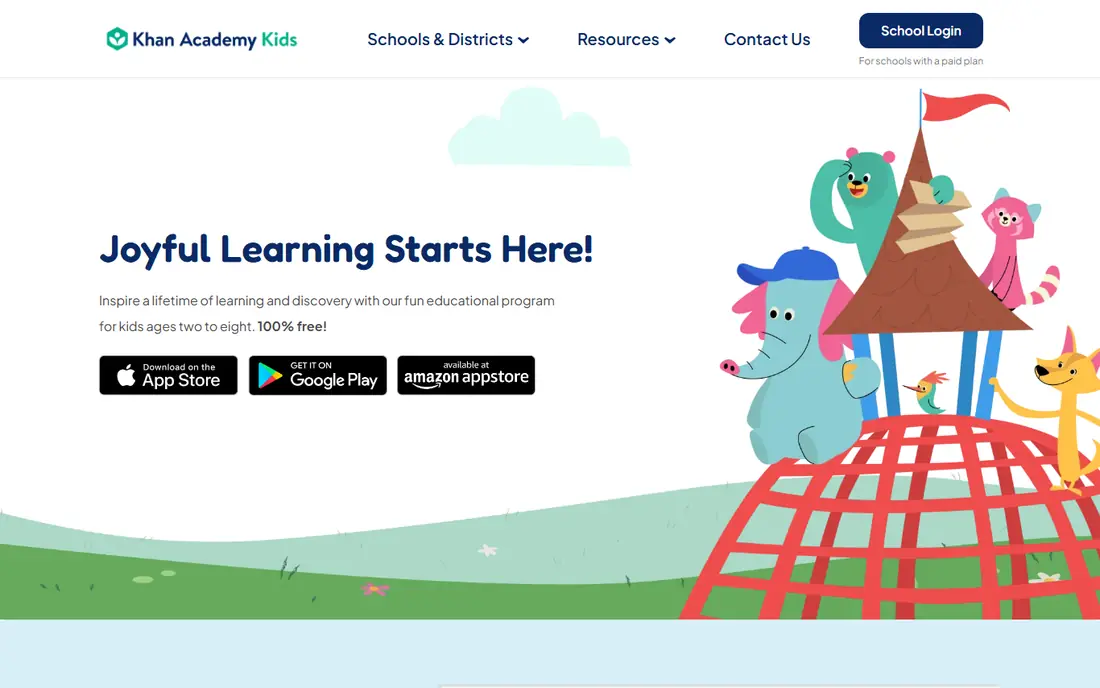
Khan Academy Kids is our first suggestion for most families, because it is free, has no ads, and covers early reading alongside other early learning. Stories, songs, and short activities introduce letters, sounds, and simple words in a gentle way that suits a 1st grader who is still building confidence. Parents can follow progress without paying for a subscription.
The limit is structure. Reading is one strand among several, so a child who needs a systematic phonics sequence may progress more slowly here than in a dedicated phonics program. Use Khan Academy Kids as a daily free base, and add a phonics focused app if your child's teacher flags gaps in letter sounds or blending.
- Completely free with no ads
- Covers reading, math, and social skills
- Friendly characters and stories
- Reading is one part of a broader app
- Less structured phonics progression than Reading Eggs
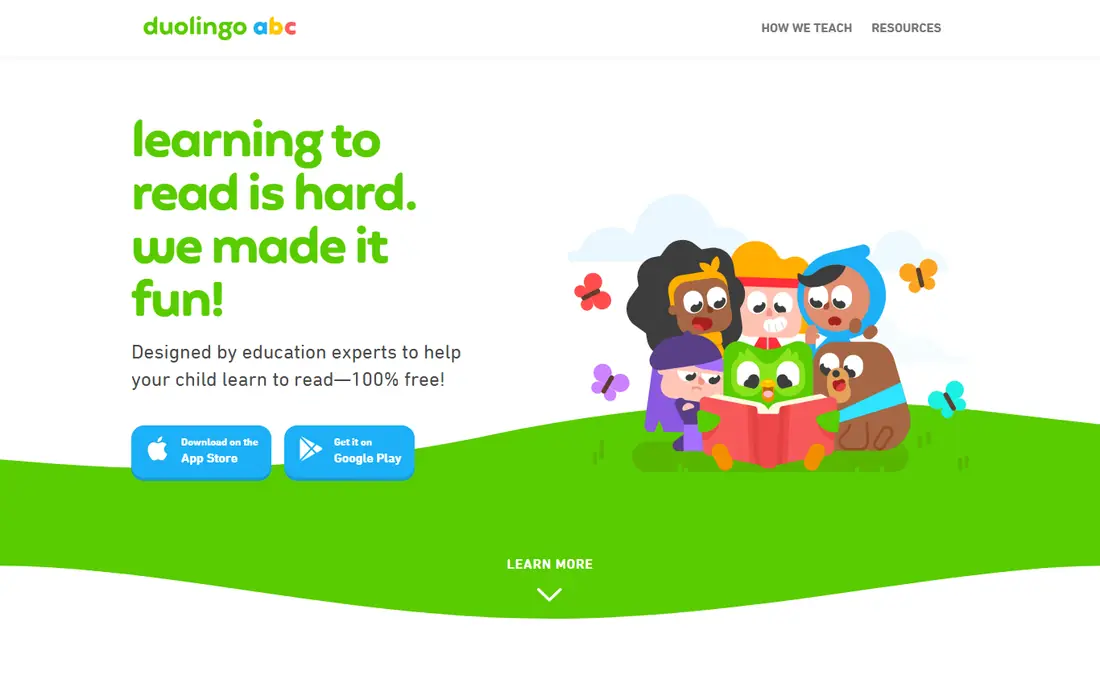
Duolingo ABC teaches phonics and early reading through short, game like lessons for children ages 3 to 8. Lessons cover letter sounds, word building, and simple stories, and the format suits short sessions after school. Because it is free with no ads, parents do not need to manage purchases or worry about an ad leading a child elsewhere.
The app is strongest at the start of the reading journey. It is less strong at building a lasting reading habit with longer books, so pair it with a library app or real books once your child can read simple sentences. For a free first phonics app, Duolingo ABC is hard to beat.
- Free with no ads
- Short phonics lessons for ages 3 to 8
- Playful game design
- No web version in many cases
- Limited long term reading habit building

Reading Eggs is often named the best overall phonics app for 1st graders, and the structure explains why. Lessons follow a set sequence through phonics, sight words, and comprehension, with games and books placed along the path. That order helps a child who needs to know what comes next, rather than picking random activities.
Pricing starts from about $8.33 per month on longer plans, with a free trial to test fit. The reward games motivate many children, though some parents find them distracting from reading itself. If your child needs a clear, step by step program and you are willing to pay, Reading Eggs is the strongest paid pick here.
- Research based phonics sequence
- Lessons, games, and books in one path
- Progress reports for parents
- Paid subscription after trial
- Screen rewards can distract some children
ABCmouse is a broad early learning platform for ages 2 to 8, covering reading, math, science, art, and music. Its reading strand includes books, phonics activities, and word games, all inside a guided learning path with tickets and rewards. Families who want one app for several subjects, rather than a separate app for each, often prefer this all in one approach.
The price, from $14.99 per month, is higher than a single subject app, and the busy interface can overwhelm a child who only wants to read. ABCmouse fits families who will use the math and science content too. If reading is the only goal, a dedicated phonics app gives better value.
- Very broad curriculum for ages 2 to 8
- Books, songs, games, and activities
- Clear learning path
- Higher monthly price
- Interface can feel busy
- Reading is not the sole focus
Teach Your Monster to Read covers systematic synthetic phonics through three adventure games, where children build a monster character while learning letter sounds and blending. The game format holds attention well, and the phonics sequence is clear enough for parents to follow. On the web it is free, which makes it one of the best free reading apps for 1st graders when used on a computer.
The mobile app costs $8.99 as a one time purchase, which is still cheap compared with a monthly subscription. The library of longer books is thinner than Epic or Raz-Kids, so use it for phonics practice and add books elsewhere. For game loving children who resist drill style lessons, this is a strong choice.
- Systematic synthetic phonics
- Free on the web
- Engaging adventure games
- Mobile app is a one time purchase
- Less book library depth than Epic
Hooked on Phonics has a long history as a phonics program, and its app keeps the same idea: short, structured lessons that build letter sounds into words, then into books. Songs and repetition help children remember patterns, and lessons are short enough for a young attention span. Parents who want a traditional, step by step method often like its clarity.
Pricing starts from $14.99 per month, which is at the higher end here, and the app is narrower than ABCmouse. It does not try to cover math or science. Hooked on Phonics fits a 1st grader who needs steady phonics work and who responds to songs and repetition.
- Structured phonics lessons with songs
- Short lessons suit young children
- Books and practice built in
- Higher monthly price
- Less broad than ABCmouse
Epic is a digital library with tens of thousands of children's books, including picture books, early readers, and chapter books. Children can read alone, listen to read to me books, or watch video books, and quizzes check understanding. For a 1st grader who can already decode simple text, a large library is what turns practice into a habit.
Epic does not teach phonics in a structured sequence, so it is not a replacement for Reading Eggs or Hooked on Phonics for a struggling reader. Pricing starts from about $5.25 per month. Pair Epic with a phonics app, and it becomes the place where reading practice turns into real reading for pleasure.
- Very large library of children's books
- Read to me and audio options
- Quizzes and rewards
- Less phonics teaching than dedicated programs
- Younger readers may need parent guidance
Raz-Kids, part of Learning A-Z, offers leveled books that match a child's reading level, with listening, reading, and quiz modes for each book. That leveling matters in 1st grade, because a book that is too hard frustrates a child and a book that is too easy teaches little. Teachers use it widely in schools, so a child may already know it from class.
Pricing starts from about $13.25 per month, and some plans are sold with a classroom focus, so check the home plan before you buy. The design feels school like rather than game like, which suits some children and bores others. Raz-Kids fits families who want measurable, level matched practice and who value quizzes that check understanding.
- Leveled books matched to reading level
- Listening, reading, and quiz modes
- Teacher and parent tracking
- Priced per classroom style plans in some cases
- Interface is school focused
Starfall Learn to Read has taught early phonics for many years, with simple activities that introduce letters, sounds, and word families. The calm design suits children who get overstimulated by flashy games, and the free content covers a useful set of basics. It is a good low pressure starting point for a child who is just beginning to blend sounds.
A paid membership opens more content, so check what is free before you promise a child full access. Starfall is less game heavy than Teach Your Monster to Read, which can be a plus or a minus depending on the child. For free, calm phonics practice, Starfall remains a solid pick.
- Free phonics and early reading content
- Simple, calm design
- Long track record in early literacy
- Some content sits behind a paid membership
- Less game depth than newer apps
Read Along by Google is a free app where a child reads aloud and a reading buddy gives feedback, points out missed words, and encourages progress. That read aloud practice is valuable in 1st grade, because silent reading alone does not show whether a child is decoding correctly. A virtual buddy also lets a child practice without feeling judged by an adult listener.
Availability leans toward Android and web, so iPhone families should check current support before planning around it. The book range is narrower than Epic, and it is a practice tool rather than a full curriculum. For free read aloud practice, especially for a child who reads better out loud, Read Along is a useful addition to any list here.
- Free
- Listens as a child reads aloud and gives feedback
- Offline use on supported devices
- Android and web focus
- Book range is narrower than Epic
How we picked these
We compared official app pages, pricing pages, and age guidance, focusing on phonics coverage, book leveling, read aloud support, and cost for families. We kept only apps that serve children around ages 6 to 7 and that are live in the United States in 2026. We did not claim classroom testing, and we note where pricing comes from vendor or comparison pages that may show plan dependent prices. Parents should still try a free tier or trial with their child before paying.
What parents should check first
Start with your child's current reading level, not their grade label alone. A child who knows letter sounds but struggles to blend needs a phonics app. A child who blends well but reads slowly needs leveled books and read aloud practice. A child who reads well but avoids books needs a library with topics they love. Ask the teacher which skill needs work, then pick the app that targets that skill.
Privacy and safety notes
Children's data deserves extra care. Before you install an app, check whether it shows ads, offers in app purchases, collects voice recordings, or shares data with third parties. Prefer apps with a clear kids privacy policy, no ads in the children's section, and parent controls for purchases and screen time. For read aloud apps that listen to a child's voice, check how recordings are stored and whether you can delete them. Keep devices in shared family spaces for young children, and sit with your child for the first sessions to see what the app actually asks for.
Making it stick
Keep sessions short, regular, and paired with real books. About 15 to 20 minutes a day, plus a paper book at bedtime, beats a long weekend binge. Let your child choose some books, praise effort rather than speed, and read aloud together when you can. If an app causes tears or avoidance for more than a week, switch the app or the skill focus, and talk to the teacher. A reading app should support a habit, not replace the joy of a story.
Frequently asked questions
What are the best reading apps for 1st graders free?
Khan Academy Kids, Duolingo ABC, Starfall, and Read Along by Google are the strongest free options, and Teach Your Monster to Read is free on the web. Khan Academy Kids covers broad early learning, Duolingo ABC covers phonics games, and Read Along covers read aloud practice. Use two free apps together to cover phonics and books.
What are the best reading apps for first graders who struggle with phonics?
Reading Eggs, Hooked on Phonics, and Teach Your Monster to Read give the most structured phonics paths. Reading Eggs and Hooked on Phonics follow a set lesson sequence, while Teach Your Monster to Read teaches the same skills through adventure games. If progress stalls, ask the teacher for a screening rather than adding more apps.
How much time should a 1st grader spend on a reading app?
Most guidance points to about 15 to 20 minutes a day of app based practice for 1st graders. Short, consistent sessions work better than long, irregular ones. Pair app time with paper books, reading aloud together, and time away from screens.
Do reading apps replace books and teachers?
No. Apps give practice, feedback, and leveling, but they do not replace a teacher who can spot a decoding problem or a parent who reads with a child. Use apps as one part of a reading routine that includes real books, library visits, and classroom instruction.
Are reading apps safe for children's data?
Safety varies by app, so check each privacy policy before you install. Prefer apps with no ads for children, clear parent controls, and a stated policy for children's data. Avoid apps that ask for unnecessary permissions, and delete voice recordings where the app allows it.
Sources
See where you really rank - block by block
ProMapRanker scans Google Maps across a grid of your service area. Simple monthly plans from $19, white-label on every plan.
Start freeKeep reading
 zscaler alternatives
Best Zscaler Alternatives in 2026
Looking for zscaler alternatives? We compare 9 SASE and zero trust platforms on architecture, data protection, pricing, and fit for your network and team.
Read → zapier alternatives free
Best Zapier Alternatives Free in 2026
Nine automation tools for zapier alternatives free in 2026, all with genuinely free tiers, plus free plan limits, starting prices and upgrade paths explained.
Read → which platform is best for online reputation
Which Platform Is Best for Online Reputation in 2026
Wondering which platform is best for online reputation? We compare 8 review, listing, and response tools for small and multi-location businesses and agencies.
Read →