 ProMapRanker
Best-Rated AI GTM Software in 2026

Key takeaways
- AI go-to-market tools differ mainly on data quality, workflow flexibility, and CRM fit, not on AI claims alone.
- Enrichment accuracy and deliverability matter more than database size for outbound results.
- A single all-in-one tool suits small teams, while larger teams often combine enrichment, sequencing, and CRM.
- No AI go-to-market tool guarantees pipeline, meetings, or revenue, and results depend on targeting and offer.
- Check data sources, compliance, and credit or seat pricing before committing to a platform.
Quick comparison
| Pick | Great for | Pricing starts at | Free tier | |
|---|---|---|---|---|
 Clay | Enrichment workflows and orchestration | See website | Yes | Visit |
 Apollo.io | All-in-one outbound on a budget | See website | Yes | Visit |
 HubSpot | CRM plus marketing and sales AI | See website | Yes | Visit |
 ZoomInfo | Enterprise B2B data and intent | See website | No | Visit |
 6sense | Account intent and prediction | See website | No | Visit |
 Demandbase | Account-based marketing and sales | See website | No | Visit |
 Clari | Pipeline and forecasting visibility | See website | No | Visit |
 Warmly | Website visitor signals and outreach | See website | Yes | Visit |
 Landbase | Agentic list building and outreach | See website | No | Visit |
The best-rated ai gtm software
Go-to-market software covers prospecting, enrichment, outreach, and pipeline, so we judged these tools on data quality, AI workflow depth, sequencing, intent signals, and how cleanly they fit a CRM.
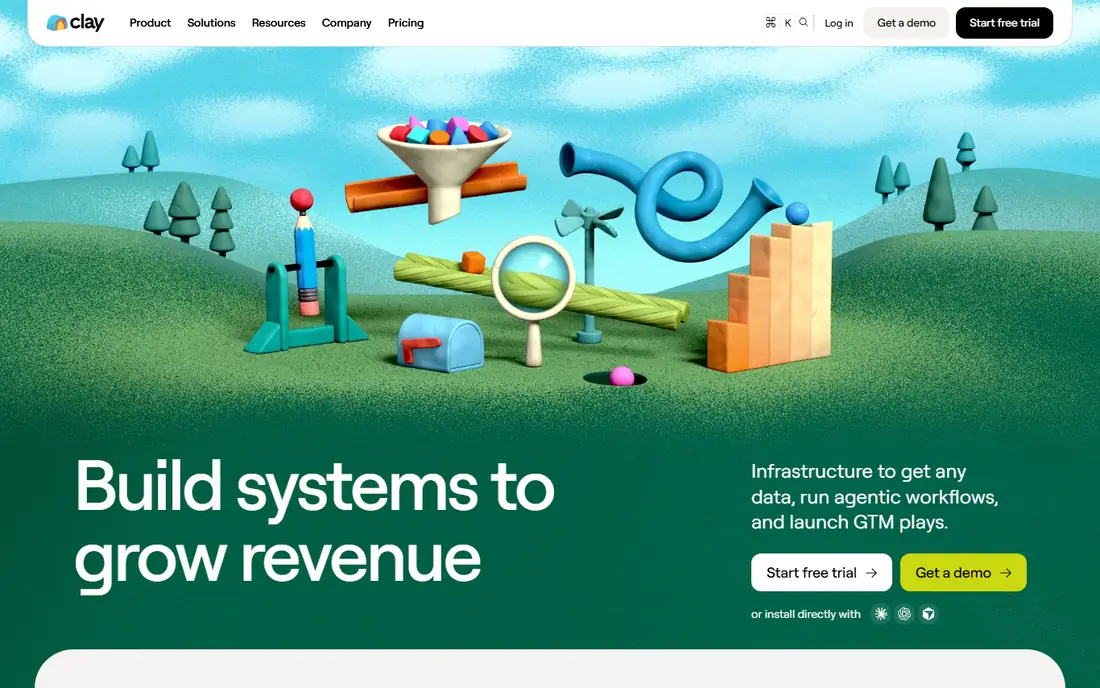
Clay is the power tool for teams that want to build their own go-to-market workflows rather than accept a fixed prospecting flow. It enriches company and contact data through a waterfall of sources, lets teams add AI research, scoring, and routing steps in a table, and pushes clean lists into a CRM or sequencer. For RevOps teams, that flexibility is the main reason to choose it.
The trade-off is complexity and cost control. New users need time to learn the workflow model, and credit usage can climb if enrichment steps are not scoped carefully. For teams with clear targeting criteria and someone to own the system, Clay can replace several point tools with one orchestrated workflow.
- Waterfall enrichment from many sources
- Flexible workflow building
- AI research and scoring inside tables
- Learning curve for new users
- Credit-based pricing needs careful budgeting
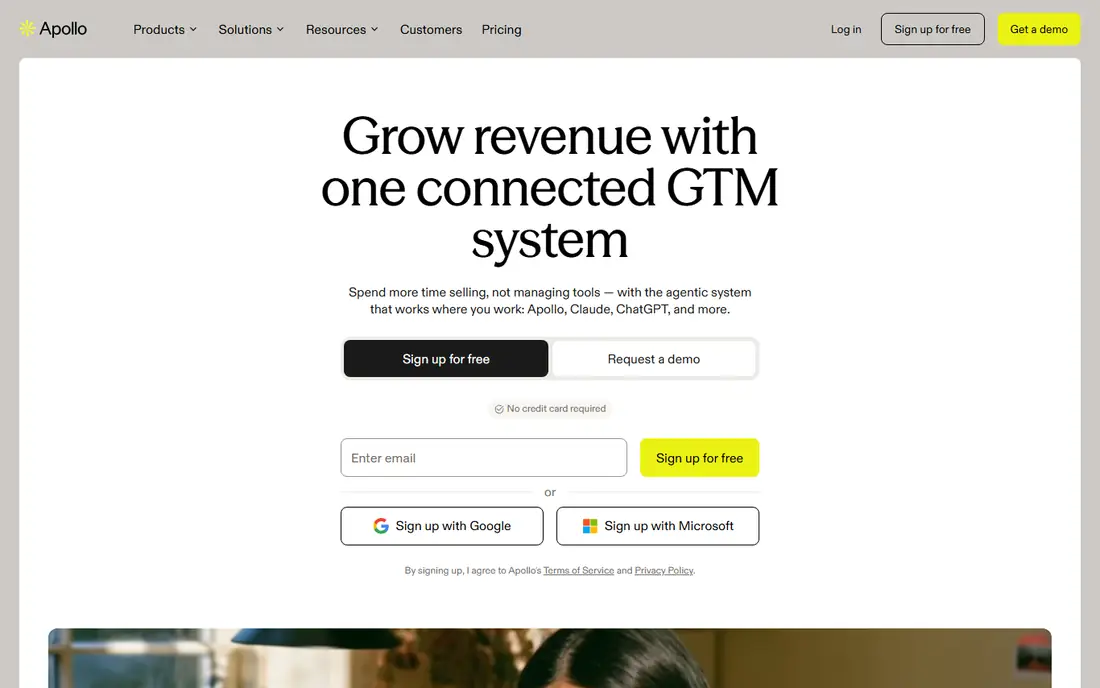
Apollo.io gives small and mid-sized teams a database, enrichment, email sequencing, dialer, and lightweight CRM in one product, which is why it is often the first go-to-market tool a team buys. A free plan lets a team test prospecting and sequencing before paying, and paid tiers add more contacts, credits, and automation. For a team that needs outbound running quickly, that breadth is hard to beat for the price.
Data quality is the honest caveat. Accuracy varies by industry and region, so teams should verify emails and test deliverability on a sample before large campaigns. For budget-conscious outbound, Apollo.io remains a strong starting point, with Clay or a dedicated data tool added when accuracy becomes the bottleneck.
- Large contact database plus sequencing
- Built-in dialer and lightweight CRM
- Free plan to start
- Data accuracy varies by segment
- Advanced features need paid tiers
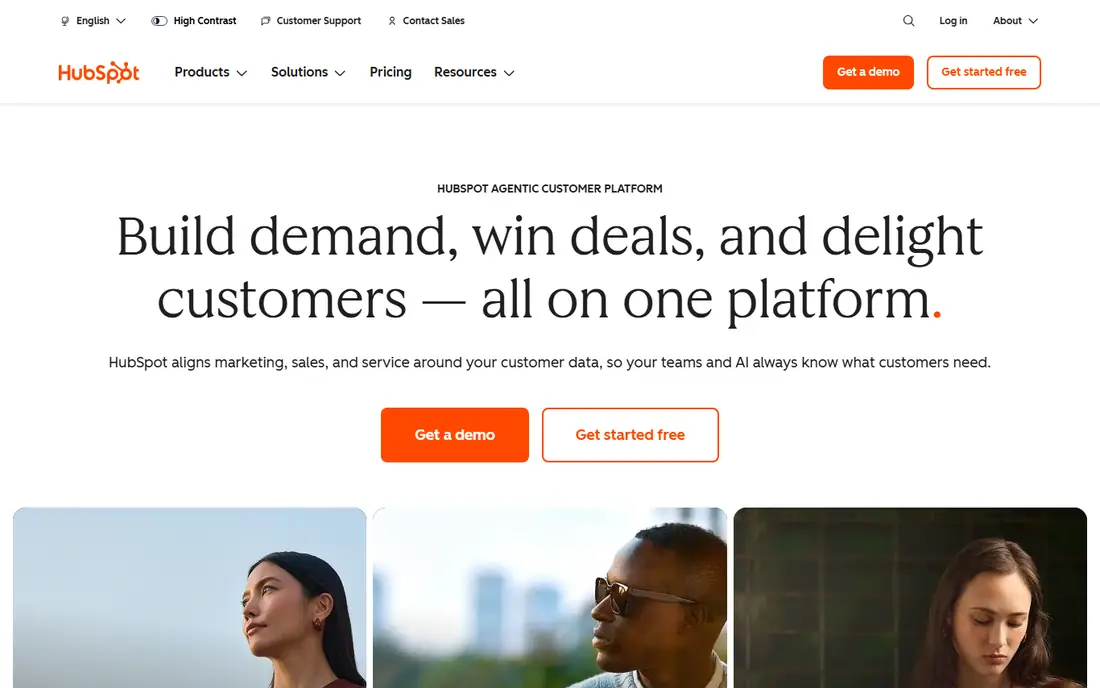
HubSpot is the system of record for many go-to-market teams, and its AI features sit inside CRM, marketing, and sales workflows rather than as a separate prospecting tool. Lead scoring, email assistance, workflow automation, and reporting help teams act on data that already lives in HubSpot, and its ecosystem covers a wide range of integrations. For teams that already run on HubSpot, that centrality is valuable.
It is not primarily a prospecting database, so teams still need a data source such as Apollo.io, Clay, or ZoomInfo for list building. Costs also rise as hubs, seats, and add-ons accumulate, so a team should price the full hub mix, not just the starter tier. As the CRM and automation layer, HubSpot is a solid anchor for AI go-to-market work.
- CRM as the system of record
- Marketing, sales, and service in one platform
- AI features inside familiar workflows
- Costs rise with hubs and seats
- Go-to-market data is not its core strength
ZoomInfo is the enterprise standard for B2B contact and company data, with intent signals, technographics, and organisational detail that help larger sales teams prioritise accounts. Its integrations with major CRMs and sales tools keep enriched data flowing into workflows, and its data depth suits account-based motions at scale. For large teams with complex territories, that coverage matters.
Pricing is enterprise-level and contract-based, which puts it out of reach for many small teams, and data accuracy still needs spot checks in niche segments. For a larger organisation that needs broad, structured B2B data with intent signals, ZoomInfo remains a leading choice, but smaller teams should compare Apollo.io and Clay first.
- Large B2B contact and company database
- Intent and technographic signals
- Strong CRM and sales integrations
- Enterprise pricing and contract terms
- Smaller teams may find it heavy and costly
6sense helps teams find accounts that show buying intent before those accounts raise a hand, using intent signals, predictive models, and account journey analytics. It then supports account-based advertising, orchestration, and sales prioritisation, so marketing and sales can focus on the same high-intent accounts. For account-based teams, that shared prioritisation is the core value.
It is an enterprise platform with setup and integration work to match, and it pays off best when marketing and sales already share account definitions and follow-up processes. Smaller teams without an account-based motion will find it more than they need. For mature account-based programmes, 6sense is a leading intent platform.
- Account intent and predictive scoring
- Account-based advertising and orchestration
- Strong analytics on buying journeys
- Enterprise pricing and setup
- Needs a mature marketing and sales process to pay off
Demandbase combines account-based advertising, intent data, and sales insights in one platform, giving marketing and sales a shared view of target accounts. Teams can run account-based campaigns, surface intent changes, and prioritise outreach from the same account data, which reduces the usual gap between marketing programmes and sales follow-up. Its enterprise integrations support larger stacks.
Like other account-based platforms, Demandbase is priced and implemented for larger organisations, and it needs clean account data to work well. For teams already committed to account-based go-to-market, it is a strong alternative to 6sense, with the choice often coming down to advertising, data, and existing stack fit.
- Account-based advertising, intent, and sales insights
- Unified account view for marketing and sales
- Strong enterprise integrations
- Enterprise pricing
- Implementation needs planning and data hygiene
Clari focuses on the later part of go-to-market work: understanding pipeline, forecasting accurately, and spotting deals at risk. It pulls activity and deal data from the CRM, gives leaders inspection views and forecasts, and uses AI insights to highlight where deals stall or slip. For sales leaders tired of spreadsheet forecasts, that visibility is the appeal.
Its value depends heavily on CRM hygiene, since poor or incomplete CRM data produces weak forecasts no matter how good the tool is. Pricing is also quote-based, so a team should run a pilot on its own pipeline before committing. For forecasting and pipeline management, Clari is a leading specialist tool.
- Pipeline inspection and forecasting
- Deal and activity insights from CRM
- Helps leaders spot risk early
- Quote-based pricing
- Value depends on CRM data quality
Warmly turns anonymous website traffic into go-to-market signals by identifying visiting companies, surfacing intent, and triggering alerts or outreach. For inbound-led teams, that timing matters: a visitor showing buying signals today is worth more than a cold list next month. Its agents and automation help sales act while interest is fresh, rather than waiting for a form fill.
It works best when a team already has meaningful website traffic, since signal volume drives value and pricing. Small sites with low traffic will see fewer actionable signals. For teams with steady inbound traffic that want to act on it faster, Warmly is a focused and useful addition to the stack.
- Identifies website visitors and buying signals
- Real-time alerts and outreach automation
- Good for inbound-led teams
- Pricing rises with signal volume and features
- Best for teams with meaningful website traffic
Landbase takes an agentic approach to go-to-market work, using AI agents to handle targeting, list building, qualification, enrichment, and outreach from natural language prompts. The idea is to cut the manual filtering and credit-burning work that fills a RevOps week, and to produce more precise lists with less hand-holding. Its 2026 launch of an agentic model drew attention for benchmark claims on list precision.
As a newer approach, Landbase deserves a controlled pilot rather than a blind switch: test it on the same prompts and criteria used for existing tools, verify results independently, and compare cost per qualified meeting, not just list size. No tool guarantees results, and Landbase is no exception, but for teams open to agentic workflows, it is worth evaluating.
- Agentic targeting, qualification, and outreach
- Natural language list building
- Aims to reduce manual list work
- Newer agentic approach needs evaluation
- Pricing and results depend on use case
How we picked these
We compared official feature and pricing pages, go-to-market reviews, and vendor documentation, and we weighted data quality, enrichment and workflow flexibility, sequencing, intent signals, CRM fit, and pricing transparency. We did not run hands-on campaigns, and we did not invent ratings, database sizes, or performance figures. Tools were included only when they offer a real AI go-to-market workflow, not just a generic AI writing feature.
How to build a go-to-market stack without buying everything
Start with the job, not the tool list. A team that needs outbound needs a verified data source, a sequencer, and a CRM, while an account-based team needs intent, advertising, and shared account prioritisation, and a forecasting-led team needs clean CRM data plus a pipeline tool. Buying all three stacks at once creates overlap, duplicate data, and invoices nobody owns.
Pilot one workflow end to end with a small, well-defined segment, and measure verified contact rate, reply rate, and cost per qualified meeting, not just activity. Check data compliance and consent rules for each region you target, since AI enrichment does not remove legal obligations. Keep the stack to three to five tools that each own a clear job, and review overlap quarterly. No AI go-to-market tool guarantees pipeline, meetings, or revenue, and any vendor claim to the contrary should be tested, not trusted.
Frequently asked questions
What does AI go-to-market software actually do?
It helps teams find target accounts and contacts, enrich and score them, run outreach, track intent, and forecast pipeline, often with AI assistance for research, writing, and prioritisation. The AI layer should save manual work and improve targeting, but human review still matters for messaging and qualification.
Is Clay better than Apollo.io?
They solve different problems. Apollo.io is an all-in-one outbound tool with a database and sequencer, while Clay is a flexible enrichment and orchestration platform for custom workflows. Many teams use Clay for list building and Apollo.io or another sequencer for outreach.
Do I still need a CRM if I buy a go-to-market tool?
Yes, in most cases. Go-to-market tools generate and enrich pipeline, but the CRM remains the system of record for deals, customers, and revenue. Choose a go-to-market tool that syncs cleanly with your CRM rather than duplicating it.
How important is data accuracy for outbound?
Very important. Bad emails harm deliverability, waste rep time, and damage sender reputation, while accurate, verified data improves replies and meetings. Test any data source on your own target segment before a large campaign.
Can AI go-to-market tools guarantee meetings or revenue?
No. They can improve targeting, speed, and workflow, but results depend on market, offer, pricing, messaging, and follow-up. Treat any guarantee of meetings or revenue as a marketing claim to be tested in a pilot.
Sources
See where you really rank - block by block
ProMapRanker scans Google Maps across a grid of your service area. Simple monthly plans from $19, white-label on every plan.
Start freeKeep reading
 worlds best local seo company
8 Worlds Best Local SEO Companies for Map Pack Growth in 2026
Compare the worlds best local seo company options for Google Business Profile work, citations, reviews, and multi-location rankings and reporting in 2026.
Read → world's best web hosting company
World's Best Web Hosting Company in 2026
Searching for the world's best web hosting company? We compared 10 hosts on price, renewal rates, speed, and support to help you choose well today in 2026.
Read → who's got the best nanny tax services
Who's Got the Best Nanny Tax Services in 2026
We answer who's got the best nanny tax services, comparing full filing, back taxes, software, and pricing so families can handle nanny taxes correctly.
Read →