 ProMapRanker
Which Qualitative Analysis Software Fits You? 7 Tools Compared

Direct answer
ATLAS.ti comes first here, mainly for adaptable professional QDA. If your case is different, Dovetail suits UX research teams and NVivo suits thorough academic research. The full list of 7 tools follows, with prices and free plan facts.
Key takeaways
- The list opens with ATLAS.ti, aimed at adaptable professional QDA.
- No starting price is published for ATLAS.ti, Dovetail, NVivo and others; expect a quote.
- ATLAS.ti comes with a trade-off: pricing per user layers on up.
- Taguette is the only tool of the 7 with a free plan.
- Quirkos is the one to check for beginners and students.
Quick comparison
| Pick | Great for | Pricing starts at | Free tier | |
|---|---|---|---|---|
 ATLAS.ti | Adaptable professional QDA | See website | No | Visit |
 Dovetail | UX research teams | See website | No | Visit |
 NVivo | Thorough academic research | See website | No | Visit |
 QDA Miner | Text mining plus coding | See website | No | Visit |
 Taguette | Free open source QDA | Free (open source) | Yes | Visit |
 Dedoose | Collaborative cloud analysis | See website | No | Visit |
 Quirkos | Beginners and students | See website | No | Visit |
Qualitative Analysis Software, one by one
If you are comparing qualitative analysis software, this page covers 7 tools in one place: what each is best for, what it costs to start, whether it has a free plan, and the main limit to know about.
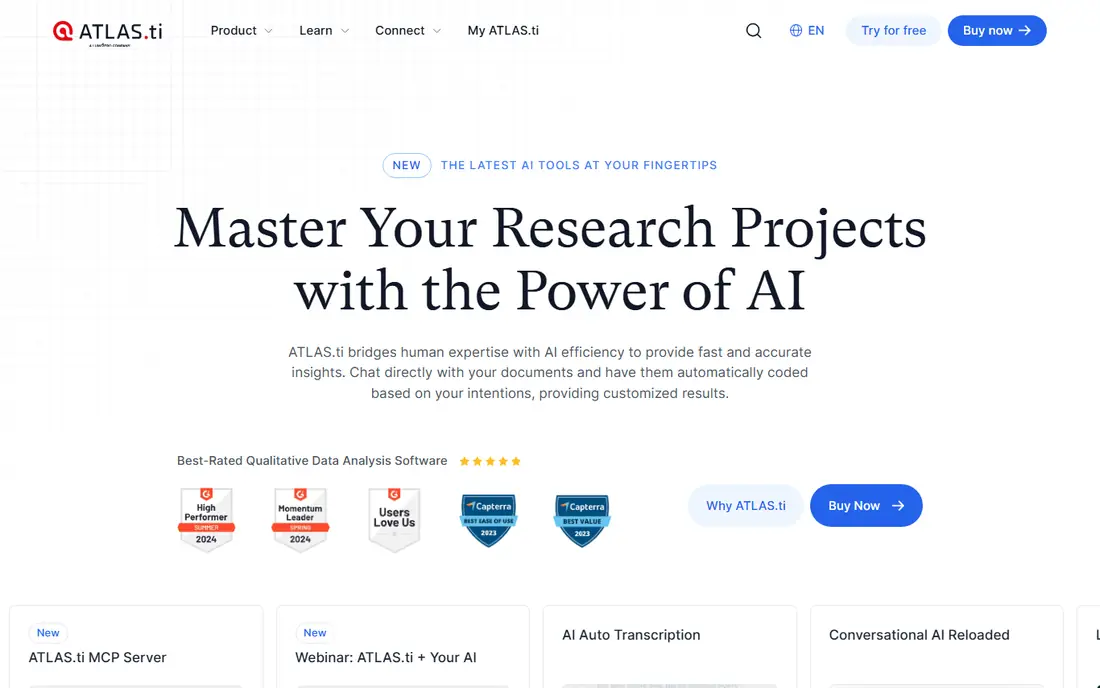
ATLAS.ti is a good fit for adaptable professional QDA. ATLAS.ti takes an adaptable approach to qualitative analysis: code freely, build networks of concepts visually, and work across desktop, web, and mobile. Recent versions added AI-assisted coding features.
Limits to weigh: Pricing per user brings up.
Also, per-user pricing makes team deployments pricey, and the adaptability means new users face choices without much guidance. The network views help researchers see relationships between codes and themes, which fits theory-building work. ATLAS.ti shows no starting price here, so confirm the cost on the vendor site. No free plan comes with ATLAS.ti.
- Adaptable coding approach
- Decent visualization
- Ramp-up time
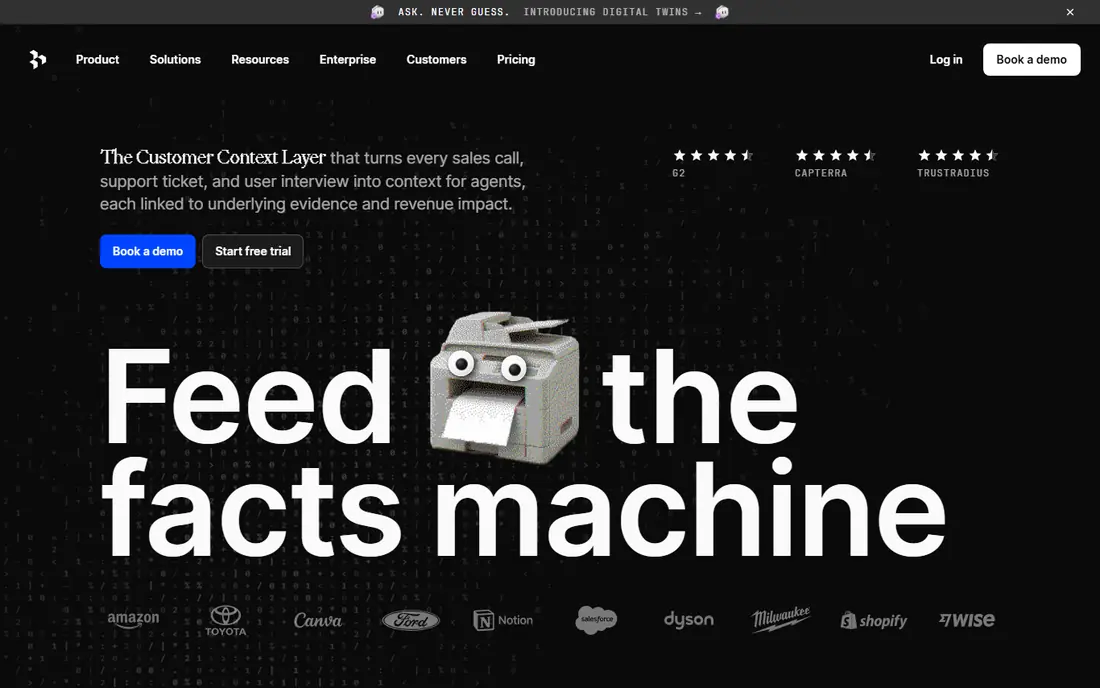
Dovetail serves UX research teams. Dovetail brings consumer-grade design to research repositories.
UX teams store interviews, code insights, and build searchable knowledge bases that the entire product organization can use. Check the vendor site for Dovetail pricing; none is listed in this comparison. Dovetail has no free plan.
Where it falls short: Less for academic research.
- Beautiful modern interface
- Excellent repository features
- Priced for business teams
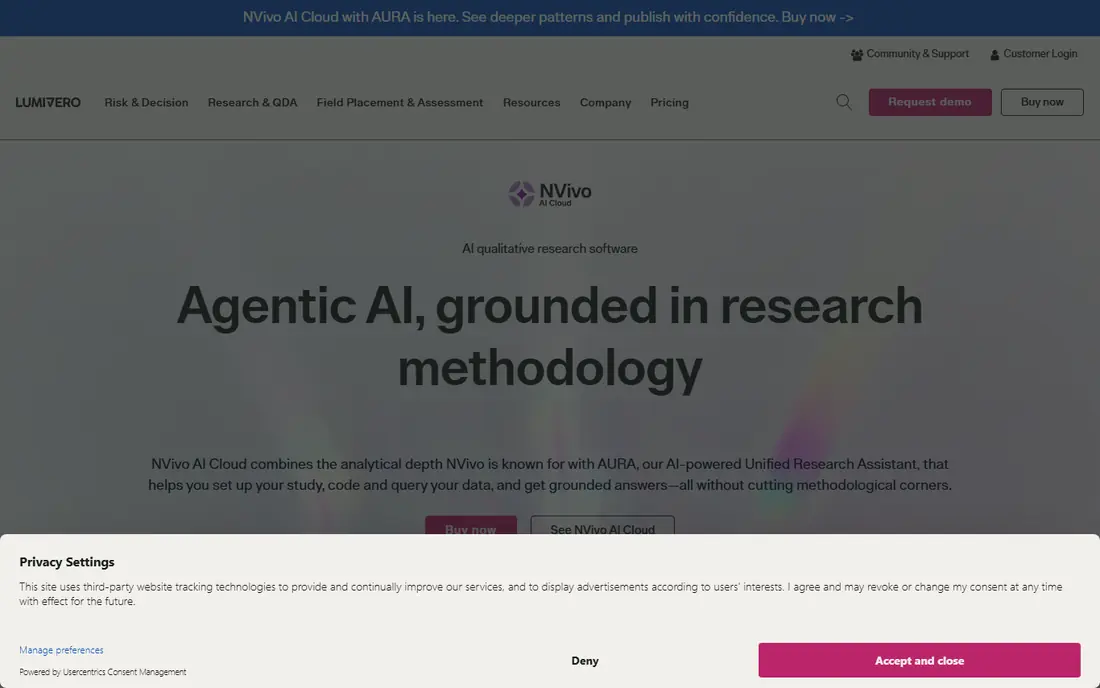
Think of NVivo for full academic research. NVivo, now part of Lumivero, remains the most fully-featured qualitative data analysis software available. It codes interviews, surveys, audio, video, images, and social media data, with queries that find patterns across all of it.
Points against: Costly.
From a buyer's view, solo researchers and small teams may find it more than they need. The interface reflects decades of accumulated features. But for dissertations, funded research projects, and institutional work where analytical depth matters, NVivo is still the benchmark. The price and complexity are the barriers. Pricing for NVivo is not stated here, so ask the vendor for current figures. NVivo does not include a free plan.
- Takes care of all data types
- Widely taught in universities
- Interface can overwhelm
QDA Miner is a good fit for text mining plus coding. QDA Miner, from Provalis Research, bridges qualitative coding and quantitative text mining. The interface presents its age, and the ramp-up time is real.
But for researchers who require both human coding and computational text analysis in one workflow, QDA Miner occupies a unique position. It is the power tool for text-heavy projects. As for the details, alongside standard coding, it supplies clustering, concept mapping, and statistical analysis of text, which fits researchers working with large document collections. QDA Miner shows no starting price here, so confirm the cost on the vendor site. No free plan comes with QDA Miner.
Downsides: Ramp-up time.
- Statistical tools
- Merges coding with text mining
- Interface is dated
Taguette makes the most sense for free open source QDA. Taguette is the open source answer: free qualitative coding software that manages the fundamentals (import documents, highlight and code, export results) without charging anything. Export your work on a regular basis in open formats so your coded data survives any software change.
But the basics are solid, and for plenty of projects the basics are enough. Every researcher should know Taguette exists before assuming QDA software must be costly. Development relies on the open source community, so updates arrive when contributors have time instead of on a corporate schedule. Price to start with Taguette: Free. Free access exists with Taguette.
Trade-offs to know: Self-hosting for full control.
- Covers coding basics well
- Fully free
- Entry-level features
Dedoose works best for collaborative cloud analysis. Dedoose was made for the way research teams actually work now: distributed, collaborative, and in the browser. From a buyer's view, several coders work on the same project simultaneously, inter-rater reliability is built in.
The monthly pricing is low-cost for projects with defined timelines. It needs an internet connection, and the advanced analytical features do not match NVivo's depth. Dedoose does not show a starting price in this comparison, so check the vendor site for current pricing. Dedoose has no free tier.
Where it falls short: Needs internet.
- A good match for teams
- Budget-friendly monthly pricing
- Fewer advanced features than desktop giants
For beginners and students, Quirkos is a natural candidate. Plenty of researchers start here and graduate to the larger tools later. From a buyer's view, pricing is budget-friendly, with student-friendly terms.
Beyond that, Quirkos is the friendly face of qualitative analysis. The visual, bubble-based interface makes coding easy-to-learn for students and newcomers who find NVivo intimidating. It spans the essentials (coding, queries, visualizations, reports) without the overwhelming choices. Pricing for Quirkos is not stated here, so ask the vendor for current figures. Quirkos has no free plan.
What to check first: Less depth for complicated projects.
- Visual and easy-to-learn
- Budget-friendly
- Smaller ecosystem
How these tools were picked
ProMapRanker used vendor pricing pages and product documentation as the base, then compared plans, free access and documented limits for 7 tools. Seat minimums, billing terms and add-ons can move the real cost, so the starting prices here are a guide and not a quote. The sequence is a judgement call: typical use case first, then pricing transparency, then free access. Use the profiles to check fit.
Things to verify first
- Confirm the entry price on the vendor page. For ATLAS.ti, Dovetail, NVivo and others that means a quote rather than a fixed price.
- Test the free plan from Taguette against your real workload before relying on it.
- Before choosing ATLAS.ti, weigh its main limit: pricing per user brings up.
- List the apps you already depend on and check that ATLAS.ti supports each one on the plan you would buy.
- Find out whether the entry plan of Quirkos covers your must-haves or only a trimmed-down version.
Frequently asked questions
Which options for qualitative analysis software have a free plan?
Taguette is the only tool in this list with a free plan. Free plans usually cap users, projects or features, so check the limits on the vendor page.
Can I try these options before paying?
Often, yes. Taguette has a free plan. Use your own data and a real task during the test, and check what the free tier or trial limits before you rely on it.
How are the tools for qualitative analysis software ordered?
The order follows typical fit for qualitative analysis software, with ATLAS.ti first and Quirkos last, then price clarity and free access. It is editorial judgement, not a score, so another team could rank the tools differently.
Is there free qualitative analysis software?
Yes: Taguette is free and open source, including the coding fundamentals well. Some commercial tools offer free trials or restricted free levels. For plenty of student and small projects, Taguette is genuinely sufficient. Beyond that, the premium tools earn their price on large, complicated, or collaborative projects.
Do these tools publish their prices?
Not all of them. ATLAS.ti, Dovetail, NVivo and others publish no starting price, so expect a quote request for those. The rest, Taguette included, show a starting price, though seats and billing terms still change the final cost.
Sources
See where you really rank - block by block
ProMapRanker scans Google Maps across a grid of your service area. Simple monthly plans from $19, white-label on every plan.
Start freeKeep reading
 zoho inventory alternatives
6 Alternatives to Zoho Inventory, Compared on Price and Fit
Zoho Inventory alternatives: 6 tools compared on price, free plans and fit. Katana leads the list for manufacturers. Fit and flaws are laid out for each entry.
Read → zoho crm alternatives
Best Zoho CRM Alternatives (2026)
Need Zoho CRM alternatives? We compare 7 tools on cost, free access and who each suits. Every pick gets a straight assessment. Built for quick decisions.
Read → zelle alternatives
Best Zelle Alternatives in 2026
Compare the best Zelle alternatives for sending money to friends, paying sellers and moving funds abroad, with honest notes on fees, speed and safety in 2026.
Read →