 ProMapRanker
Best Python Alternatives to Zod in 2026

Key takeaways
- Zod itself is a TypeScript schema validation library, so this list covers Python libraries only and never lists Zod as a product.
- Pydantic is our pick for most Python projects, because it uses type hints, gives clear errors and works well with FastAPI.
- msgspec is the speed pick for JSON-heavy services, while Cerberus and Voluptuous suit simple dictionary and config validation.
- All ten libraries here are free and open source, so the choice comes down to style, performance and how your team already writes Python.
Quick comparison
| Pick | Great for | Pricing starts at | Free tier | |
|---|---|---|---|---|
 Pydantic | Type-hint validation and APIs | Free | Yes | Visit |
 Marshmallow | Serialization and schemas | Free | Yes | Visit |
 Cerberus | Rule-based dictionary validation | Free | Yes | Visit |
 Voluptuous | Lightweight schema validation | Free | Yes | Visit |
 jsonschema | JSON Schema standards | Free | Yes | Visit |
 msgspec | Fast JSON validation | Free | Yes | Visit |
 attrs | Class definitions with validation | Free | Yes | Visit |
 Schematics | Model validation and transformation | Free | Yes | Visit |
 Pandera | DataFrame validation | Free | Yes | Visit |
 Schema | Simple example-based validation | Free | Yes | Visit |
The best python alternatives to zod
We compared official documentation, project pages and public reviews for Python validation libraries live in October 2026. The list covers type-hint models, dictionary rules, JSON Schema and data-focused validation, because Zod users in Python need different tools for APIs, configs and data pipelines.
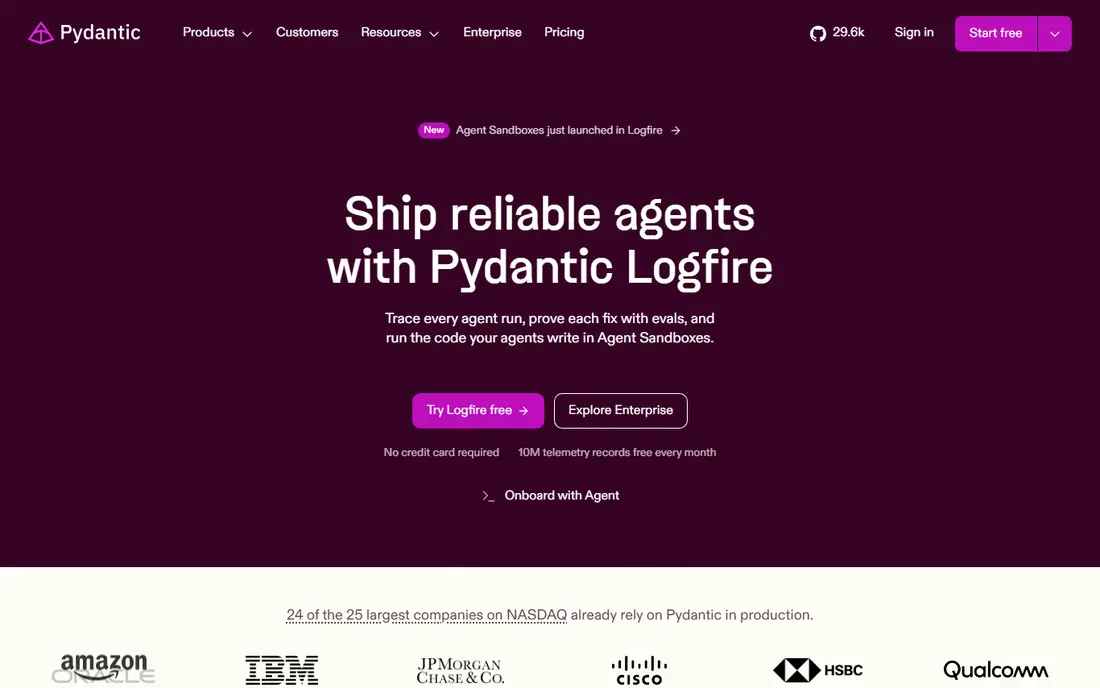
Pydantic is the closest Python answer to Zod for most developers. You define a model with type hints, Pydantic checks incoming data at runtime, coerces types where allowed, and raises a structured error when data fails. That model-first style feels familiar to Zod users who define a schema and then parse data against it.
The main catch is the version 2 shift. Pydantic v2 is faster and cleaner, but some v1 patterns changed, so older code needs review before upgrading. Strict mode also rejects loose coercion, which is good for safety but can break inputs that used to pass. For new APIs, especially with FastAPI, Pydantic is the default pick in this list.
- Uses Python type hints for clear models
- Fast core in version 2
- Clear validation errors and JSON Schema export
- Version 2 changed some version 1 behaviour, so migration needs care
- Strict mode can surprise users who expect coercion
- Larger feature set than a tiny validator
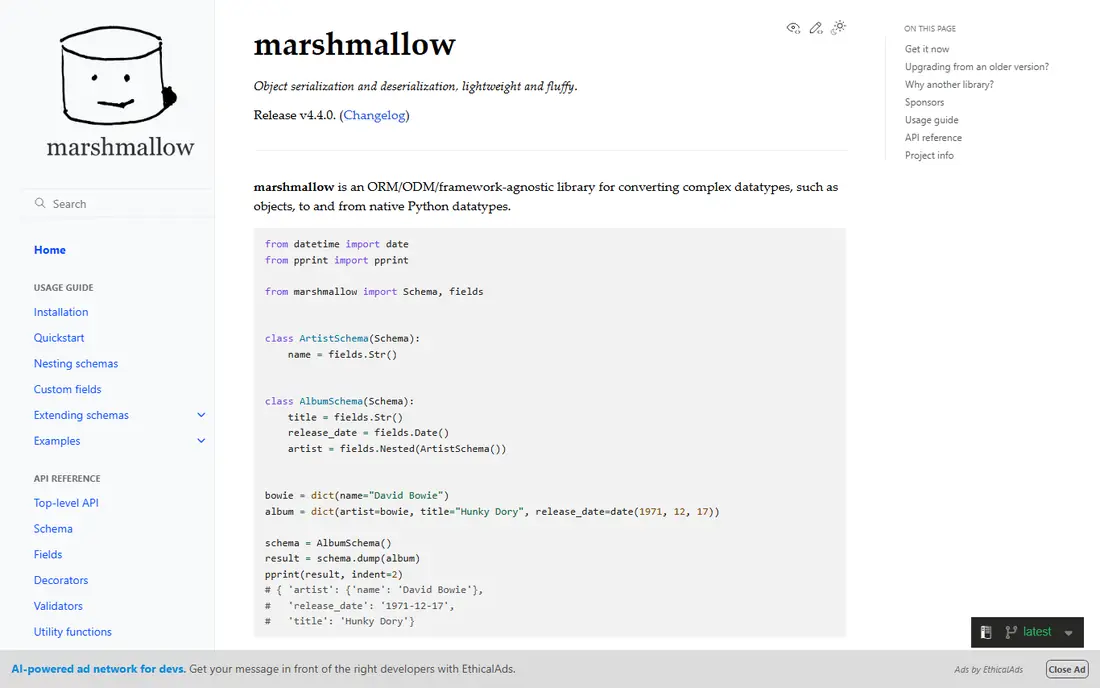
Marshmallow suits projects where data moves between formats. You define a schema class with fields, then load data in, validate it, and dump it out in a clean shape. It collects all validation errors rather than stopping at the first one, which helps API clients fix several problems in one pass.
Verbosity is the trade-off. A simple model needs a schema class and field definitions, which feels heavier than a Pydantic model or a Zod schema. Performance also trails Pydantic v2 for very high-throughput services. If your work is data transformation and ORM integration, Marshmallow earns its extra code. If you only need validation, Pydantic is simpler.
- Strong serialization and deserialization
- Collects all errors by default
- Framework-agnostic with Flask and Django support
- More verbose than Pydantic for simple models
- Slower than Pydantic v2 for high-throughput APIs
- Schema classes add boilerplate
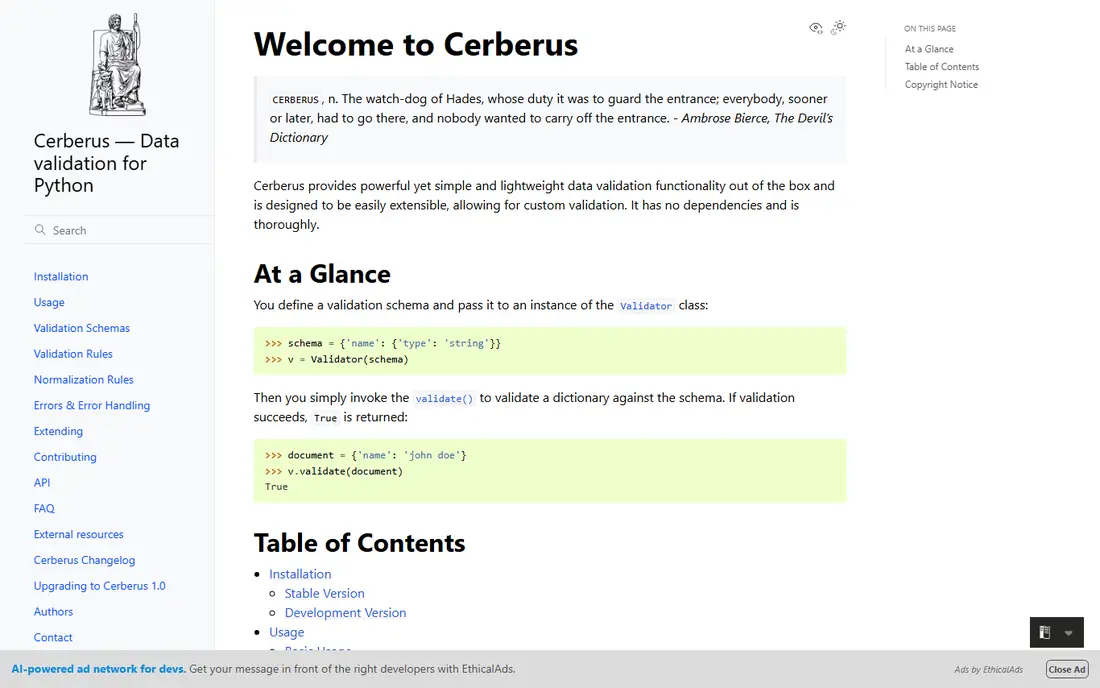
Cerberus is ideal when your data is already a dictionary and you want rules, not models. You write a schema as a plain dictionary, with types, required flags and ranges, then validate data against it. That style suits config files, dynamic schemas and scripts where type-hint models would feel forced.
The limit is depth. Cerberus does not give you model classes, serialization or the ecosystem that Pydantic offers, and its development pace is steadier and slower. For lightweight, rule-driven validation, that simplicity is a strength. For a large API with shared models, Pydantic or msgspec will scale better.
- Simple dictionary rule definitions
- No type hints required
- Easy custom validators and error messages
- Less active feature development than Pydantic
- No built-in model classes
- Nested rules can get verbose
Voluptuous takes a Pythonic route: schemas are built from functions and markers such as Required, All and Length. That makes small schemas easy to read and compose, especially for config files and command-line tools. You can express ranges, lengths and custom checks in a few lines.
Error handling is the catch. Voluptuous stops at the first failure, so a client with several bad fields gets one error at a time. It also lacks the model, serialization and API ecosystem of larger libraries. For config parsing and small utilities, Voluptuous is a pleasant, light choice. For public APIs, prefer a library that reports all errors.
- Readable, composable schemas using Python functions
- Good for configs and small utilities
- Small dependency footprint
- Raises on the first error rather than collecting all errors
- Less suited to large API models
- Documentation is thinner than Pydantic
jsonschema is the pick when a standard matters more than Python style. JSON Schema is a cross-language spec, so the same schema can validate data in Python, JavaScript, Go and other languages. That makes it ideal for API contracts, shared specs and teams that publish schemas for partners to use.
The cost is verbosity. JSON Schema documents are longer than a Pydantic model or a Zod schema, and raw error output needs formatting before it is user-friendly. If your schema must travel across languages, jsonschema is the right tool. If it only lives in Python, Pydantic will feel far more direct.
- Implements the JSON Schema standard in Python
- Schemas work across languages
- Good for API contracts and shared specs
- Schemas are verbose JSON, not Python models
- Validation errors need formatting for users
- No built-in Python class generation
msgspec is the speed pick. It uses type hints to define Struct types, then decodes and validates JSON in one fast pass. Benchmarks cited in public guides place it ahead of Pydantic for raw JSON decode and validate work, which matters for high-throughput services and data ingestion.
The trade-off is ecosystem. msgspec is focused and fast, but it does not offer the broad tooling, integrations and documentation depth of Pydantic. Its Struct types also feel different from regular Python classes. Use msgspec when JSON speed is the bottleneck, and Pydantic when you need the wider feature set.
- Very fast JSON encoding and decoding with validation
- Type-hint based Struct types
- Small and focused API
- Smaller ecosystem than Pydantic
- Fewer high-level features such as form handling
- Struct style differs from class models
attrs helps you write Python classes without boilerplate, and its validators check values when instances are created. Paired with cattrs, it also handles conversion between dictionaries and classes. That combination suits codebases that already use attrs for data classes and want light validation built in.
attrs is not a dedicated schema library. It lacks the JSON Schema export, API integration and error reporting depth of Pydantic, and full serialization needs the separate cattrs package. Choose attrs when class design is the main job and validation is a supporting feature, not when validation itself is the product.
- Clean class definitions with validators
- Works well with cattrs for conversion
- Widely used and stable
- Validation is one feature of a class library, not a full schema system
- Needs cattrs for full serialization
- Less API-focused than Pydantic
Schematics lets you combine types into models, validate input, and transform data shapes in one place. Its type system covers common document fields and supports custom types, which suits projects that store flexible document data and need consistent validation on the way in and out.
Age is the honest weakness. Schematics moves more slowly than Pydantic, its community is smaller, and its style predates modern type-hint models. For a new project, Pydantic is usually the better bet. For an existing Schematics codebase, it remains a workable, documented choice.
- Model types that validate and transform data
- Clear type system for documents
- Useful for MongoDB-style data shapes
- Development pace is slower than Pydantic
- Smaller community and fewer integrations
- API style feels older than modern type-hint libraries
Pandera solves a different problem from the rest of this list: validating tabular data. You define a schema for a DataFrame, with column types, ranges and custom checks, then validate data before analysis or model training. That catches bad data early in a pipeline, where a single bad column can ruin results.
Pandera is not a general API validator. If your input is a JSON payload, Pydantic or msgspec fits better. If your input is a DataFrame from a file, database or pipeline step, Pandera is the right specialist. Data teams often use both: Pydantic at the API edge and Pandera inside the pipeline.
- Validates pandas DataFrames and Series with schemas
- Checks types, ranges and custom rules
- Useful for data science pipelines
- Focused on DataFrames, not general API payloads
- Adds a dependency for data work only
- Overkill for simple dictionary validation
Schema, the library by keleshev, is the simplest entry on this list. You write a schema that looks like example data, with types and optional markers, and the library checks input against it. That example-based style makes it easy to teach and quick to use in scripts and small tools.
Simplicity limits scale. Schema lacks the model features, error detail and ecosystem of Pydantic, and complex nested APIs will outgrow it. Use it for small scripts, tests and prototypes where a few lines of validation beat a full model system. When the schema grows, migrate to Pydantic or Cerberus.
- Very easy to learn
- Schemas read like example data
- Lightweight with no heavy dependencies
- Limited features for large models
- Error messages are basic
- Less suited to complex nested APIs
How we picked these
We compared official documentation, project pages and public reviews for Python libraries live in October 2026. We kept only Python libraries that validate data against a schema or rules, and we left out Zod itself, because it is a TypeScript library and this article is about Python options. We favoured libraries with clear documentation, active maintenance or a stable, well-understood role.
Choosing by project type
Match the library to where data enters your system. For a web API, Pydantic or msgspec covers the edge, with Pydantic for features and msgspec for speed. For a config file or script, Cerberus, Voluptuous or Schema keeps things light. For a shared contract across languages, jsonschema gives you a standard other teams can use.
For data pipelines, add Pandera at the DataFrame stage, even if you already validate at the API edge. Validation at two points catches different failures: API validation catches bad requests, while pipeline validation catches bad files, joins and transforms. Start with one library for your main job, and add a specialist only when a second data shape proves the need.
Frequently asked questions
Is Zod available for Python?
No. Zod is a TypeScript-first schema validation library. Python developers use libraries such as Pydantic, Marshmallow or msgspec for the same job. This list covers Python options only, so you can pick a tool that fits Python type hints and tooling.
Which Python library is closest to Zod?
Pydantic is closest in feel, because you define a model or schema and parse data against it, with structured errors on failure. msgspec is close for JSON work, while Cerberus is closer if you prefer dictionary rules over models. The best match depends on whether you value models, rules or speed most.
Is Pydantic free?
Yes. Pydantic is free and open source. All libraries in this list are free and open source, so cost does not decide the choice. Paid products exist in the wider Pydantic ecosystem, but the validation library itself costs nothing to use.
Should I use Pydantic v1 or v2?
Use Pydantic v2 for new projects, because it is faster and is the current major version. Existing v1 projects should plan migration carefully, because some behaviours changed. Check the migration guide and test validation, coercion and error handling before you upgrade a production API.
Can I use more than one validation library?
Yes. Many teams use Pydantic at the API edge and Pandera for DataFrames, or jsonschema for shared contracts and Pydantic for Python models. Keep each library in its own layer, so a change in one place does not force a rewrite everywhere.
How do I handle validation errors for API users?
Return all errors you can, with field names and clear messages, rather than stopping at the first failure. Pydantic and Marshmallow both support collecting errors, which helps clients fix a payload in one pass. Avoid leaking internal details in error messages, and log the full error server-side for debugging.
Sources
- https://pydantic.dev
- https://marshmallow.readthedocs.io
- https://python-cerberus.org
- https://voluptuous.readthedocs.io
- https://python-jsonschema.readthedocs.io
- https://jcristharif.com/msgspec
- https://www.attrs.org
- https://schematics.readthedocs.io
- https://pandera.readthedocs.io
- https://github.com/keleshev/schema
- https://www.linuxlinks.com/best-free-open-source-python-data-validation/
See where you really rank - block by block
ProMapRanker scans Google Maps across a grid of your service area. Simple monthly plans from $19, white-label on every plan.
Start freeKeep reading
 zyte alternatives
Best Zyte Alternatives in 2026
These zyte alternatives cover managed scraping APIs, proxy networks and no code tools for lawful collection from your own or consented sources only in 2026.
Read → zerto alternatives
Best Zerto Alternatives in 2026
Compare the best zerto alternatives for disaster recovery and replication, with recovery targets, cloud options and honest trade-offs for teams in 2026.
Read → zerofox alternatives
Best ZeroFox Alternatives in 2026
We compared 9 zerofox alternatives for brand protection, phishing takedowns, dark web monitoring, and social impersonation, with clear coverage notes.
Read →