 ProMapRanker
Best Push Notification Tools for Mobile Apps in 2026


Free delivery for Firebase apps · Pricing starts at: Free
Key takeaways
- Firebase Cloud Messaging is the free delivery baseline, while OneSignal and Pushwoosh add dashboards and free tiers for small apps.
- Pusher Beams and Courier suit developer-led teams that want an API first, while Braze and Airship suit large lifecycle programs.
- Pricing units differ sharply, so compare monthly active users, subscribers and sends before judging a headline price.
- A free tier helps for testing, but segmentation, journeys and analytics are often where paid plans earn their cost.
Quick comparison
| Pick | Great for | Pricing starts at | Free tier | |
|---|---|---|---|---|
| Firebase Cloud Messaging | Free delivery for Firebase apps | Free | Yes | Visit |
 OneSignal | Small to growing apps needing a dashboard | $19 per month | Yes | Visit |
 Pushwoosh | Predictable per-user pricing | $7 per 1,000 MAU | Yes | Visit |
 Pusher Beams | Developer API for transactional push | $29 per month | Yes | Visit |
 Airship | Enterprise mobile engagement | See website | No | Visit |
 Braze | Enterprise lifecycle campaigns | See website | Free trial | Visit |
 Courier | Multi-channel product messages | See website | Yes | Visit |
 WonderPush | Low-cost full-featured push | €1 per month | Free trial | Visit |
 Amazon SNS | Cloud-scale transactional push | See website | Yes | Visit |
The best push notification tools for mobile apps
We compared official pricing pages, documentation, free tier limits and public reviews, with attention to how each tool counts users and sends. The best push notification service for mobile apps depends on team size, message volume and whether marketing journeys matter as much as delivery itself.
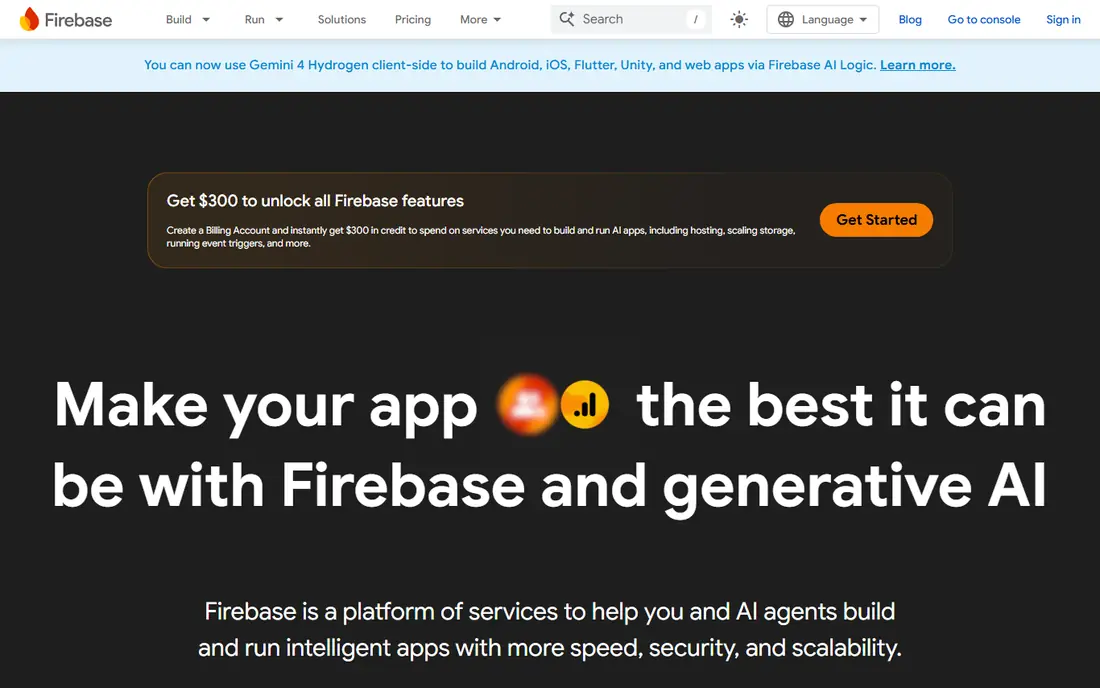
Firebase Cloud Messaging, known as FCM, delivers push messages at no cost for apps already using Firebase, which makes it the baseline every other tool must beat on price. Developers send messages through the FCM API or Firebase console, and the service handles routing to Android, iOS and web devices. For teams with engineering capacity and simple messaging needs, that free delivery is hard to argue against.
The trade-off is tooling. FCM alone does not offer rich journey builders, advanced segmentation dashboards or lifecycle campaign templates, so product and marketing teams must build or buy that layer. FCM suits developer-led apps that want control and low cost, while teams needing a marketer-friendly console should pair it with, or replace it by, a dashboard tool.
- Free delivery with no paid messaging tier
- Works across Android, iOS and web
- Deep integration with other Firebase services
- No marketing dashboard or journey builder built in
- Sending logic must be coded
- Analytics and segmentation need extra work
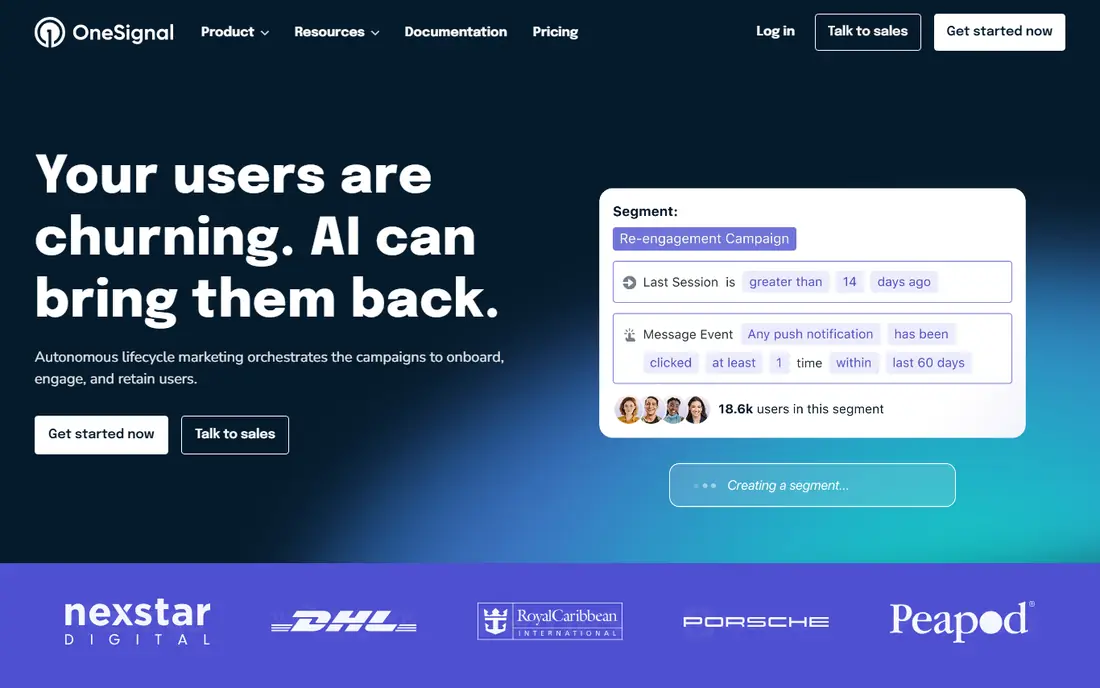
OneSignal gives small teams a usable dashboard without an enterprise contract, with a free tier covering mobile push and paid Growth plans adding usage-based capacity. Segmentation, scheduling, A/B testing and in-app messages help product teams run campaigns without building their own console, and SDKs cover the main mobile platforms. That balance explains its popularity with startups and growing consumer apps.
Costs need careful reading. Growth pricing starts at $19 per month plus per-user usage, so a fast-growing app can see bills rise with audience size rather than send count. OneSignal is best when a team wants a dashboard now and can forecast active users, rather than when messaging volume alone drives cost.
- Free tier with mobile push
- Visual dashboard and segmentation
- Email, SMS and in-app options alongside push
- Paid costs scale with monthly active users
- Advanced journeys sit on higher plans
- Web subscriber limits differ from mobile

Pushwoosh prices on monthly active users, with a free tier up to 1,000 MAU and push-only pricing from $7 per 1,000 MAU, while unlimited push volume sits inside each tier. That model suits apps that send often to a stable audience, since extra sends do not raise the bill in the same way as per-message pricing. A visual journey builder, segmentation and in-app messaging round out the core offer.
The watch-out is audience growth without revenue growth. A spike in low-intent installs raises MAU and therefore cost, even if conversions stay flat. Pushwoosh fits teams that track MAU closely and want predictable billing for frequent messaging.
- Free up to 1,000 monthly active users
- Unlimited push sends on plans
- Journey builder and segmentation included
- Billing follows audience size, not revenue
- Web push feels secondary to mobile
- Enterprise features need higher tiers
Pusher Beams is built for developers who need reliable transactional push, such as order updates, alerts and account events, without adopting a full marketing platform. The API is straightforward, the sandbox covers 1,000 subscribers for testing, and paid tiers scale by subscriber count rather than per-message fees. Teams that already use Pusher for realtime features get a natural fit.
Marketing teams will find gaps. Journey orchestration, rich audience analytics and cross-channel campaigns are thinner than on Braze or Airship, so Beams suits product-triggered messages more than lifecycle marketing. Choose it when delivery reliability and clean code matter most.
- Clean push API without marketing-suite weight
- Sandbox with 1,000 subscribers
- Predictable subscriber tiers
- No lifecycle marketing depth
- Costs rise with subscriber tiers
- Analytics are lighter than engagement suites
Airship targets large mobile brands running complex, high-volume programs across push, email, SMS and mobile wallet. Its strength lies in combining those channels with analytics, experimentation and journey tools that handle millions of users and many message variants. Enterprise teams with dedicated product and data staff get the most from that depth.
Small teams should look elsewhere. Pricing is quote-based, onboarding takes longer than a self-serve dashboard, and the feature set exceeds what a simple app needs. Airship is a serious evaluation for large consumer apps, not a quick trial for a first launch.
- Mobile-first engagement at enterprise scale
- Wallet, email and SMS alongside push
- Strong analytics and experimentation
- Quote-based pricing with no public starting price
- Implementation needs time and data work
- Overkill for small apps
Braze is the reference lifecycle platform for large consumer apps, where push is one channel inside long, branching customer journeys. Canvas lets teams test message order, timing and content across channels, while analytics show which variants drive retention rather than just opens. That depth makes Braze powerful for retention-focused teams with rich event data.
Cost and complexity are the barriers. Pricing is quoted, contracts typically run at enterprise levels, and getting full value needs clean event tracking and staff to run experiments. Braze fits teams that already treat messaging as a core growth function, not teams sending occasional alerts.
- Deep Canvas journey orchestration
- Strong experimentation and analytics
- Email, SMS, in-app and WhatsApp alongside push
- Sales-quoted contracts, often enterprise-priced
- Implementation assumes event data and team capacity
- Learning curve is steep
Courier helps product teams send notifications across channels from one API, with templates, user preferences and delivery routing handled centrally. The free tier covers a monthly send allowance for testing, and pay-as-you-go pricing suits apps with uneven volume. Developers like the single integration point, since adding a channel does not mean adopting a new vendor each time.
Per-message pricing is the catch for high-volume apps, because frequent notifications multiply costs even to a modest audience. Courier suits product messages such as alerts, receipts and reminders, while heavy marketing campaigns may fit better on a user-based platform.
- One API for push, email, SMS and in-app
- Free tier with monthly sends
- Templates and preferences in one place
- Per-message costs add up for chatty apps
- Push-specific marketing features are lighter than suites
- Template setup takes care
WonderPush stands out on price, with plans starting at €1 per month for the smallest subscriber band and full features included rather than gated behind higher tiers. Unlimited push, automation, segmentation, deep links and realtime reports come as standard, which makes it attractive for small apps and indie developers. Setup is quick, with a dashboard for marketers and an API for developers.
The trade-off is ecosystem size. Integrations, community resources and enterprise support are narrower than larger rivals, and US buyers should factor currency and tax handling into the total cost. WonderPush is a strong value pick for cost-sensitive teams that can work with a smaller vendor.
- Very low starting price per subscriber band
- Unlimited push and projects
- Segmentation, automation and analytics included
- Smaller brand presence than OneSignal or Braze
- Support and integrations are narrower
- Pricing is in euros for US buyers
Amazon Simple Notification Service, or SNS, sends mobile push at cloud scale for teams already running on AWS, with a free tier covering a large monthly push allowance. It fits transactional systems that already use AWS services, since push becomes one more endpoint in an existing architecture rather than a separate vendor relationship. Reliability and scale are the main draws.
Marketing features are absent. There is no journey builder, segmentation dashboard or campaign analytics comparable to OneSignal or Braze, so teams must build that layer themselves. SNS suits backend-led teams sending system messages, not marketers running lifecycle campaigns.
- Massive scale inside AWS
- Free tier for mobile push
- Pay-as-you-go after the free tier
- No marketing dashboard
- Setup needs AWS knowledge
- Message formatting varies by platform
How we picked these
We compared official pricing pages, documentation and free tier terms, and we checked how each vendor counts billable units, since that unit decides the real cost. We favoured tools with clear mobile SDKs, documented delivery handling and current 2026 pricing, and we included both free delivery options and enterprise suites so teams at different stages can compare honestly. Tools with unclear mobile support or discontinued push products were left out.
How to choose without overpaying
Start by counting your billable unit. List monthly active users, push subscribers and expected sends per month, then map each vendor price to that same unit before comparing. A cheap per-message price can beat a user-based plan for quiet apps, while a user-based plan wins for apps that send often to the same audience.
Next, separate delivery from marketing. If you only need alerts and receipts, FCM, SNS or Pusher Beams may cover the job at low cost. If retention campaigns, journeys and experiments matter, budget for a dashboard or suite and test its segmentation on a small audience first.
Finally, test deliverability and opt-in flow on real devices. Token handling, permission prompts, deep links and quiet hours all affect whether messages arrive and get opened. A tool that looks cheap on paper but loses tokens or mishandles permissions will cost more in lost engagement than a pricier, better-run alternative.
Frequently asked questions
What is the best push notification service for mobile apps?
For most small apps, OneSignal or Pushwoosh offer the best balance of dashboard, free tier and price. For free delivery alone, Firebase Cloud Messaging wins, while Braze and Airship suit large lifecycle programs.
Is Firebase Cloud Messaging really free?
Yes for message delivery, with no paid messaging tier. Costs can still arise from other Firebase services or from building your own dashboard, segmentation and analytics on top of FCM.
How does OneSignal pricing work?
OneSignal offers a free tier for mobile push, with Growth plans starting at $19 per month plus per-user usage for mobile and web subscribers. Check current limits before launch, since free and paid subscriber counts differ by channel.
Do push tools handle iOS and Android differently?
Yes. Each platform has its own token system, permission rules and message formats, so a good tool abstracts those differences while still letting developers set platform-specific options. Test on both platforms before release.
What is the difference between MAU, subscribers and sends?
Monthly active users count people active in a month, subscribers count devices or users registered for push, and sends count messages delivered. Vendors bill on different units, so compare costs using your own numbers, not headline prices alone.
Should small apps start with a free tier?
Yes in most cases. A free tier lets teams test SDK setup, permission prompts and basic campaigns before paying. Move to a paid plan when segmentation, journeys or audience size outgrow the free limits.
Sources
See where you really rank - block by block
ProMapRanker scans Google Maps across a grid of your service area. Simple monthly plans from $19, white-label on every plan.
Start freeKeep reading
 zyte alternatives
Best Zyte Alternatives in 2026
These zyte alternatives cover managed scraping APIs, proxy networks and no code tools for lawful collection from your own or consented sources only in 2026.
Read → zerto alternatives
Best Zerto Alternatives in 2026
Compare the best zerto alternatives for disaster recovery and replication, with recovery targets, cloud options and honest trade-offs for teams in 2026.
Read → zerofox alternatives
Best ZeroFox Alternatives in 2026
We compared 9 zerofox alternatives for brand protection, phishing takedowns, dark web monitoring, and social impersonation, with clear coverage notes.
Read →