 ProMapRanker
Best Publishing Companies for New Authors in 2026


Publishing on Amazon at no upfront cost · Pricing starts at: Free
Key takeaways
- First-time authors usually choose between traditional querying, hybrid publishing and self-publishing platforms, and each path trades control for support.
- Amazon KDP, IngramSpark and Draft2Digital are the most practical starting platforms for authors who want to publish this year.
- Hybrid publishers such as She Writes Press and Greenleaf Book Group vet manuscripts and charge for production, so read contracts carefully.
- Reedsy is a marketplace for hiring editors and designers, not a publisher that buys your book.
- This guide is based on public services and pricing descriptions, not a verified ranking, and no acceptance or sales outcome is promised.
Quick comparison
| Pick | Great for | Pricing starts at | Free tier | |
|---|---|---|---|---|
| Amazon KDP | Publishing on Amazon at no upfront cost | Free | Yes | Visit |
 IngramSpark | Bookstore and library distribution | $49 per title | No | Visit |
 Draft2Digital | Wide ebook distribution | Free | Yes | Visit |
 BookBaby | Full-service self-publishing packages | See website | No | Visit |
 Lulu | Print and ebook self-publishing | Free | Yes | Visit |
 She Writes Press | Curated hybrid publishing for women authors | See website | No | Visit |
 Greenleaf Book Group | Premium hybrid publishing for business and nonfiction | See website | No | Visit |
 SparkPress | Hybrid publishing for fiction and young adult | See website | No | Visit |
 Reedsy | Hiring editors, designers and marketers | See website | No | Visit |
The best publishing companies for new authors
The options below cover the main routes a new author can take in 2026. Some are platforms where you publish yourself, some are hybrid publishers that share costs and vet work, and one is a marketplace for hiring help. We describe each plainly so you can match the route to your budget, genre and patience for learning the process.
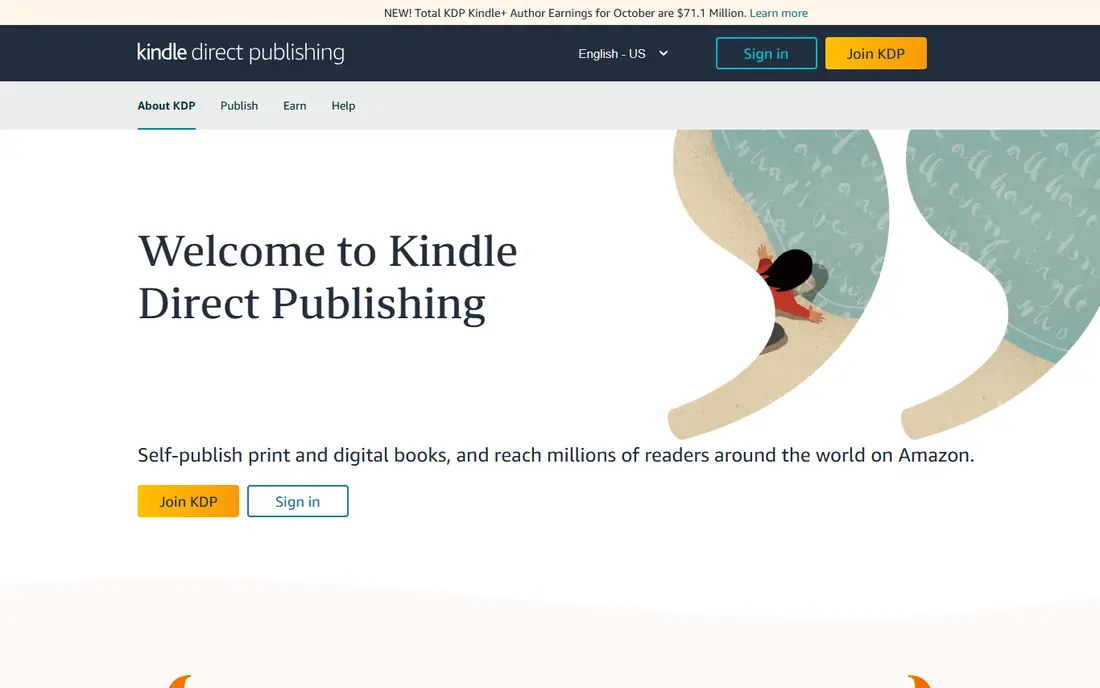
Amazon Kindle Direct Publishing is the starting point for most first-time authors who want a book live quickly. You upload a manuscript and cover, set a price, and publish in ebook and print formats without paying a publisher upfront. That low barrier is why so many new authors begin here, even if they later add wider distribution.
The trade is responsibility. Amazon does not edit your book, design a professional cover for free, or market it for you. Authors who skip editing and cover design often find that a live book alone does not bring readers, so budget time or money for those steps even though the platform itself is free.
- No upfront publishing fee
- Large Amazon readership
- Print and ebook in one dashboard
- Amazon-only reach unless you add other channels
- You handle editing, cover and marketing
- Royalty terms vary by price and region
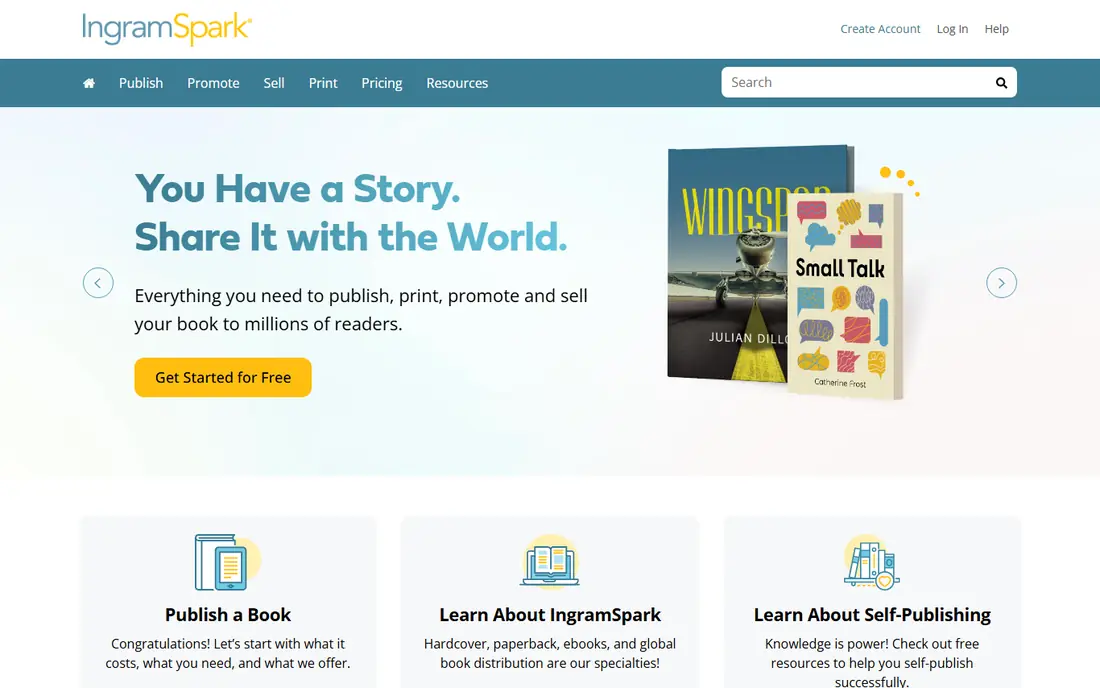
IngramSpark is the usual partner for authors who want bookstores and libraries to be able to order their book. Its wholesale catalog reaches retailers beyond Amazon, which matters if you plan readings, local store events or library placement. Many authors use it alongside Amazon, with Amazon for direct sales and IngramSpark for wider trade reach.
Beginners should take time with the setup. Discount, returns and pricing choices affect whether a bookstore will stock your title, and mistakes there are harder to undo than a typo in a description. If you only want Amazon sales, you may not need IngramSpark at all.
- Wide wholesale distribution to bookstores and libraries
- Print and ebook options
- Professional catalog presence
- Setup fee per title
- Interface is less beginner-friendly
- Returns and discount settings need care
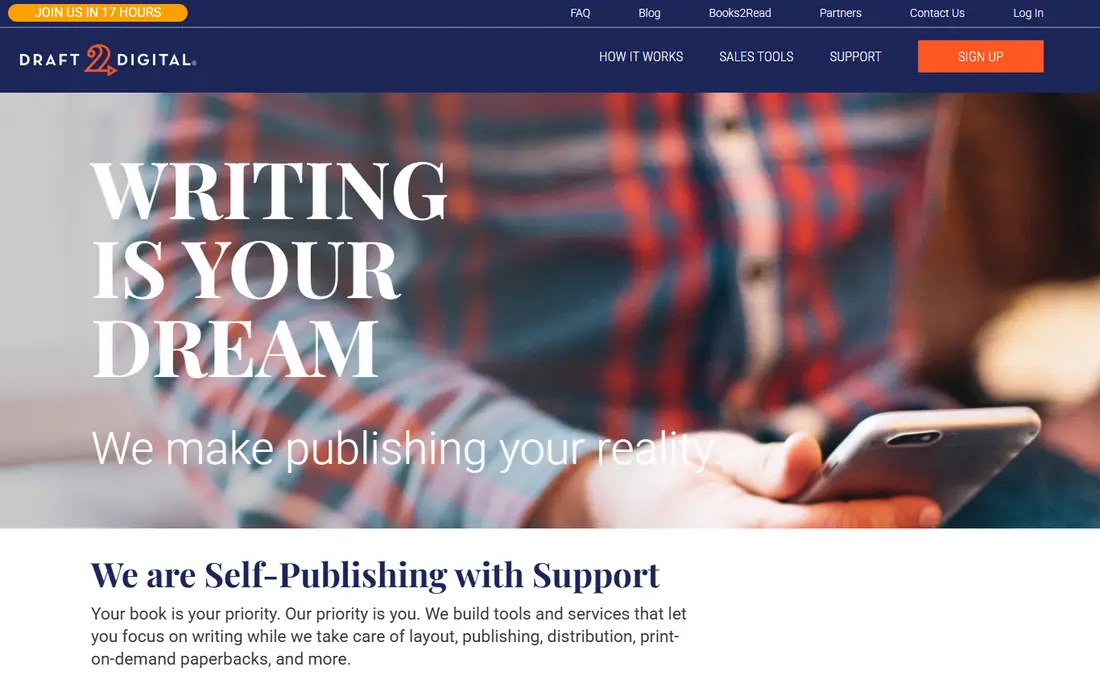
Draft2Digital suits authors who want their ebook in many stores without managing each retailer separately. You upload once, and the service distributes to major ebook retailers, handling formatting and sales reporting in one place. For a first-time author, that simplicity removes a lot of early friction.
The cost is a royalty share rather than an upfront fee, so compare that share against the value of your time before choosing direct accounts instead. Authors with strong sales may later move some titles direct, while most beginners benefit from the wide reach first.
- Free to upload
- Distribution to Apple, Kobo, Barnes and Noble and others
- Simple dashboard for beginners
- Takes a share of net royalties
- Print options are more limited than IngramSpark
- Less control than direct retailer accounts
BookBaby appeals to authors who want help but want to keep control of their book. Its packages bundle production steps that beginners often find confusing, such as formatting, cover design and distribution, into a single service. That structure can shorten the path from finished manuscript to published book.
Read the package details closely, because editing levels, distribution reach and marketing support differ between tiers. BookBaby is a service provider, not a traditional publisher that pays you an advance, so set expectations around sales accordingly.
- Editing, design and distribution packages in one place
- Print and ebook support
- Author keeps rights in its model
- Packages cost more than do-it-yourself platforms
- Package scope varies, so read inclusions
- Marketing help is limited unless added
Lulu is a flexible self-publishing platform with a long history in print-on-demand. Authors can produce paperbacks, hardcovers and ebooks, sell direct through Lulu, and add retail distribution where it fits. That range suits authors with unusual formats, such as photo books or workbooks, as well as standard novels and nonfiction.
As with other self-publishing platforms, Lulu does not replace editing or marketing. A free upload is only the start, and authors who invest in a professional cover and edit tend to present far better than those who publish a raw draft.
- Free basic publishing tools
- Print-on-demand with varied formats
- Direct store and retail options
- You manage editing and marketing yourself
- Distribution reach depends on the package
- Print costs vary by format
She Writes Press is a hybrid publisher focused on women authors, with a curated list and distribution through Simon and Schuster. Authors whose manuscripts are accepted pay for production and receive a higher royalty share than a typical traditional deal, while the publisher handles production quality and trade distribution.
The key distinction is cost. This is not a traditional deal where the publisher pays you, and it is not a self-publishing platform where anyone can upload. Read the contract for rights, royalties, term and what production covers before signing, and compare the total cost against hiring freelancers yourself.
- Curated selection and author community
- Distribution through Simon and Schuster
- Higher royalties than many traditional deals
- Author pays production costs
- Acceptance is selective
- Marketing still needs author effort
Greenleaf Book Group
Great for: Premium hybrid publishing for business and nonfiction
Greenleaf Book Group is a well-known hybrid publisher for business, nonfiction and thought-leadership titles. It offers production, distribution and marketing support under its imprint, with project pricing quoted per book rather than as a fixed public package. That model suits authors with a professional audience and a budget for a polished launch.
New authors should confirm the full scope and cost in writing before committing, since individual quotes make comparison harder. Greenleaf is best viewed as a professional publishing partner for authors who want a curated imprint and are ready to invest in it.
- Long-running hybrid with in-house distribution
- Strong fit for business and nonfiction
- Premium production standards
- Projects are quoted individually, so costs vary
- Selective intake
- Author investment is substantial
SparkPress serves commercial fiction and young adult authors through the same hybrid model as She Writes Press, with curated selection and trade distribution. For a first-time novelist who wants an imprint and distribution support without waiting years for a traditional deal, it is a clear option to investigate.
Genre fit is important here. Review recent SparkPress titles in your category before submitting, and confirm costs, royalties and rights in the contract. A hybrid deal only makes sense when the publisher's list, distribution and production quality match your book.
- Sister imprint to She Writes Press
- Focus on commercial fiction and young adult
- Trade distribution support
- Author pays production costs
- Selective acceptance
- Genre fit matters, so check current list
Reedsy is not a publisher, but it belongs on a first-time author shortlist because it solves the hardest part of self-publishing: finding good help. Its marketplace lists editors, cover designers, formatters and marketers with profiles and past work, so you can hire professionals without guessing from open freelance sites.
Budget carefully, since hiring an editor, designer and formatter separately can approach the cost of a package elsewhere. The benefit is control: you choose each person, keep your rights and royalties, and publish through the platform of your choice.
- Vetted freelance editors, designers and marketers
- Clear project marketplace
- Useful for authors publishing independently
- Not a publisher, so it does not distribute or buy books
- Freelancer costs add up
- You manage the project
How we picked these
We compared public service descriptions, pricing pages and distribution claims for platforms and publishers that actively serve new authors in 2026. We included self-publishing platforms, hybrid publishers with public track records, and one hiring marketplace, because first-time authors realistically weigh all three routes. We excluded vanity-style operators with unclear terms and any service that promised sales or acceptance outcomes, since no publisher can guarantee those results.
Choosing between traditional, hybrid and self-publishing
Traditional publishing usually starts with a literary agent, not a direct submission to a large publisher, and it can take months of querying before an offer arrives. The publisher pays production costs and may pay an advance, but the author gives up a larger royalty share and some control over timing and design. That route suits authors with patience, a commercial genre fit and a willingness to revise through an agent and editor.
Hybrid publishing sits in the middle. The publisher vets the manuscript, produces the book under its imprint and offers trade distribution, while the author pays production costs and keeps a higher royalty share. Self-publishing gives the author full control and full royalties, but also full responsibility for editing, design, distribution and marketing. Many first-time authors publish independently first, learn the process, and then decide whether a hybrid or traditional route fits a later book.
A practical checklist before you sign or upload
First, finish and revise the manuscript before comparing publishers, since a polished draft changes every conversation. Second, get a sample edit or a professional read if you can afford it, because early feedback is cheaper than a full rework. Third, read any contract for rights, term, royalties, costs and what happens if the book goes out of print or the deal ends.
Also check who owns the files, the ISBN and the cover, and whether you can publish elsewhere later. Keep copies of everything you sign, and be wary of any company that contacts you out of the blue with praise and a large fee. Reputable publishers and services explain their process plainly before you pay.
Frequently asked questions
What are the best publishing companies for first time authors?
For most first-time authors, Amazon KDP, IngramSpark and Draft2Digital are the most practical starting platforms, because they let you publish this year without a long querying process. Hybrid publishers such as She Writes Press, SparkPress and Greenleaf Book Group suit authors who want a curated imprint and trade distribution and can invest in production. The best route depends on budget, genre and how much control you want.
Do traditional publishers accept new authors directly?
Large traditional publishers rarely accept unsolicited manuscripts, and most new authors reach them through a literary agent. Independent presses sometimes run open submission windows, so check each press for current guidelines. Expect querying to take months, with many rejections before an offer.
How much does it cost to publish a book as a new author?
It can cost nothing upfront on Amazon KDP or Draft2Digital, around $49 per title on IngramSpark for setup, and far more for full-service packages or hybrid production. A professional DIY launch with freelancers often falls in a broad range, so get quotes for editing and design before setting a budget.
What is the difference between hybrid publishing and vanity publishing?
Hybrid publishers vet manuscripts, publish under their own imprint, offer real distribution and pay higher royalties, while the author pays production costs. Vanity operators often charge large fees with little vetting, weak distribution and poor terms. Check distribution, recent titles, contract terms and author experiences before signing.
Should a first-time author use Reedsy?
Reedsy is useful if you plan to self-publish and want vetted editors, designers or marketers. It does not publish or distribute your book, so you still need a platform such as Amazon KDP or IngramSpark for sales. Use it to hire help, not as a substitute for a publisher.
Can I publish on Amazon and also use IngramSpark?
Yes, many authors use both, with Amazon for direct sales and IngramSpark for bookstore and library distribution. Take care with ISBNs, pricing and edition settings so the two channels do not conflict, and read each platform's guidance before uploading the same title twice.
Sources
- https://kdp.amazon.com
- https://www.ingramspark.com
- https://www.draft2digital.com
- https://www.bookbaby.com
- https://www.lulu.com
- https://www.shewritespress.com
- https://www.greenleafbookgroup.com
- https://www.sparkpress.com
- https://www.reedsy.com
- https://writersofthewest.net/blog/best-hybrid-publishing-companies-for-new-authors/
- https://harmonypublishing.net/blog/publishing-companies-2026-guide-types-real-costs-how-to-choose-the-right-one
- https://bergpublisher.com/blog/best-publishing-platforms-2026-to-2027-the-ultimate-comparison-guide
See where you really rank - block by block
ProMapRanker scans Google Maps across a grid of your service area. Simple monthly plans from $19, white-label on every plan.
Start freeKeep reading
 zscaler alternatives
Best Zscaler Alternatives in 2026
Looking for zscaler alternatives? We compare 9 SASE and zero trust platforms on architecture, data protection, pricing, and fit for your network and team.
Read → zapier alternatives free
Best Zapier Alternatives Free in 2026
Nine automation tools for zapier alternatives free in 2026, all with genuinely free tiers, plus free plan limits, starting prices and upgrade paths explained.
Read → which platform is best for online reputation
Which Platform Is Best for Online Reputation in 2026
Wondering which platform is best for online reputation? We compare 8 review, listing, and response tools for small and multi-location businesses and agencies.
Read →