 ProMapRanker
Best Publishing Companies in 2026


Largest trade reach · Pricing starts at: See website
Key takeaways
- The largest trade publishers, often called the Big Five, offer the widest distribution and marketing, but most only accept manuscripts through a literary agent.
- Independent publishers such as Sourcebooks and Scholastic offer strong genre and children's expertise, sometimes with more direct submission routes.
- Amazon KDP suits authors who want to publish quickly, keep control, and retain a larger share of royalties, at the cost of doing their own editing and marketing.
- Traditional publishers do not charge authors upfront; they pay advances and royalties. Be wary of any company that charges a large fee while also taking rights.
Quick comparison
| Pick | Great for | Pricing starts at | Free tier | |
|---|---|---|---|---|
| Penguin Random House | Largest trade reach | See website | No | Visit |
 HarperCollins | Global multi-genre publishing | See website | No | Visit |
 Simon and Schuster | Commercial and literary trade books | See website | No | Visit |
 Hachette Book Group | Broad trade and children's lists | See website | No | Visit |
 Macmillan | Literary and trade publishing | See website | No | Visit |
 Scholastic | Children's and young adult books | See website | No | Visit |
 Sourcebooks | Independent and author-friendly publishing | See website | No | Visit |
 Amazon KDP | Self-publishing with full control | Free | Yes | Visit |
The best publishing companies
Publishing companies fall into three groups: large traditional publishers, independents, and self-publishing platforms. The companies below cover all three, so authors can compare the traditional route, where a publisher pays you, with the self-publishing route, where you keep control and do more of the work yourself.
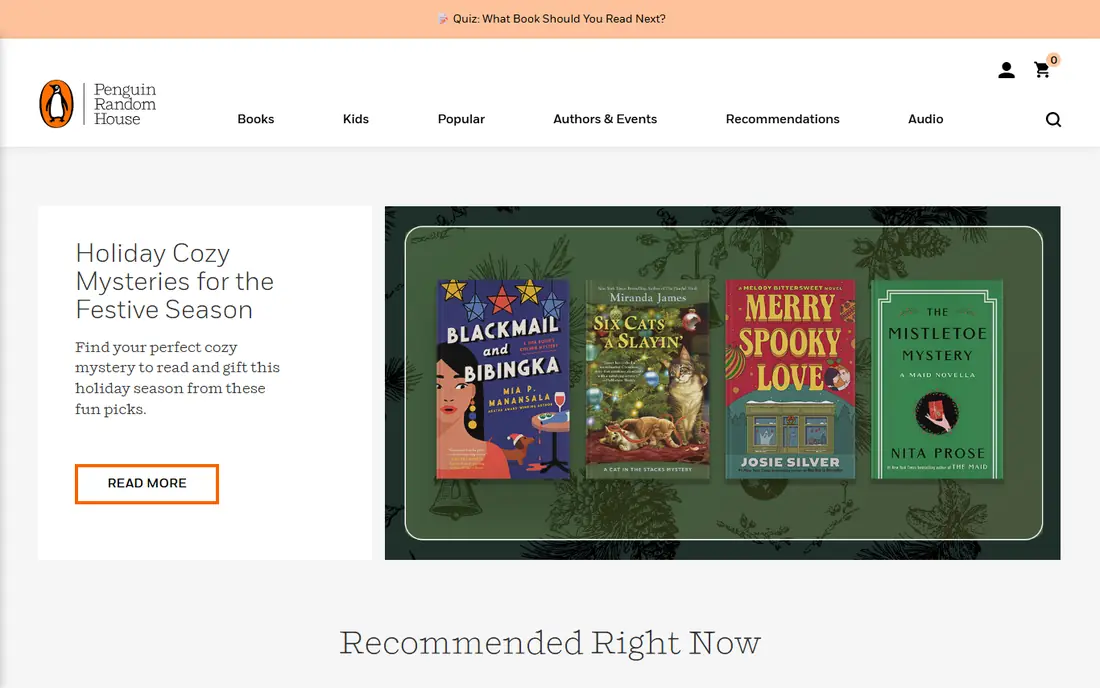
Penguin Random House is the largest trade publisher in the United States, with a very large list of imprints covering fiction, nonfiction, children's books, and genre titles. That scale brings distribution into bookstores and libraries, professional editing and cover design, and marketing resources that smaller publishers cannot match. For commercial and literary authors with agent representation, it is the most powerful traditional route.
Access is the honest barrier. Most imprints do not accept unsolicited manuscripts, so authors usually need a literary agent to submit. Competition is also intense, and even strong manuscripts face long odds. If you have agent interest and a book with broad appeal, Penguin Random House should be on your list.
- Widest global distribution and many imprints
- Strong editorial, design, and marketing resources
- Deep backlist presence
- Extremely competitive
- Most submissions come through literary agents, not direct queries
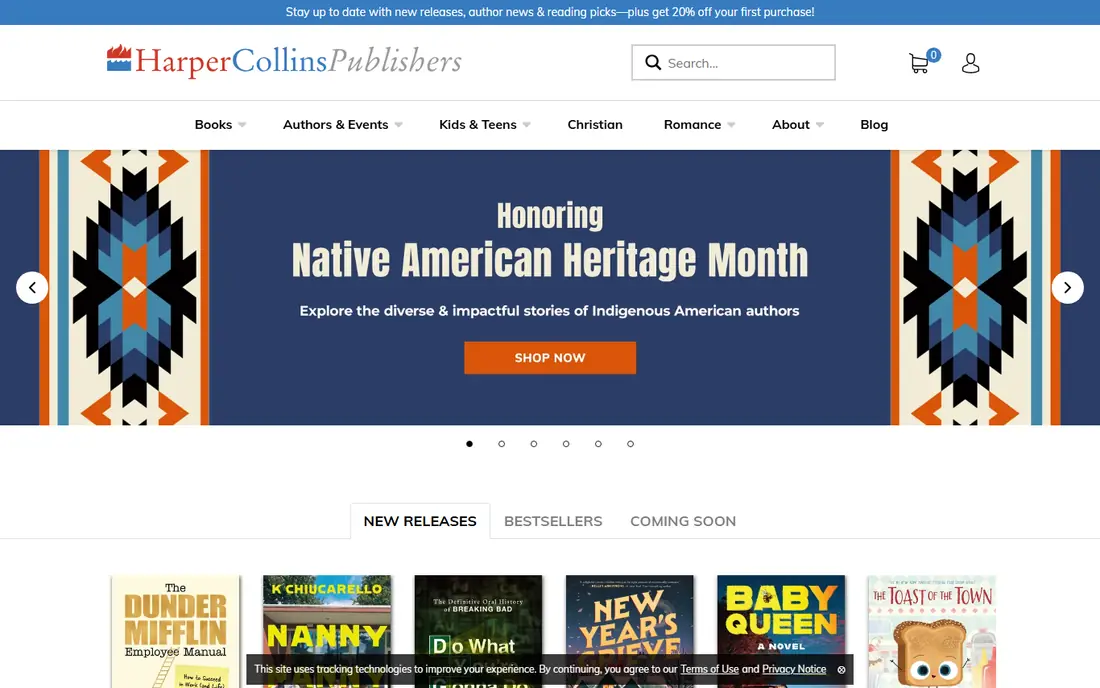
HarperCollins is one of the largest global publishers, with imprints across fiction, nonfiction, children's books, and Christian publishing. Its international reach helps books travel beyond the United States, and its catalog includes long-running brands and bestselling authors. Editorial and marketing support is extensive, and distribution is strong in both physical and digital channels.
As with other Big Five publishers, access runs mainly through agents for adult trade books, and competition is high. Some children's imprints and special programs accept direct submissions at times, so check current guidelines before querying. For authors with a broadly commercial book, HarperCollins is a top traditional target.
- Global reach across many countries
- Broad fiction, nonfiction, and children's lists
- Strong backlist and brand imprints
- Highly competitive
- Agent representation is the usual route for adult trade books
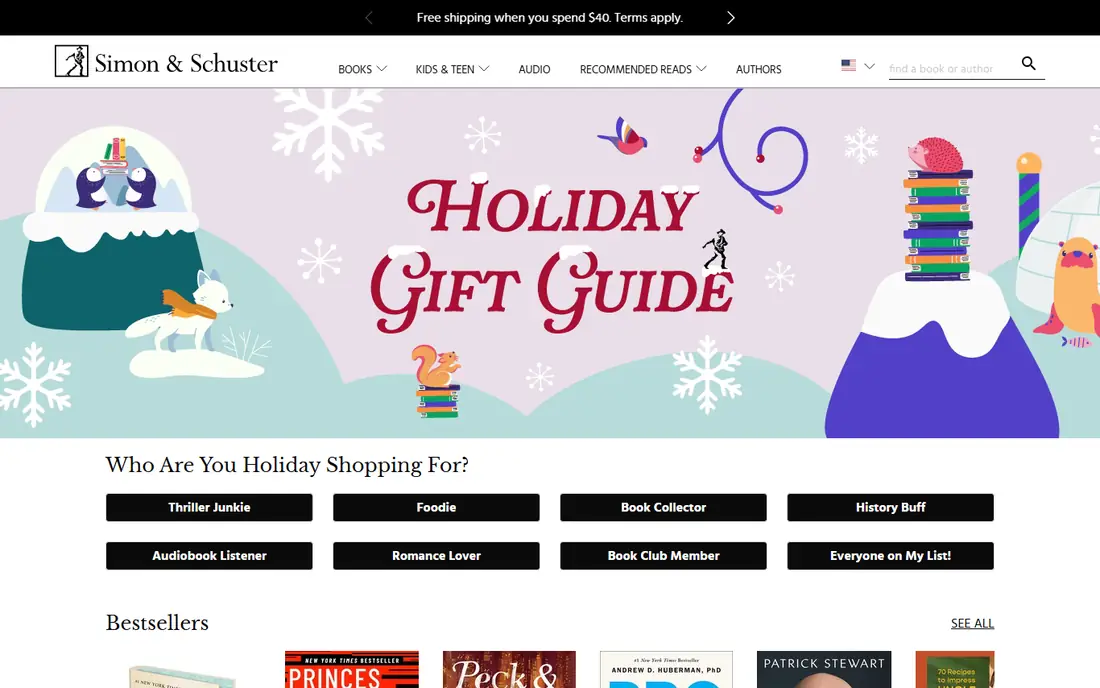
Simon and Schuster covers trade fiction, nonfiction, children's books, and young adult titles through a range of imprints. It is known for commercial hits as well as literary and memoir titles, and its distribution and marketing support suit books aimed at a wide readership. Authors who write accessible nonfiction, memoir, or commercial fiction will find relevant imprints here.
The same access limits apply. Most adult trade imprints require an agent, and the submission process takes time. Authors should research individual imprints, since each has its own focus and editors. For a commercial book with agent backing, Simon and Schuster is a strong traditional option.
- Strong commercial and literary lists
- Good bookstore relationships
- Wide genre coverage
- Highly competitive
- Agent route is standard for most imprints
Hachette Book Group is another Big Five publisher, with imprints spanning literary fiction, commercial fiction, nonfiction, children's books, and genre titles. Its distribution network reaches bookstores, libraries, and online retailers, and its marketing teams support both frontlist titles and backlist authors. Genre writers, in particular, will find imprints focused on their categories.
Competition and agent requirements mirror the rest of the Big Five. Direct submission is rare for adult trade books, so an agent query is the normal path. For authors with a book that fits a Hachette imprint's list, the publisher offers scale, professionalism, and reach.
- Broad trade, children's, and genre coverage
- Strong distribution
- Multiple well-known imprints
- Highly competitive
- Most trade submissions need an agent
Macmillan is known for literary quality alongside commercial publishing, with imprints covering fiction, nonfiction, academic titles, and children's books. Its editors have a reputation for supporting distinctive voices, and its distribution is global. Authors who write literary fiction, serious nonfiction, or crossover titles often target Macmillan imprints.
Access remains competitive, and agents are the standard route for trade books. Macmillan also runs programs and imprints with different focuses, so authors should match the imprint to the book rather than querying the company as a whole. For literary and ambitious trade books, Macmillan is a respected traditional home.
- Strong literary reputation
- Diverse imprints for fiction, nonfiction, and children's books
- Global distribution
- Highly competitive
- Agent representation is the usual route
Scholastic is the leading publisher for children's and young adult books in the United States, with a presence in schools, classrooms, book fairs, and retail. Its series, picture books, middle-grade, and young adult lists reach young readers in ways other publishers cannot easily match. For children's authors, that school channel is a major advantage.
Scholastic is not a general adult publisher, so adult authors should look elsewhere. Children's submissions also often go through agents, though guidelines vary by imprint and program. For a children's or young adult book, Scholastic is the most specialized major publisher on this list.
- Unmatched school and classroom distribution
- Trusted children's brand
- Strong series and educational lists
- Focused on children's and young adult books
- Trade submissions often need an agent
Sourcebooks is one of the largest independent publishers in the United States, with lists covering fiction, nonfiction, children's books, and romance. It has a reputation for being author-friendly and for trying new marketing and distribution approaches, which appeals to authors who want more personal attention than a very large house may offer. Its books reach national retail and library channels.
Scale is the trade-off. Sourcebooks does not match Big Five distribution and marketing budgets, and traditional deals remain competitive. Authors who value an independent partner with a strong track record and a hands-on approach should consider Sourcebooks alongside the larger houses.
- Independent with a reputation for author support
- Broad fiction, nonfiction, and children's lists
- Innovative marketing
- Smaller scale than the Big Five
- Still competitive for traditional deals
Amazon Kindle Direct Publishing is the most widely used self-publishing platform, and it suits authors who want speed and control. You can publish an ebook and a print book without an agent, set your own price, update files, and reach Amazon readers worldwide. There is no upfront publishing fee for the basic service, and royalties are paid on sales.
Control brings work. KDP does not edit your manuscript, design a professional cover, or market the book for you, so authors must hire freelancers or do that work themselves. Discoverability also depends heavily on your own promotion, categories, and reviews. For authors who want to publish this year and keep control, KDP is the most practical route.
- Free to publish ebooks and print books
- Fast time to market
- Author keeps control of price, rights, and updates
- Author handles editing, cover design, and marketing
- Discoverability depends on your own promotion
How we picked these
We compared official publisher pages, submission guidelines, and catalogs, and we checked recent publishing guides to confirm which companies were active in 2026. We favored publishers with national distribution, a clear catalog, and a real route for authors, whether through agents or self-publishing. We left out vanity presses that charge large fees while taking rights, and ghostwriting firms that are not publishers in the traditional sense.
How to choose the right publisher
Start with your book and your timeline. If you want a traditional deal, research agents who represent your genre, since agents are the main route to the Big Five and many independents. Query agents with a strong proposal or manuscript, and let the agent match the book to imprints. That process takes months, and often longer, so patience is part of the route.
If you want to publish soon, keep control, or test a niche book, self-publishing through KDP or a similar platform is more realistic. Budget for professional editing and cover design, since readers judge self-published books by those signals. For children's books, check Scholastic and children's imprints first, since their school channels are hard to replace.
A warning on fees and rights
A traditional publisher pays you; it does not charge you to publish. A self-publishing service may charge for editing, design, or printing, and that can be legitimate, but you should keep your rights and your royalties. Walk away from any company that charges a large fee, takes a permanent royalty share, and controls your rights, since that combination is the hallmark of a vanity press. Read every contract, and consider a publishing lawyer for a traditional deal.
Frequently asked questions
Which publishing company is the best?
Penguin Random House is the largest and best-known trade publisher, but the best publisher depends on your book. HarperCollins, Simon and Schuster, Hachette, and Macmillan are the other Big Five houses, while Scholastic leads children's books and Sourcebooks is a strong independent.
What are the best book publishing companies for first-time authors?
For first-time authors who want to publish soon, Amazon KDP is the most practical route, since it accepts authors without an agent. For a traditional deal, first-time authors usually query literary agents first, who then submit to publishers such as Penguin Random House, HarperCollins, or Sourcebooks.
Do publishing companies charge authors?
Traditional publishers do not charge authors upfront; they pay advances and royalties. Self-publishing platforms such as KDP are free to use, while editing, cover design, and printing services may cost money. Be wary of companies that charge large fees while also taking your rights.
Can I submit directly to a big publisher?
Most Big Five imprints only accept manuscripts through literary agents, with limited exceptions for children's programs or special open windows. Independents and self-publishing platforms are more open to direct submissions, so check each publisher's current guidelines before querying.
Is self-publishing better than traditional publishing?
It depends on your goals. Traditional publishing offers editing, design, distribution, and marketing support, but it is slow and competitive. Self-publishing offers speed and control, but you must handle editing, design, and marketing yourself. Many authors choose based on timeline, genre, and how much promotion they can do.
Sources
See where you really rank - block by block
ProMapRanker scans Google Maps across a grid of your service area. Simple monthly plans from $19, white-label on every plan.
Start freeKeep reading
 zoho inventory alternatives
6 Alternatives to Zoho Inventory, Compared on Price and Fit
Zoho Inventory alternatives: 6 tools compared on price, free plans and fit. Katana leads the list for manufacturers. Fit and flaws are laid out for each entry.
Read → zoho crm alternatives
Best Zoho CRM Alternatives (2026)
Need Zoho CRM alternatives? We compare 7 tools on cost, free access and who each suits. Every pick gets a straight assessment. Built for quick decisions.
Read → zelle alternatives
Best Zelle Alternatives in 2026
Compare the best Zelle alternatives for sending money to friends, paying sellers and moving funds abroad, with honest notes on fees, speed and safety in 2026.
Read →