 ProMapRanker
Best Public Transportation Software in 2026

Key takeaways
- No single platform covers planning, dispatch, ticketing and rider apps equally well, so agencies usually buy for their weakest link first.
- Optibus suits planning and scheduling, Swiftly suits real-time data and performance, and Masabi suits digital ticketing.
- Trapeze and HASTUS suit large agencies with complex rostering, while Via and Ecolane suit demand-response and paratransit work.
- Almost all pricing is quoted per agency, so a demo, a pilot and a clear support contract matter more than a price page.
- Rider communication during disruptions is a core feature now, not an extra, so test alerts and app updates before you sign.
Quick comparison
| Pick | Great for | Pricing starts at | Free tier | |
|---|---|---|---|---|
 Optibus | Planning and scheduling | See website | No | Visit |
 Trapeze Group | Large agency operations | See website | No | Visit |
 Swiftly | Real-time data and performance | See website | No | Visit |
 Masabi | Digital ticketing | See website | No | Visit |
 HASTUS | Scheduling and rostering | See website | No | Visit |
 INIT | Integrated planning and dispatch | See website | No | Visit |
 Via Transportation | Demand-response transit | See website | No | Visit |
 Ecolane | Paratransit scheduling | See website | No | Visit |
The best public transportation software
We compared official product pages, agency use cases and feature descriptions for planning, scheduling, operations, ticketing and rider information. This list is aimed at transit agencies, operators and planners, not at individual riders looking for a journey planner app. Most tools here are enterprise systems sold by quote.
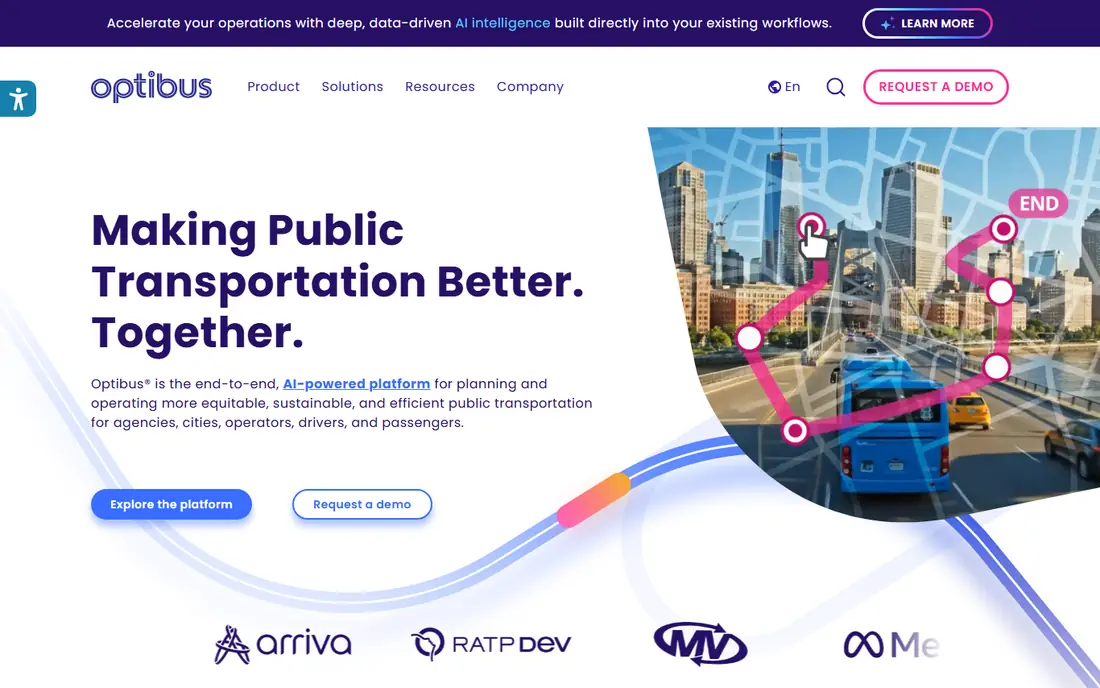
Optibus brings planning, scheduling, rostering and operations into one platform, which helps agencies stop juggling separate timetable, driver roster and vehicle tools. Planners can test schedule changes, see the effect on vehicles and drivers, and publish updated services faster than with manual spreadsheets. Its optimization tools help agencies use vehicles and staff hours more carefully, which matters when budgets are tight.
The platform works best when input data is clean. Poor timetable data, missing ridership counts or outdated driver rules will limit what optimization can do, so agencies should plan a data cleanup step. Pricing is quoted, and implementation needs staff time for training and process change. For agencies whose main pain is planning and scheduling, Optibus is a strong first demo.
- Unified planning, scheduling and rostering
- AI-assisted optimization
- Passenger information tools
- Pricing is quote-only
- Full value needs clean timetable and ridership data

Trapeze Group offers an integrated suite covering planning, scheduling, dispatch, operations and reporting, with a focus on agencies that run complex networks. Its real-time service control tools help dispatchers respond to delays, detours and vehicle issues across many routes, while reporting tools give managers a view of on-time performance and service gaps. Multi-operator networks benefit from shared workflows rather than separate systems per operator.
Breadth brings complexity. A full Trapeze rollout is a major project, with scoping, integration and training phases that take months for large agencies. Smaller agencies may find parts of the suite more than they need. For large operators that want one vendor across planning and day-to-day control, Trapeze is a serious candidate.
- Broad suite for planning, dispatch and operations
- Experience with multi-operator networks
- Real-time service control
- Large suite can mean a long rollout
- Pricing is quote-only
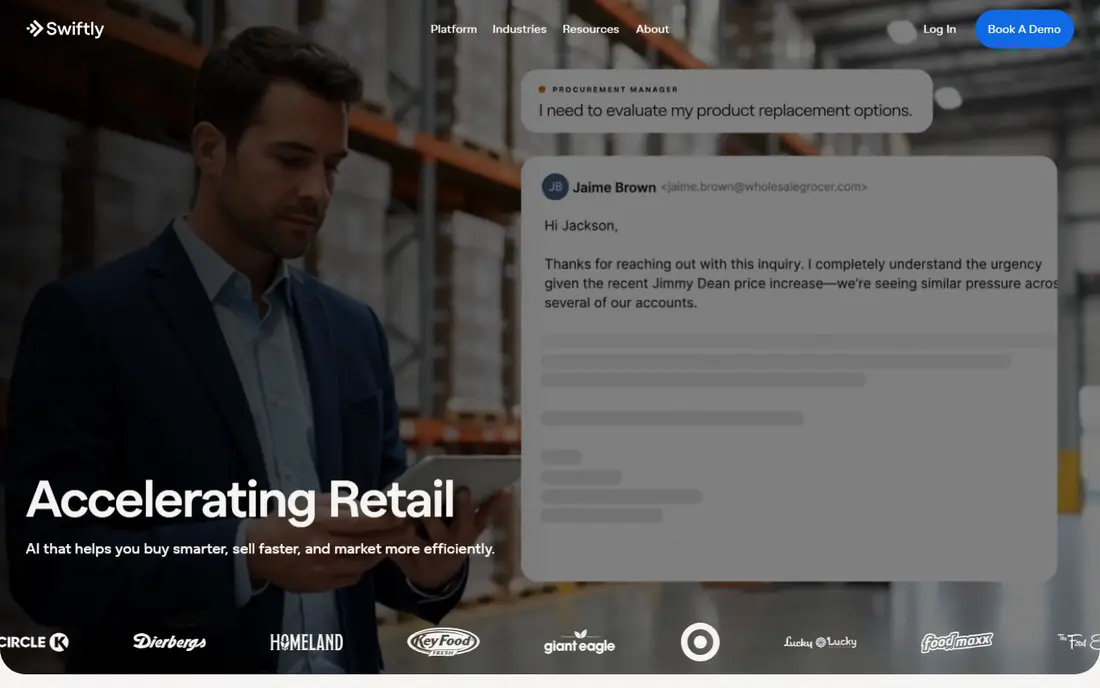
Swiftly focuses on the live side of transit: accurate arrival predictions, real-time vehicle tracking, service performance and disruption handling. Agencies use it to improve the data riders see in apps, to spot late or bunched buses early, and to measure on-time performance by route, time and stop. That focus makes it a good complement to a planning system, rather than a replacement for one.
Agencies that need ticketing, full scheduling or rostering will need other tools alongside Swiftly. Pricing is quoted per agency, so ask what data feeds, integrations and support are included. If rider trust is falling because arrival times are wrong, or managers lack clear performance data, Swiftly addresses that gap directly.
- Strong real-time predictions and performance analytics
- Rider-facing data quality
- Disruption tools
- Focuses on data and operations insight, not full ticketing or planning
- Pricing is quote-only
Masabi provides digital ticketing and fare management for transit agencies, covering mobile tickets, smartcards where supported, and distribution through partner apps and channels. Riders can buy and show tickets on a phone, agencies can manage fare products and promotions, and revenue reporting stays in one place. That shift cuts cash handling and speeds boarding compared with paper tickets.
Masabi does not replace planning, scheduling or dispatch software, so agencies should plan integrations with their operations systems. Pricing is quoted, and fare rules, validation hardware and payment partners all affect the total project. For agencies moving from paper to digital fares, Masabi is one of the most focused options.
- Multi-channel digital ticketing
- Fare product management
- Distribution across apps and retail
- Ticketing focus means planning and dispatch need separate tools
- Pricing is quote-only
HASTUS, from GIRO, is a long-standing scheduling and rostering system used by large transit agencies. It handles timetable creation, vehicle blocking, run cutting and driver rostering in depth, which matters when hundreds of vehicles and drivers must fit legal rules, union agreements and service patterns. Its optimization helps planners build workable rosters without endless manual fixes.
That depth comes with a learning curve. Planners need training, and the system rewards agencies with clean rules and data. Smaller agencies may find HASTUS more than they need, and pricing is quoted per project. For large agencies where scheduling is the bottleneck, HASTUS remains a benchmark tool.
- Deep scheduling, run cutting and rostering
- Long use by large transit agencies
- Strong optimization
- Enterprise tool with a steep learning curve
- Implementation and training take significant time
INIT offers planning, dispatch, real-time passenger information and fare systems, with workflows that link disruptions to specific routes and timetable changes. When a road closes or a vehicle fails, dispatchers can adjust service and push updated rider information from related tools, rather than handling each step in isolation. That link between operations and rider communication is a real strength during disruptions.
The suite scope means procurement and rollout need careful scoping, since agencies may buy more than they need at first. Pricing is quoted, and hardware for vehicles and stops can add to the project cost. For agencies that want planning, dispatch and rider information from one vendor family, INIT deserves a place on the shortlist.
- Planning, dispatch and passenger information in one family
- Disruption workflows tied to routes
- Fare system options
- Broad scope can lengthen procurement
- Pricing is quote-only
Via Transportation is best known for on-demand and microtransit services, where riders request trips and software matches them to vehicles in real time. Its routing, rider app and driver tools suit agencies testing flexible services in low-density areas, late-night coverage or first-mile and last-mile links to fixed routes. Via also operates services directly in some markets, which gives it operational experience beyond software alone.
Fixed-route agencies with large timetables will still need planning and scheduling tools like Optibus or HASTUS. Via pricing and delivery models vary, so agencies should clarify whether they are buying software, a managed service or both. For demand-response work, Via is a leading option.
- Strong on-demand routing and matching
- Rider app and driver tools
- Experience with microtransit services
- Less suited to fixed-route timetable planning
- Pricing and service models vary by project
Ecolane focuses on paratransit and demand-response operations, covering trip booking, scheduling, dispatch and reporting. That focus matters for agencies serving riders with disabilities, seniors and others who book trips in advance, since fixed-route tools often handle those workflows poorly. Ecolane helps schedulers group trips efficiently, manage driver manifests and track service quality.
Agencies that mainly run fixed routes will need other tools for timetable planning. Pricing is quoted, and integration with rider eligibility systems and phone booking should be checked early. For paratransit-first agencies, Ecolane offers a focused, practical system rather than a generic fleet tool stretched to fit.
- Focus on paratransit and demand-response scheduling
- Rider booking and dispatch tools
- Reporting for compliance
- Narrower focus than full fixed-route suites
- Pricing is quote-only
How we picked these
We compared official product pages, agency use cases and feature descriptions for planning, scheduling, dispatch, ticketing and demand-response work. We kept only platforms that serve public transit agencies and cover at least one core workflow in depth. We did not claim hands-on use, and we used See website for pricing where vendors quote per agency, rather than inventing figures.
How to choose the right platform
Start with the workflow that causes the most pain today. If schedules take weeks to build, look at Optibus or HASTUS. If riders complain about wrong arrival times, look at Swiftly. If paper tickets slow boarding, look at Masabi. If paratransit booking is the bottleneck, look at Ecolane or Via. Buying for the weakest link first gives a faster return than replacing everything at once.
Run a pilot on real routes with real data. Test disruption handling, rider alerts, driver tools and reporting, not just the sales demo on clean sample data. Ask about integrations with vehicle hardware, fare systems and existing planning tools, and get support hours, training and data ownership in writing. A platform that works on your worst day, during a major disruption, is the one worth signing for.
Frequently asked questions
What is the best public transportation software for a small agency?
Small agencies should start with the workflow they struggle with most, rather than buying a full enterprise suite. Optibus suits planning, Swiftly suits real-time data, and Ecolane suits paratransit, while a pilot helps confirm fit before a large contract.
What are the best public transportation apps for riders?
Rider apps are usually supplied by the agency or a journey planner, not by the back-office systems on this list. Swiftly and INIT help agencies publish better real-time data, which then improves the arrival times riders see in their apps.
What is the best public transportation app for planning a service?
Optibus and HASTUS are strong planning tools, with Optibus covering planning, scheduling and rostering in one platform, and HASTUS offering deep scheduling and rostering for large agencies. The right pick depends on agency size and roster complexity.
How much does public transportation software cost?
Most vendors quote per agency, based on fleet size, routes, modules and contract length, so public prices are rare. Expect a scoping process, a demo and a custom proposal, and ask for implementation, training and support costs in the same quote.
Does public transportation software include ticketing?
Some suites include fare tools, but ticketing is often a separate purchase. Masabi specializes in digital ticketing, while INIT offers fare options alongside operations tools. Check how ticketing, validation and revenue reporting connect to your operations system.
Can one platform handle fixed-route and paratransit together?
Some suites cover both, but paratransit workflows differ enough that focused tools like Ecolane often work better for demand-response trips. Agencies running both service types should test booking, scheduling and reporting for each mode before choosing a single vendor.
Sources
See where you really rank - block by block
ProMapRanker scans Google Maps across a grid of your service area. Simple monthly plans from $19, white-label on every plan.
Start freeKeep reading
 zscaler alternatives
Best Zscaler Alternatives in 2026
Looking for zscaler alternatives? We compare 9 SASE and zero trust platforms on architecture, data protection, pricing, and fit for your network and team.
Read → zapier alternatives free
Best Zapier Alternatives Free in 2026
Nine automation tools for zapier alternatives free in 2026, all with genuinely free tiers, plus free plan limits, starting prices and upgrade paths explained.
Read → which platform is best for online reputation
Which Platform Is Best for Online Reputation in 2026
Wondering which platform is best for online reputation? We compare 8 review, listing, and response tools for small and multi-location businesses and agencies.
Read →