 ProMapRanker
Best Provider Credentialing Software in 2026

Key takeaways
- Medallion suits organisations that want fast, automated primary source verification and payer enrollment in one flow.
- symplr Provider suits larger health systems that need credentialing plus workforce and compliance tools together.
- Verifiable and CredyApp suit teams that need broad primary source checks and clear expiry alerts.
- CredentialStream suits medical staff offices with privileging and committee workflows.
- Most pricing in this category is quote based, so compare per provider cost, implementation time, and support before signing.
Quick comparison
| Pick | Great for | Pricing starts at | Free tier | |
|---|---|---|---|---|
 Medallion | Fast automated credentialing | See website | No | Visit |
 symplr Provider | Large health systems | See website | No | Visit |
 Verifiable | Primary source verification | See website | No | Visit |
 CredentialStream | Enterprise credentialing | See website | No | Visit |
 Modio Health | License and credential tracking | See website | No | Visit |
 Verisys | Real time verification data | See website | No | Visit |
 MedTrainer | Compliance and credential tracking | See website | No | Visit |
 CredyApp | High volume verification | See website | No | Visit |
The best provider credentialing software
Credentialing covers verifying a clinician's education, licences, and history, then enrolling that clinician with payers so the practice can bill. The tools below handle different parts of that job, from automated checks to hospital privileging, so fit depends on practice size and payer mix.

Medallion is built around speed and automation for provider credentialing and payer enrollment. The platform pulls provider data, runs primary source checks, and prepares files for committee review, which helps groups that onboard many clinicians across states. Payer enrollment tracking in the same system reduces the risk of a credentialed clinician sitting unbilled because an enrollment step was missed. The main limit is price transparency. Costs are quote based and often per provider, so a small practice should get a written quote for its actual provider count and payer mix before judging value. Implementation also needs clean provider data at the start, since automation speeds up good data but cannot fix missing licences or expired documents. For growing groups and telehealth organisations, Medallion is a strong shortlist pick.
- Automated primary source verification
- Payer enrollment workflows
- Committee ready files
- Quote based pricing
- Smaller practices may find the platform broad for their needs
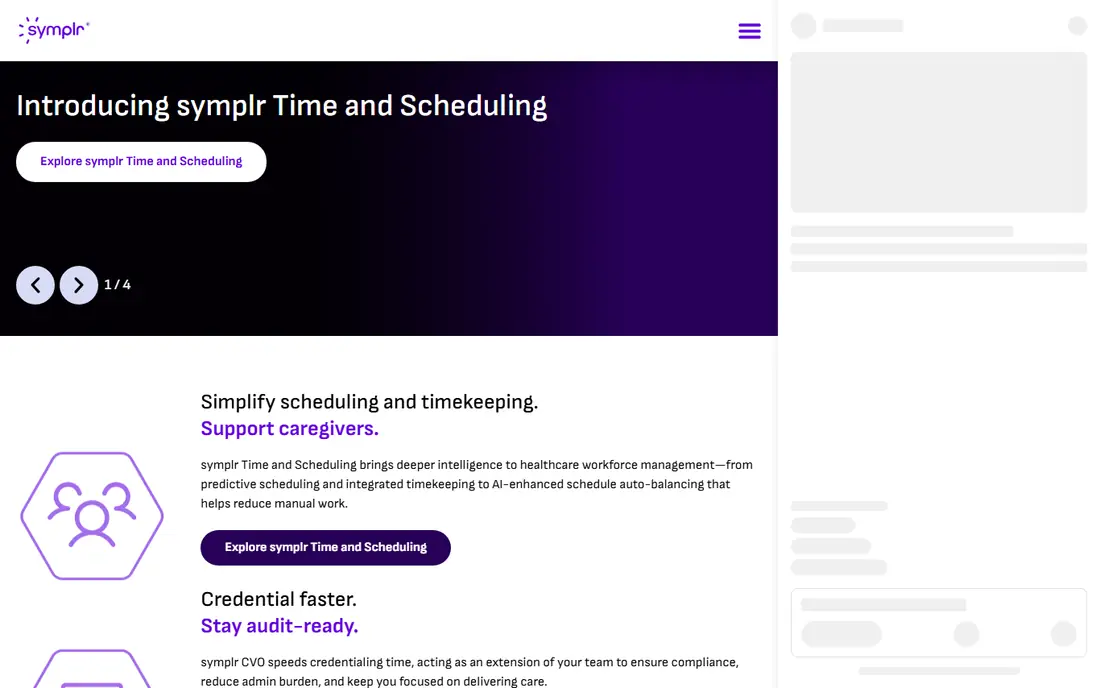
symplr Provider suits hospitals and large health systems that need credentialing as part of a wider workforce system. It handles provider data collection, verification, document tracking, and compliance checks, with links to other workforce tools in the symplr suite. That breadth helps a system that manages hundreds of providers, multiple sites, and complex privileging rules. The trade off is scale. symplr is an enterprise platform, with implementation and training that need internal ownership, and pricing that reflects that scope. A small clinic with a handful of providers will likely find it more than it needs, while a health system with a medical staff office will value the audit trails and reporting. Ask for a demo using your own provider types and payer list, since generic demos hide the setup work.
- Deep credentialing and provider data tools
- Workforce and compliance breadth
- EHR links
- Enterprise scale and cost
- Smaller practices may find setup heavy
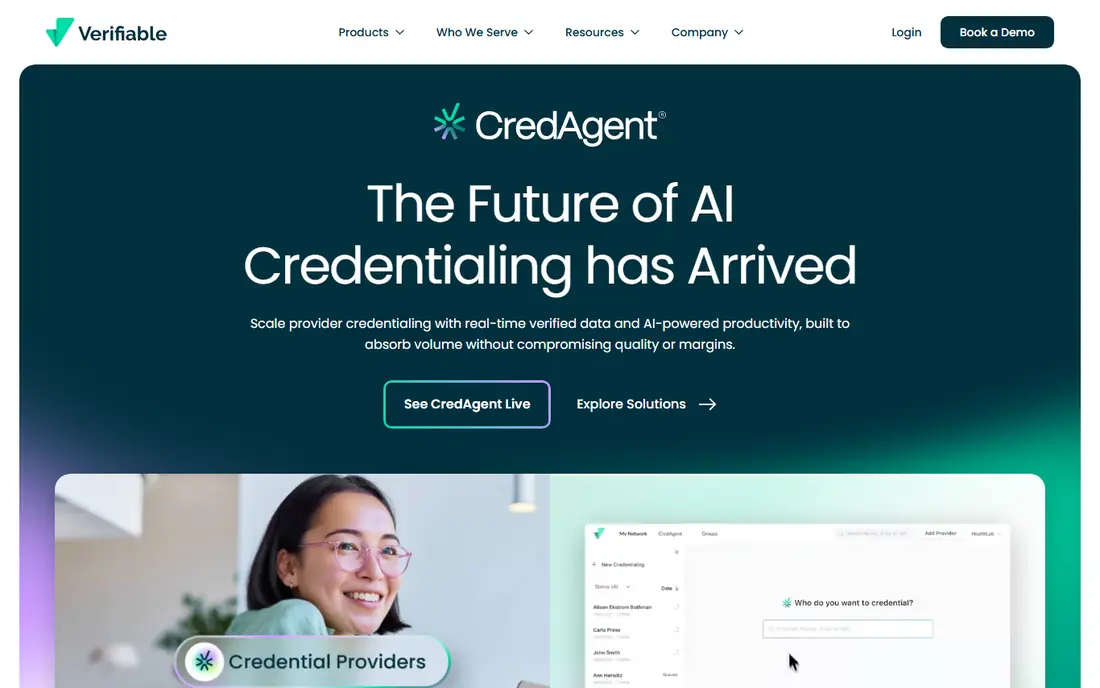
Verifiable focuses on automated primary source verification, checking licences, certifications, and exclusion lists against source data and flagging expiries before they become a billing problem. That monitoring role matters, since credentialing is not a one time task and a lapsed licence can stop a clinician from practising or billing. An API lets larger teams connect verification to their own HR or practice systems. Pricing is quote based, and the exact mix of verification, monitoring, and enrollment help depends on the plan, so buyers should confirm which steps are software only and which include human support. For organisations that already handle enrollment in house but need reliable verification and alerts, Verifiable is a focused choice. For a practice that wants a fully managed service, compare the service tier carefully.
- Automated verification across many sources
- Expiry monitoring
- API for integrations
- Quote based pricing
- Enrollment services vary by plan and need checking
CredentialStream, part of the wider symplr family in recent years, is aimed at large organisations that need to manage provider data at scale. It supports credentialing workflows, document management, and reporting across many providers and sites, with controls that suit audit and accreditation reviews. Large teams can split work, track status, and keep a consistent record for each provider. Implementation time is the honest catch, since enterprise credentialing systems need configuration for payer rules, privileging, and approval steps. A solo practice or a small group will not need this depth, and should look at lighter tools on this list. A hospital network or a large multi specialty group, by contrast, will benefit from the structure and audit trail that CredentialStream provides.
- Scalable provider data management
- Workflow for large teams
- Audit ready records
- Enterprise pricing and implementation time
- Overkill for a solo practice
Modio Health, known for its OneView platform, helps practices keep provider credentials, licences, and payer enrollments in one profile. That single profile view helps an office manager see what is current, what is expiring, and what is still pending with a payer, without digging through spreadsheets and email. The interface is cleaner than many enterprise tools, which helps smaller teams adopt it. Pricing is quote based, so a practice should compare the per provider cost against the admin time saved, especially if it only credentials a few clinicians a year. Modio Health is less broad than a full health system suite, but that is a benefit for groups that want credentialing done well without buying a whole workforce platform. It suits mid size practices and growing groups best.
- Provider profiles and licence tracking
- Payer enrollment support
- Clean interface
- Quote based pricing
- Larger system breadth is less than symplr
Verisys provides verification data and continuous monitoring for healthcare organisations, checking licences, sanctions, exclusions, and other records against primary sources. That data focus suits organisations that run ongoing screening, such as health systems, staffing firms, and payer networks, where a one time check is not enough. Alerts on changes help compliance teams act before a problem affects billing or patient care. The limit is workflow. Verisys is stronger as a verification and monitoring data source than as a full payer enrollment workflow, so some buyers pair it with a credentialing platform or an in house enrollment team. Buyers should ask how alerts are delivered, how often data refreshes, and which sources are covered for their provider types. For monitoring at scale, Verisys is a credible data partner.
- Broad verification data sources
- Continuous monitoring
- Data for screening decisions
- More data focused than workflow focused
- Needs pairing with enrollment tools for some buyers
MedTrainer combines credential tracking with compliance training and document management, which suits practices that need to keep staff credentials and training current together. A practice can track licences, certifications, and required training in one place, with reminders before expiry. That combined view helps office managers who handle both clinical and non clinical staff compliance. The catch is that credentialing depth depends on the package, and payer enrollment is not the central focus in the same way as with Medallion or Modio Health. Buyers who need deep payer enrollment should confirm that scope in writing. For small to mid size practices that want compliance and credential tracking together, MedTrainer offers a practical, single system approach.
- Credential tracking plus compliance training
- Document management
- Reporting
- Credentialing depth varies by package
- Pricing is quote based
CredyApp focuses on high volume primary source verification, with connections to many direct sources including state boards across the United States. That breadth helps organisations that credential clinicians in many states, where manual checks would be slow and error prone. Per provider or service based pricing gives buyers a choice between software access and a more managed verification service. As a less widely known name than symplr or Medallion, CredyApp deserves a careful pilot. Test it with a small set of providers, check source coverage for your states and licence types, and confirm turnaround times in writing. For telehealth groups and staffing organisations with high verification volume, the source breadth is a real advantage, provided the pilot results hold up. Software alone does not make a practice compliant. Credentialing rules, payer requirements, and state laws vary, and this article is general information only, not legal advice. Check payer and regulator requirements for your practice, and talk to a qualified professional about compliance decisions.
- Many direct source connections
- Per provider or service pricing
- State board coverage
- Newer and less widely known than larger rivals
- Service scope needs careful checking
How we picked these
We compared official product pages, payer enrollment and verification descriptions, and public buyer guides for credentialing software in October 2026. We kept tools that verify provider credentials against primary sources, track expiries, or manage payer enrollment, and that serve practices, groups, or health systems in the United States. We excluded generic HR tools that do not handle healthcare credentialing.
Choosing the right credentialing software
Start with your bottleneck. If onboarding is slow because verification is manual, prioritise automated primary source checks and expiry alerts. If clinicians are credentialed but cannot bill, prioritise payer enrollment tracking and contract loading, since those are separate steps. If you run a hospital medical staff office, prioritise privileging, committee workflows, and audit trails. Ask every vendor the same questions before signing. How many primary sources are covered for your licence types and states, how often is data refreshed, what is the turnaround for a clean file, and what is included in the quoted price. Get implementation time and support terms in writing, and run a pilot with real provider files, not demo data, before a full rollout.
Frequently asked questions
What does provider credentialing software actually do?
It collects provider data, verifies education, licences, and history against primary sources, tracks expiries, and helps manage payer enrollment. Some tools also handle privileging and committee review for hospitals. It does not replace payer decisions, and a credentialed provider still cannot bill until enrollment and contract loading are complete.
How long does credentialing take with software?
A clean commercial file often takes 90 to 120 days from submission to payer approval, even with software, while telehealth and Medicare files can move faster and Medicaid varies by state. Software speeds up verification and tracking, but payer timelines, missing documents, and state rules still affect the total time. Start enrollment early for new clinicians.
Is credentialing the same as payer enrollment?
No, they are related but different steps. Credentialing verifies that a clinician is qualified, while payer enrollment registers that clinician with a specific payer so the practice can bill that payer. A clinician can be credentialed and still be out of network with a payer until enrollment and contract loading are finished.
How much does provider credentialing software cost?
Most tools in this category use quote based pricing, often per provider, with cost depending on provider count, states, payer mix, and whether human verification help is included. Get a written quote for your actual provider count and ask what is excluded, such as implementation, training, or extra payer applications.
Can small practices use enterprise credentialing tools?
They can, but enterprise tools often cost and weigh more than a small practice needs. Modio Health and MedTrainer suit smaller teams better than large system suites, while Verifiable and CredyApp suit teams with specific verification needs. Match the tool to provider count and payer complexity, not to brand size.
Does this software guarantee compliance?
No, software helps track and verify credentials, but it does not guarantee compliance with payer, state, or accreditation rules. Practices remain responsible for checking requirements, keeping records, and acting on alerts. Use the software as a control system, with human review for committee and payer decisions.
Sources
See where you really rank - block by block
ProMapRanker scans Google Maps across a grid of your service area. Simple monthly plans from $19, white-label on every plan.
Start freeKeep reading
 what’s the best risk software for enterprises
What Is the Best Risk Software for Enterprises in 2026
We compared what’s the best risk software for enterprises on risk registers, controls, third-party risk, and reporting, with pricing notes for large teams.
Read → what's the best pam software for enterprises
What is the Best PAM Software for Enterprises in 2026
Find what's the best pam software for enterprises, with vaulting, session recording, just in time access and pricing compared for large enterprise IT teams.
Read → what’s the best grc software
What Is the Best GRC Software in 2026
We compared what’s the best grc software on risk, compliance, audit and vendor risk, so teams can pick a platform that fits their frameworks and budget.
Read →