 ProMapRanker
7 Best Project Management Software for Healthcare Options for 2026


Teams wanting tasks, docs and goals under one HIPAA BAA · Pricing starts at: $7/user/month billed annually (Unlimited plan)
Direct answer
ClickUp comes first here, mainly for teams wanting tasks, docs and goals under one HIPAA BAA. Priority Matrix is better for clinics and labs wanting a purpose-built HIPAA edition, and Asana is better for cross-functional clinical and administrative teams. All 7 tools are compared below on price, free plan and limits.
Key takeaways
- Number one here is ClickUp, a fit for teams wanting tasks, docs and goals under one HIPAA BAA.
- For the cheapest start, look at ClickUp: $7/user/month billed annually.
- For healthcare organizations already standardized on Microsoft 365, Microsoft Planner is worth a look.
- What to know about Asana first: BAA needs Enterprise+, the top level.
- A free plan is available from 2 of the 7 tools: ClickUp, Asana.
Quick comparison
| Pick | Great for | Pricing starts at | Free tier | |
|---|---|---|---|---|
| ClickUp | Teams wanting tasks, docs and goals under one HIPAA BAA | $7/user/month billed annually (Unlimited plan) | Yes | Visit |
 Priority Matrix | Clinics and labs wanting a purpose-built HIPAA edition | $12/user/month billed yearly (Pro plan) | Free trial | Visit |
 Asana | Cross-functional clinical and administrative teams | $10.99/user/month billed yearly (Starter plan) | Yes | Visit |
 Jira | Hospital IT and digital health teams needing the cheapest BAA path | See website (plans quoted on Atlassian's pricing page) | Free trial | Visit |
 monday.com | Configurable healthcare operations and quality workflows | $9/seat/month billed yearly (Basic plan) | Free trial | Visit |
 Wrike | Large health systems with controlled document workflows | $10/user/month (Team plan) | Free trial | Visit |
 Microsoft Planner | Healthcare organizations already standardized on Microsoft 365 | See website (bundled with Microsoft 365 plans) | No | Visit |
Every option for project management software for healthcare explained
ProMapRanker put together this guide to project management software for healthcare for readers who want a clear shortlist without reading every vendor page. It compares 7 tools on starting price, free plans, who each one suits and where each one falls short.
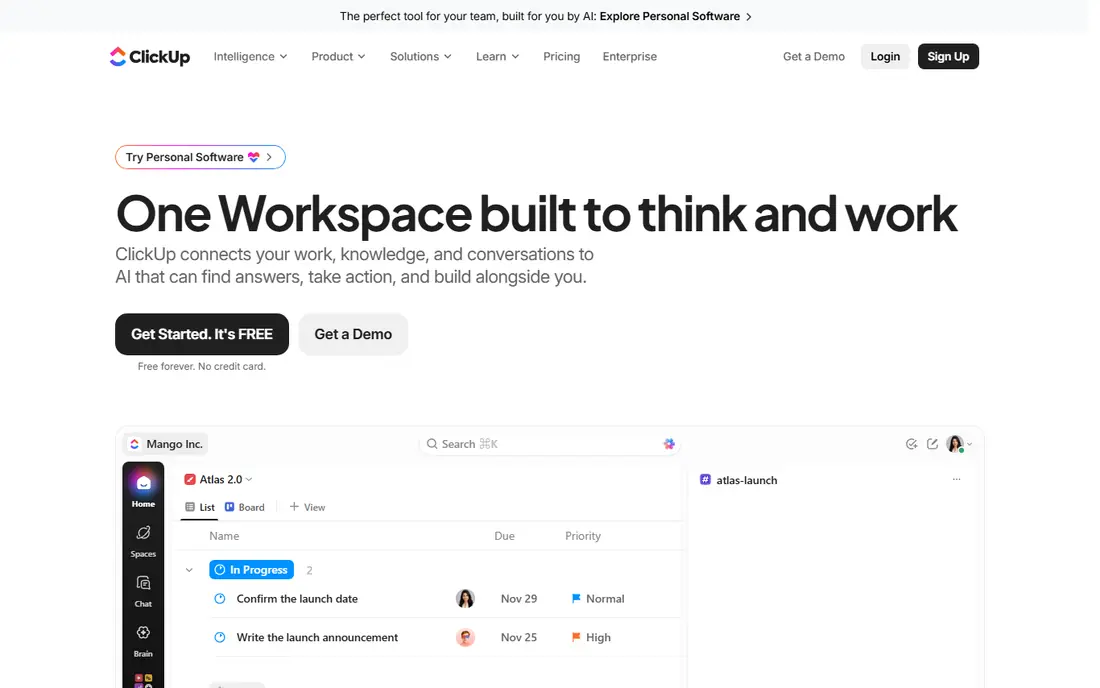
Choose ClickUp for teams wanting tasks, docs and goals under one HIPAA BAA. ClickUp's AI capabilities also need deliberate configuration to stay inside the BAA's boundaries. And the interface, feature-rich as it is, asks more of ward managers and facilities coordinators than more straightforward tools.
What to check first: The interface can overwhelm non-technical clinical staff; BAA needs Enterprise.
Where it shines: Ample free plan for non-PHI projects.
For a digital health team or a hospital IT department, that cuts the number of vendors touching sensitive workflows. From a buyer's view, the trade-offs mirror monday's. The BAA is Enterprise-only, so budget for the top level if PHI will enter the system. Price to start with ClickUp: $7/user/month billed annually. You can start on ClickUp without paying.
- Consolidates tasks, docs
- Signs a BAA on the Enterprise plan
- Far above the $7 Unlimited level
Priority Matrix
Great for: Clinics and labs wanting a purpose-built HIPAA edition
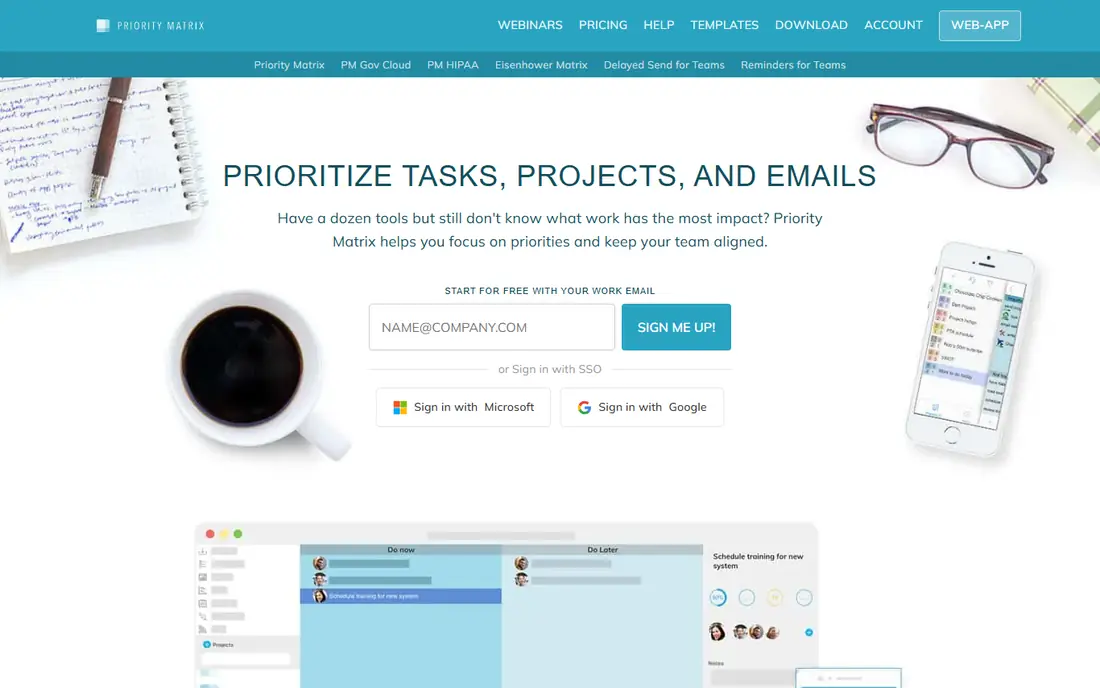
Priority Matrix serves clinics and labs wanting a purpose-built HIPAA edition. But for a clinic, lab or small practice that wants compliance without an enterprise contract, the dedicated HIPAA edition at $12 per user a month billed yearly is a compelling middle path.
Entry price for Priority Matrix: $12/user/month billed annually. Trial and free access: Free trial.
Best features of Priority Matrix: A dedicated HIPAA edition aimed at doctor offices and labs. Limits to weigh: Smaller vendor with a narrower feature set than the platforms.
- Straightforward per-user pricing from $12 monthly billed yearly
- Hosted on separate US infrastructure
- Advanced portfolio reporting lags Smartsheet and Wrike
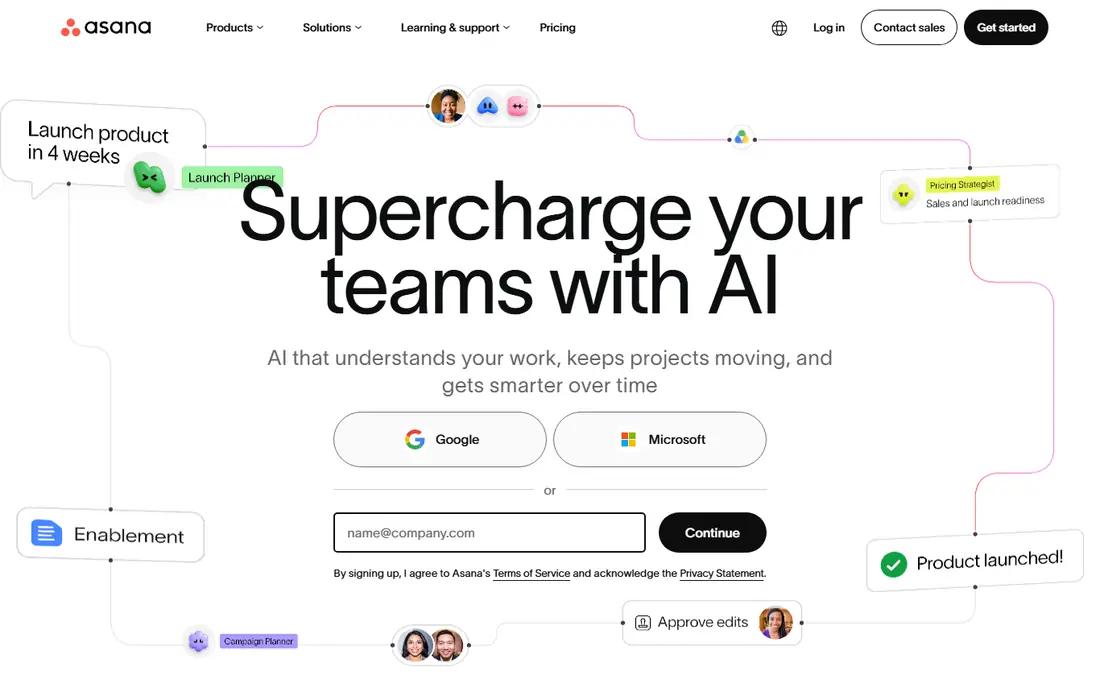
Pick Asana if this describes you: cross-functional clinical and administrative teams. Portfolios provide executives a cross-department view, and the workflow automation takes care of recurring accreditation and policy-review cycles. Numerous hospitals sensibly use it for the former and keep PHI in the EHR.
Where it falls short: Costs scale steeply with headcount.
Asana wins on adoption. Ward managers, quality leads and facilities coordinators can use it without a training program, which is the difference between a tool that gets used and a tool that gets circumvented. Asana pricing: $10.99/user/month billed annually. Free access exists with Asana.
- Portfolios and goals features suit multi-department initiatives
- BAA available on Enterprise+ for regulated work
- BAA needs Enterprise+, the top level
Jira
Great for: Hospital IT and digital health teams needing the cheapest BAA path
In short, Jira is for Hospital IT and digital health teams needing the cheapest BAA path. Atlassian signs a BAA beginning at the Standard plan, which makes it the cheapest compliant path among the general-purpose tools here.
Best features of Jira: the lowest BAA threshold on this list.
Where it is weaker: Aimed at software teams, so clinical and facilities staff face a ramp-up time.
For everyday use, outside IT, it is a harder sell. For everyday use, Jira is the budget answer to the HIPAA question. Pricing for Jira is not stated here, so ask the vendor for current figures. On free options: Free trial.
- Made for technical teams running EHR and infrastructure projects
- Signs a BAA from the Standard plan
- The interface assumes agile vocabulary
monday.com is designed for configurable healthcare operations and quality workflows. The BAA lives on Enterprise, not on the $9 Basic or $19 Pro levels most teams evaluate. So the real cost of compliant use is an enterprise contract.
Honest limits: BAA only on Enterprise, so the $9 starter price is irrelevant for PHI work.
Where monday.com stands out: Highly configurable boards fit accreditation trackers. A quality team can build an accreditation tracker, a facilities team can run a renovation timeline, and leadership gets dashboards rolling it all up, all in one workspace. Worth adding: for PHI-adjacent work, monday provides HIPAA activation with an executed BAA on its Enterprise plan, which puts it in the compliant set for hospital operations. monday.com pricing: $9/seat/month billed annually. Trial and free access: Free trial.
- Facilities projects and staffing workflows
- HIPAA activation available with a signed BAA on Enterprise
- Per-seat costs climb on enterprise contracts
Pick Wrike if this describes you: large health systems with controlled document workflows. The interface also carries more complexity than Asana or Planner, so frontline adoption needs partnership.
Where it falls short: Meaningful reporting needs the Business level and above.
The system's file handling, proofing and approval chains are more solid than the more straightforward tools here. A BAA is available for regulated use. The starting price for Wrike: $10/user/month. Free access: Free trial.
- Workload and resource views for staffing projects
- Solid document collaboration and approval workflows suit clinical policy work
- BAA needs a separate agreement before any PHI is uploaded
Microsoft Planner
Great for: Healthcare organizations already standardized on Microsoft 365
Where Microsoft Planner fits: healthcare organizations already standardized on Microsoft 365. If the organization runs Microsoft 365, Planner is already licensed, already inside Teams, and already covered by the existing BAA, which means IT, legal and compliance have nothing new to approve. The product itself is modest: kanban boards, entry-level checklists and Teams integration, without the timelines, portfolios or resource management of the tools above.
Downsides: Reporting and portfolio views are entry-level.
It will not run a construction program or an accreditation portfolio. But for department-level task tracking where compliance matters more than features, it is often the right answer, and it is already premium for. Also, for task tracking on PHI-adjacent work, that zero-friction path beats a better tool that needs a six-month procurement cycle. Microsoft Planner does not show a starting price in this comparison, so check the vendor site for current pricing. Microsoft Planner does not include a free plan.
- No extra license cost for M365 customers
- Integrates with Teams
- Far less capable than the dedicated tools here
A closer look at project management software for healthcare
Picture the operations manager at a 200-bed hospital: Joint Commission survey in four months, a facilities renovation running behind, policy reviews due across six departments, and every update living in someone's inbox. Beyond that, healthcare projects fail in the handoffs, and the handoffs are where patient information leaks into tools that were never cleared to hold it.
How these tools were picked
The comparison looks at four things: starting price, free access, how well the feature set matches project management software for healthcare, and the main limit of each tool. Plan names, prices and limits change often. Treat the figures here as a starting point and verify them with the vendor. Tools are placed by general fit for project management software for healthcare, with price clarity and free access as tie-breakers. A different team can reasonably rank them differently.
What to check before you buy
- Get a written quote from Jira and Microsoft Planner; the list shows no starting price for them.
- Check what the free option really includes: ClickUp and Asana offer a free plan, and usage caps differ.
- Run a trial of Priority Matrix, Jira, monday.com and Wrike with real work before paying for a year; your own workflow is the best test.
- Before choosing ClickUp, weigh its main limit: BAA needs Enterprise, far above the $7 Unlimited level.
- Check how data leaves Microsoft Planner: formats, limits and whether exports are available on every plan.
- Price monday.com for your actual team size; headline prices rarely include add-ons or overage.
Frequently asked questions
How are the tools for project management software for healthcare ordered?
ClickUp sits first and Microsoft Planner last because the order follows typical fit for project management software for healthcare, then price clarity and free access. It is a judgement call, so read each profile for fit and limits.
Can I use the free plan of Asana or ClickUp for healthcare projects?
The moment PHI enters the picture, you need the BAA-covered level. A practical rule numerous hospitals follow: PHI stays in the EHR, and the project tool references record numbers, never patient details.
Which options for project management software for healthcare have a free plan?
On this list, ClickUp and Asana include a free plan. Caps on seats, usage or features are common, so test the free plan against your real workload. Several others offer a trial instead.
Is ClickUp the right pick for everyone comparing project management software for healthcare?
No single tool suits every team. ClickUp comes first because it fits teams wanting tasks, docs and goals under one HIPAA BAA, while Priority Matrix suits clinics and labs wanting a purpose-built HIPAA edition and Asana suits cross-functional clinical and administrative teams. Match the tool to your own size, budget and workflow before deciding.
What should a small clinic use instead of an enterprise plan?
Alternatively, keep PHI out of the project tool and run operations on the standard plans of Asana, ClickUp or monday.com. Microsoft 365-based clinics can use Planner at no additional cost under their existing BAA.
Can I try these tools before paying?
Often, yes. ClickUp and Asana have a free plan and Priority Matrix, Jira, monday.com and Wrike offer a free trial. Use your own data and a real task during the test, and check what the free tier or trial limits before you rely on it.
Sources
See where you really rank - block by block
ProMapRanker scans Google Maps across a grid of your service area. Simple monthly plans from $19, white-label on every plan.
Start freeKeep reading
 zscaler alternatives
Best Zscaler Alternatives in 2026
Looking for zscaler alternatives? We compare 9 SASE and zero trust platforms on architecture, data protection, pricing, and fit for your network and team.
Read → zapier alternatives free
Best Zapier Alternatives Free in 2026
Nine automation tools for zapier alternatives free in 2026, all with genuinely free tiers, plus free plan limits, starting prices and upgrade paths explained.
Read → which platform is best for online reputation
Which Platform Is Best for Online Reputation in 2026
Wondering which platform is best for online reputation? We compare 8 review, listing, and response tools for small and multi-location businesses and agencies.
Read →