 ProMapRanker
Best Product Development Software in 2026


Feedback-driven planning · Pricing starts at: $19 per maker per month
Key takeaways
- Product development tools split into strategy tools, feedback tools, and delivery tools, and most teams need one of each, not one tool for everything.
- Productboard suits feedback-driven planning, Aha suits enterprise roadmapping, and Jira suits software teams that already live in Atlassian tools.
- ClickUp, Monday, and Notion cover product work at lower cost, but they need more setup to match a dedicated product tool.
- Price by makers and product managers, not by total staff, because many tools charge only for editors while viewers cost less or nothing.
Quick comparison
| Pick | Great for | Pricing starts at | Free tier | |
|---|---|---|---|---|
| Productboard | Feedback-driven planning | $19 per maker per month | Yes | Visit |
 Aha Roadmaps | Enterprise strategy and roadmaps | $59 per user per month | No | Visit |
 Jira | Software delivery teams | Free | Yes | Visit |
 ClickUp | Low-cost all-in-one workspace | Free | Yes | Visit |
 Monday | Visual cross-functional work | $9 per user per month | Yes | Visit |
 Notion | Docs-first small product teams | Free | Yes | Visit |
 Linear | Fast software issue tracking | Free | Yes | Visit |
 ProdPad | Discovery and idea triage | See website | Free trial | Visit |
 Craft.io | Purpose-built planning at lower cost | See website | Free trial | Visit |
The best product development software
Product development software covers discovery, roadmapping, prioritization, and delivery, from an idea to a shipped release. We compared vendor pricing pages, feature pages, and public pricing roundups, and we focused on tools that are still sold and supported for product teams in October 2026.
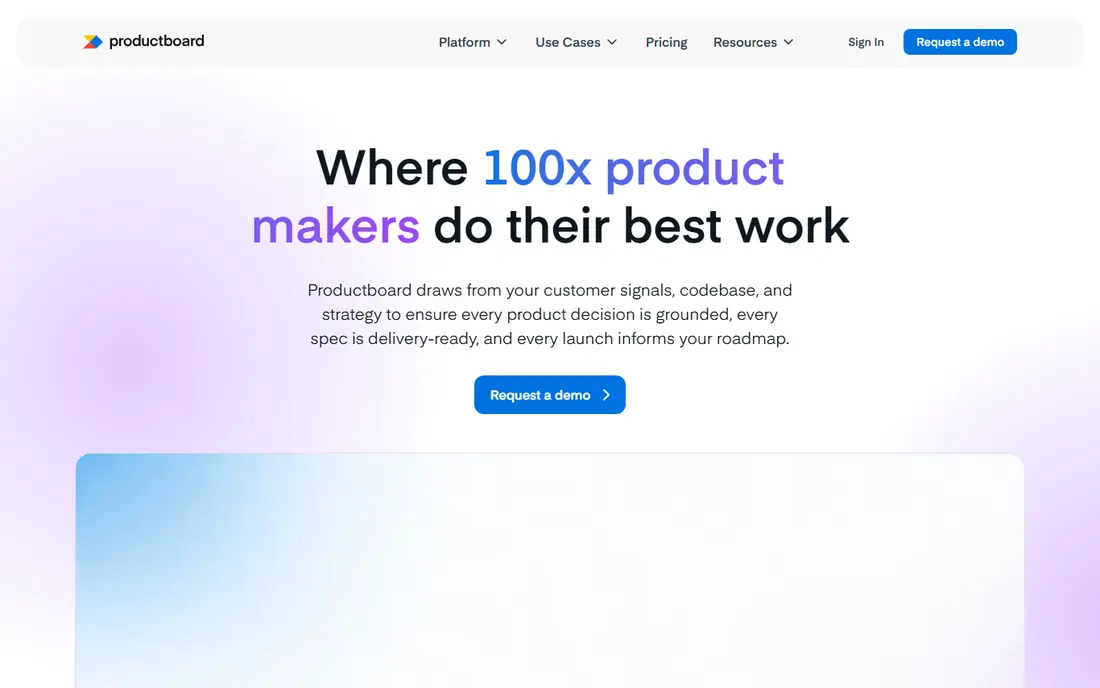
Productboard is our pick for teams that plan from customer feedback rather than from opinion alone. Feedback from support, sales, and research lands in one board, gets linked to features, and feeds prioritization and roadmaps that stakeholders can actually read. That chain, from a customer quote to a roadmap item, is what makes it a product tool rather than a task list.
The free Starter plan suits a small team testing the workflow, while Essentials starts at 19 dollars per maker per month. Note the maker model: only people who edit and prioritize count as makers, so price it by your product team, not your whole company. If your feedback is scattered across tools, Productboard gives it a home.
- Central feedback board tied to features and roadmaps
- Prioritization with user impact scoring
- Visual roadmaps for stakeholders
- Pricing is per maker, so costs rise with product staff
- Advanced integrations and AI insights sit in higher tiers
- Needs discipline to keep feedback clean
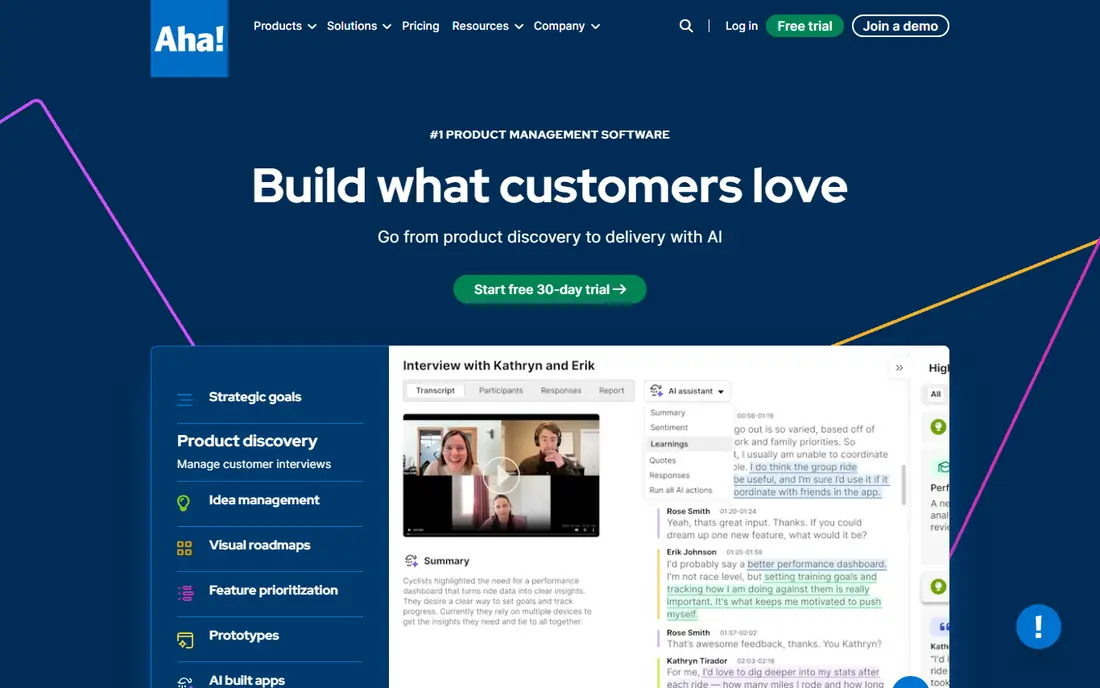
Aha Roadmaps suits product organizations that need to standardize strategy, roadmaps, and releases across many products and teams. It covers goals, initiatives, ideas, roadmaps, and releases in one system, with portfolio views that leadership can use without asking each team for a separate deck. For a larger product organization, that consistency is valuable.
The price and setup are the barriers. Premium starts at 59 dollars per user per month, with Enterprise tiers higher, and a 30-day trial rather than a free plan. Small teams will find it heavy, both in cost and in configuration. Shortlist Aha when you have several product managers and a real need for portfolio reporting.
- Deep strategy, roadmap, and release planning
- Portfolio views for multiple products
- Strong reporting for leadership
- Premium pricing from 59 dollars per user per month
- Setup and configuration take time
- Overkill for a single product manager
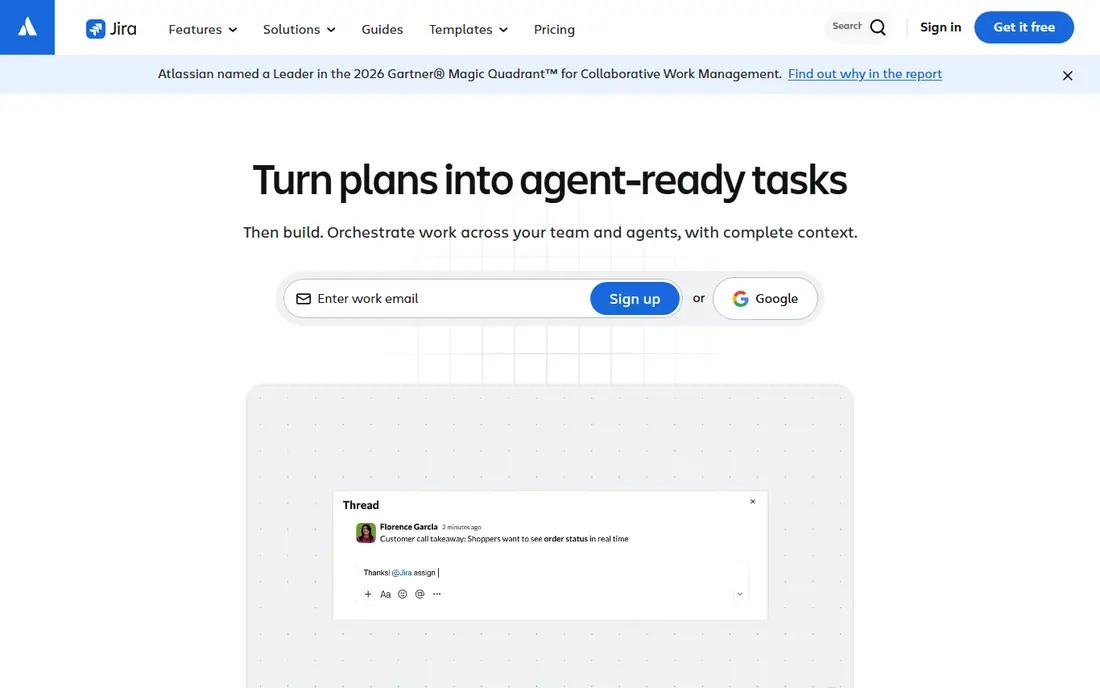
Jira is the delivery backbone for many software product teams, and it earns that role with boards, backlogs, sprints, issue tracking, and automation that scale from a small team to a large program. The free tier covers small teams, with Standard from about 7.91 dollars per user per month and Premium higher. If your engineers already live in Jira, keeping product delivery there reduces handoffs.
Jira alone is not a full product development tool. Strategy, feedback, and discovery work often needs Jira Product Discovery or a separate product tool, and stakeholder roadmaps need care to stay readable. Use Jira for delivery, and pair it with a planning tool when your roadmap audience grows beyond engineering.
- Strong boards, backlogs, sprints, and automation for software teams
- Free tier for small teams
- Deep Atlassian and developer integrations
- Roadmapping and discovery need add-ons or related Atlassian tools
- Configuration can grow complex
- Non-technical stakeholders may find it dense
ClickUp appeals to teams that want one workspace for tasks, docs, sprints, and goals without paying for several tools. The Free Forever plan covers unlimited tasks and members, and Unlimited starts at 7 dollars per user per month billed annually. For a small product team on a tight budget, that value is hard to ignore.
The trade is setup. ClickUp does not ship as a ready-made product management system, so roadmaps, feedback, and prioritization views need building and upkeep. Teams that enjoy configuring a workspace will get a lot from it. Teams that want product views out of the box should look at Productboard or Craft.io first.
- Free Forever plan with unlimited tasks and members
- Custom statuses, docs, goals, and dashboards
- Low paid entry at 7 dollars per user per month billed annually
- Breadth can feel overwhelming
- Product-specific views need setup
- Advanced features vary by tier
Monday suits cross-functional product work where design, marketing, and engineering need one visual workspace. Boards, timelines, automations, and dashboards make status clear without a long training session, and templates give product teams a fast start. Paid plans start at 9 dollars per user per month billed annually, with a free tier for individuals.
Dedicated product depth is the limit. Feedback management, prioritization frameworks, and portfolio roadmapping are lighter than in Productboard or Aha, so larger product organizations may still need a dedicated tool alongside Monday. Use it when visual coordination across teams matters more than deep product planning.
- Visual boards, timelines, and automations that cross-functional teams grasp quickly
- Templates for product work
- Free tier for individuals
- Product-specific depth is lighter than dedicated tools
- Costs rise with team size and features
- Reporting depth varies by tier
Notion fits small product teams that already live in docs and want tasks, specs, and roadmaps in the same place. You can build a roadmap database, link specs to tasks, and keep meeting notes beside the plan, all without buying a dedicated product tool. The free plan covers individuals, and Plus starts at 10 dollars per user per month billed annually.
It is a workspace, not a product platform. Feedback scoring, prioritization frameworks, and stakeholder roadmaps need manual building, and there is no built-in product analytics. For a team of a few people, that flexibility is a strength. For a larger product organization, it becomes a maintenance job.
- Docs, tasks, databases, and roadmaps in one flexible workspace
- Free for individuals
- Low Plus price at 10 dollars per user per month billed annually
- Needs setup to act as a product system
- No native feedback scoring or advanced roadmapping
- Performance can lag in very large workspaces
Linear is the choice for software teams that want speed and focus in issue tracking. Cycles, initiatives, and a clean interface help engineers move work without the configuration weight of a larger platform. The free plan covers small teams, and Basic starts at 10 dollars per user per month, with Business higher.
Product strategy is not its main job. Roadmaps, feedback boards, and discovery workflows are lighter than in Productboard or Aha, so product managers often pair Linear with a planning tool or a docs workspace. If your bottleneck is delivery speed and engineering clarity, Linear is a strong pick.
- Fast, focused issue tracking with cycles and initiatives
- Clean interface engineers like
- Free plan for small teams, Basic from 10 dollars per user per month
- Product strategy and feedback tools are lighter
- Best fit for software teams only
- Non-engineering stakeholders may need a separate roadmap view
ProdPad suits product teams focused on discovery and idea triage, where the hard part is deciding what to build next. It organizes ideas, feedback, and roadmaps around outcomes, with Now-Next-Later views that non-technical stakeholders can read at a glance. That clarity helps teams that drown in feature requests.
Pricing is quote or tier based rather than a single published starting price, so use See website and ask for a quote at your team size. Delivery still lives in tools such as Jira or Linear, so budget for that integration. Shortlist ProdPad when discovery, not delivery, is your bottleneck.
- Outcome-driven roadmaps and idea management
- Feedback capture tied to product ideas
- Now-Next-Later views stakeholders understand
- Pricing is not published as a simple starting figure
- Smaller ecosystem than larger rivals
- Delivery tracking needs integration with tools such as Jira
Craft.io gives product teams a purpose-built planning tool at a lower cost than enterprise suites. It covers feedback, prioritization, roadmaps, and capacity planning, with multiple roadmap views for different audiences. For a mid-size product team that finds Aha too expensive and ClickUp too generic, Craft.io is a sensible middle path.
The main friction is pricing clarity, since current tiers need a vendor check rather than a single published figure. Use See website and confirm the plan that includes the roadmap views and integrations you need. Test it with your real feedback and roadmap data, because product tools live or die on how well they handle your actual backlog.
- Purpose-built product planning without Aha pricing
- Roadmaps, feedback, and prioritization in one tool
- Multiple roadmap views
- Pricing varies and needs a vendor quote for current tiers
- Smaller brand than Aha or Productboard
- Some advanced features sit in higher tiers
How we picked these
We compared vendor pricing and feature pages, plus public product management roundups, and we favored tools with current roadmapping, feedback, prioritization, or delivery features for product teams. We kept strategy, feedback, and delivery tools in one list because product development spans all three, and we flagged where a tool covers only part of that span. Where pricing was not published clearly, we used See website.
How to choose the right shape
Start by naming your bottleneck. If feedback is scattered, pick a feedback-driven tool such as Productboard or ProdPad. If leadership needs one portfolio view, pick a strategy tool such as Aha or Craft.io. If delivery is slow, fix issue tracking with Jira or Linear first, because a better roadmap will not fix a broken delivery process.
Next, count only the people who will edit and prioritize, and price the tool on that number. Test with a real quarter of work: import feedback, build a roadmap, run one sprint or cycle, and share the roadmap with stakeholders. If stakeholders still ask for a separate deck, the tool has not solved your communication problem.
Frequently asked questions
What is the best product development tool?
There is no single best tool, because product development spans strategy, feedback, and delivery. Productboard is a strong pick for feedback-driven planning, Aha for enterprise roadmapping, and Jira for software delivery. Small teams on a budget often do well with ClickUp, Notion, or Linear, paired with a simple roadmap view.
Which product development tool is best for a small team?
For a small team, ClickUp, Notion, or Linear often cover the work at low or no cost, with Productboard Starter as a free feedback option. Pick the tool your team will actually update each week, because a perfect system that no one maintains is worse than a simple one that stays current.
What tools are best for product development roadmaps?
Productboard, Aha Roadmaps, Craft.io, and ProdPad all offer dedicated roadmap views, with different strengths in feedback, portfolio reporting, and discovery. Monday and Notion can also show roadmaps, but they need more setup. Test roadmap sharing with stakeholders before you buy, since a roadmap that only product managers can read has limited value.
Is Jira a product development tool?
Jira is a delivery and issue tracking tool that forms part of product development, especially for software teams. It covers boards, backlogs, sprints, and releases well, but strategy and feedback work often needs Jira Product Discovery or a separate planning tool. Treat Jira as the delivery layer, not the whole product system.
Do product development tools replace project management tools?
Not always. Dedicated product tools handle strategy, feedback, and roadmaps, while project tools handle tasks, timelines, and cross-team work. Many teams use both: a product tool for what to build and why, and a project or delivery tool for how and when it ships.
How much should a product team budget for product development software?
Budget by editors, not by total staff. Free tiers cover small teams, paid plans often start at 7 to 19 dollars per editor per month, and enterprise roadmapping can start at 59 dollars per user per month or higher. Add delivery tools such as Jira or Linear to the total if you use separate systems for planning and delivery.
Sources
See where you really rank - block by block
ProMapRanker scans Google Maps across a grid of your service area. Simple monthly plans from $19, white-label on every plan.
Start freeKeep reading
 zscaler alternatives
Best Zscaler Alternatives in 2026
Looking for zscaler alternatives? We compare 9 SASE and zero trust platforms on architecture, data protection, pricing, and fit for your network and team.
Read → zapier alternatives free
Best Zapier Alternatives Free in 2026
Nine automation tools for zapier alternatives free in 2026, all with genuinely free tiers, plus free plan limits, starting prices and upgrade paths explained.
Read → which platform is best for online reputation
Which Platform Is Best for Online Reputation in 2026
Wondering which platform is best for online reputation? We compare 8 review, listing, and response tools for small and multi-location businesses and agencies.
Read →