 ProMapRanker
Best Product Analytics Tools in 2026

Key takeaways
- Mixpanel and Amplitude lead for self serve funnel, retention, and cohort analysis, with generous free tiers for smaller products.
- PostHog is the best all in one pick for developer led teams, since it adds session replay, feature flags, and experiments.
- Heap suits teams that want retroactive analysis without planning every event in advance, while Pendo suits teams that also need in app guides.
- Most tools price by event or user volume, so your tracking plan matters more than the headline monthly rate.
Quick comparison
| Pick | Great for | Pricing starts at | Free tier | |
|---|---|---|---|---|
 Mixpanel | Self serve funnel and retention | Free | Yes | Visit |
 Amplitude | Behavioral analytics at scale | Free | Yes | Visit |
 PostHog | All in one developer platform | Free | Yes | Visit |
 Heap | Retroactive autocapture analysis | Free | Yes | Visit |
 Pendo | Analytics plus in app guides | Free | Yes | Visit |
 FullStory | Session replay and debugging | See website | No | Visit |
 Google Analytics 4 | Free web and app traffic analytics | Free | Yes | Visit |
 Matomo | Privacy focused self hosted analytics | Free | Yes | Visit |
 LogRocket | Session replay for product issues | See website | Free trial | Visit |
The best product analytics tools
We compared official pricing pages, feature pages, and documentation for these tools, looking at event analysis, funnels, retention, cohorts, session replay, experimentation, and ease of setup. Pricing in this category is usage based, tied to events, sessions, or monthly users, so check the vendor pricing page for your volume before you buy. Free tiers are real here, but limits and overage rules differ.
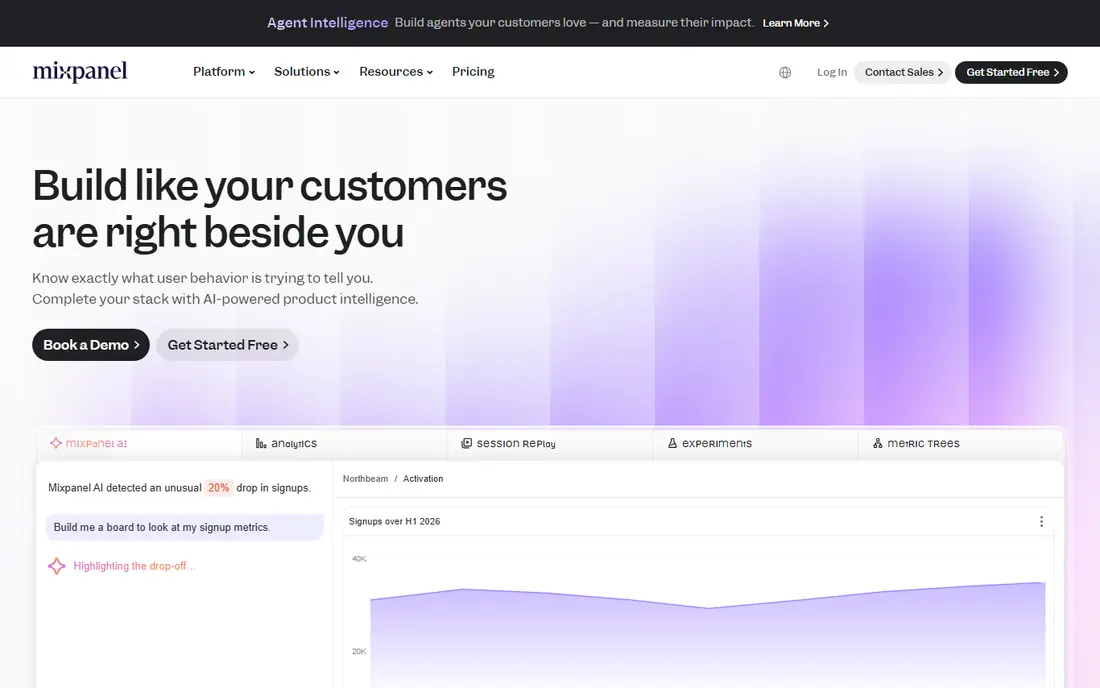
Mixpanel is the tool many product teams open first when they want to know why users convert or drop off. Its funnel, retention, and cohort reports are fast to build without SQL, and segmentation by plan, device, or behavior is straightforward. That self serve speed helps small teams answer questions without waiting for an analyst.
The catch is discipline. Mixpanel rewards a clean tracking plan, with consistent event and property names, and it punishes messy instrumentation with confusing reports. The free tier covers up to 1 million events per month in current listings, with paid Growth plans scaling from there. If your team will own its taxonomy, Mixpanel is an excellent default.
- Fast self serve funnel, retention, and cohort reports
- Strong segmentation
- Warehouse and AI assisted analysis options
- Needs a clean event taxonomy
- Costs rise with event volume
- Session replay is not the core strength
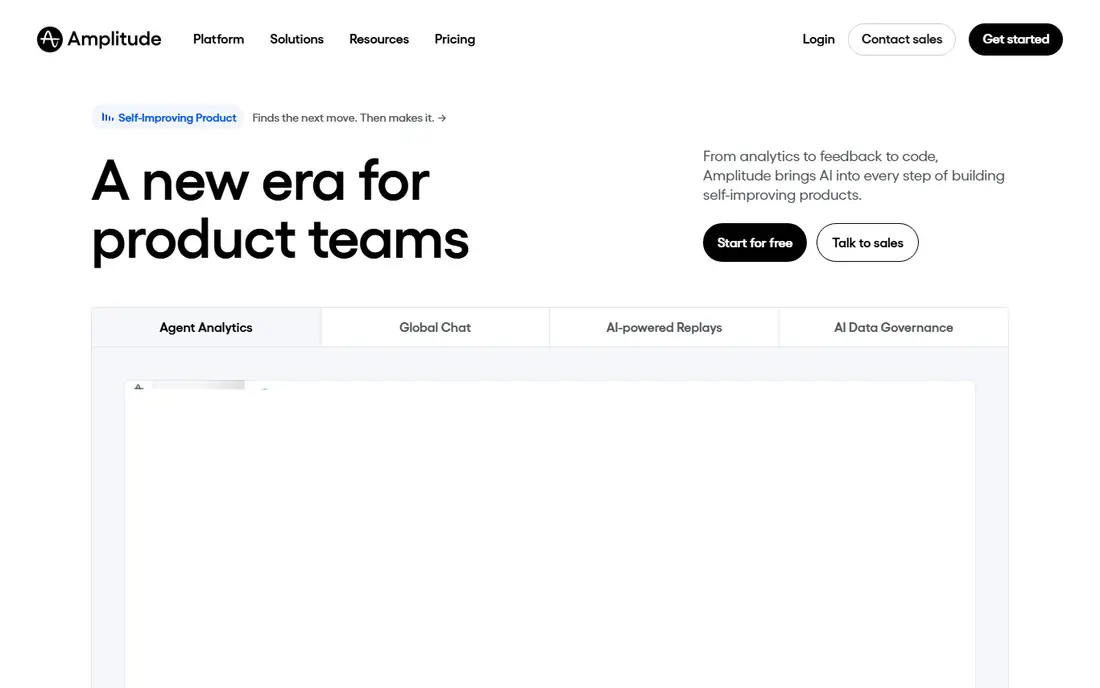
Amplitude suits growth stage and enterprise teams that need depth. Its cohort builder, retention curves, and journey analysis go further than basic funnel tools, and its experimentation and customer data features let teams test a change and measure the result in one place. Governance tools help larger firms keep event data consistent.
The free Starter tier is generous, with current listings showing up to 2 million events per month on some plans, while Plus and Growth tiers add advanced analysis and support. Smaller teams may find Amplitude more than they need, but teams with multiple products or large user bases will value its depth.
- Deep behavioral cohorts and retention analysis
- Experimentation and data platform options
- Strong enterprise controls
- Advanced features sit on higher tiers
- Setup and governance take effort at scale
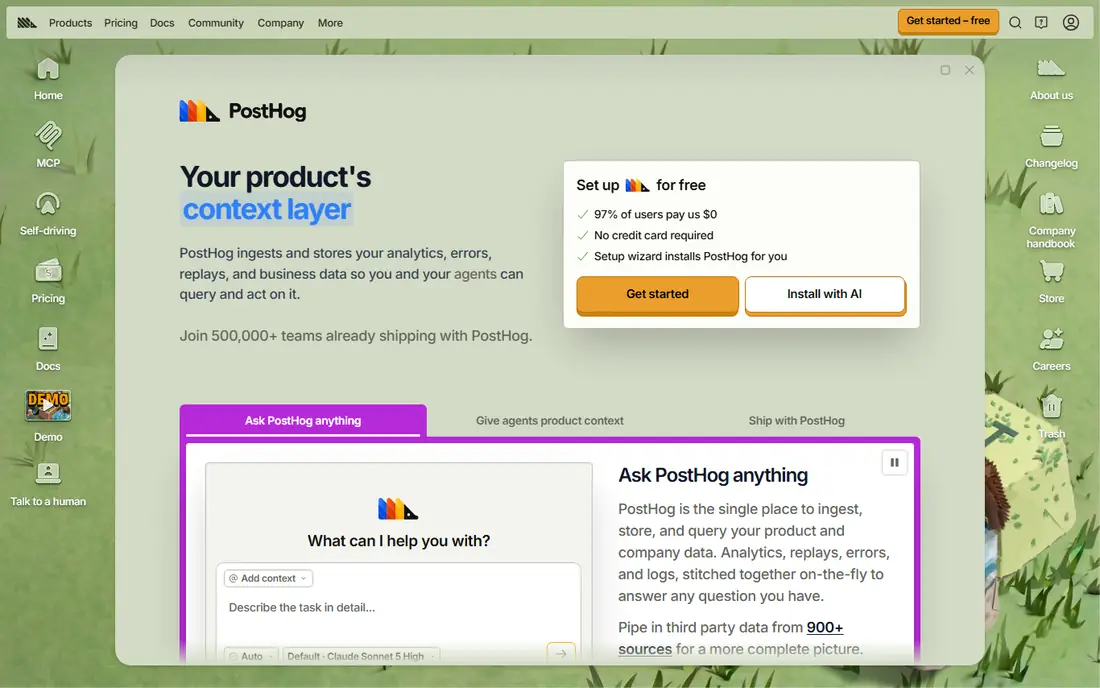
PostHog is the developer favorite on this list because it bundles so much in one platform. Product analytics sit beside session replay, feature flags, A/B experiments, surveys, and error tracking, so a small team can avoid buying five separate tools. Self hosting appeals to privacy conscious teams, and open source roots mean documentation is strong.
The breadth has a cost in complexity. Non technical product managers may need engineering help to set up events and flags well. Pricing is usage based, with 1 million events free per month in current listings, then pay as you go above that. For engineering led startups, PostHog offers the best value per feature here.
- Product analytics plus session replay, feature flags, surveys, and experiments
- Self hosting option
- Usage based pricing
- Interface can feel technical for non technical teams
- Many features need setup time
Heap solves a common pain: you realize too late that you did not track an important click. Its autocapture records user interactions automatically, so you can define an event after the fact and analyze past behavior. That flexibility helps teams that move fast and change features often.
The free tier covers a limited number of sessions per month, with Growth pricing quoted by sales in current listings. Autocapture does not remove the need for naming discipline, since raw clicks still need clear definitions to become useful reports. If your team hates re instrumenting after every release, Heap is worth a trial.
- Autocapture records clicks, taps, and page views without pre defined events
- Retroactive analysis
- Journey and session tools
- Paid pricing is sales led beyond the free tier
- Autocapture still needs governance for clean reports
Pendo is more than an analytics tool. It pairs usage analytics with in app guides, tooltips, surveys, and feedback collection, which helps B2B teams onboard users and drive feature adoption. Product managers can see where users struggle, then publish a guide in the same platform.
The free tier covers up to 500 monthly active users in current listings, which suits small products and trials. Paid plans are custom quoted, so budget talks take longer than with self serve rivals. If adoption and onboarding matter as much as analysis, Pendo is a strong pick. If pure funnel depth matters most, Mixpanel or Amplitude will suit you better.
- Product analytics with in app guides, surveys, and roadmaps
- Strong for B2B onboarding
- Free tier for small products
- Paid pricing is custom and sales led
- Analytics depth is less than Mixpanel or Amplitude for pure analysis
FullStory excels at showing why users struggle. Session replay, with signals for rage clicks, dead clicks, and errors, lets product and engineering teams watch a real journey and find the exact step that breaks. That qualitative view pairs well with quantitative funnel data from another tool.
FullStory pricing is custom quoted, so we list it as See website. It does not offer the same free self serve tier as rivals here, which makes it better suited to funded teams and enterprises. If your main problem is diagnosing drop offs and bugs, FullStory is one of the best replay tools available.
- Detailed session replay with frustration signals
- Strong debugging and UX diagnosis
- Enterprise integrations
- Pricing is custom
- Not a full replacement for event based funnel tools on its own
Google Analytics 4, or GA4, remains the free baseline for web and app traffic. It tracks sessions, sources, events, and conversions, and it integrates with Google Ads and BigQuery for deeper work. For a new product with no budget, GA4 answers the basic questions: where users come from, what they do, and where they leave.
It is not a full product analytics platform. Funnel, retention, and cohort analysis are thinner than in Mixpanel or Amplitude, and privacy rules require careful consent and data settings. Most serious product teams use GA4 for traffic, plus a dedicated product tool for behavior. As a free starting point, though, it is hard to fault.
- Free for standard use
- Broad web and app measurement
- BigQuery export for deeper analysis
- Product funnel and cohort depth is weaker than dedicated tools
- Setup and consent handling need care
Matomo suits teams that want control over their data. You can self host it for free, keep analytics data on your own servers, and avoid sharing user data with a third party analytics vendor. Cloud hosting is also available, with pricing listed on the vendor site. Reports cover traffic, behavior, goals, and funnels at a useful level.
Matomo is not as deep for product cohorts and experimentation as the leaders here, and self hosting adds maintenance work. For privacy sensitive products, European customers, or teams with strict data rules, that trade is worth it. Pair Matomo with session tools only if you need replay depth it does not provide.
- Self hosting gives full data ownership
- No sampling on standard reports
- Privacy friendly by design
- Product analytics depth is lighter than Mixpanel
- Self hosting needs maintenance
LogRocket pairs session replay with technical context, including console logs, network requests, and errors, so engineers can reproduce a bug without asking the user to explain it. Product teams can also use its analytics and survey features, but its core strength is debugging real user sessions.
Pricing is shown on the vendor site with a free trial, and larger plans are quoted, so we list the starting price as See website. LogRocket suits teams where engineering and product work closely on quality. If you need pure funnel analysis first, start with Mixpanel or Amplitude, then add LogRocket for replay.
- Session replay linked to console errors and network activity
- Strong for engineering debugging
- Product analytics add ons
- Pricing is custom for larger use
- Replay focus means funnel tools are secondary
How we picked these
We compared official pricing pages, feature pages, and documentation, and we kept tools that are actively sold and supported in October 2026, that cover product behavior analysis, and that serve different team types, from solo founders to enterprises. We left out pure marketing attribution tools, heatmap only tools, and tools that had shut down or merged away. Prices are usage based, so we used See website where pricing was custom or volume dependent.
How to choose without drowning in data
Start with one question your team asks every week, such as why trial users do not activate, or which feature drives retention. Pick the tool that answers that question fastest, not the tool with the longest feature list. A tool nobody opens is worse than a simple tool everyone uses.
Tracking plan, privacy, and cost control
Write a short tracking plan before you install anything: name each event, its properties, and the question it answers. Limit events to what you will actually analyze, since extra events raise cost and noise. Set privacy rules early, including consent, data retention, and who can see session replays. Watch usage monthly, set alerts for event spikes, and archive or delete stale events before renewal.
Frequently asked questions
What is the best product analytics tool for startups?
PostHog is our startup pick for developer led teams, thanks to its bundled features and free tier. Mixpanel is the best pick for non technical product teams that want fast funnel and retention reports without engineering help for every question.
What is the best product analytics platform for enterprises?
Amplitude leads for enterprise behavioral analysis, with deep cohorts, governance, and experimentation. Pendo suits B2B enterprises that also need in app guides, while FullStory and LogRocket add replay depth for large products.
Is Google Analytics 4 enough for product analytics?
GA4 is enough for traffic and basic conversions, but it is thinner for product funnels, retention, and cohorts. Most product teams pair GA4 with Mixpanel, Amplitude, or PostHog once behavior questions become central.
How much do product analytics tools cost?
Most tools offer a free tier, then price by events, sessions, or monthly users. Small products often stay free, while growing products can pay from tens to hundreds of dollars per month, and enterprises pay custom rates. Check your event volume on the vendor pricing page before you commit.
What is the difference between Mixpanel and Amplitude?
Both cover funnels, retention, and cohorts, but Mixpanel leans toward fast self serve analysis for mid size teams, while Amplitude leans toward deeper behavioral analysis, governance, and experimentation for larger teams. Trial both with the same events to see which reports your team actually uses.
Do I need session replay as well as product analytics?
Not always, but replay helps when funnels show a drop off without explaining why. PostHog includes replay, while FullStory and LogRocket specialize in it. Add replay when debugging and UX diagnosis become a weekly need, not just a curiosity.
Sources
See where you really rank - block by block
ProMapRanker scans Google Maps across a grid of your service area. Simple monthly plans from $19, white-label on every plan.
Start freeKeep reading
 outreach alternatives
Outreach Alternatives in 2026
Compare outreach alternatives for 2026, from Salesloft and Apollo to HubSpot and Lemlist, with pricing, channels, features, limits, and honest trade-offs.
Read → best web conference tools
Best Web Conference Tools in 2026
Compare the best web conference tools for meetings, webinars and team calls, with current pricing, free plans and honest limits for each option here today.
Read → best voice cloning tools
Best Voice Cloning Tools in 2026
Compare the best voice cloning tools in 2026, from ElevenLabs and Descript to Resemble and Cartesia, with consent rules, pricing, licenses, and limits.
Read →