 ProMapRanker
Best Procurement Software to Streamline Payments in 2026

Key takeaways
- Payment speed depends on intake and approvals first: a tool that fixes purchase requests will cut payment delays more than a tool that only speeds up invoice entry.
- Enterprise suites are quote-only and take months to roll out, while Precoro publishes pricing and Ramp offers a free core plan.
- Tipalti suits global vendor payments, while Coupa and SAP Ariba suit large firms with complex sourcing and supplier networks.
- Always confirm which payment methods, currencies, and ERP connections are included, since those details decide whether payments truly flow without manual work.
- This is general information only, not financial advice, and payment terms should be checked with your finance and legal advisers.
Quick comparison
| Pick | Great for | Pricing starts at | Free tier | |
|---|---|---|---|---|
 Coupa | Large enterprises with complex spend | See website | No | Visit |
 SAP Ariba | Enterprises already running SAP | See website | No | Visit |
 Oracle Procurement Cloud | Large Oracle ERP customers | See website | No | Visit |
 Tipalti | Global vendor payments and tax compliance | $99 per month | No | Visit |
 Precoro | Mid-market teams wanting transparent pricing | $499 per month | No | Visit |
 Procurify | Mid-sized firms needing live budget visibility | See website | No | Visit |
 Zip | Teams whose bottleneck is intake and approvals | See website | No | Visit |
 Ramp | Startups and mid-market firms wanting free core spend tools | Free | Yes | Visit |
The best procurement software to streamline payments
We compared procurement tools on intake, approvals, purchase orders, invoicing, supplier management, and payment execution. A tool earns a place here only if it connects buying to payment, rather than handling requests alone or invoices alone.
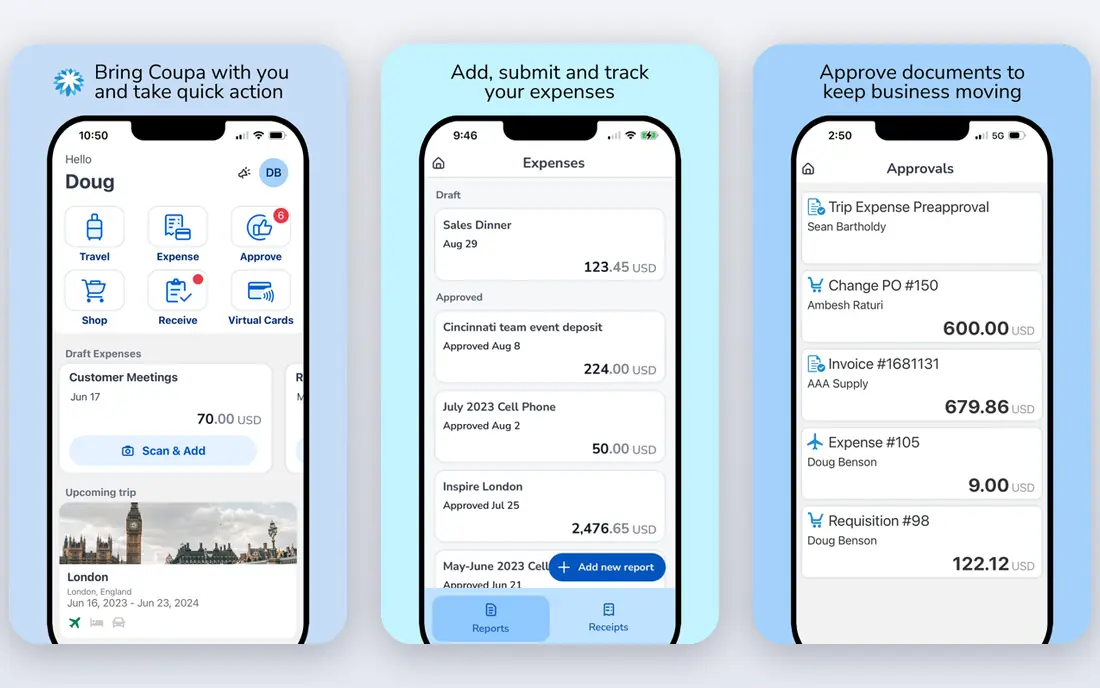
Coupa covers the full journey from sourcing and procurement through invoicing, expenses, and payments, with spend analytics that let finance compare categories across business units. For a large enterprise, that breadth is the point: one system can enforce buying policy, track committed spend, and pay suppliers without a patchwork of tools.
The cost is commitment. Pricing is custom and enterprise-scale, and a full rollout usually takes months including process design and supplier onboarding. A smaller firm will find Coupa heavy, but a large firm with complex categories and many suppliers will get value from the control and visibility it provides.
- Full source-to-pay coverage
- Spend analytics and benchmarking
- Supplier collaboration and contract tools
- Quote-only enterprise pricing
- Rollout takes months and needs a mature procurement team
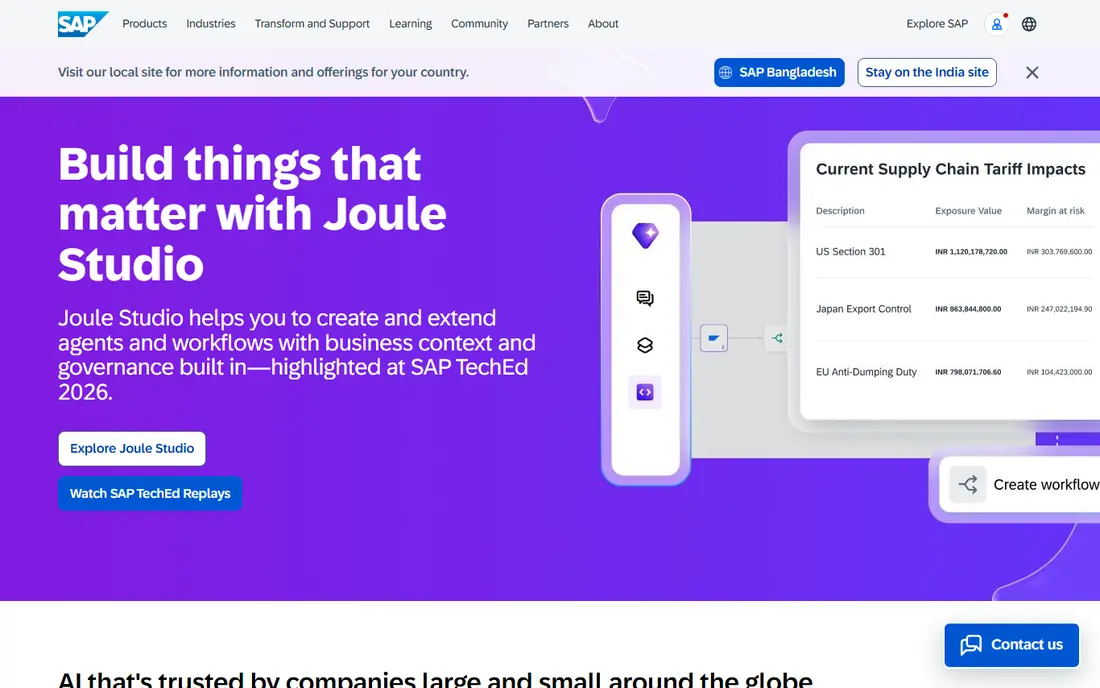
SAP Ariba suits a global enterprise that already runs SAP, because its supplier network and ERP connections are built for that world. Sourcing, contract management, supplier information, and invoicing sit together, and suppliers can join through the SAP Business Network. For a firm with thousands of suppliers, that network effect saves onboarding time.
For a team outside SAP, the learning curve and rollout time are real drawbacks, and pricing is enterprise and quote-only. Choose Ariba when SAP is already your system of record. Otherwise, Coupa or a mid-market tool will likely reach value faster.
- Large supplier network
- Sourcing, contracts, and invoicing in one system
- Natural fit with SAP ERP
- Quote-only pricing
- Steep learning curve and long rollout for non-SAP teams
Oracle Procurement Cloud makes sense when finance already runs Oracle Fusion Cloud ERP. Procurement, supplier qualification, sourcing, and payables share the same data, which reduces reconciliation between buying and payment. Invoice matching and payment execution then follow the same controls as the rest of the ERP.
Outside Oracle, the case weakens. Pricing is quoted by module and user, and implementation is an ERP project rather than a standalone purchase. An Oracle customer gets a coherent system; a non-Oracle customer should shortlist Coupa, Ariba, or a mid-market tool instead.
- Procurement inside Oracle Fusion Cloud ERP
- Supplier qualification and sourcing
- Invoice and payment integration
- Quote-only pricing by module and user
- Best value only for Oracle customers
Tipalti focuses on the payment end of procurement: onboarding vendors, collecting tax forms, processing invoices, and paying suppliers across borders. That global payment and compliance strength is why finance teams choose it when they pay many international vendors. Automated invoice processing and approval workflows cut manual entry, and multi-currency payment reduces the need for separate banking work.
Starter plans are reported from $99 per month, with costs rising by volume and features, and advanced plans require a custom quote. A firm with only domestic suppliers may not need its global tax depth, but a firm paying vendors in many countries will find that depth hard to replace.
- Global payments in many currencies
- Vendor onboarding and tax form collection
- Automated invoice processing
- Starter price rises with volume and features
- Advanced plans are custom priced
Precoro is the rare procurement tool with published pricing, which makes budgeting far easier. The Core plan costs $499 per month billed annually, and Automation costs $999 per month, with purchase requests, approvals, purchase orders, and budget tracking at the centre. Setup is measured in weeks rather than months, which suits a mid-market team that needs control now.
The limit is depth. Precoro does not match Coupa or Ariba on strategic sourcing, large supplier networks, or complex contract management. For a team whose payment delays come from weak approvals and missing purchase orders, though, Precoro fixes the actual problem at a known price.
- Published pricing from $499 per month on Core
- Tight purchase order control
- Fast setup for mid-market teams
- Less sourcing depth than enterprise suites
- Automation plan at $999 per month needed for fuller workflows
Procurify gives finance a live view of spend against budget, so a manager can see remaining budget before approving a purchase rather than after it is paid. Automated approval workflows, PunchOut catalogs, and mobile approvals keep requests moving, which in turn keeps invoices and payments on schedule. That budget-first design suits mid-sized firms where finance needs control without an enterprise suite.
Pricing is modular and quote-based, so the total depends on organisation size and modules chosen. It also lacks the deep sourcing of enterprise suites. Choose Procurify when budget visibility is the priority and your supplier base is manageable.
- Real-time spend against budgets
- Automated approvals and PunchOut catalogs
- Mobile approvals
- Modular quote-based pricing
- Less enterprise sourcing depth than Coupa or Ariba
Zip fixes the step most procurement projects miss: intake. Employees submit any purchase through a guided form, approvals route automatically, and the request connects to the ERP without replacing it. That design helps a company that already has an ERP but still suffers from email approvals, missing purchase orders, and late invoices.
Zip is not a full source-to-pay suite, so a firm that needs deep sourcing, supplier networks, and contract management will need another tool alongside it. For a team whose payment delays start with slow intake, Zip is a focused and effective choice, and it can sit on top of the ERP you already run.
- Guided intake for any purchase request
- Fast approvals
- Works on top of an existing ERP
- Quote-only pricing
- Not a full sourcing suite on its own
Ramp is the lowest-cost entry point in this list. Its core platform is free and covers corporate cards, expenses, travel, and basic accounts payable, with a Plus plan at $15 per user per month and Enterprise pricing on request. Procurement workflows sit on top as a paid add-on, which lets a startup start free and add buying controls as it grows.
The honest limit is that free does not mean full procurement. Sourcing, supplier management, and advanced approval chains need paid tiers or another tool. For a US startup or mid-market firm whose main need is controlled spend and faster bill payment, Ramp is a strong starting point, and it can grow with the company.
- Free core plan with cards, expenses, travel, and basic accounts payable
- Plus plan at $15 per user per month
- Procurement as a paid add-on
- Procurement features are paid add-ons
- US-focused card and banking features may suit US firms best
How we picked these
We compared official product pages, pricing pages, and public procurement guides for tools operating in October 2026. We kept tools that connect purchase requests, approvals, and payment, whether as a full suite or as a focused intake or payment layer. Where a vendor does not publish a price, we wrote See website rather than presenting a third-party estimate as a list price, and we flagged published prices that come from secondary guides in our report notes.
What to check before you buy procurement software
Map one purchase end to end before you demo. Follow a real request from intake through approval, purchase order, goods receipt, invoice matching, and payment, and note every manual step, email, or spreadsheet. A tool that only improves one step will leave the rest of the delay in place, so score vendors on the full journey, not on a single feature demo.
Check payment details early. Confirm supported payment methods, currencies, and bank connections, plus how tax forms and supplier banking details are collected and verified. Ask about ERP integration scope, implementation time, and what happens to open purchase orders and unpaid invoices if you leave. A clear answer on those points matters more than a long feature list.
Frequently asked questions
What is procurement software?
It manages how a company buys things: purchase requests, approvals, purchase orders, supplier management, invoicing, and payments. Good tools connect those steps so finance can see committed spend before money leaves the account.
How does procurement software streamline payments?
It creates a purchase order before spending, routes approvals quickly, matches invoices to orders automatically, and pays approved invoices on schedule. That chain cuts manual entry, duplicate payments, and late-payment friction with suppliers.
How much does procurement software cost?
Mid-market tools with published pricing start around $499 per month, while enterprise suites are quote-only and often run into six figures a year for mid-sized deployments. Ramp is the exception, with a free core plan and procurement as a paid add-on.
Do I need procurement software if I already have an ERP?
Maybe not a full suite. Many firms add an intake tool such as Zip on top of their ERP to fix approvals and employee experience, and only move to a suite when sourcing, supplier management, and global compliance outgrow the ERP.
How long does implementation take?
Ramp or a focused intake tool can go live in days to weeks. Mid-market tools such as Precoro and Procurify usually take weeks. Enterprise suites such as Coupa, SAP Ariba, and Oracle typically take three to nine months including process design and supplier onboarding.
Sources
See where you really rank - block by block
ProMapRanker scans Google Maps across a grid of your service area. Simple monthly plans from $19, white-label on every plan.
Start freeKeep reading
 what’s the best risk software for enterprises
What Is the Best Risk Software for Enterprises in 2026
We compared what’s the best risk software for enterprises on risk registers, controls, third-party risk, and reporting, with pricing notes for large teams.
Read → what's the best pam software for enterprises
What is the Best PAM Software for Enterprises in 2026
Find what's the best pam software for enterprises, with vaulting, session recording, just in time access and pricing compared for large enterprise IT teams.
Read → what’s the best grc software
What Is the Best GRC Software in 2026
We compared what’s the best grc software on risk, compliance, audit and vendor risk, so teams can pick a platform that fits their frameworks and budget.
Read →