 ProMapRanker
Best Procure to Pay Software in 2026

Key takeaways
- Coupa and SAP Ariba lead for large enterprises, but both are quote-based and need a long rollout.
- Precoro is the clearest mid-market option for teams that want published pricing and fast purchase order control.
- Zip suits companies whose main problem is intake and approvals rather than a full sourcing suite.
- Budget for implementation and change management, not just the licence, since enterprise suites often take months to go live.
Quick comparison
| Pick | Great for | Pricing starts at | Free tier | |
|---|---|---|---|---|
 Coupa | Large enterprises managing total spend | See website | No | Visit |
 SAP Ariba | Companies already running SAP | See website | No | Visit |
 Oracle Procurement Cloud | Oracle ERP customers | See website | No | Visit |
 Ivalua | Complex, configurable source-to-pay | See website | No | Visit |
 JAGGAER | Manufacturing and regulated buying | See website | No | Visit |
 GEP SMART | Software plus procurement services | See website | No | Visit |
 Zip | Intake and approvals orchestration | See website | No | Visit |
 Precoro | Mid-market purchase order control | $499 per month | No | Visit |
 Procurify | Mid-sized teams needing budget visibility | See website | No | Visit |
The best procure to pay software
Procure-to-pay software covers the journey from a purchase request to a paid invoice. We compared suites and focused tools using vendor feature pages, pricing pages and public buyer guides, and we favoured platforms that are live and supported in October 2026.
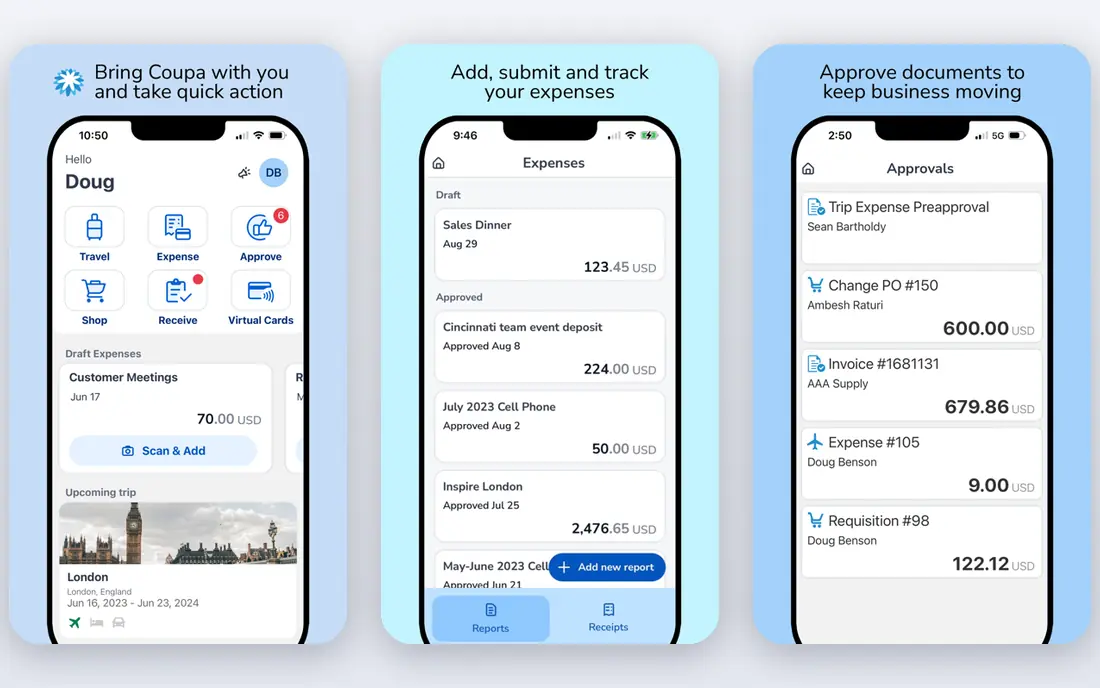
Coupa is the default shortlist entry for large indirect spend programmes. It covers intake, approvals, purchase orders, invoicing and payments, and it adds sourcing, contracts and expenses in the wider platform. Its business network also helps buyers connect with suppliers that already transact on the platform.
The main cautions are cost and time. Pricing is quote-based by module and scope, and a full rollout is a multi-month project. Companies should start with one or two modules if they want faster value, and confirm what the quote includes for integration and supplier onboarding.
- Broad spend management coverage
- Large supplier business network
- Strong community benchmarking data
- Quote-only pricing
- Implementation can be long
- Occasional users may find the interface heavy
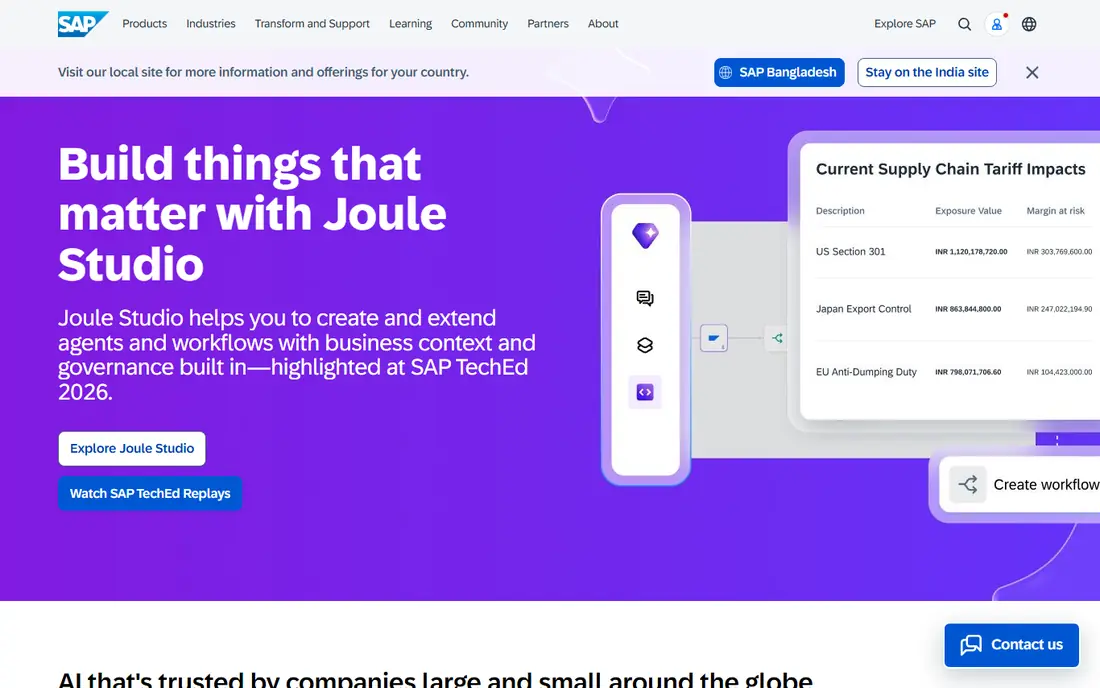
SAP Ariba makes most sense inside a SAP estate. When purchasing, supplier data and financial postings flow into SAP systems with less custom integration, and the SAP Business Network gives access to a huge supplier base. For global enterprises with complex compliance needs, that depth is hard to match.
Outside SAP, the case is weaker. Implementation is still enterprise-scale, and buyers should model total cost including integration and supplier fees. Shortlist Ariba first if SAP is your system of record, and compare Coupa closely if it is not.
- Very large supplier network
- Deep SAP integration
- Strong sourcing and supplier management
- Quote-only pricing
- Long enterprise rollout
- Supplier-side network fees can arise in negotiations

Oracle Procurement Cloud is the natural choice for companies already committed to Oracle Fusion. Because procurement sits inside the ERP, there is no separate integration layer to maintain, and finance teams get consistent data for budgets, commitments and payments.
Buyers should still scope carefully. Pricing depends on users and modules, and a broad rollout needs process design and training. If your ERP is not Oracle, another suite will usually be a shorter path to value.
- Procurement native to Oracle Fusion
- Shared supplier and financial data
- Strong controls and approvals
- Quote-based by user and module
- Weakest fit outside Oracle ERP
- Enterprise rollout effort
Ivalua suits organisations whose buying processes do not fit a standard template. Its platform can be configured for unusual approval chains, direct materials and complex supplier qualification, all on one data model. That flexibility is why sourcing-led teams often shortlist it.
Flexibility has a cost. You need people who can configure and govern the system, and timelines stretch when every process is customised. Buyers should agree the standard processes they will keep before they start tailoring.
- Highly configurable single platform
- Strong sourcing and supplier management
- Direct and indirect spend coverage
- Quote-only pricing
- Configuration needs skilled resources
- Rollout can run nine months or more
JAGGAER is a strong pick for manufacturing, higher education and regulated buyers. It handles direct materials, supplier quality and complex sourcing events better than many indirect-led suites, and its compliance controls suit organisations where awards can be challenged.
Smaller teams may find it heavier than they need. Get a scoped quote, ask for references in your sector, and confirm how much of the rollout is software configuration versus services. That split shapes both cost and timeline.
- Strong sourcing and supplier quality tools
- Direct materials support
- Good fit for regulated sectors
- Quote-only pricing
- Enterprise implementation effort
- Interface can feel dated in places
GEP SMART appeals to enterprises that want software and transformation help from one provider. The platform covers source-to-pay, and GEP can also supply advisory or managed procurement services around it. That combination suits programmes that need process change as much as software.
The trade-off is weight. Smaller buyers may not need the services layer, and pricing is scoped rather than published. Compare the software alone against Coupa and Ivalua if you plan to run the programme in-house.
- Unified direct and indirect coverage
- Software paired with consulting and managed services
- Global enterprise scale
- Quote-only, scope-based pricing
- Services-led model may suit larger buyers best
- Long rollout for full suites
Zip fixes a different problem from the suites above. Many companies do not struggle with sourcing, they struggle with employees starting purchases in email and chat, then waiting weeks for approval. Zip gives staff one intake front door and routes requests through the right approvals, then hands off to the ERP.
That focus is also its limit. If you need deep sourcing, contract lifecycle management and a supplier network, Zip alone will not cover it. It works best as an orchestration layer over an ERP, or alongside a suite for the intake experience.
- Fast, employee-friendly intake
- Approval orchestration across systems
- Sits over existing ERP and tools
- Not a full sourcing suite
- Quote-only pricing
- Value depends on your existing ERP and AP setup
Precoro is our pick for mid-market teams that want procure-to-pay without an enterprise project. It covers requests, approvals, purchase orders, budgets and receiving, with pricing published on its site. Rollout is typically measured in weeks rather than quarters.
The limit is scope. Precoro does not try to be a full source-to-pay suite, so heavy sourcing or complex direct materials programmes will outgrow it. For indirect spend control in a growing company, that narrower scope is a strength, since there is less to configure and learn.
- Published pricing from $499 per month
- Clear purchase order and approval controls
- Faster rollout than enterprise suites
- Narrower scope than full suites
- No free plan
- Advanced sourcing is limited
Procurify suits mid-sized companies where finance needs to see spend against budget in real time. Requesters get a guided buying experience, while approvers and finance see commitments before invoices arrive. That visibility often matters more than advanced sourcing features at this size.
Pricing is modular and quote-based, so get a quote tied to your user count and modules. Confirm what is included for implementation and integrations, since those costs shape the first-year total more than the subscription alone.
- Live budget visibility for finance
- Guided purchasing for requesters
- Purchase order and AP workflow in one tool
- Quote-based modular pricing
- No free plan
- Enterprise sourcing depth is limited
How we picked these
We compared vendor feature and pricing pages with public buyer guides, and we kept only platforms that are live in October 2026. We weighed scope, ERP fit, rollout effort and pricing transparency, and we used See website wherever a vendor does not publish list pricing. Enterprise pricing is almost always quote-based in this category, so we did not invent figures for those platforms.
How to choose procure to pay software
Start with your biggest pain, not the longest feature list. If intake and approvals are the bottleneck, a tool like Zip may solve the problem faster than a suite. If sourcing, contracts and supplier management are the gap, shortlist Coupa, Ivalua or SAP Ariba instead.
Next, map your ERP and finance systems. A suite native to your ERP usually integrates faster and keeps data cleaner, while an ERP-agnostic suite needs middleware and testing. Ask each vendor for a realistic timeline, a named implementation team, and references from companies of your size and sector.
Finally, model total cost for year one. Include the licence, implementation, integration, training and supplier onboarding, and cap annual increases in the contract where you can. A short pilot with one department often reveals approval and adoption problems before you commit the whole company.
Frequently asked questions
What is the best procure to pay software?
For large enterprises, Coupa and SAP Ariba are the strongest general shortlist, with the choice often following your ERP. For mid-market teams, Precoro is the clearest option with published pricing, and Zip is best when intake and approvals are the main problem.
What is the best procure-to-pay platform for small businesses?
Full suites are usually too heavy and costly for small teams. Precoro or Procurify fit better at mid-market scale, while very small companies may manage with purchase order features inside their accounting or spend tool until volume justifies a dedicated platform.
How much does procure to pay software cost?
Mid-market tools start around $499 per month, while enterprise suites are quote-based and often run into six figures a year for mid-size deployments. Implementation can add a large amount on top, so ask for a total first-year figure, not just the licence.
What are the top procure to pay software solutions for enterprises?
Coupa, SAP Ariba, Oracle Procurement Cloud, Ivalua, JAGGAER and GEP SMART form the usual enterprise shortlist. They differ on ERP fit, sourcing depth, services model and supplier network, so shortlist by your ERP and your direct versus indirect mix.
How long does it take to implement procure to pay software?
Mid-market tools can go live in two to six weeks. Enterprise suites typically take three to nine months, and complex global rollouts can take longer. Intake-led tools over an existing ERP often sit in the middle, at roughly three to six months for a broad rollout.
Sources
See where you really rank - block by block
ProMapRanker scans Google Maps across a grid of your service area. Simple monthly plans from $19, white-label on every plan.
Start freeKeep reading
 zscaler alternatives
Best Zscaler Alternatives in 2026
Looking for zscaler alternatives? We compare 9 SASE and zero trust platforms on architecture, data protection, pricing, and fit for your network and team.
Read → zapier alternatives free
Best Zapier Alternatives Free in 2026
Nine automation tools for zapier alternatives free in 2026, all with genuinely free tiers, plus free plan limits, starting prices and upgrade paths explained.
Read → which platform is best for online reputation
Which Platform Is Best for Online Reputation in 2026
Wondering which platform is best for online reputation? We compare 8 review, listing, and response tools for small and multi-location businesses and agencies.
Read →