 ProMapRanker
Best PRM Software in 2026

Key takeaways
- Impartner and Unifyr are the fullest enterprise options, covering onboarding, training, deal registration, funds and partner marketing in one system.
- PartnerStack stands out when recruitment matters as much as management, because partners can discover your program in its marketplace.
- Kiflo gives smaller teams a published starting price, at $399 per month for 25 partners on Core, which most enterprise vendors do not publish.
- Allbound and Channeltivity suit teams that care most about partner enablement and content, rather than running a huge global channel.
- Most PRM pricing is quoted, so budget by partner count, CRM integration depth and implementation time, not by a headline monthly figure alone.
Quick comparison
| Pick | Great for | Pricing starts at | Free tier | |
|---|---|---|---|---|
 Impartner | Large global partner programs | See website | No | Visit |
 PartnerStack | Partner recruitment and payouts | See website | No | Visit |
 Unifyr | Enterprise channel automation | See website | No | Visit |
 Allbound | Partner enablement and content | See website | No | Visit |
 Kiflo | Small and growing partner programs | $399 per month | Free trial | Visit |
 Channeltivity | Customizable mid-market PRM | See website | No | Visit |
 Magentrix | Collaboration and partner workflows | See website | No | Visit |
 PartnerPortal.io | Simple low-cost partner portals | See website | Free trial | Visit |
 Salesforce PRM | Teams already running Salesforce | See website | Free trial | Visit |
The best prm software
Partner relationship management software gives partners a branded portal, training, deal registration and payout tracking, while your team gets pipeline visibility. The right choice depends on partner count, program maturity and how deep the CRM link needs to go.
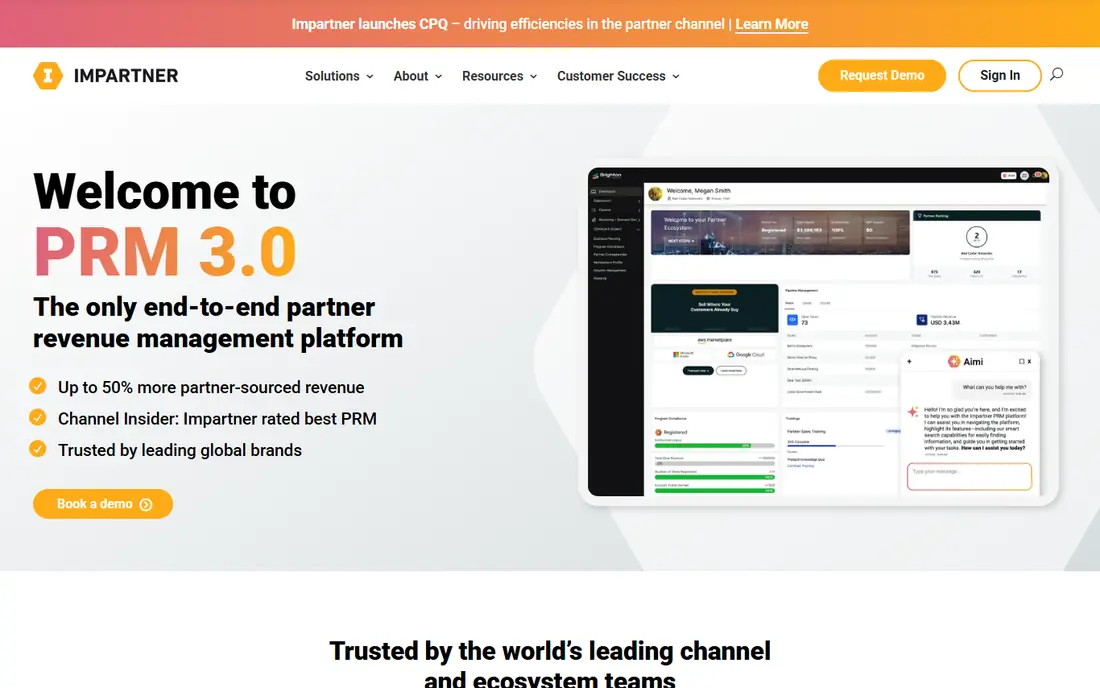
Impartner covers recruitment, onboarding with training and certification, deal registration, incentives, market development funds and compliance checks in one platform. That breadth is why it appears first in enterprise channel conversations, and its Salesforce integration keeps partner pipeline data in sync with direct sales data. Automated partner journeys move new partners through onboarding without constant manual work from your channel team.
The honest catch is scale and cost. Pricing is quoted, and buyer reports place enterprise contracts well above small-team budgets, so a 50-partner program will likely find it heavy. Choose Impartner when you run hundreds or thousands of partners across regions and need governance to match that scale.
- Full partner lifecycle
- Deep CRM integration
- Partner marketplace and funds management
- Quote-only pricing
- Implementation takes time and dedicated channel staff
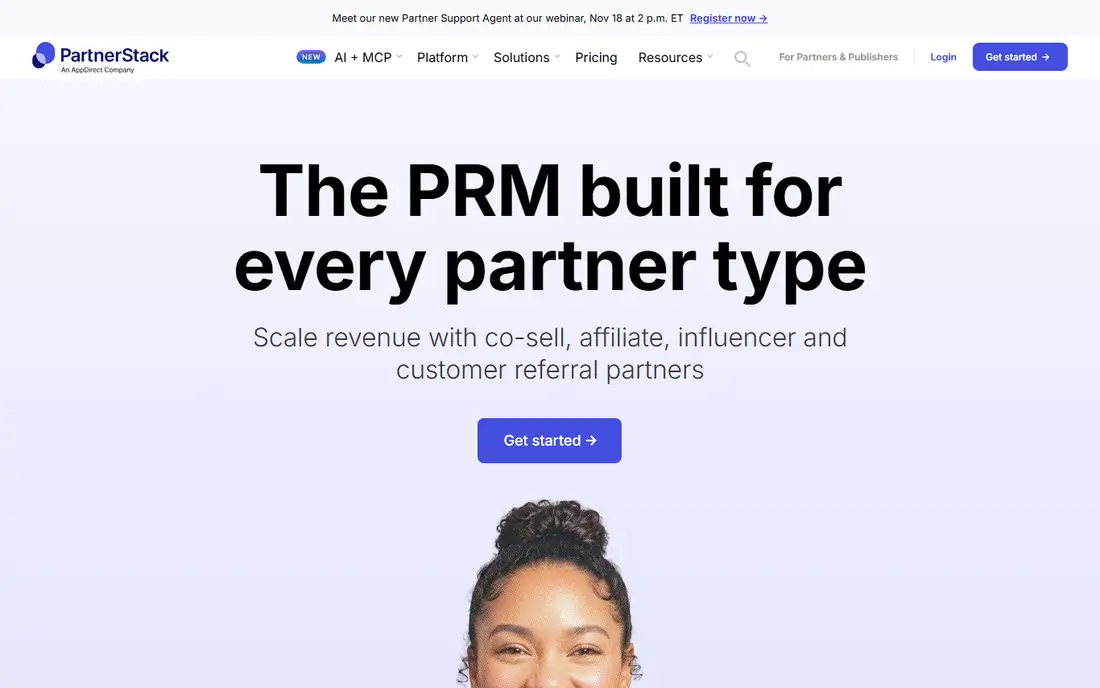
PartnerStack works differently from a pure portal tool, because it also helps you recruit. Its marketplace connects your program with partners who already sell software, which matters when you have a good product but a small channel team. Payouts, tax forms and tracking for affiliates, referral partners and resellers sit in the same system, cutting finance work as partner counts grow.
The limit is fit. PartnerStack is strongest for SaaS and digital products with partner-led growth, and less natural for a traditional hardware distributor with complex inventory rules. Pricing is quoted and usually sized for funded scale-ups, so small teams should get a quote early rather than assuming it fits a starter budget.
- Built-in partner marketplace
- Global payout handling
- Strong tracking for affiliates and resellers
- Quote-based pricing
- Best value for SaaS companies with partner-led growth
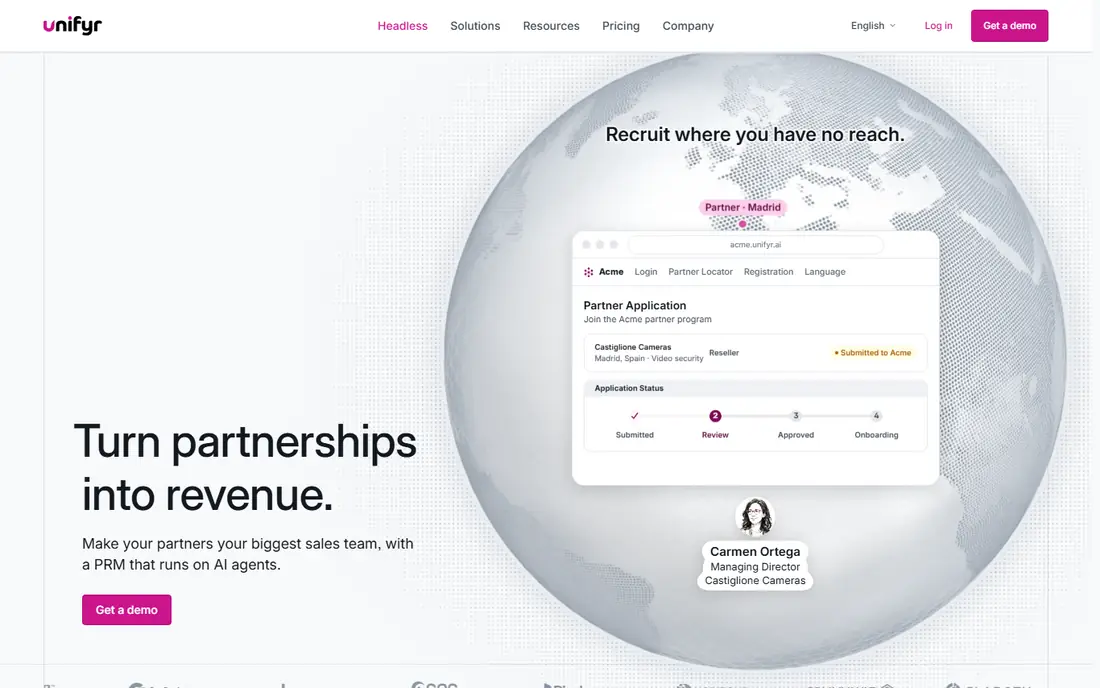
Unifyr, formerly ZiftONE, combines partner management, through-channel marketing automation and a learning system, so partners can find campaigns, complete training and register deals without juggling three tools. Co-selling and shared pipeline views help vendors and partners work the same opportunity, and built-in fund and incentive tools keep spending visible. That single-pane approach suits B2B enterprises with complex, multi-partner ecosystems.
Breadth brings setup work. You will need to decide which modules to launch first, and a team that only needs a simple portal may pay for scope it never uses. It earns its place here for mid-market and enterprise programs that want marketing, learning and pipeline in one contract.
- PRM, through-channel marketing and learning in one platform
- Deal registration and pipeline visibility
- Quote-only pricing
- Broad scope needs careful setup
Allbound centers on partner enablement, with a portal where partners find content, complete training, track deals and collaborate on opportunities. Playbooks and co-branding tools help partners present your product consistently, which matters when your channel sells to varied local markets. Gamification and progress tracking give channel managers a clear view of which partners are engaged and which have gone quiet.
Pricing is not published, so budget conversations start with a sales call, and very small teams may find the platform more than they need. For mid-market SaaS companies that live or die by partner readiness, the enablement depth is the reason to shortlist it.
- Strong partner portal and content sharing
- Built-in learning and gamification
- Co-selling tools
- Pricing not published
- Less suited to very small programs
Kiflo is the clearest starter option in this list, because its Core plan starts at $399 per month for 25 partners, billed annually, with a cap of 50 partners. You get a partner portal, lead registration, deal tracking, automatic commission calculation and account mapping for co-selling, plus sync with HubSpot and Salesforce. That combination covers the core PRM loop without an enterprise contract.
The cap is the boundary to watch. Growing past 50 partners, or needing self-invoicing, automatic payouts and enterprise single sign-on, means moving to Plus or Premier on quoted pricing. For a first or second partner program, that path is sensible, since you only pay for scale once you have it.
- Published Core pricing
- Partner portal and lead registration
- HubSpot and Salesforce sync
- Core caps at 50 partners
- Advanced payouts and SSO sit on higher tiers
Channeltivity appeals to teams that already run Salesforce or HubSpot and want partner workflows inside that system of record. Deal registration, training, content sharing and partner communications can be shaped around your existing stages and fields, rather than forcing your team into a fixed template. That CRM-native feel keeps data clean and reduces duplicate entry for sales operations.
Customization cuts both ways. A team without a clear partner process may spend weeks shaping the portal before partners see value, and pricing varies with the integration chosen. It fits mid-market and enterprise teams that know their channel process and want the tool to match it.
- Deep Salesforce and HubSpot integration
- Highly customizable portal
- Strong support reputation
- Pricing varies by integration
- Setup benefits from a clear process design
Magentrix combines a partner portal with collaboration features, learning tools and workflow automation that spans internal and external users. Partners can work through training, share documents and track opportunities, while your internal teams manage approvals and communications in the same place. AI-assisted search helps partners find the right asset without asking your channel manager.
The platform is broader than a basic portal, so small teams may find setup heavier than expected, and pricing is quoted. It suits companies that want partners, internal teams and workflows in one connected system, rather than a portal that sits apart from daily work.
- Partner portal with collaboration tools
- Learning management
- Cross-department workflows
- Quote-only pricing
- Broader scope than a simple portal
PartnerPortal.io targets small teams that need a working portal fast, without enterprise implementation. Partners get a clean place to register deals, access resources and track payouts, and the interface stays simple enough that partners actually use it. Payout handling without extra fees is a practical plus for teams that have struggled with finance overhead on small programs.
Simpler scope is the trade-off. Large programs with complex funds, multi-tier training and deep marketing automation will outgrow it, and should look at Impartner or Unifyr instead. For a first portal or a lean program, simplicity is a feature, not a gap.
- Clean simple portal
- Payout handling
- Quick setup for small teams
- Fewer enterprise features
- Best for simpler partner programs
Salesforce PRM, sold as part of the Salesforce partner ecosystem, keeps partner recruitment, onboarding, deal registration and training inside the CRM your sales team already uses. That native link removes sync problems and lets partner data appear in the same reports and dashboards as direct pipeline. Co-branding and lifecycle flows help partners stay on process without learning a separate system.
The catch is commitment. If your company is not standardized on Salesforce, the advantage fades and a standalone PRM may be cheaper and faster. Even inside Salesforce, PRM is an add-on cost on top of CRM licenses, so total cost needs a full quote, not a single line item.
- Native Salesforce automation
- Partner lifecycle flows
- Co-branding and deal tools
- Value depends on Salesforce commitment
- Add-on pricing adds up
How we picked these
We compared vendor feature pages, pricing pages and public reviews for PRM platforms that are live in October 2026, favoring tools with a real partner portal, deal registration and CRM integration. We checked published pricing where vendors offer it, and used See website where pricing is quoted, rather than repeating unverified third-party figures as fact. We did not claim hands-on testing, and we weighed partner experience, payout handling and integration depth alongside feature lists.
Choosing the right PRM for your program size
Start by counting partners honestly, including the ones you plan to recruit in the next year. A tool built for 50 partners will strain at 500, and an enterprise platform will slow down a small team with setup it does not need. Kiflo and PartnerPortal.io fit the small end, while Impartner, Unifyr and Salesforce PRM fit the large end.
Next, map the work partners actually do. If recruitment is the bottleneck, PartnerStack earns priority. If training and content drive sales, Allbound and Magentrix deserve a closer look. If deals must sync cleanly with your CRM, Channeltivity and Salesforce PRM reduce manual reconciliation. Ask each vendor to show deal registration, payout reporting and partner onboarding on a live demo using your own stages, not a generic script.
Finally, budget for implementation, not just licenses. Enterprise PRM often needs process design, data cleanup and partner migration, and those weeks matter more than a small monthly difference. Run a pilot with a handful of real partners, measure portal logins and deal registrations, and only then roll out to the full channel.
Frequently asked questions
What is PRM software?
PRM software, or partner relationship management software, gives partners a branded portal for training, content, deal registration and payouts, while vendors track partner pipeline and performance. It replaces spreadsheets and shared inboxes for channel programs.
Which PRM software has the best reviews for small teams?
Smaller teams often favor Kiflo and PartnerPortal.io, because setup is faster and pricing is clearer than enterprise platforms. Check recent user reviews for your CRM and partner count, since ease of use varies with program size.
What is the best partner management software for enterprises?
Impartner, Unifyr and Salesforce PRM lead for large programs, thanks to lifecycle coverage, funds management and CRM depth. Enterprises should still run a pilot, because implementation effort and governance needs differ by industry.
How much does PRM software cost?
Published starter pricing is rare. Kiflo Core starts at $399 per month for 25 partners, while most other vendors quote by partner count, modules and contract length. Ask for total cost including implementation and payout fees.
Do I need PRM software or just a CRM?
A CRM alone can track deals, but it rarely gives partners a branded portal, training paths and self-service deal registration. If partners need to work independently and at scale, PRM adds value a CRM alone does not provide.
Sources
See where you really rank - block by block
ProMapRanker scans Google Maps across a grid of your service area. Simple monthly plans from $19, white-label on every plan.
Start freeKeep reading
 zscaler alternatives
Best Zscaler Alternatives in 2026
Looking for zscaler alternatives? We compare 9 SASE and zero trust platforms on architecture, data protection, pricing, and fit for your network and team.
Read → zapier alternatives free
Best Zapier Alternatives Free in 2026
Nine automation tools for zapier alternatives free in 2026, all with genuinely free tiers, plus free plan limits, starting prices and upgrade paths explained.
Read → which platform is best for online reputation
Which Platform Is Best for Online Reputation in 2026
Wondering which platform is best for online reputation? We compare 8 review, listing, and response tools for small and multi-location businesses and agencies.
Read →