 ProMapRanker
Best Private Equity Software in 2026

Key takeaways
- No single platform covers every private equity job, so firms usually combine a CRM, a data source and a reporting tool.
- Affinity and 4Degrees suit relationship-driven sourcing, while PitchBook and Preqin suit market data and benchmarking.
- Intapp DealCloud suits firms that want one system across the full deal lifecycle, but it needs serious implementation effort.
- Most enterprise pricing is quoted per firm, so demos should include user count, funds and reporting needs.
- This is not financial advice, and firms should check security, permissions and data handling before sharing deal information.
Quick comparison
| Pick | Great for | Pricing starts at | Free tier | |
|---|---|---|---|---|
 Affinity | Relationship-driven deal sourcing | See website | No | Visit |
 Intapp DealCloud | Full deal lifecycle | See website | No | Visit |
 PitchBook | Private market data | See website | No | Visit |
 Preqin | Fund and LP intelligence | See website | No | Visit |
 Altvia | Fundraising and investor relations | See website | No | Visit |
 Grata | Private company discovery | See website | No | Visit |
 4Degrees | Warm introduction mapping | See website | No | Visit |
 Dynamo Software | Fund accounting and reporting | See website | No | Visit |
The best private equity software
These are the best private equity software platforms for firms at different stages, from sourcing to fundraising and portfolio reporting. We judged each one on its core job, not on trying to be everything at once, because that distinction matters when you buy.

Affinity is built around relationships, which is how many private equity deals actually start. It captures email and calendar activity, maps who knows whom and shows the strength of connections to a target company. That helps a deal team find a warm path in, rather than sending cold outreach to a founder who has no reason to reply.
Pricing is enterprise-level and quoted per user, so it suits firms with a real sourcing team rather than a single searcher. Adoption also matters: if the team does not connect calendars and email, the relationship data stays thin. For firms that live on proprietary deal flow, Affinity is one of the strongest tools available.
- Automatic relationship data capture
- Strong pipeline views
- Useful for warm introductions
- Enterprise pricing
- Needs clean adoption to deliver full value
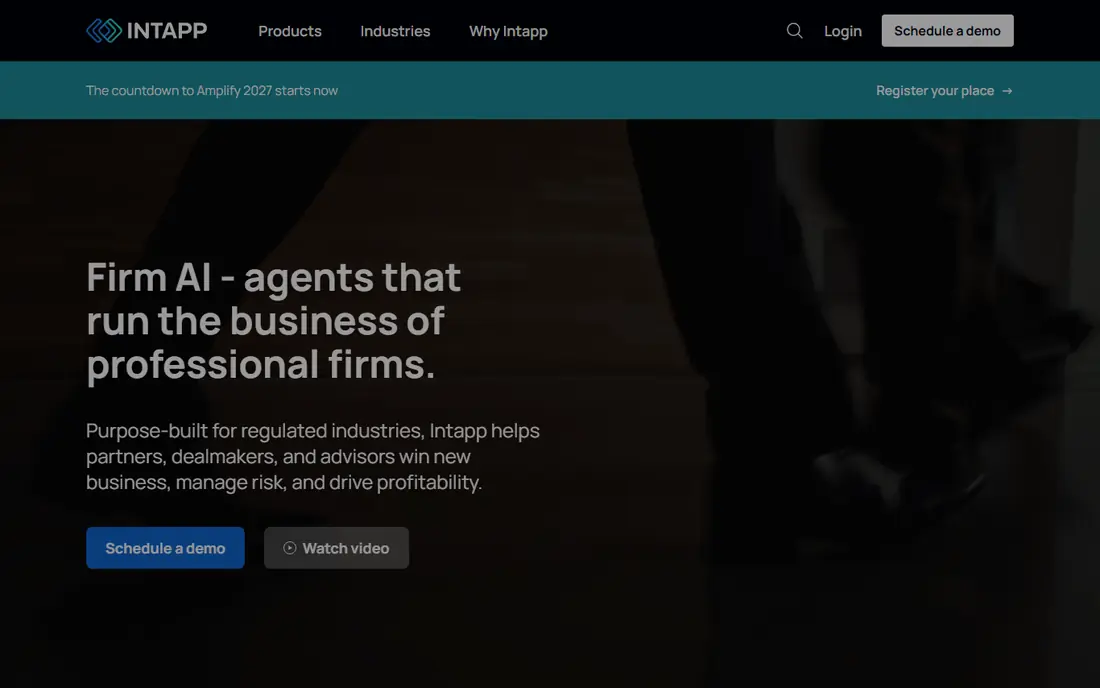
Intapp DealCloud aims to be the single system for a private equity firm, covering deal sourcing, pipeline, due diligence, fundraising and portfolio monitoring. Its workflow tools let teams standardise how deals move through stages, who approves what and what documents sit where. That consistency helps larger firms avoid the spreadsheet sprawl that grows when each deal team works differently.
The trade-off is implementation. DealCloud needs configuration, data migration and training, and it is priced for firms that will use it deeply. Smaller firms may find a lighter CRM faster to adopt. For a mid-size or large firm that wants one source of truth, DealCloud is a leading choice.
- Covers sourcing to portfolio monitoring
- Strong workflow tools
- Used by many large firms
- Implementation takes time
- Pricing is enterprise-level

PitchBook is the data backbone for many private equity teams, with company profiles, deal history, valuations, fund data and comparable transactions. Analysts use it to size a market, check what similar companies sold for and build a target list with real financial context. Its research and news coverage also help teams track a sector between deals.
Seat pricing is high, and a firm that only checks data occasionally may not get full value. PitchBook also works best alongside a CRM, because it is a data source first, not a workflow tool. For firms that underwrite deals on data, PitchBook is close to essential.
- Deep private market data
- Deal comps and valuations
- Strong research tools
- High seat pricing
- Best value for firms that use data daily
Preqin focuses on the fund side of private equity: fund performance, limited partner profiles, fundraising activity and benchmarking. That makes it valuable for investor relations teams and for firms raising a new fund, because it shows who invests in similar strategies and how peers perform. Benchmarking tools help a firm place its own returns in context for LP conversations.
Like PitchBook, Preqin is priced as an enterprise data service, and new users need time to learn its filters and reports. It overlaps partly with PitchBook, so firms should compare coverage for their specific strategy before buying both. For fundraising and LP intelligence, Preqin is a top pick.
- Fund performance and LP data
- Fundraising intelligence
- Benchmarking tools
- Enterprise pricing
- Interface takes time to learn
Altvia combines a CRM for fundraising with an investor portal, so a firm can track LP conversations, share documents and publish reports in one place. That pairing matters during a fundraise, when timely, accurate LP communication can affect closing. Its reporting tools help investor relations teams send consistent updates without rebuilding spreadsheets each quarter.
Some Altvia deployments sit on Salesforce, which can affect setup and admin needs, so buyers should confirm the current architecture during a demo. Pricing is quoted per firm, and smaller funds should check the minimum scope. For fundraising-led firms, Altvia offers a focused alternative to a general CRM.
- Investor portal and CRM in one
- Fundraising workflow
- LP reporting tools
- Built on Salesforce in some deployments
- Implementation varies by plan
Grata helps deal teams find private companies that match a thesis, using keyword search, filters and thematic discovery across millions of private companies. That is useful for a sector-focused firm that wants to build a proprietary target list, rather than waiting for banked deals. Conference attendee data can also help time outreach around events where founders are already thinking about growth.
Annual pricing is significant for a small team, and contact data should be verified before outreach, as with any database. Grata is best paired with a CRM such as Affinity, so discovered targets flow into a tracked pipeline. For systematic sourcing, Grata is a strong discovery layer.
- Searchable private company database
- Keyword and thematic search
- Conference data
- Annual pricing is significant
- Contact data quality varies
4Degrees focuses on the network behind deal sourcing, mapping relationships across a team and showing the best introduction path to a target. That focus makes it lighter to adopt than a full lifecycle platform, while still solving the core problem of finding who can open a door. Teams can track companies, people and interactions without the weight of a large enterprise system.
Its scope is narrower than DealCloud, so firms that also need fundraising, accounting and portfolio reporting will need other tools. Pricing is quoted per user, which suits small and mid-size teams. For relationship-led sourcing on a tighter budget than Affinity, 4Degrees deserves a demo.
- Relationship mapping for deal teams
- Lighter than full enterprise CRM
- Useful intro paths
- Narrower scope than DealCloud
- Pricing quoted per user
Dynamo Software covers the back and middle office side of private equity, including fund accounting, portfolio monitoring and investor reporting. That makes it a fit for firms that need accurate partnership accounting, capital calls, distributions and LP statements in one system. Its long focus on alternative assets means its workflows reflect how private funds actually operate.
Implementation is an enterprise project, and Dynamo is not a sourcing tool, so deal teams will still need a CRM or data platform alongside it. For firms where reporting accuracy and audit readiness matter most, Dynamo is a credible core system. Pair it with a sourcing tool, and the full stack becomes coherent.
- Fund accounting and investor reporting
- Portfolio monitoring
- Long private equity focus
- Enterprise implementation
- Less suited to pure sourcing teams
How we picked these
We compared official platform pages, core use cases and pricing models for software that private equity firms actually use across sourcing, data, fundraising and reporting. We favoured platforms with a clear primary job and a live product in 2026, rather than generic CRMs with no private equity focus. We did not claim hands-on testing, and where pricing is quoted per firm we wrote See website rather than inventing a figure. This article is general information, not financial advice.
Building a private equity software stack
Start by mapping your workflow in four parts: sourcing, diligence, fundraising and reporting. A sourcing firm needs a relationship CRM and a company database first, while a firm in fundraising needs an investor portal and LP reporting first. Buying a reporting system before you have deal flow, or a data platform no one uses daily, wastes budget.
Demo with real data. Ask each vendor to load a sample of your target companies, show a full deal moving through stages and produce a sample LP report. Check permissions, audit trails and data security, because deal information is sensitive and access must be controlled. Finally, plan for adoption: assign an owner, train the team and review usage after ninety days. The best software for private equity is the system your team actually uses, not the one with the longest feature list.
Questions to ask vendors
Ask how data is imported, how integrations work with your CRM or accounting system, what support hours cover and how pricing changes as users or funds grow. Ask for reference firms of a similar size and strategy, and ask what implementation typically takes. Clear answers here prevent a costly mismatch later.
Frequently asked questions
What is the best software for private equity deal sourcing?
Affinity and 4Degrees suit relationship-driven sourcing, while Grata suits systematic company discovery. Most sourcing teams pair a discovery database with a relationship CRM, so targets found in Grata can be tracked and worked in Affinity or 4Degrees. Choose based on whether your edge is network or sector research.
What are the best private equity platforms for fundraising?
Altvia is a strong fundraising and investor relations choice, while Preqin helps with LP intelligence and benchmarking. A firm raising a fund needs both: data on who invests, and a portal to manage the raise. Confirm portal, reporting and document controls during a demo.
Do small private equity firms need enterprise software?
Not always. A small team can start with a lighter CRM and a focused data source, then add reporting tools as funds grow. Enterprise platforms pay off when deal volume, user count or reporting complexity makes spreadsheets risky. Start with your biggest pain point, not the largest platform.
How much does private equity software cost?
Most enterprise platforms quote per firm or per user, and annual costs can run from thousands to tens of thousands per user for data platforms. Always get a quote that includes implementation, training and support, because those costs affect the first-year total. Lighter tools may publish lower starting prices.
Is PitchBook or Preqin better?
They serve different jobs: PitchBook is stronger for company and deal data, while Preqin is stronger for fund performance and LP data. Many large firms use both, but a smaller firm should pick the one that matches its main job and add the other later if needed. Trial both with your own target list before deciding.
Sources
See where you really rank - block by block
ProMapRanker scans Google Maps across a grid of your service area. Simple monthly plans from $19, white-label on every plan.
Start freeKeep reading
 zscaler alternatives
Best Zscaler Alternatives in 2026
Looking for zscaler alternatives? We compare 9 SASE and zero trust platforms on architecture, data protection, pricing, and fit for your network and team.
Read → zapier alternatives free
Best Zapier Alternatives Free in 2026
Nine automation tools for zapier alternatives free in 2026, all with genuinely free tiers, plus free plan limits, starting prices and upgrade paths explained.
Read → which platform is best for online reputation
Which Platform Is Best for Online Reputation in 2026
Wondering which platform is best for online reputation? We compare 8 review, listing, and response tools for small and multi-location businesses and agencies.
Read →