 ProMapRanker
Best Internet Services for Price in 2026

Key takeaways
- Xfinity and Spectrum lead on wide cable availability, while fiber providers often give steadier upload speeds where they reach an address.
- Starting prices in this guide are entry tiers only, and autopay, taxes, equipment, and promotions can change the monthly total.
- A slower plan can be the better price when it covers the household, while a faster plan only pays off when many people stream and work at once.
- Always enter the exact service address before ordering, because the same provider can offer different speeds and prices a few streets away.
Quick comparison
| Pick | Great for | Pricing starts at | Free tier | |
|---|---|---|---|---|
 Xfinity | Wide cable availability | $45 per month | No | Visit |
 Spectrum | Low entry price | $30 per month | No | Visit |
 AT&T Fiber | Fiber with matched speeds | $50 per month | No | Visit |
 Verizon Fios | Fiber value where available | $30 per month | No | Visit |
 GFiber | Simple fiber pricing | $70 per month | No | Visit |
 Cox | Cable in Cox areas | See website | No | Visit |
 Frontier Fiber | Fiber in Frontier areas | $29.99 per month | No | Visit |
 T-Mobile Home Internet | Simple wireless setup | $50 per month | No | Visit |
The best price for internet service
Prices and availability change by address, so we compared providers on starting price, speed, contract terms, and the costs that sit behind the headline rate.
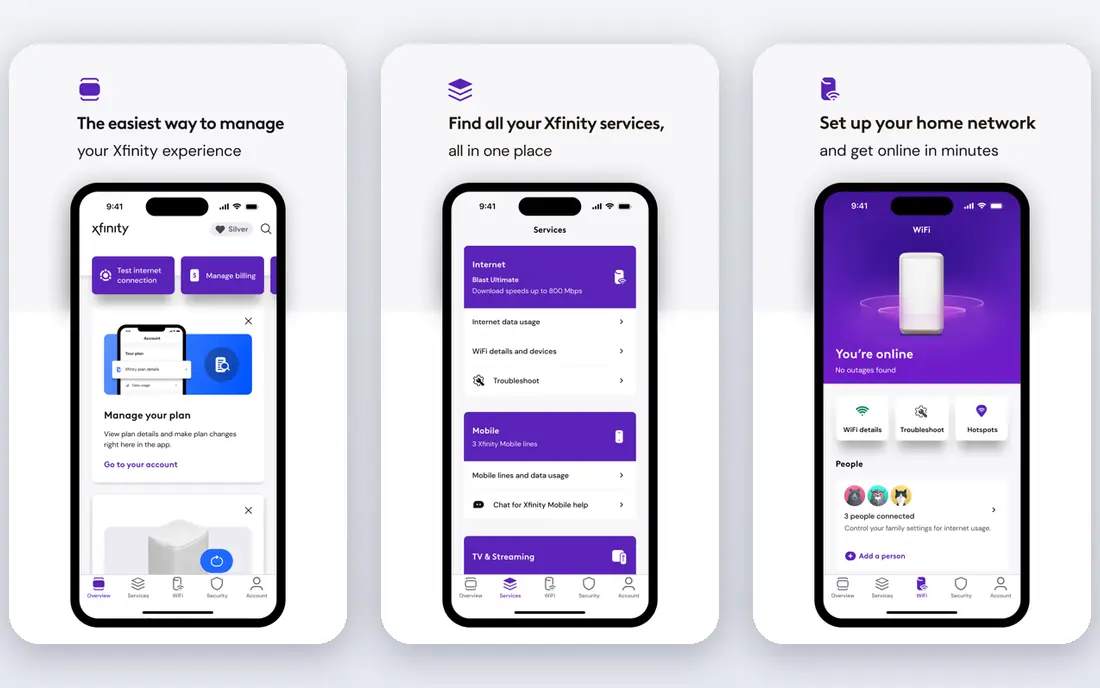
For households that want a widely available cable option first, Xfinity is the natural starting point. Cable service with a national plan ladder and a five-year price guarantee option on some tiers. Our team looked at what the service covers, how pricing works, and where the limits sit, so readers can judge fit before signing up or ordering.
The strength here is clear from its published features. Wide availability; no annual contract on current national plans; unlimited data on current plans. That strength can outweigh a higher price or a narrower range when the core need matches the service focus.
The honest catch is also worth weighing. Promotional terms vary by address; upload speeds lag fiber on many tiers; taxes and fees extra. Before choosing, check current terms on the official site and compare total cost, including fees and add-ons.
- Wide availability
- No annual contract on current national plans
- Unlimited data on current plans
- Promotional terms vary by address
- Upload speeds lag fiber on many tiers
- Taxes and fees extra
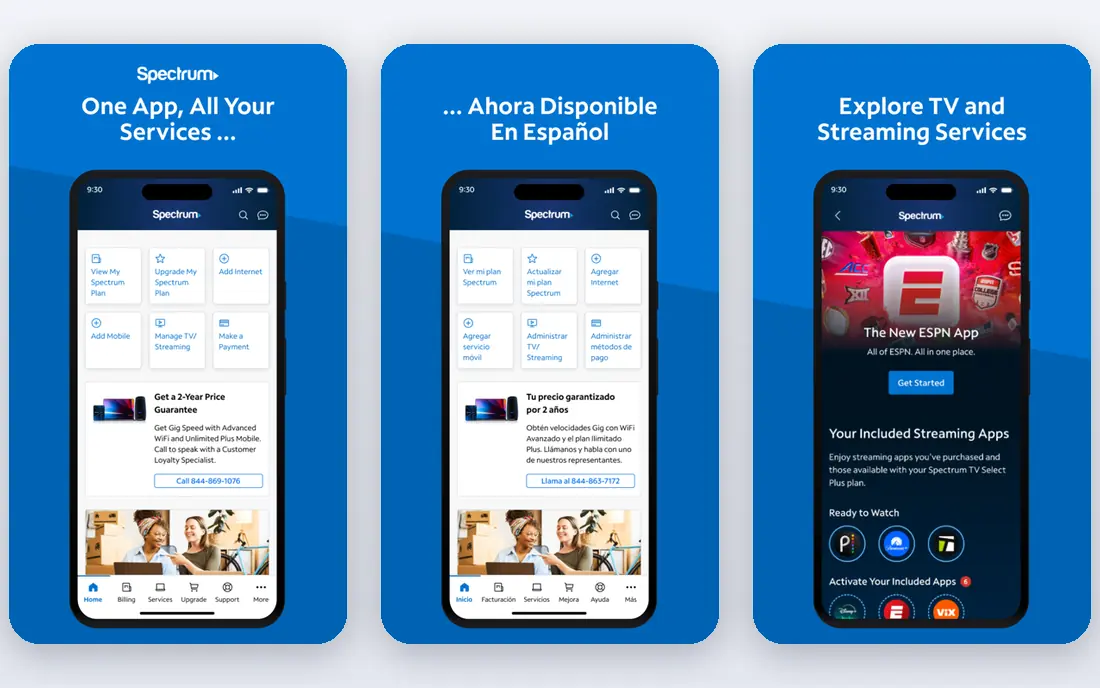
Spectrum stands out in this list for its low entry price, at $30 per month for 100 Mbps. Cable service with simple tiers and a bundle path that can lower the internet rate further. Our team looked at what the service covers, how pricing works, and where the limits sit, so readers can judge fit before signing up or ordering.
The strength here is clear from its published features. Low entry tier price; no data caps; free modem on listed plans. That strength can outweigh a higher price or a narrower range when the core need matches the service focus.
The honest catch is also worth weighing. Entry price is a first-year offer in many cases; Advanced WiFi costs extra on lower tiers; standard rates apply after promotion. Before choosing, check current terms on the official site and compare total cost, including fees and add-ons.
- Low entry tier price
- No data caps
- Free modem on listed plans
- Entry price is a first-year offer in many cases
- Advanced WiFi costs extra on lower tiers
- Standard rates apply after promotion
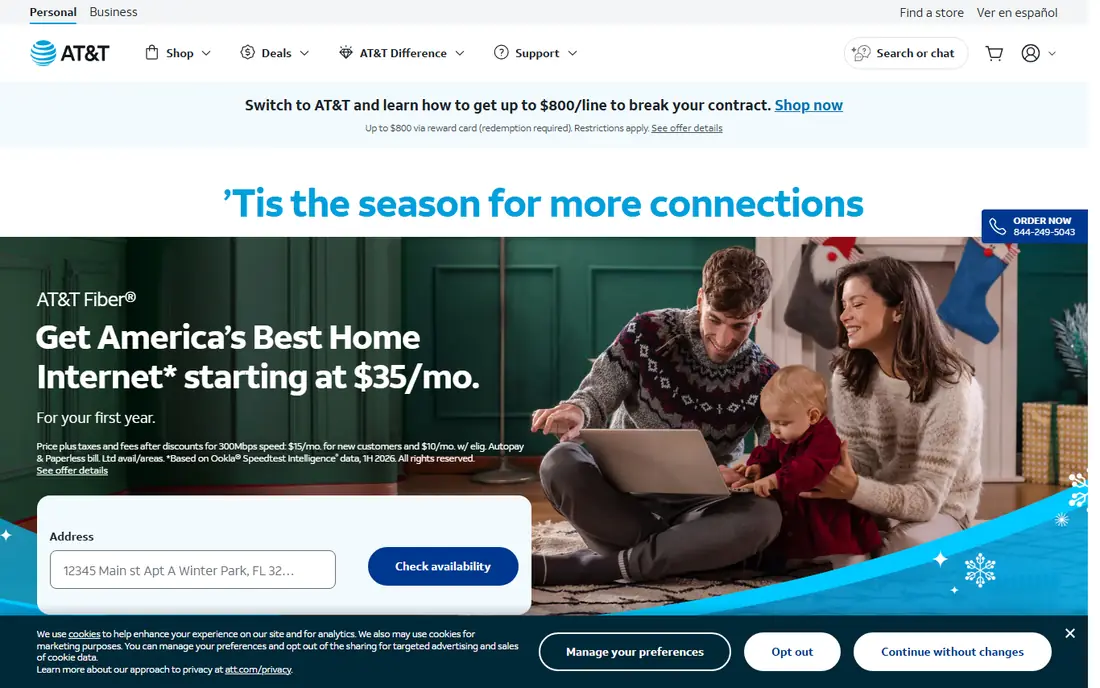
AT&T Fiber suits homes that can get fiber and want upload speed to match download speed. Fiber service with four main tiers from 300 Mbps to 5 Gig in served areas. Our team looked at what the service covers, how pricing works, and where the limits sit, so readers can judge fit before signing up or ordering.
The strength here is clear from its published features. Matched upload and download speeds; unlimited data; gateway included on fiber plans. That strength can outweigh a higher price or a narrower range when the core need matches the service focus.
The honest catch is also worth weighing. Fiber reach is limited to served areas; quoted price usually needs autopay and paperless billing; taxes and fees extra. Before choosing, check current terms on the official site and compare total cost, including fees and add-ons.
- Matched upload and download speeds
- Unlimited data
- Gateway included on fiber plans
- Fiber reach is limited to served areas
- Quoted price usually needs autopay and paperless billing
- Taxes and fees extra
Verizon Fios is worth checking first in Fios areas, because its entry tier is priced from $30 per month with autopay. Fiber service with tiers from 300 Mbps upward and price guarantees that vary by tier. Our team looked at what the service covers, how pricing works, and where the limits sit, so readers can judge fit before signing up or ordering.
The strength here is clear from its published features. Fiber speeds with matched uploads on lower tiers; no annual contract on listed plans; no data caps. That strength can outweigh a higher price or a narrower range when the core need matches the service focus.
The honest catch is also worth weighing. Availability is limited to Fios areas; setup and autopay conditions apply; higher tiers cost much more. Before choosing, check current terms on the official site and compare total cost, including fees and add-ons.
- Fiber speeds with matched uploads on lower tiers
- No annual contract on listed plans
- No data caps
- Availability is limited to Fios areas
- Setup and autopay conditions apply
- Higher tiers cost much more
GFiber appeals to buyers who want a plain fiber offer without a long menu of tiers. Fiber service with gigabit and multi-gigabit plans and unlimited data. Our team looked at what the service covers, how pricing works, and where the limits sit, so readers can judge fit before signing up or ordering.
The strength here is clear from its published features. Simple plan structure; no contract; no equipment fees on listed plans. That strength can outweigh a higher price or a narrower range when the core need matches the service focus.
The honest catch is also worth weighing. Availability covers only selected cities and areas; entry tier starts at gigabit pricing, which some homes do not need. Before choosing, check current terms on the official site and compare total cost, including fees and add-ons.
- Simple plan structure
- No contract
- No equipment fees on listed plans
- Availability covers only selected cities and areas
- Entry tier starts at gigabit pricing, which some homes do not need
Cox is the practical pick for households inside its footprint who cannot get fiber. Cable service with tiers up to multi-gigabit speeds in selected areas. Our team looked at what the service covers, how pricing works, and where the limits sit, so readers can judge fit before signing up or ordering.
The strength here is clear from its published features. Wide cable footprint in its service areas; a range of speed tiers; bundling options with mobile and TV. That strength can outweigh a higher price or a narrower range when the core need matches the service focus.
The honest catch is also worth weighing. Data caps apply on some plans; prices and tiers vary by address; equipment costs can add to the bill. Before choosing, check current terms on the official site and compare total cost, including fees and add-ons.
- Wide cable footprint in its service areas
- A range of speed tiers
- Bundling options with mobile and TV
- Data caps apply on some plans
- Prices and tiers vary by address
- Equipment costs can add to the bill
Frontier Fiber deserves a check in its service areas, because its entry price undercuts many larger providers. Fiber service with tiers from 200 Mbps upward in served areas. Our team looked at what the service covers, how pricing works, and where the limits sit, so readers can judge fit before signing up or ordering.
The strength here is clear from its published features. Low starting price in its fiber footprint; fiber upload speeds; unlimited data on fiber plans. That strength can outweigh a higher price or a narrower range when the core need matches the service focus.
The honest catch is also worth weighing. Availability varies sharply by address; some areas still lack fiber; installation terms vary. Before choosing, check current terms on the official site and compare total cost, including fees and add-ons.
- Low starting price in its fiber footprint
- Fiber upload speeds
- Unlimited data on fiber plans
- Availability varies sharply by address
- Some areas still lack fiber
- Installation terms vary
T-Mobile Home Internet fits renters and homes that want to avoid a wired install. Fixed wireless home internet over 5G, plus fiber plans in selected T-Mobile Fiber areas. Our team looked at what the service covers, how pricing works, and where the limits sit, so readers can judge fit before signing up or ordering.
The strength here is clear from its published features. Simple self-install setup; no contract; no equipment fees on listed plans. That strength can outweigh a higher price or a narrower range when the core need matches the service focus.
The honest catch is also worth weighing. Speeds vary by signal and congestion; not a fit where 5G coverage is weak; higher tiers cost more. Before choosing, check current terms on the official site and compare total cost, including fees and add-ons.
- Simple self-install setup
- No contract
- No equipment fees on listed plans
- Speeds vary by signal and congestion
- Not a fit where 5G coverage is weak
- Higher tiers cost more
How we picked these
We started with products that exist and work in October 2026 and that truly fit the topic, then we compared official feature pages, pricing pages, app store listings, privacy policies, and public reviews. Products that did not fit, that lacked a working official site, or that could not be verified were left out, rather than padded into the list.
We also weighed fit for different buyers, not just the largest brands. A low price, a free tier, a specialist focus, or a wider range can each make an option the right pick for one reader and a poor pick for another, so each write-up notes who it suits and where it falls short.
How to judge the real price, not just the headline
Start with the speed the household actually uses. A home with two people browsing and streaming on one television at a time rarely needs a gigabit tier, while a home with several workers on video calls, gamers, and many connected devices can feel the difference on upload speed. Write down peak-time use before comparing tiers, because that list matters more than a maximum speed number on a sales page.
Read the full bill shape. Ask what happens when a promotion ends, whether autopay and paperless billing are required for the quoted price, and whether equipment, installation, taxes, and fees are included. Some providers price the gateway in the plan, while others charge separately, and that difference can close a gap that looked large at first glance.
Check the contract and the exit terms. A no-contract plan gives room to switch if service is poor, while a price guarantee can help budgeting if the terms are clear and the address qualifies. For fixed wireless, test coverage at the home itself, since signal strength and congestion vary by location and time of day.
Frequently asked questions
What is the cheapest internet service overall?
There is no single cheapest service for every address, because availability and promotions vary by location. In this guide, Spectrum starts at $30 per month for its entry tier and Verizon Fios is listed from $30 per month with autopay in some areas, but both depend on the service address. Enter the exact address on each provider page before treating any starting price as a quote.
Why does my neighbour pay less for the same provider?
Providers sell different tiers, promotions, and bundles by address, and older plans can carry different terms. A neighbour may also have a bundle discount, an autopay discount, or a price guarantee from an earlier offer. Comparing the speed, contract, and total monthly cost gives a fairer picture than comparing one headline number.
Is fiber always better than cable or fixed wireless?
Fiber often gives matched upload and download speeds, which helps video calls and large uploads. Cable can still be a strong choice where fiber is absent, and fixed wireless can suit renters or homes that need simple setup. The right choice depends on the speeds available at the address and how the household uses the connection.
Do starting prices include taxes and equipment?
Not always. Some quoted prices require autopay and paperless billing, and taxes, fees, installation, or equipment can sit outside the headline rate. Read the provider terms for the exact address and ask for the total monthly cost before ordering.
How much speed do most households need?
A small household can often work well on 100 to 300 Mbps, while larger households with many streams, calls, and devices may want 500 Mbps or more. Upload speed matters more for remote work and cloud backups than for watching video alone, so check both directions when comparing plans.
Sources
See where you really rank - block by block
ProMapRanker scans Google Maps across a grid of your service area. Simple monthly plans from $19, white-label on every plan.
Start freeKeep reading
 worlds best local seo company
8 Worlds Best Local SEO Companies for Map Pack Growth in 2026
Compare the worlds best local seo company options for Google Business Profile work, citations, reviews, and multi-location rankings and reporting in 2026.
Read → world's best web hosting company
World's Best Web Hosting Company in 2026
Searching for the world's best web hosting company? We compared 10 hosts on price, renewal rates, speed, and support to help you choose well today in 2026.
Read → who's got the best nanny tax services
Who's Got the Best Nanny Tax Services in 2026
We answer who's got the best nanny tax services, comparing full filing, back taxes, software, and pricing so families can handle nanny taxes correctly.
Read →