 ProMapRanker
Best Predictive Pricing Software in 2026

Key takeaways
- PROS, Pricefx, Vendavo, and Zilliant lead for B2B pricing, while Competera, Omnia Retail, and Revionics focus more on retail.
- Predictive models are only useful when recommendations reach quotes and orders with clear approval controls.
- Almost all pricing in this category is quote-based, so compare implementation, data needs, and total cost, not only the subscription.
- Model output should be tested against margin, volume, and customer impact before any price change goes live.
Quick comparison
| Pick | Great for | Pricing starts at | Free tier | |
|---|---|---|---|---|
 PROS Pricing | AI-led B2B price optimisation | See website | No | Visit |
 Pricefx | Modular B2B pricing and CPQ | See website | No | Visit |
 Vendavo | Enterprise B2B manufacturers | See website | No | Visit |
 Zilliant | Mid-market B2B pricing | See website | No | Visit |
 Competera | Retail and e-commerce pricing | See website | No | Visit |
 Omnia Retail | E-commerce dynamic pricing | See website | No | Visit |
 Revionics | Retail price optimisation | See website | No | Visit |
 Earnix | Insurance and lending pricing | See website | No | Visit |
The best predictive pricing software
We compared model quality, governance, ERP and CPQ integration, and implementation scale for pricing teams. This article is general information only and is not financial advice. Predictive pricing does not guarantee returns or accuracy, and every recommendation should be tested before it affects live prices.
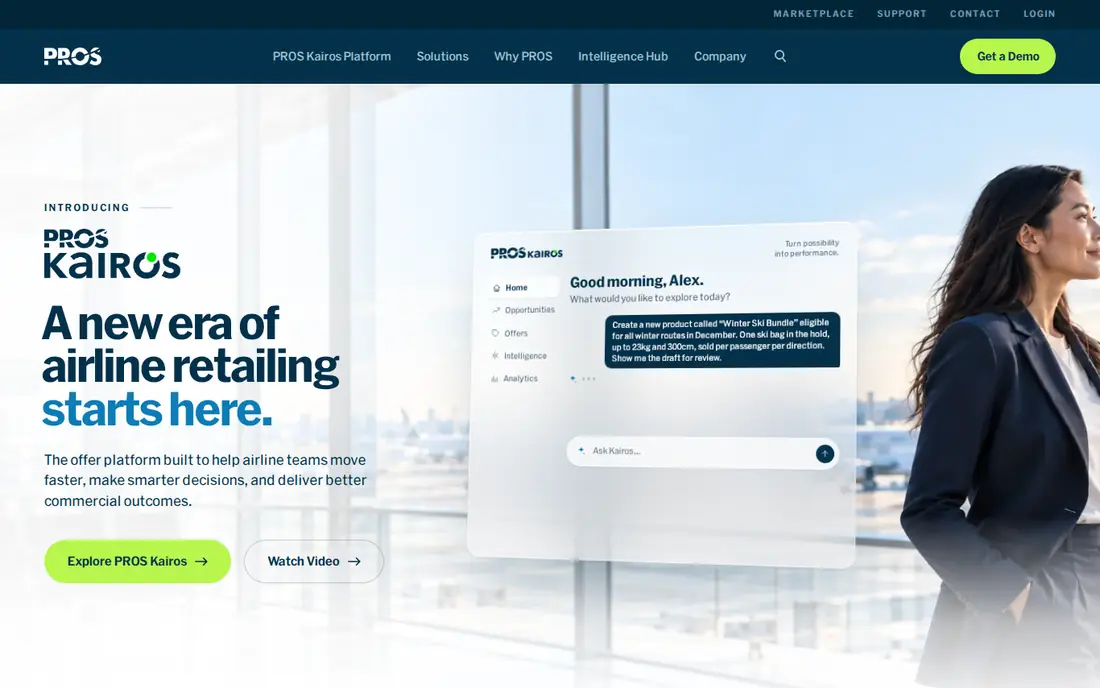
PROS Pricing is built for large B2B teams that need model-driven price recommendations with controls around them. Recommendations can be routed through approvals before they reach quoting and ordering, which matters when a model suggests a price change for a strategic customer. Scenario tools also let pricing teams test the effect of a change before committing to it.
The trade-off is scale. PROS suits organisations with large catalogues, many customer segments, and clean transaction history, and implementation needs data work and governance planning. Smaller teams with simple price lists may find a lighter tool faster and cheaper, while large teams gain most from the model depth.
- Strong AI and machine learning pricing models
- Guardrail-aware recommendations
- Scenario planning and approvals
- Enterprise price and implementation scale
- Best fit for large, complex portfolios
Pricefx covers price management, CPQ, rebate management, and analytics in one cloud platform, with modules that can be bought in stages. That modular shape helps B2B teams that want to start with price management and add CPQ or rebates later, without migrating to a new system. Its pricing AI tools support deal-level guidance for sales teams.
Modularity still needs scoping. Buyers should define which modules are in phase one, which data sources feed the models, and who owns price governance. Pricing is custom, so ask for a written quote by module, and confirm implementation time for your own catalogue size.
- Modular suite covering pricing, CPQ, and rebates
- Flexible configuration
- Strong partner network
- Custom pricing with no simple list price
- Advanced optimisation features take time to learn
Vendavo suits large manufacturers with complex B2B pricing, including contracted prices, rebates, and channel variations. Its commercial tools bring pricing, deal guidance, and rebate handling together, which helps when the same product carries different net prices across customers and regions. SAP-heavy manufacturers often find the integration fit strong.
The cost is time and complexity. Implementations in large ERP estates take planning, data cleaning, and change management, and total cost includes consulting as well as subscription. Teams that need that depth should budget for it, while mid-market teams should compare Zilliant or Pricefx first.
- Deep B2B pricing for manufacturers
- Unified commercial tools
- Strong SAP-adjacent experience
- Long implementation for complex ERP estates
- Enterprise cost and consulting needs
Zilliant targets B2B pricing teams that want governed, model-driven pricing without the longest enterprise rollout. Versioned price books, effective dating, and approval workflows help teams publish price changes in a controlled way, with audit trails for who changed what and when. That governance matters when prices affect many customers at once.
Data quality remains the limiting factor. Models need clean transaction, cost, and customer history, and teams without that foundation should plan a data phase before expecting model output. For mid-market B2B firms, Zilliant often balances depth and speed better than the largest suites.
- Faster time to value than large suites in published comparisons
- Governed price books
- Analytics for pricing teams
- Less depth than Vendavo for the largest manufacturers
- Still needs clean transaction data
Competera is built for retailers and e-commerce teams that need to react to competitor prices, demand signals, and margin targets across large catalogues. What-if simulations let teams test a price change across categories before publishing it, which helps avoid margin damage from a broad repricing. Contextual models can also reflect product roles, such as traffic drivers versus margin items.
B2B teams with contracted prices and rebates will find less depth here than in PROS or Vendavo. Retail buyers should check data feeds, update frequency, and how recommendations flow into their storefront or marketplace channels, because a good model that cannot publish quickly loses value.
- Retail-specific pricing models
- Competitor and market data inputs
- What-if simulation for price changes
- Retail focus means less B2B contract depth
- Enterprise pricing by quote
Omnia Retail suits online retailers that want dynamic pricing driven by rules, competitor data, and margin targets. Automation can reprice large catalogues on a schedule, which helps teams that cannot review every SKU by hand. Published comparisons have noted a clearer starting price than many enterprise rivals, although final pricing still depends on catalogue size and modules.
US buyers should confirm coverage for their sales channels, marketplaces, and competitor data sources, since Omnia grew in European e-commerce. Also check how the tool handles promotions, stock levels, and price floors, so automation does not undercut margin during a sale.
- Transparent published starting point in some comparisons
- Dynamic pricing for online retail
- Automation for repricing rules
- European roots mean buyers should confirm US channel and data coverage
- Smaller scale than large B2B suites
Revionics, part of Aptos, focuses on retail pricing, promotion, and markdown decisions, with models built for large assortments and many stores or channels. That retail depth helps grocers, apparel, and general merchandise teams that need to balance traffic, margin, and clearance together, rather than optimising price alone.
The platform is enterprise in scale, so smaller retailers may find implementation and cost heavy for their needs. Buyers should test how recommendations handle promotions and markdown timing, and confirm integration with merchandising, inventory, and point-of-sale systems before signing.
- Retail price, promotion, and markdown optimisation
- Large catalogue scale
- Science-led models for retail teams
- Retail focus and enterprise implementation
- Pricing by quote
Earnix serves insurers and lenders that need predictive pricing with strong governance, simulation, and monitoring. In regulated pricing, teams must explain why a price changed, test fairness and risk effects, and monitor models over time, and Earnix is built around those needs. That focus suits banks, insurers, and lenders more than general retailers.
General B2B or retail teams should look elsewhere, because Earnix depth is sector-specific. Regulated buyers should ask how models are documented, how changes are approved, and how monitoring flags drift, because those controls matter as much as the initial model accuracy.
- Predictive pricing for insurance and lending
- Simulation and governance tools
- Model monitoring for regulated teams
- Sector focus means less general retail or B2B depth
- Enterprise pricing by quote
How we picked these
We compared vendor product pages, pricing model features, governance controls, and published pricing comparisons for predictive pricing tools used in October 2026. We included B2B, retail, and regulated-sector tools because predictive pricing differs by market, and we noted where pricing is quote-based rather than inventing a price. We did not claim hands-on testing.
What to check before you buy
Start with data, not with model claims. List your transaction history, cost data, competitor data, and customer segments, then ask each vendor what data quality and volume their models need to work well. A model trained on thin or messy data will produce confident output that should not be trusted.
Next, check the path from model to live price. Ask who approves a recommendation, how price books are versioned, how changes roll back, and how the system connects to ERP, CPQ, storefront, or policy systems. Finally, run a backtest on historical data and a controlled pilot on a small category or segment, measuring margin, volume, and customer impact before wider rollout.
Frequently asked questions
What is predictive pricing software?
It uses historical transactions, costs, demand signals, and market data to recommend prices or price ranges. Good tools add governance, simulation, and approval controls so recommendations do not reach customers unchecked.
Does predictive pricing guarantee higher margins?
No. Models can suggest prices that improve margin in testing but fail in live markets, and they cannot guarantee returns or accuracy. Test recommendations in a pilot and monitor results before wider use.
How much data do I need?
Most enterprise tools need clean transaction history by product and customer, plus cost data. The exact volume depends on catalogue size and model type, so ask vendors to assess your data before you sign.
Is predictive pricing the same as dynamic pricing?
Not exactly. Predictive pricing forecasts the effect of a price, while dynamic pricing changes prices automatically in response to rules or market signals. Many retail tools combine both, with rules and floors to control automation.
Can small businesses use predictive pricing?
Small teams can use simpler pricing tools and rule-based repricing, but enterprise predictive platforms usually need larger catalogues and data volumes to justify cost. Start with clean price and margin data, then scale up.
How do I control model risk?
Use approval workflows, price floors and ceilings, versioned price books, backtesting, and ongoing monitoring. Keep a human decision step for strategic customers and large price changes.
Sources
See where you really rank - block by block
ProMapRanker scans Google Maps across a grid of your service area. Simple monthly plans from $19, white-label on every plan.
Start freeKeep reading
 what’s the best risk software for enterprises
What Is the Best Risk Software for Enterprises in 2026
We compared what’s the best risk software for enterprises on risk registers, controls, third-party risk, and reporting, with pricing notes for large teams.
Read → what's the best pam software for enterprises
What is the Best PAM Software for Enterprises in 2026
Find what's the best pam software for enterprises, with vaulting, session recording, just in time access and pricing compared for large enterprise IT teams.
Read → what’s the best grc software
What Is the Best GRC Software in 2026
We compared what’s the best grc software on risk, compliance, audit and vendor risk, so teams can pick a platform that fits their frameworks and budget.
Read →