 ProMapRanker
Best Predictive Maintenance Software in 2026


Manufacturers wanting sensor-driven machine health · Pricing starts at: See website
Key takeaways
- Augury and Senseye suit sensor-driven factories, while IBM Maximo suits large asset portfolios.
- MaintainX, UpKeep, Fiix and Limble suit teams that want predictive features inside a maintenance system.
- Sensor and implementation costs often exceed software fees, so budget for hardware and setup.
- Start with a pilot on your most critical machines, not a plant-wide rollout.
Quick comparison
| Pick | Great for | Pricing starts at | Free tier | |
|---|---|---|---|---|
| Augury | Manufacturers wanting sensor-driven machine health | See website | No | Visit |
 Senseye PdM | Large industrial fleets, especially Siemens users | See website | No | Visit |
 IBM Maximo | Large enterprises managing complex asset portfolios | See website | No | Visit |
 MaintainX | Mobile-first maintenance teams adding predictive features | $20 per user per month | Yes | Visit |
 UpKeep | Small teams wanting mobile work orders plus sensors | $24 per user per month | Free trial | Visit |
 Fiix | Teams wanting a free CMMS with predictive options | $45 per user per month | Yes | Visit |
 Limble CMMS | Operations teams wanting fast technician adoption | See website | Free trial | Visit |
 Fracttal | Latin American and European maintenance teams | See website | Free trial | Visit |
 eMaint | Multi-site teams standardising maintenance | $69 per user per month | Free trial | Visit |
 Tractian | Manufacturers wanting affordable sensor monitoring | See website | Free trial | Visit |
The best predictive maintenance software
We compared tools that predict equipment failure from sensor data, condition monitoring and maintenance history, not just tools that schedule routine work. Predictive tools warn a team before a machine fails, so repairs can be planned rather than rushed. The list mixes sensor-first platforms with maintenance systems that add predictive features, since buyers come from both directions.
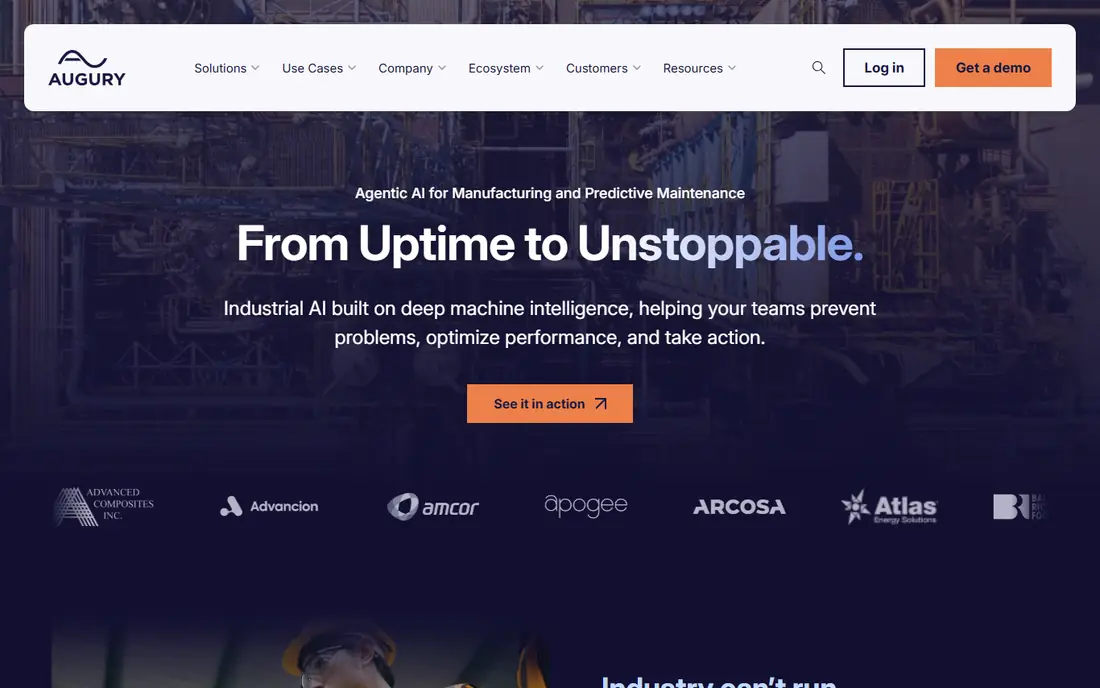
Augury is a sensor-first predictive maintenance platform. It monitors machine health with sensors and AI analysis, flags faults early, and pairs that analysis with reliability expertise to help teams act on alerts. Integrations with maintenance systems help turn a prediction into a planned work order.
The total cost goes beyond software. Sensors, installation and ongoing analysis are part of the package, and pricing is quoted. Augury suits manufacturers with critical rotating equipment where unplanned downtime is expensive, rather than a small facility with a few simple machines.
- Machine health sensors and AI analysis
- Reliability expertise
- CMMS integrations
- Quote-led pricing
- Sensor hardware adds cost
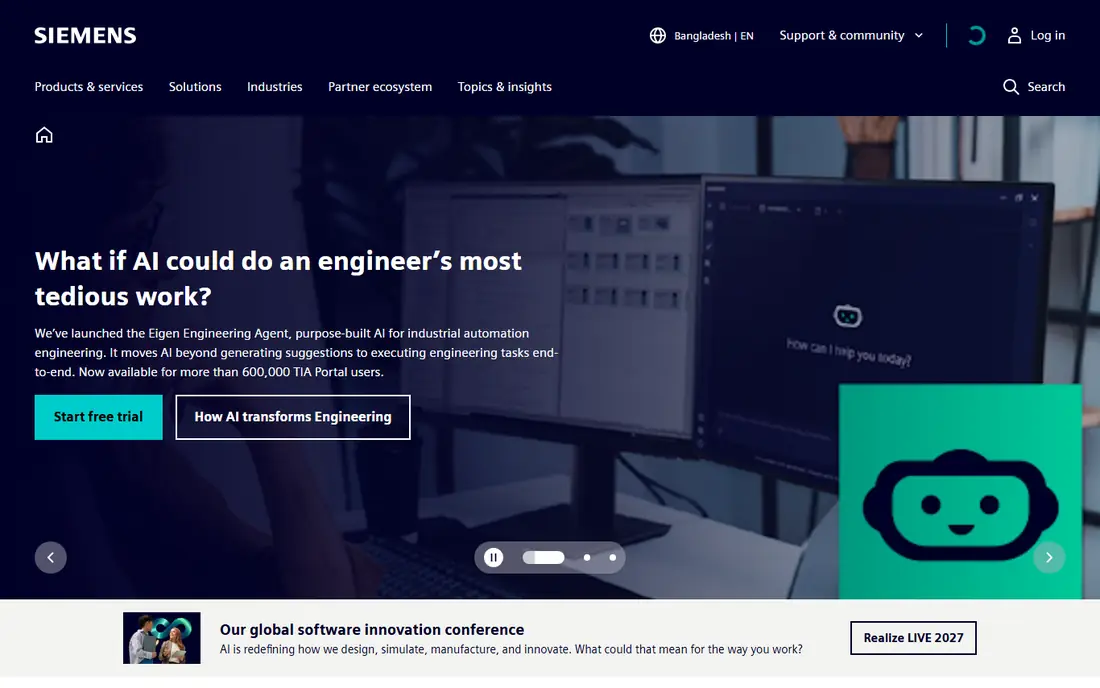
Senseye PdM, now part of Siemens, monitors large fleets of industrial assets and uses AI to spot anomalies before they become failures. It suits multi-site manufacturers that need a fleet view, prioritised alerts and integration with wider Siemens digital tools. Teams without a data science department can still use its automated analysis.
The fit is strongest inside the Siemens ecosystem, and pricing is quoted per asset or fleet. A buyer outside that ecosystem should test integrations carefully and confirm sensor and data requirements before committing to a fleet-wide rollout.
- Fleet-wide asset monitoring
- AI anomaly detection
- Siemens ecosystem fit
- Quote-led pricing
- Strongest inside the Siemens ecosystem
IBM Maximo Application Suite covers the full asset lifecycle, from procurement and maintenance to predictive analytics and reliability planning. Large utilities, manufacturers and transport operators use it where asset portfolios are complex and compliance records matter. Predictive features sit inside that broader asset system.
The scale is the downside. Maximo needs implementation planning, training and integration work, and pricing is quoted. It suits enterprises with a dedicated asset programme, not a small team that only needs work orders and simple alerts.
- Deep asset lifecycle management
- Predictive analytics
- Enterprise integrations
- Quote-led pricing
- Implementation is long and costly
MaintainX starts as a mobile maintenance system, which is why technicians adopt it quickly. Work orders, assets, parts and preventive schedules live in an app that works on the shop floor, and higher tiers add analytics and condition insights. The free Basic plan makes it a low-risk way to digitise maintenance first.
Predictive depth is lighter than Augury or Senseye, since MaintainX is not primarily a sensor platform. It suits teams that want to move from reactive work to planned and data-informed maintenance, then add sensors later if the data justifies them.
- Strong mobile app
- Free Basic plan
- Work orders and asset tracking
- Predictive depth is lighter than sensor-first platforms
- Advanced analytics need higher tiers
UpKeep is a mobile maintenance platform that also offers IoT sensor options for condition monitoring. Technicians can manage work orders, assets and parts from a phone, while managers gain a clearer view of asset health and maintenance history. That combination suits regulated manufacturers moving off spreadsheets.
The per-user price grows as the team grows, so larger teams should model the total, not just the entry price. Predictive and sensor features also vary by tier, so confirm which tier includes the monitoring you actually need before you buy.
- Mobile-first work orders
- Asset and parts tracking
- IoT sensor options
- Per-user costs grow with team size
- Predictive features vary by tier
Fiix, now part of Rockwell Automation, offers a free CMMS plan alongside paid tiers for larger teams. It covers assets, work orders, preventive maintenance and parts, with integrations that help connect maintenance data to wider operations. The free plan makes it a practical first step for a small team.
The paid entry price is higher than MaintainX or UpKeep, and deeper predictive analytics sit in higher tiers. Fiix suits teams that want a solid maintenance foundation first, with a path to more advanced analytics as their data and processes mature.
- Free CMMS plan
- Asset and work order depth
- Integrations
- Entry paid price is higher than some rivals
- Predictive analytics need higher tiers
Limble CMMS is known for ease of use, which matters when technicians must actually use the system every day. It covers preventive maintenance, work orders, assets and parts, with a mobile app that suits shop-floor work. Teams that struggled with complex systems often adopt Limble faster.
Limble is not a sensor-first predictive platform, so buyers who need deep machine health analytics should pair it with a sensor tool or choose Augury or Senseye. Pricing also needs a quote or demo, so request a written price for your user count and feature tier.
- Easy mobile adoption
- Preventive maintenance depth
- Asset hierarchies
- Pricing is not published in a simple form
- Sensor features are limited
Fracttal is a maintenance platform with a strong presence in Latin America and Europe, covering assets, work orders, preventive maintenance and analytics. Its mobile app and multi-language support suit distributed teams in those regions, and its predictive features help teams move beyond fixed schedules.
The US presence is smaller than MaintainX or Fiix, so US buyers should check support hours and integrations for their region. Predictive depth also varies by plan, so confirm which analytics are included and whether sensor integrations are needed for your machines.
- Strong in Latin America and Europe
- Asset and maintenance depth
- Mobile app
- Smaller US presence
- Predictive features vary by plan
eMaint, a Fluke solution, suits multi-site operations that need standardised maintenance, asset records and compliance documentation. Its links to Fluke sensors and condition monitoring tools help teams add predictive data to a structured maintenance system. Governance and reporting are strengths here.
The entry price is higher than mobile-first rivals, and the interface feels enterprise rather than lightweight. eMaint suits organisations that value standardisation and audit trails across sites, not a single-site team that wants the simplest possible app.
- Multi-site asset management
- Fluke sensor links
- Compliance records
- Higher entry price
- Interface feels enterprise rather than simple
Tractian pairs sensor hardware with AI analysis to monitor vibration, temperature and related signals on industrial machines. It suits manufacturers that want sensor-driven predictions without an enterprise platform project, since hardware, software and alerts come as a combined offer. Mobile alerts help technicians act quickly.
The combined hardware and subscription cost needs careful modelling, and coverage depends on correct sensor placement. Start with critical machines, validate alerts against real failures, and expand only where predictions prove useful and accurate.
- Sensor hardware plus AI analysis
- Vibration and temperature monitoring
- Mobile alerts
- Hardware and subscription costs combine
- Coverage depends on sensor placement
How we picked these
We compared platforms with live official sites and a current predictive or condition-monitoring offer in October 2026. We included both sensor-first platforms and maintenance systems with predictive features, since buyers search for both, and we labelled the difference in each write-up. Where pricing was quoted, we wrote See website rather than publishing a marketplace estimate as a vendor price.
We also weighed data quality. Predictive tools only work with clean asset data, correct sensor placement and a history of failures to learn from. That is why we recommend a pilot on critical machines, and why we favoured tools that explain how alerts are generated rather than hiding the method.
How to choose predictive maintenance software
Start with your most expensive failures, not your largest machine count. List the machines where unplanned downtime costs the most, then check whether sensor data, maintenance history or both are available for those machines. That list decides whether you need a sensor platform, a maintenance system, or both.
Run a pilot with clear success measures, such as fewer unplanned stops, faster fault detection or better planned repair windows. Check sensor costs, installation effort, integration with your maintenance system and alert accuracy. If alerts are noisy or ignored, the tool will fail no matter how good the AI sounds.
Frequently asked questions
What is the best predictive maintenance software?
The best tool depends on your machines and data. Augury and Senseye suit sensor-driven factories, IBM Maximo suits large asset portfolios, and MaintainX, UpKeep and Fiix suit teams adding predictive features to maintenance.
What are the best predictive maintenance tools for small manufacturers?
Small teams should start with MaintainX, UpKeep or Fiix, which offer published entry prices and mobile maintenance first. Add sensors later only for critical machines where downtime is costly.
What are the best predictive maintenance platforms for large fleets?
Senseye PdM and IBM Maximo suit large, multi-site fleets because of fleet views, asset lifecycle depth and enterprise integrations. Both are quote-led, so budget for implementation and sensors.
What is the top predictive maintenance software for sensors?
Augury, Senseye PdM and Tractian are sensor-first options that monitor machine health and flag faults early. Compare sensor types, installation costs and alert accuracy for your specific machines.
Do we need sensors for predictive maintenance?
Not always. Maintenance history, usage data and condition inspections can support simpler predictions, while vibration and temperature sensors improve accuracy for rotating equipment. Start with the data you already have, then add sensors where they add clear value.
Sources
See where you really rank - block by block
ProMapRanker scans Google Maps across a grid of your service area. Simple monthly plans from $19, white-label on every plan.
Start freeKeep reading
 zscaler alternatives
Best Zscaler Alternatives in 2026
Looking for zscaler alternatives? We compare 9 SASE and zero trust platforms on architecture, data protection, pricing, and fit for your network and team.
Read → zapier alternatives free
Best Zapier Alternatives Free in 2026
Nine automation tools for zapier alternatives free in 2026, all with genuinely free tiers, plus free plan limits, starting prices and upgrade paths explained.
Read → which platform is best for online reputation
Which Platform Is Best for Online Reputation in 2026
Wondering which platform is best for online reputation? We compare 8 review, listing, and response tools for small and multi-location businesses and agencies.
Read →