 ProMapRanker
Best Pre IPO Investment Platform in 2026

Key takeaways
- EquityZen, Forge and Hiive serve accredited investors buying secondary shares in private companies, with different minimums and fee structures.
- StartEngine, Wefunder and Republic serve a wider audience through regulated crowdfunding, with much lower minimums and very different risk.
- EquityBee serves startup employees who need help exercising stock options, rather than outside investors buying shares.
- Fundrise Innovation Fund offers diversified private tech exposure through a fund, with a low minimum and periodic redemption terms, not daily trading.
- This is general information only, not financial advice. Private investing carries risk, including loss of capital, and returns are never guaranteed.
Quick comparison
| Pick | Great for | Pricing starts at | Free tier | |
|---|---|---|---|---|
 EquityZen | Lower-minimum secondary deals | See website | No | Visit |
 Forge | Broad secondary marketplace | See website | No | Visit |
 Hiive | Live order-book price discovery | See website | No | Visit |
 StartEngine | Regulated startup investing | See website | Yes | Visit |
 Wefunder | Low-minimum startup investing | See website | Yes | Visit |
 Republic | Curated startup and private deals | See website | Yes | Visit |
 EquityBee | Employee option exercise funding | See website | No | Visit |
 Fundrise Innovation Fund | Diversified fund exposure | See website | Yes | Visit |
The best pre IPO investment platforms
Pre-IPO investing means buying into private companies before any public listing, and the route you take changes the risk, the minimum and the exit path. Secondary marketplaces sell existing private shares, crowdfunding portals sell new startup securities, and funds pool many companies into one holding. We compared official feature pages, pricing and fee pages, eligibility pages, privacy policies and public reviews to build this list. This is general information only, not financial advice. Private investments are illiquid, valuations are uncertain, companies may never list, and you can lose some or all of your capital. Returns are never guaranteed.
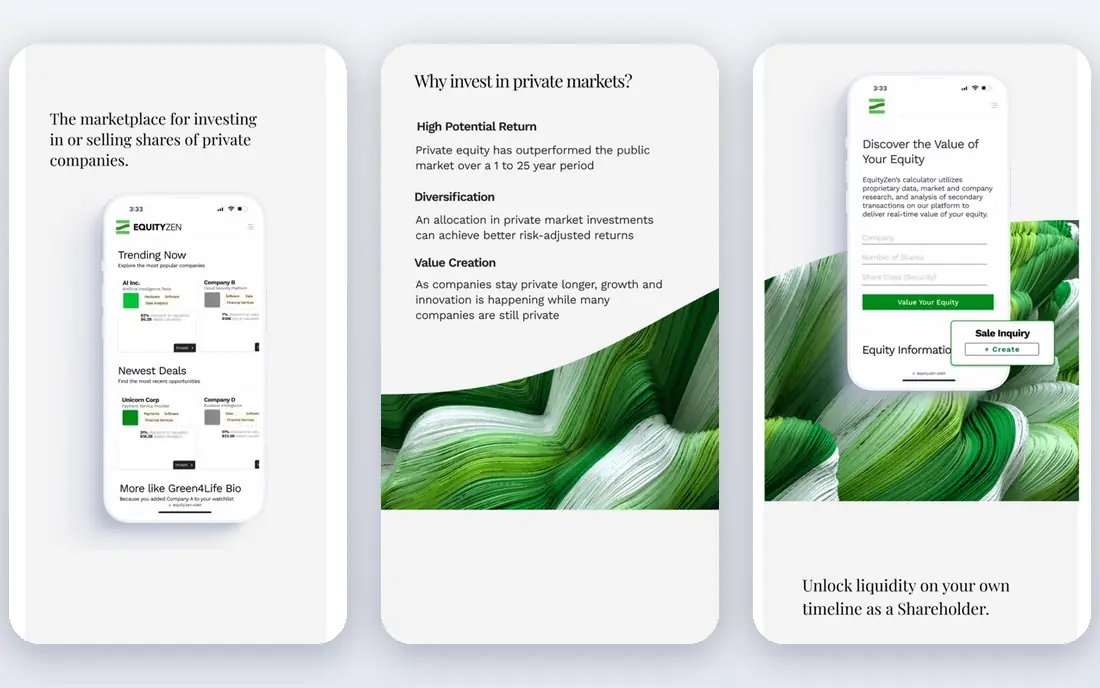
EquityZen gives accredited investors access to shares in private companies through funds and single-company structures, with a standard minimum often around 10,000 dollars and select deals from 5,000 dollars. Its investor fee was reported at 2.5 percent up to 1 million dollars invested after the Morgan Stanley acquisition closed in early 2026. That lower entry point makes it a practical first look for accredited investors with smaller checks.
The honest risk stays the same as any secondary deal. Shares may not list for years, or may never list, and resale options are limited and subject to company approval. Read the offering documents for each deal, confirm fees and minimums before committing, and treat any single private position as a small share of a wider portfolio.
- Lower typical minimums than many secondary rivals
- Single-company funds and direct deals
- Now part of Morgan Stanley
- Accredited investors only for secondary deals
- Holdings are illiquid with limited resale
- Fees apply on top of the investment
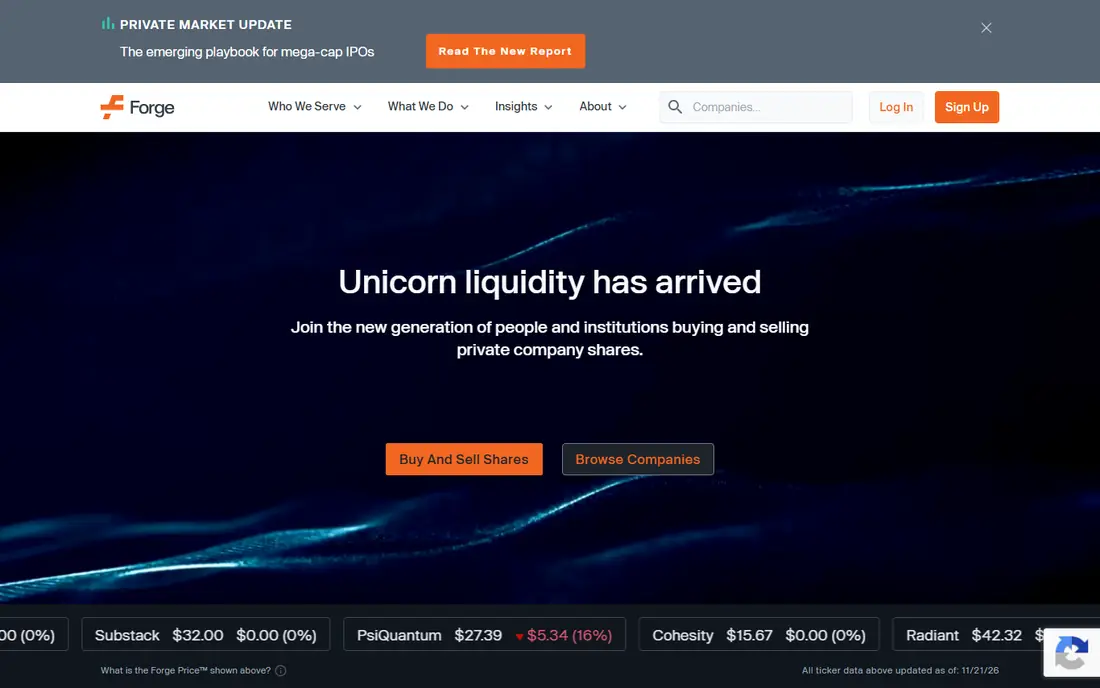
Forge operates a large secondary marketplace for private shares, with a guided service model that suits investors who want help through a complex transaction. Direct purchases often carry a high minimum, while select fund structures start lower. Forge also offers custody and data services, which appeal to investors and institutions tracking private holdings.
The drawback is entry cost and complexity. A high direct minimum puts many deals out of reach for smaller accredited investors, and fees of a few percent plus the spread between bid and ask prices affect net returns. Forge fits best when check size is large and a guided process matters more than the lowest fee.
- Broad inventory of well-known private companies
- Guided, relationship-led service
- Custody and valuation services
- Direct minimums are often around 100,000 dollars
- Accredited investors only
- Transaction fees plus bid-ask spread add cost
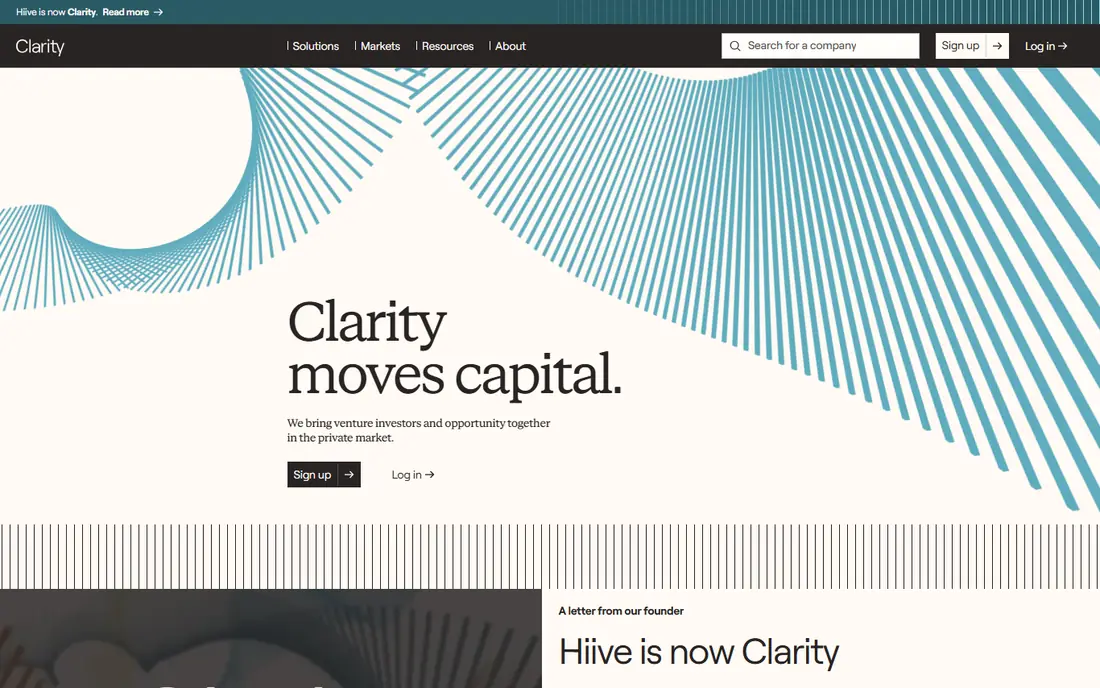
Hiive stands out for price discovery. Its order-book format shows bids and asks before you commit, which gives a clearer sense of what other buyers and sellers will pay than a single quoted price. Many deals aim for direct share transfers rather than fund interests, which some investors prefer for clarity of ownership.
The limit is access and completion risk. Hiive restricts access to accredited investors, some fund structures require qualified purchaser status, and a company can refuse a transfer or exercise a right of first refusal. A visible price is not a completed trade, so confirm eligibility, minimums and transfer terms for each listing.
- Visible bid and ask pricing through a live order book
- Direct share transfers in many deals
- Broker-operated marketplace
- Accredited investors only, with higher bars for some fund structures
- Minimums vary and are often higher
- Company approval can block a trade
StartEngine is a regulated crowdfunding portal where companies raise capital from a broad investor base, often with minimums around 100 dollars. That low entry point opens startup investing to people who do not meet accredited investor tests, and the platform lists a wide range of early-stage companies across sectors.
The risk is stark. Early-stage startups fail at a high rate, shares are illiquid, and resale is often restricted for twelve months. StartEngine is best treated as a way to back early companies with money you can afford to lose, after reading the offering circular and understanding dilution, valuation and exit limits.
- Open to a wider audience through regulated offerings
- Low minimums on many deals
- Broad startup listings
- Early-stage risk is very high
- Holdings are illiquid with resale limits
- Many startups fail or return nothing
Wefunder follows a similar regulated crowdfunding model, with many offerings open at low minimums and a community feel around founder updates. Investors can browse campaigns, read disclosures and invest small amounts across several companies, which spreads a small budget across more bets than a single secondary deal.
The weakness is selection. Deal quality varies, information is thinner than public company filings, and most holdings will not produce a quick or certain return. Diversifying across many startups does not remove the risk that most of them fail, so position sizing and careful reading of disclosures matter more than enthusiasm for any one pitch.
- Low minimums on many offerings
- Founder stories and updates in one place
- Regulated crowdfunding structure
- Very high failure risk for early startups
- Illiquid holdings
- Deal quality varies widely
Republic curates offerings across startups, private companies and other private assets, with many deals open at low minimums. Its presentation and disclosure pages help investors compare terms, and the platform covers both retail crowdfunding and larger private placements for eligible investors.
The honest caveat is that curation is not a guarantee. A curated list still contains early-stage companies with high failure risk, illiquid securities and uncertain exits. Treat Republic as a discovery and access tool, not as a recommendation, and read each offering document before investing.
- Curated deal flow across startups and private assets
- Low minimums on many offerings
- Clear offering documents
- Holdings are illiquid
- Early-stage and private risk remains high
- Curated does not mean vetted for returns
EquityBee solves a different problem from the marketplaces above. Startup employees often hold options they cannot afford to exercise, and EquityBee connects them with funding to exercise and hold shares, in exchange for a share of future proceeds under deal terms. That helps employees who believe in their company but lack cash at exercise time.
The limit is scope and risk. EquityBee is not a place for outside investors to browse and buy shares in any private company, and the employee still faces the risk that the company never lists or lists below expectations. Employees should compare funding terms with tax advice and their own cash position before signing.
- Helps employees fund option exercises
- Connects employees with investors
- Focused on a real employee problem
- Not a general share marketplace for outside buyers
- Terms and costs vary by deal
- Employee equity outcomes stay uncertain
Fundrise Innovation Fund pools investor money into a diversified portfolio of private technology companies, rather than a single-company bet. That diversification lowers single-company risk, and the low minimum makes private tech exposure accessible without accredited status. Redemptions follow periodic terms set by the fund, not daily market trading.
The weakness is liquidity and valuation. Investors cannot sell daily like a listed stock, and fund holdings are valued under private market methods that can lag or differ from a future listing price. The fund suits patient investors who want broad private tech exposure and accept illiquidity, not traders seeking a quick pre-IPO flip.
- Diversified private tech exposure in one fund
- Low minimum reported at 10 dollars
- Open to a wider audience than secondary marketplaces
- Periodic redemption terms, not daily trading
- Fund value can fall
- Private tech valuations are uncertain
How we picked these
We compared official feature pages, fee and eligibility pages, offering structures, privacy policies and public reviews for each platform. We kept only platforms that are genuinely open to eligible investors today, that explain their structure plainly, and that fit either secondary trading, regulated crowdfunding, employee option funding or diversified fund exposure. We did not list platforms reported closed or bankrupt in 2026 as live options, and we did not promise returns for any platform. This is general information only, not financial advice.
What to check before you invest
Start with eligibility. Secondary marketplaces generally require accredited investor status, meaning income above 200,000 dollars a year, or 300,000 dollars jointly, in each of the prior two years, or net worth above 1 million dollars excluding a primary residence. Some fund structures require the higher qualified purchaser bar. Crowdfunding portals and diversified funds have wider eligibility, but that wider access does not lower the underlying risk.
Next, read the deal documents in full. Confirm the minimum, the fee, what you actually hold, whether the company can block a transfer, how long resale is restricted, and what happens if the company never lists. Ask about tax treatment with a professional, since private share sales and option exercises carry tax rules that vary by situation. Finally, size any private position as money you can leave untouched for years and afford to lose, and keep it small beside liquid, diversified holdings.
Frequently asked questions
Do I need to be an accredited investor to invest pre-IPO?
For secondary marketplaces like EquityZen, Forge and Hiive, generally yes. Accredited status usually means income above 200,000 dollars a year, or 300,000 dollars jointly, in each of the prior two years, or net worth above 1 million dollars excluding a primary residence. Regulated crowdfunding portals and diversified funds offer wider eligibility, with their own limits and risks.
What is the minimum investment on a pre-IPO platform?
Minimums vary widely. EquityZen often lists a standard minimum around 10,000 dollars with select deals from 5,000 dollars, Forge direct deals often start much higher, and crowdfunding portals often start around 100 dollars. Fund minimums can be far lower. Always confirm the minimum for the specific deal, since it changes by offering.
Can I sell pre-IPO shares easily?
Usually no. Private shares are illiquid, resale is often restricted, and company approval or a right of first refusal can block a sale. Secondary marketplaces offer some resale routes, but timing and price are uncertain. Treat pre-IPO money as locked up for years, and do not invest funds you may need soon.
Are pre-IPO returns guaranteed?
No. Private companies can delay, cancel or avoid a listing, valuations can fall, and early-stage companies can fail outright. Fees, spreads and taxes further affect net outcomes. No platform can promise a return, and any marketing that implies one should be treated with caution.
What is the difference between a secondary marketplace and crowdfunding?
A secondary marketplace sells existing private shares from current holders, usually to accredited investors. Crowdfunding portals sell new securities issued by early-stage companies, often to a wider audience at low minimums. Secondary deals involve established private companies, while crowdfunding deals involve earlier, riskier startups.
Sources
See where you really rank - block by block
ProMapRanker scans Google Maps across a grid of your service area. Simple monthly plans from $19, white-label on every plan.
Start freeKeep reading
 worlds best local seo company
8 Worlds Best Local SEO Companies for Map Pack Growth in 2026
Compare the worlds best local seo company options for Google Business Profile work, citations, reviews, and multi-location rankings and reporting in 2026.
Read → world's best web hosting company
World's Best Web Hosting Company in 2026
Searching for the world's best web hosting company? We compared 10 hosts on price, renewal rates, speed, and support to help you choose well today in 2026.
Read → who's got the best nanny tax services
Who's Got the Best Nanny Tax Services in 2026
We answer who's got the best nanny tax services, comparing full filing, back taxes, software, and pricing so families can handle nanny taxes correctly.
Read →