 ProMapRanker
Best Practice Management Software in 2026


Solo therapists wanting one complete system · Pricing starts at: $49 per month
Key takeaways
- SimplePractice and TherapyNotes are the strongest all-round picks for US therapy and counseling practices that bill insurance.
- Jane and Cliniko suit multi-discipline clinics that need booking, charting and payments in one place.
- TheraNest, Carepatron and Power Diary keep costs lower for solo practitioners and small teams.
- Practice Better fits nutrition, coaching and program-led practices better than talk-therapy-only clinics.
- Insurance billing, claim fees and add-ons change the real monthly cost, so check the pricing page before you commit.
Quick comparison
| Pick | Great for | Pricing starts at | Free tier | |
|---|---|---|---|---|
| SimplePractice | Solo therapists wanting one complete system | $49 per month | Free trial (30 days) | Visit |
 TherapyNotes | Insurance-heavy therapy practices | $69 per month | Free trial (30 days) | Visit |
 Jane | Multi-discipline clinics | See website | Free trial (30 days) | Visit |
 Cliniko | Scheduling-first clinics | $45 per month | Free trial (30 days) | Visit |
 TheraNest | Budget-conscious small practices | $29 per month | Free trial (21 days) | Visit |
 Practice Better | Nutrition, coaching and program-led practices | $35 per month | Free trial (14 days) | Visit |
 Carepatron | Cost-conscious solo practices | Free | Yes | Visit |
 Power Diary | Lean practices wanting a low monthly bill | $9.50 per month | Free trial (14 days) | Visit |
The best practice management software
A good practice system should handle booking, notes, billing and client messages without forcing you to juggle five separate tools. The eight platforms below cover therapy, counseling, allied health and wellness practices, and we compared them on scheduling, documentation, billing, telehealth and price.

SimplePractice is our pick for most solo therapists because it covers the full daily workflow in one place. You can take bookings, write notes, run telehealth sessions, send intake forms and bill clients without switching apps. The client portal keeps messages and documents in one secure spot, which cuts down on email back-and-forth. For a private-pay practice, the Starter plan covers the basics well.
The catch is the total cost once you add the extras most busy practices need. Appointment reminders, insurance claim filing and group features sit on higher tiers or carry extra fees, and the AI note taker and e-prescribing tools are paid add-ons. If you bill insurance often, the Essential plan at $79 per month is usually the more practical starting point. Still, the breadth and polish make it a safe default choice.
- Scheduling, notes, telehealth, billing and a client portal in one system
- Polished interface
- Unlimited clients on paid plans
- Add-ons for AI notes and e-prescribing raise the bill
- Insurance claim fees apply on top of the plan price

TherapyNotes is built around the paperwork that insurance-heavy practices live with every day. Its note templates are detailed, its billing workflow is direct, and claims and electronic remittance advice are part of the core system rather than an afterthought. Schedulers, supervisors and billing accounts can be added without a clinician seat, which helps larger practices keep admin costs in check.
The trade-off is style and flexibility. The design is more functional than modern, and practices that want slick client-facing pages or program-based care may find it plain. Text and phone reminders also carry a small per-message fee, while email reminders are free. If most of your income runs through insurance, though, the billing depth and support make TherapyNotes hard to beat.
- Built-in insurance billing with low per-claim fees
- Strong note templates
- Free phone support
- Interface feels dated next to newer rivals
- Group pricing adds up with each clinician
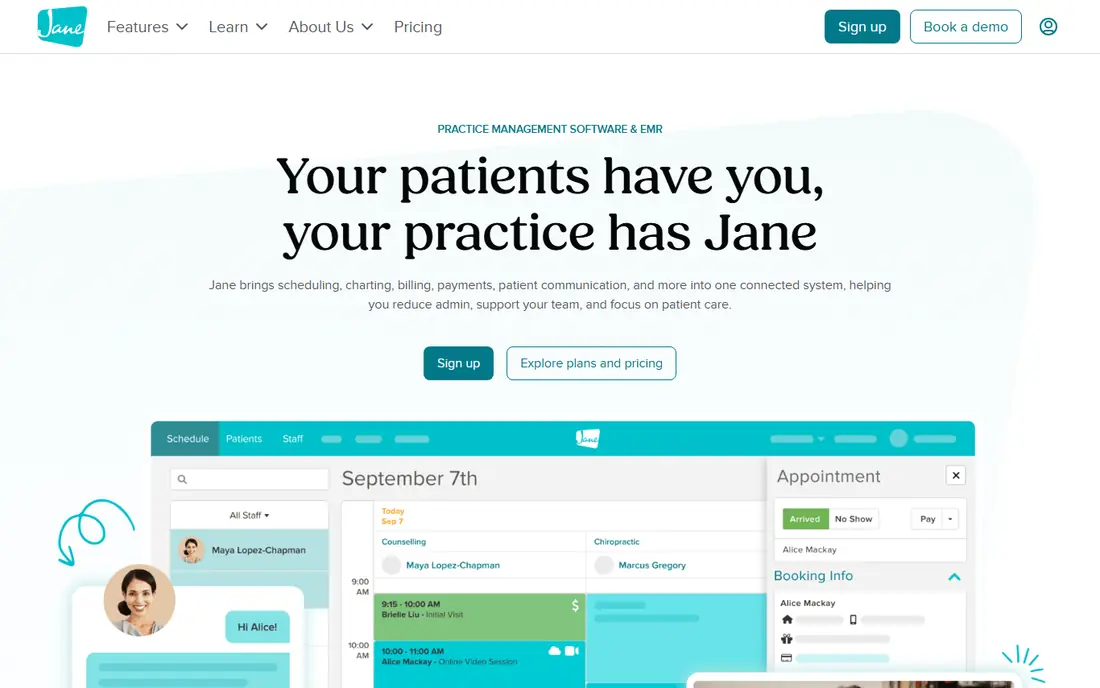
Jane works well for clinics where physiotherapists, massage therapists, counselors and other practitioners share one diary. Booking, charting, intake forms, payments and video visits sit together, and the interface is easy for front-desk staff to learn. Multi-location practices can manage rooms, practitioners and schedules without a separate system for each site.
US practices should read the billing details closely. Jane is not an insurance-first system in the US in the same way TherapyNotes is, and insurance claims involve an add-on plus a separate claims account. That does not rule it out, but it does change the cost and setup. For cash-pay and mixed clinics that prize smooth booking, Jane is one of the most pleasant options here.
- Clean booking and charting for many disciplines
- Online payments and telehealth included
- Good multi-location support
- Published pricing varies by plan and practitioner count, so budgeting needs a quote check
- US insurance billing needs an add-on and a separate claims account
Cliniko keeps the focus on the diary, the patient record and the bill, and it does those three jobs with very little clutter. Clinics can book appointments, track patient history, send reminders and run reports from one calm dashboard. Because pricing is based on practitioner count rather than per user, reception staff can use the system without adding a seat for every person.
The limit shows up when a practice needs deep insurance billing or detailed clinical notes. Cliniko covers invoicing and payments, but US insurance workflows are not its strength. Practices that mostly take direct payment, or that work across countries, will get more from it than a US insurance-heavy therapy practice. For a scheduling-first clinic, that simplicity is a feature, not a flaw.
- Clear scheduling and patient records
- Unlimited users on paid plans
- Works well for international clinics
- Billing and insurance features are lighter than therapy-specific systems
- Fewer built-in clinical templates
TheraNest gives small therapy practices a complete system at a price that undercuts most rivals. The Essentials plan covers scheduling, documentation, billing and a client portal, which is enough for many solo practitioners and small groups starting out. The layout is straightforward, so new users can get running without a long training period.
You do give up some depth. Reporting, billing extras and advanced features are thinner than SimplePractice or TherapyNotes, and practices that grow into complex insurance work may outgrow it. For a solo therapist watching costs, or a small group that needs the basics done well, TheraNest is a sensible place to start. You can always move later if your billing needs become more complex.
- Low entry price for therapists
- Scheduling, notes and billing in one place
- Client portal included
- Smaller feature set than the category leaders
- Some advanced billing tools sit on higher tiers
Practice Better stands out because it is built for practitioners who sell programs, not just sessions. Nutritionists, health coaches and wellness practitioners can run fixed-date programs, self-paced courses, protocols and packages alongside one-to-one appointments. The client portal, forms and messaging support that model well, and the free Sprout tier lets a tiny practice test the system with a few clients.
Traditional therapy practices may find the note-taking and insurance side less complete than TherapyNotes or SimplePractice. Claims run through a separate claims account that you pay for on top of the plan. If your work is program-led, though, Practice Better fits better than any general therapy system here, and its pricing stays fair as you add clients.
- Programs, courses and protocols built in
- Flexible client portal
- Free tier for very small caseloads
- Insurance claims need a separate claims account
- Less suited to traditional talk-therapy notes
Carepatron is the strongest free starting point on this list for a solo practitioner. The free tier covers scheduling, charting, telehealth and a client portal, and paid tiers add an AI scribe and more capacity at prices that stay below the big names. For a part-time practice or a new clinic testing its workflow, that low barrier matters.
The catch is the same one that applies to several lower-cost options: US insurance claims are handled through a separate claims account rather than built in. Integrations are also fewer than SimplePractice offers, so practices with a long list of connected tools should check compatibility first. If you mostly take direct payment and want to keep costs down, Carepatron delivers a lot for very little money.
- Free tier for solo use
- Scheduling, charting, telehealth and AI scribe tools
- Client portal included
- Insurance claims run through a separate claims account
- Smaller company with a thinner integration list
Power Diary is for practices that want a tidy diary and client records without paying for features they will never use. Booking, client management, reminders and invoicing are covered, and the interface stays simple for both staff and clients. Small allied health clinics, especially outside the US insurance system, often find it is all they need.
The low price comes with limits. Notes, billing and automation are less developed than in therapy-specific systems, and US insurance-heavy practices will likely need a separate billing step. If your practice is small, mostly direct-pay and booking-led, Power Diary is the cheapest credible option here. Larger or insurance-driven practices should look higher up this list.
- Very low starting price
- Clean booking and client records
- Good for small allied health clinics
- Clinical and billing depth is lighter than the leaders
- Fewer automation features on the cheapest tier
How we picked these
We compared official feature pages, pricing pages and public reviews for health and wellness practice systems, and we kept only platforms that are live, actively sold and genuinely built for professional practices. We favored systems that combine scheduling, documentation, billing and a client portal, and we noted where insurance billing needs a separate account or extra fees. Prices shown are starting prices from vendor and review sources checked in October 2026, and they can change with plan, practitioner count and add-ons.
What to check before you choose
Start with how you get paid. If most income runs through insurance, put billing first and shortlist TherapyNotes and SimplePractice, then confirm claim fees, eligibility checks and remittance support for your payers. If most clients pay directly, booking quality, reminders and payments matter more, and Jane, Cliniko, Carepatron or Power Diary may serve you better at a lower cost.
Next, test the daily workflow with a trial. Book an appointment, write a note, send an intake form and run a telehealth session, and see how many clicks each task takes. Check whether your state and payer rules are supported, whether the vendor signs a business associate agreement, and how client data can be exported if you leave. A system that feels easy on day one is the one your team will actually keep using.
Finally, model the full monthly cost, not just the headline plan price. Add clinician seats, claim fees, reminder fees, card processing and any AI or prescribing add-ons, then compare that total across two or three finalists. The cheapest plan on paper is not always the cheapest system once your real caseload is loaded in.
Frequently asked questions
What is the best practice management software for a solo therapist?
SimplePractice is our pick for most solo therapists because it covers scheduling, notes, telehealth, billing and a client portal in one system. TherapyNotes is the better choice if you bill insurance heavily and want deeper claims support. Carepatron and TheraNest are worth a look if budget is the main constraint.
What are the best practice management platforms for a multi-discipline clinic?
Jane and Cliniko are the strongest multi-discipline picks here. Jane offers clean booking, charting and payments across many disciplines, while Cliniko keeps scheduling and patient records simple and lets unlimited staff use the system. Both handle multiple locations, which matters as a clinic grows.
Do these platforms handle insurance billing?
Some do, and some need help. TherapyNotes and SimplePractice have built-in insurance billing, though claim fees apply. Jane, Practice Better and Carepatron use a separate claims account for US electronic claims, so confirm that cost before you sign. Always check payer support for your own practice.
Is there a free practice management platform?
Carepatron offers a free tier for solo use, and Practice Better has a free tier for a very small caseload. Free tiers usually limit clients, features or support, so they suit part-time practices better than busy clinics. Paid plans add capacity, automation and support.
How much should a small practice expect to pay?
Starting prices here run from free to $69 per month for the first plan, but the real bill depends on clinician seats, claim fees and add-ons. A solo therapist often lands between $29 and $99 per month before processing fees. Model your full caseload before choosing, and use the free trial to confirm the fit.
Sources
See where you really rank - block by block
ProMapRanker scans Google Maps across a grid of your service area. Simple monthly plans from $19, white-label on every plan.
Start freeKeep reading
 zoho inventory alternatives
6 Alternatives to Zoho Inventory, Compared on Price and Fit
Zoho Inventory alternatives: 6 tools compared on price, free plans and fit. Katana leads the list for manufacturers. Fit and flaws are laid out for each entry.
Read → zoho crm alternatives
Best Zoho CRM Alternatives (2026)
Need Zoho CRM alternatives? We compare 7 tools on cost, free access and who each suits. Every pick gets a straight assessment. Built for quick decisions.
Read → zelle alternatives
Best Zelle Alternatives in 2026
Compare the best Zelle alternatives for sending money to friends, paying sellers and moving funds abroad, with honest notes on fees, speed and safety in 2026.
Read →