 ProMapRanker
Best Portfolio Software in 2026


Large enterprises and transformation planning · Pricing starts at: See website
Key takeaways
- This article covers application portfolio management software for IT and business portfolios, not investment portfolios or artist portfolios.
- SAP LeanIX is our pick for large enterprises that want clear application visibility and transformation planning, while ServiceNow APM suits teams already using ServiceNow.
- Ardoq suits teams that want flexible, visual enterprise architecture modeling, while Alfabet suits structured portfolio rationalization at scale.
- Planview Portfolios suits organizations that also need project and work portfolio management alongside application data.
- Budget for data cleanup and ownership, since portfolio tools only help when application, owner and lifecycle data are kept current.
Quick comparison
| Pick | Great for | Pricing starts at | Free tier | |
|---|---|---|---|---|
| SAP LeanIX | Large enterprises and transformation planning | See website | Free trial | Visit |
 ServiceNow APM | Teams already using ServiceNow | See website | No | Visit |
 Ardoq | Flexible visual architecture modeling | See website | Free trial | Visit |
 Alfabet | Structured rationalization at scale | See website | Free trial | Visit |
 Planview Portfolios | Project plus application portfolios | See website | No | Visit |
 Bizzdesign | Strategy and transformation modeling | See website | Free trial | Visit |
 MEGA HOPEX | Governance and compliance-focused portfolios | See website | No | Visit |
 Avolution ABACUS | Scenario modeling and reporting depth | See website | Free trial | Visit |
 CAST Highlight | Fast application health and cloud readiness insight | See website | Yes | Visit |
The best portfolio software
Application portfolio management software helps IT and business leaders see every application in use, understand what each one costs and supports, and decide which to keep, modernize or retire. We use portfolio software here in that IT sense, not for investment holdings or creative work. We compared official product pages, pricing pages and public product descriptions, and focused on inventory visibility, lifecycle tracking, cost insight, dependencies and planning tools.
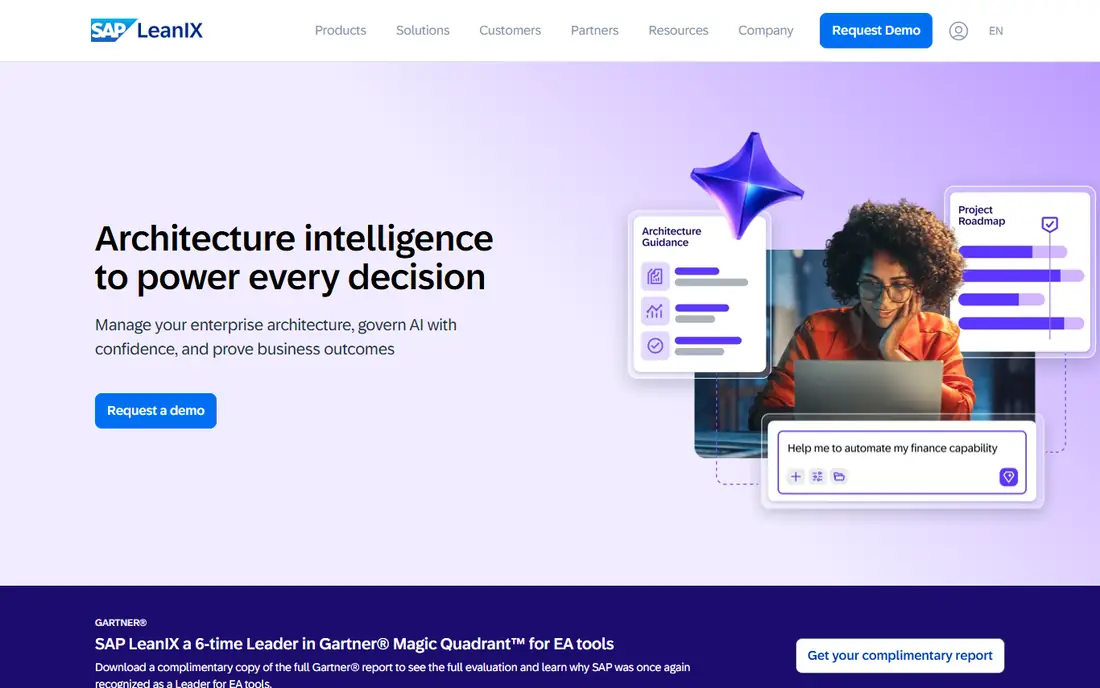
SAP LeanIX, now part of SAP, is an enterprise architecture platform with strong application portfolio management features. It gives a single view of applications, business capabilities, technologies and dependencies, tracks lifecycle stages and obsolescence risk, and supports transformation roadmaps. Surveys, dashboards and AI-assisted inventory features help teams keep data current without manual spreadsheets.
Pricing is custom, and smaller teams may find the platform more than they need for a simple inventory. LeanIX also works best when organizations commit to regular data updates and ownership. For large enterprises planning ERP modernization, cloud moves or application rationalization, LeanIX is a leading choice.
- Clear application inventory and visualization
- Lifecycle and risk tracking
- Broad integrations
- Custom pricing
- Can feel heavy for small IT teams
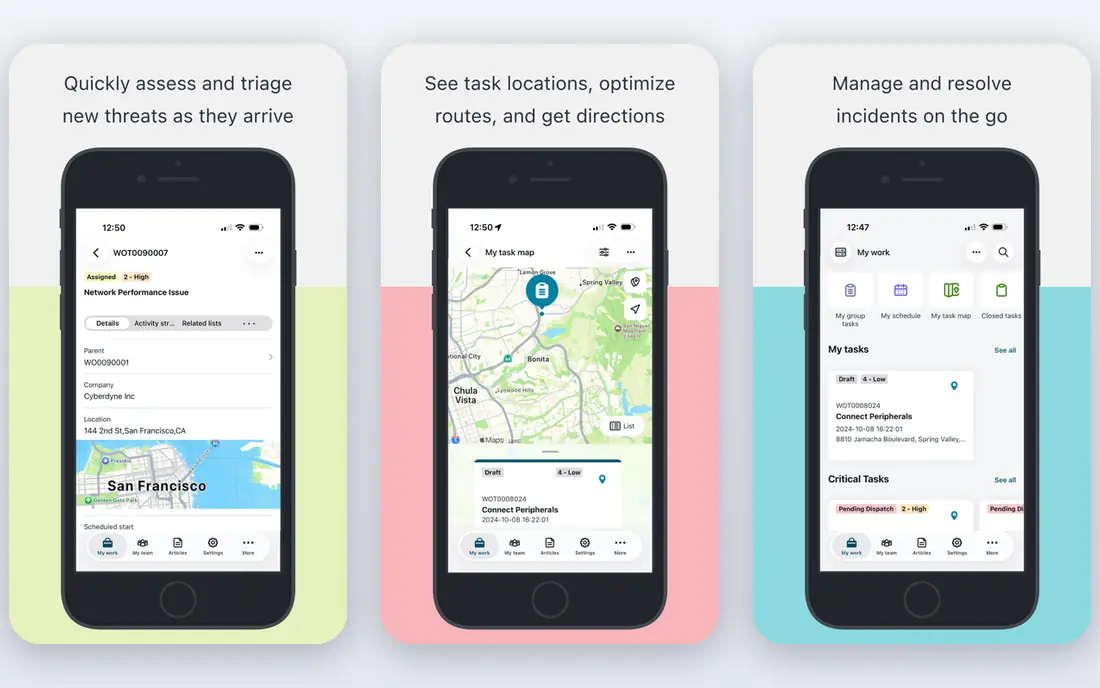
ServiceNow Application Portfolio Management sits inside ServiceNow Strategic Portfolio Management and connects directly to ITSM data and the configuration management database. That integration helps teams link applications to incidents, services, costs and business capabilities without reconciling separate systems. Scoring, rationalization workflows and planning views support keep, modernize or retire decisions.
The main limits are cost and ecosystem fit. ServiceNow APM pricing is custom, and value is highest for organizations already using ServiceNow for service management. Smaller teams without ServiceNow will likely find a standalone tool cheaper and faster. For ServiceNow customers, APM is the natural portfolio extension.
- Native ITSM and CMDB integration
- Application scoring and rationalization workflows
- Familiar ServiceNow interface
- Custom pricing
- High cost for smaller organizations
- Best value inside ServiceNow
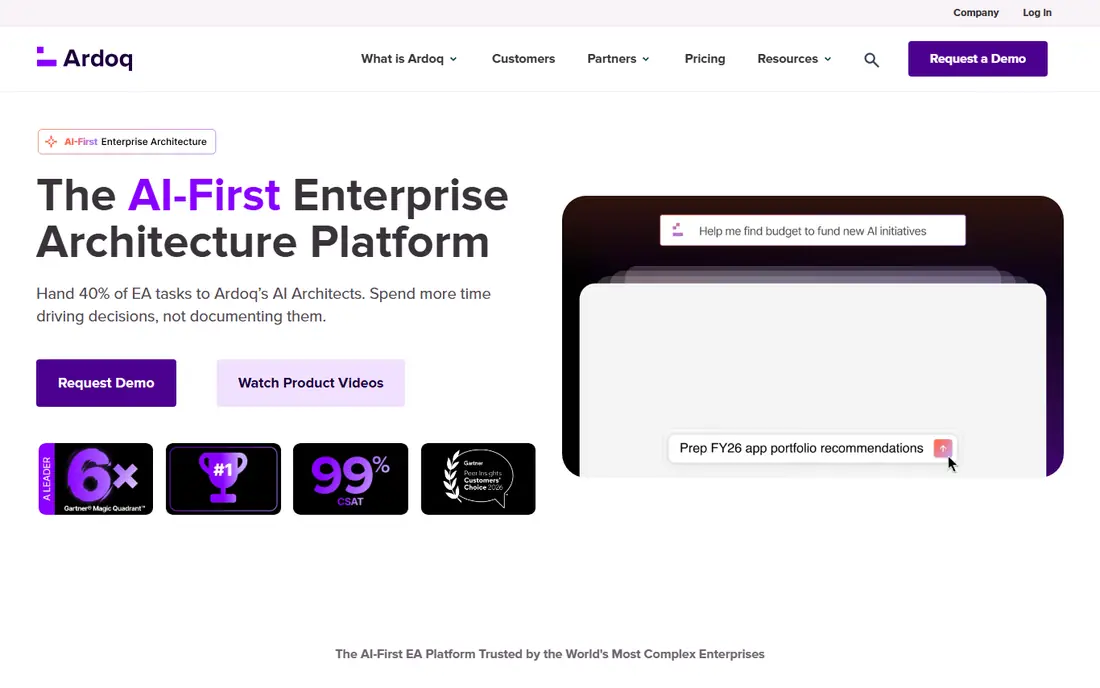
Ardoq is an enterprise architecture platform with strong application portfolio features. It lets teams model applications, capabilities, technologies and dependencies, then explore that model through interactive diagrams, timelines and dashboards. Collaboration features help business and IT stakeholders review the same portfolio view, which supports transformation discussions.
Ardoq pricing is custom, and advanced modeling takes learning time, especially for teams new to enterprise architecture. It is also less structured than Alfabet for very formal rationalization programs. For teams that value visual exploration and flexible modeling, Ardoq is a strong choice.
- Interactive visualizations
- Flexible data modeling
- Good collaboration for architecture teams
- Custom pricing
- Learning curve for advanced modeling
Alfabet, from Software AG, is a long-standing enterprise architecture and IT portfolio platform. It offers a rich meta-model for applications, projects, technologies and business capabilities, with analysis for rationalization, strategy alignment, risk, cost and cloud planning. Stakeholder-specific views and roadmaps help different teams use the same portfolio data for their own decisions.
Alfabet pricing is custom, and the platform requires training and governance discipline to use well. Smaller teams may find it more structured than they need. For large organizations running formal rationalization programs, Alfabet is one of the most purpose-built portfolio tools available.
- Rich portfolio meta-model
- Lifecycle, cost and risk analysis
- Strong roadmapping
- Custom pricing
- Requires training and governance discipline
Planview Portfolios helps organizations manage work, projects and applications together, so portfolio decisions consider delivery capacity, budgets and strategy at the same time. Application data can be linked to projects, roadmaps and financial plans, which suits organizations that fund transformation through project portfolios. Analytics and reporting support executive planning.
Implementation can be complex, and pricing is custom, so smaller IT teams may prefer a focused APM tool. Planview also works best when project and portfolio governance are already mature. For organizations that need application and project portfolios in one planning system, Planview is a strong enterprise option.
- Combines project, product and application portfolios
- Strong analytics
- Enterprise planning depth
- Custom pricing
- Complex implementation for larger deployments
Bizzdesign, formerly known for Horizzon, is an enterprise architecture platform with application portfolio management features. It supports standard modeling frameworks, strategy alignment and transformation planning, with views that connect business strategy to applications and technology. That structure suits organizations running formal digital transformation programs.
Pricing is custom and typically enterprise-level, and modeling takes training. Smaller teams that only need an application inventory may find it heavy. For organizations that want architecture modeling and portfolio management in one governed platform, Bizzdesign is a credible choice.
- Strong modeling frameworks
- Strategy-to-execution views
- Transformation roadmaps
- Custom pricing
- Expensive for smaller businesses
- Learning curve for modeling
MEGA HOPEX is an enterprise architecture and governance platform with IT portfolio management features. It suits organizations that need strong compliance, risk and governance controls around their application portfolio, with a shared repository for architecture, processes and risks. Detailed reporting supports audit and regulatory review.
HOPEX pricing is custom, and new users face a learning curve, especially for advanced modeling and governance workflows. Smaller teams may find lighter tools faster to adopt. For governance and compliance-focused enterprises, HOPEX offers depth that simpler inventory tools do not match.
- Strong governance, risk and compliance features
- Integrated architecture repository
- Detailed reporting
- Custom pricing
- Learning curve for new users
Avolution ABACUS is an enterprise architecture tool with application portfolio management features, known for scenario modeling and reporting depth. Teams can model current and future portfolios, test what-if scenarios for rationalization or cloud moves, and present results through customizable dashboards and reports. That analytical depth suits architecture teams that advise executives on transformation choices.
ABACUS pricing is custom, and effective use needs modeling skill and data discipline. It is less of a simple inventory tool than CAST Highlight, and smaller teams may need training to get full value. For teams that need scenario analysis and executive-ready reporting, ABACUS is a strong specialist.
- Strong scenario modeling and analytics
- Flexible reporting
- Good visualization options
- Custom pricing
- Setup and modeling skill needed
CAST Highlight offers a faster, more focused starting point than full enterprise architecture platforms. It analyzes applications automatically to give insight into software health, technical debt, cloud readiness and risk, which helps teams prioritize modernization without a long modeling project. A free version is available, with premium features for deeper analysis and portfolio views.
Highlight is not a full portfolio governance platform. It offers less depth than LeanIX, Alfabet or ServiceNow APM for lifecycle management, cost planning and enterprise governance workflows. For teams that need a quick, evidence-based view of which applications need attention first, CAST Highlight is a useful and low-cost entry point, and it can complement a fuller portfolio tool later.
- Fast automated application analysis
- Cloud readiness and health insights
- Free version available
- Less full portfolio governance than LeanIX or Alfabet
- Analysis depth varies by code and data access
How we picked these
We compared official product pages, pricing pages and public product descriptions, and kept only tools that currently offer application portfolio management or enterprise architecture features for IT portfolios. We included large enterprise platforms, visual modeling tools, governance specialists and a fast analysis tool, so different organization sizes and goals are covered. We did not claim hands-on testing, and where pricing is custom we wrote See website rather than guessing a rate. We also kept the scope plain: this article is about application portfolios, not investment or artist portfolios.
What to check before you choose
Start with the decision you need to make. A team planning cloud migration needs different data than a team cutting duplicate SaaS tools or preparing for an audit. List the applications in scope, the owners, the lifecycle stages and the cost data you already have, then check which tools can import and maintain that data without a manual rebuild every quarter.
Next, test inventory and lifecycle views with real data. Ask how the tool discovers applications, how it tracks versions and end-of-life dates, how dependencies are modeled, and how easily a business owner can update their own applications. A tool that only architects can update will fall out of date quickly.
Cost, risk and rationalization
Check how each tool handles application cost, usage, risk and business value scoring, since rationalization decisions need all four. Confirm whether cost data comes from integrations, manual entry or estimates, and how scores can be customized for your organization. Avoid tools that force a single scoring model that does not match how your business values applications.
Rollout and ownership
Assign an owner for the portfolio data and a regular review cycle, such as quarterly rationalization reviews. Pilot with one business domain, clean that data first, and expand only when owners are updating their applications reliably. Budget for implementation help and training, since enterprise portfolio tools need both to succeed.
Frequently asked questions
What is the best portfolio software for application portfolio management?
SAP LeanIX is a strong overall pick for large enterprises, while ServiceNow APM suits ServiceNow customers. Ardoq suits visual modeling teams, Alfabet suits structured rationalization, and CAST Highlight suits teams that need fast application insight first.
Is this article about investment portfolio software?
No. This article covers application portfolio management software for IT and business application portfolios. Investment portfolio tools for stocks and funds, and portfolio tools for artists and designers, are different categories with different features.
What is the best tool for application portfolio management on a budget?
CAST Highlight offers a free version for fast application analysis, which suits teams starting with limited budgets. For a fuller catalog and governance tool, teams should trial Ardoq or SAP LeanIX and compare quoted pricing against their application count and user needs.
How is application portfolio management different from IT asset management?
IT asset management tracks hardware, software licences and inventory details. Application portfolio management focuses on business value, lifecycle, cost, risk and dependencies, and on decisions to keep, modernize or retire applications. The two overlap on inventory data, but portfolio management adds planning and rationalization.
How long does it take to implement application portfolio software?
A focused tool such as CAST Highlight can give insight quickly, while full platforms such as SAP LeanIX, ServiceNow APM, Alfabet and Planview often take weeks or months for a full rollout. Time depends on application count, data quality, integrations and governance needs.
What data do I need before buying portfolio software?
Start with an application list, owners, business capabilities supported, lifecycle stages, costs and key dependencies. Clean data for one business domain first, then expand. Tools can help discover applications, but ownership and business value still need human input.
Sources
See where you really rank - block by block
ProMapRanker scans Google Maps across a grid of your service area. Simple monthly plans from $19, white-label on every plan.
Start freeKeep reading
 zoro.to alternatives
Best Zoro.to Alternatives in 2026
We compare the best zoro.to alternatives in 2026, listing only legal licensed anime streaming services, from Crunchyroll to free options for fans today.
Read → zip alternatives
Best Zip Alternatives in 2026
We compare the best zip alternatives for buy now, pay later in 2026, covering pay-in-4 plans, fees, spending limits, and credit reporting options today.
Read → yesware alternatives
Best Yesware Alternatives in 2026
Compare the best yesware alternatives for sales email tracking, templates, and sequences, with current pricing and honest tradeoffs for small sales teams.
Read →