 ProMapRanker
Best Portfolio Management Software for Advisors in 2026


All-in-one RIA platform · Pricing starts at: See website
Key takeaways
- Orion and Envestnet Tamarac suit RIAs that want portfolio accounting, reporting, billing, and trading in one platform.
- Black Diamond suits firms that want strong client reporting inside the wider SS&C technology stack.
- Addepar, Masttro, and FundCount fit family offices and firms with complex alternatives and multi-entity portfolios.
- Every platform here sells on quote with implementation work, so budget for onboarding time as well as license cost.
Quick comparison
| Pick | Great for | Pricing starts at | Free tier | |
|---|---|---|---|---|
| Orion Advisor Technology | All-in-one RIA platform | See website | No | Visit |
 SS&C Black Diamond | Client reporting and analytics | See website | No | Visit |
 Addepar | Complex and alternative portfolios | See website | No | Visit |
 Envestnet Tamarac | Integrated RIA desktop | See website | No | Visit |
 SS&C Advent | Institutional portfolio accounting | See website | No | Visit |
 Advyzon | Growing RIAs wanting value | See website | No | Visit |
 FinFolio | Customizable all-in-one back office | See website | No | Visit |
 AssetBook | Small to mid-size RIAs | See website | No | Visit |
 FundCount | General-ledger portfolio accounting | See website | No | Visit |
 Masttro | Family offices and UHNW clients | See website | No | Visit |
The best portfolio management software for advisors
This article is general information only, not financial advice, and it does not promise investment returns. We compared advisor portfolio platforms on accounting, reporting, billing, trading, data aggregation, and client portals. The best fit depends on firm size, client complexity, and how much of the back office you want in one system.

Orion is the most commonly recommended all-in-one platform for mid-size to large RIAs. It handles portfolio accounting, performance reporting, billing automation, trading, and client portals, with integrations for planning and CRM tools. That breadth helps a firm replace several point tools with one vendor relationship.
The trade-off is implementation. Configuring accounting, billing, and reporting for your custodians and models takes time, and pricing is quote based. Firms that want a single advisor operating system, and can invest in onboarding, will get the most from Orion.
- Portfolio accounting plus reporting, billing, and trading
- Large integration library
- Client portals
- Quote-based pricing
- Breadth takes onboarding time
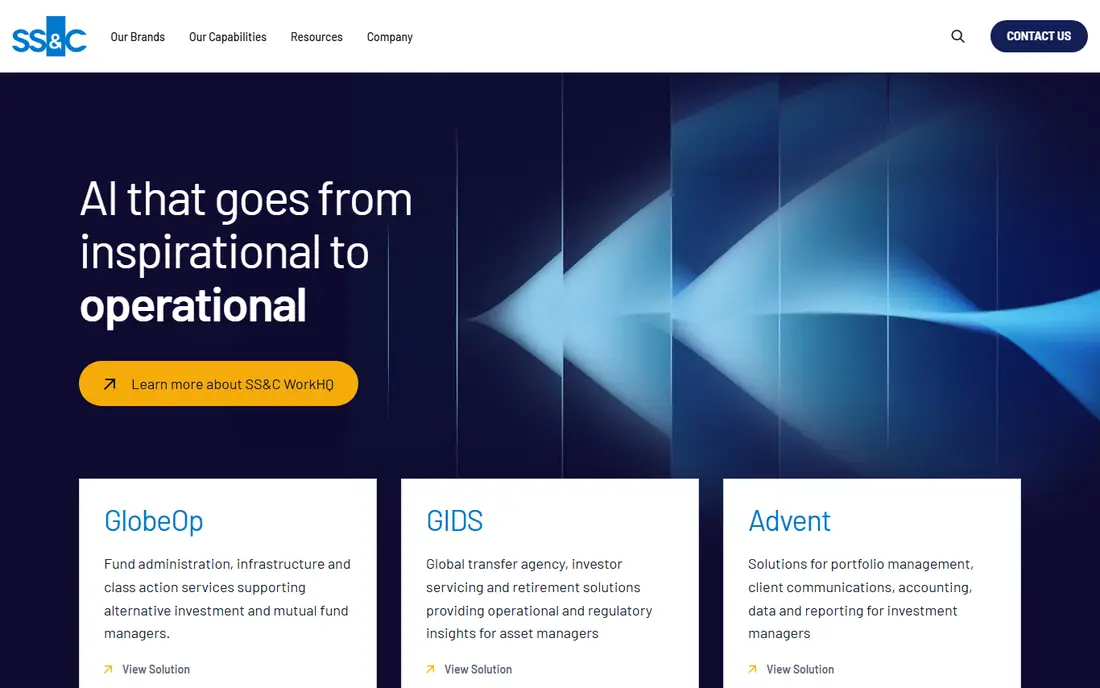
Black Diamond Wealth Platform, from SS&C, is known for portfolio analytics, accounting, and polished client reporting. It integrates with planning, CRM, and accounting tools, and it fits firms that already have a planning engine but need a dedicated portfolio layer. Hundreds of data sources support custodian aggregation for many firms.
Pricing is quote based, and firms that need full general-ledger accounting should check how Black Diamond pairs with their accounting system. For firms where client experience and reporting quality drive retention, Black Diamond is a strong pick.
- Strong reporting engine
- Portfolio analytics
- Client portal experience
- Quote-based pricing
- Accounting depth differs from a full general ledger
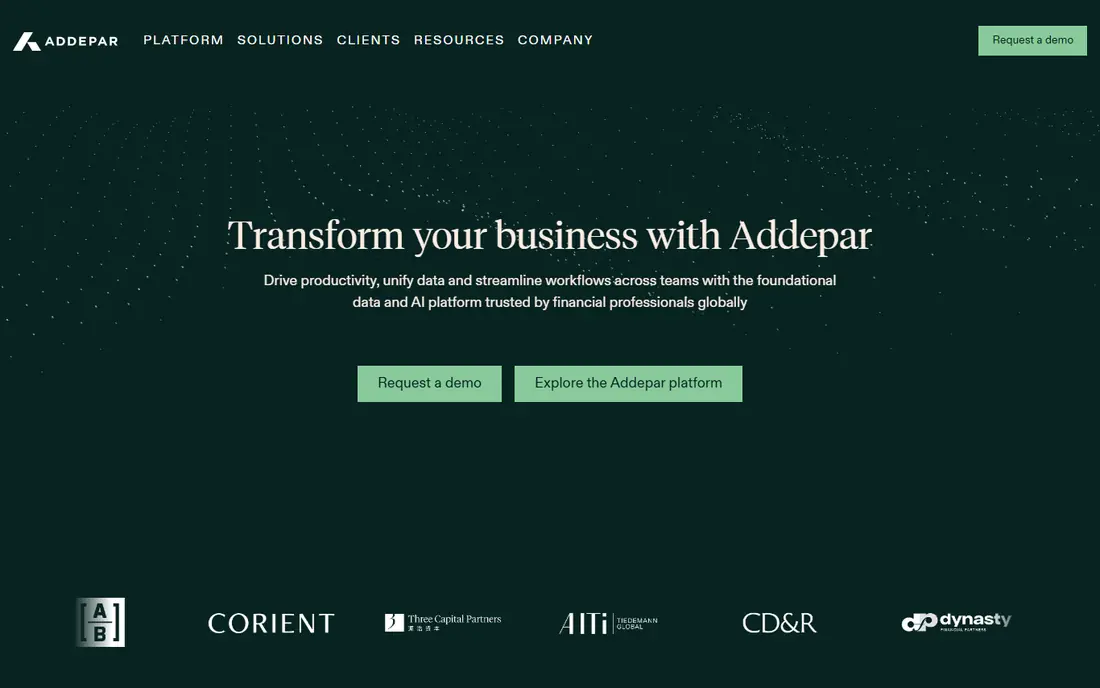
Addepar serves family offices and RIAs with complex, ultra-high-net-worth portfolios. It centralizes data across custodians, private investments, and alternative assets in household views, with analytics and reporting built for complex ownership. That aggregation strength matters when clients hold assets that standard RIA tools handle poorly.
Pricing is quote based and implementation can be involved, especially for alternatives data. Smaller RIAs with plain portfolios may find Addepar more than they need. For alternatives-heavy firms, Addepar offers depth that general advisor platforms lack.
- Multi-custodian aggregation
- Alternatives coverage
- Household-level views
- Quote-based pricing
- Implementation can be involved
Envestnet Tamarac combines portfolio management, rebalancing, reporting, billing, and CRM for independent advisory firms. Data aggregation across custodians helps multi-advisor teams keep client views current. The platform suits firms that want trading, reporting, and client management in one integrated desktop.
Pricing is quote based, often tied to assets and accounts. Firms outside the Envestnet ecosystem should check integration fit for planning and CRM tools. For larger RIAs that value an integrated desktop, Tamarac remains a core shortlist option.
- Portfolio management plus rebalancing and CRM
- Envestnet data aggregation
- Reporting
- Quote-based pricing
- Best value inside the Envestnet ecosystem
SS&C Advent covers institutional and advisor portfolio accounting through products such as APX and Geneva. It suits asset managers and larger firms that need fund-level accounting, performance measurement, and wide instrument coverage. SS&C support resources and a long track record add weight for institutional buyers.
Implementations are long and can be costly, and some parts of the platform feel older than newer RIA tools. For firms that need institutional accounting depth, Advent offers a proven system of record. Smaller RIAs will usually prefer Orion, Tamarac, or Advyzon.
- Long institutional track record
- APX and Geneva coverage
- Deep instrument support
- Legacy architecture in places
- Implementations are long
Advyzon gives growing RIAs portfolio management, reporting, billing, CRM, and client portal tools in one platform at a competitive value point. Its modern interface appeals to firms that find legacy platforms heavy, and its all-in-one design reduces the need for separate CRM and reporting tools. That combination suits firms moving from spreadsheets or a first-generation platform.
The ecosystem is smaller than Orion or SS&C, so check integrations for your custodians and planning tools. Pricing is quote based, so request a figure tied to accounts and assets. For growing RIAs that want breadth without enterprise complexity, Advyzon is worth a demo.
- Portfolio management plus CRM and reporting
- Competitive value
- Modern interface
- Pricing is quote based
- Smaller ecosystem than Orion or SS&C
FinFolio offers investment portfolio management for wealth managers and advisors, with performance reporting, rebalancing, trading, billing, and a customizable client portal. Cloud and on-premises deployment options give firms a choice that many newer platforms do not offer. Flexibility in reports and workflows helps firms shape the system around their process.
That flexibility needs setup time, and firms should test performance on their own account counts during a trial. Pricing is quote based. For firms that want a customizable back office with deployment choice, FinFolio is a practical option.
- Reporting, rebalancing, trading, and billing in one system
- Cloud or on-premises choice
- Customization takes setup time
- User reports note occasional performance issues
AssetBook Pulse serves small to mid-size RIAs that want portfolio management and reporting without enterprise complexity. Its interface is known for ease of use, and per-account pricing gives firms a predictable cost that scales with accounts rather than assets. A growing advisor program has helped newer firms start on the platform.
Advanced features trail enterprise leaders, so large firms with complex needs should test reporting and trading depth carefully. Pricing details vary by program, so confirm current terms. For smaller RIAs that value usability and service, AssetBook offers a clear fit.
- Intuitive interface
- Per-account pricing clarity
- Strong service reputation
- Fewer advanced features than enterprise platforms
- Reporting options need checking
FundCount takes an accountant's approach to portfolio software, posting every transaction to a double-entry general ledger so performance and holdings reports tie to the books. That precision matters for family offices, fund administrators, and investment partnerships that need financial statements, capital accounts, and tax forms alongside investment reporting. Multi-currency and multi-entity support add depth for complex structures.
The interface is utilitarian compared with Addepar or Masttro, and the integration catalog is narrower. Pricing is quote based. For firms that prioritize accounting precision over presentation polish, FundCount offers a distinct and valuable system of record.
- True double-entry general ledger
- Partnership accounting
- Multi-entity depth
- Interface is utilitarian
- Smaller integration catalog
Masttro is an all-in-one platform for single and multi-family offices, wealth managers, and larger institutions. It consolidates complex, multi-asset portfolios, including alternatives, into a unified view for advisors and clients. A mobile-first portal helps family members and advisors stay connected to net worth and documents.
Pricing is quote based and the platform targets larger clients, so small RIAs may find it out of reach. Implementation also needs care for complex entity structures. For family offices that need a polished, consolidated wealth view, Masttro is a strong contender.
- Multi-asset consolidation
- Family office workflows
- Mobile-first portal
- Quote-based pricing
- Enterprise focus
How we picked these
We compared official product pages, pricing pages, and public documentation for portfolio platforms used by advisors, RIAs, and family offices in 2026. We favored tools with live custodian aggregation, portfolio accounting, reporting, and billing or trading features, and we wrote See website where pricing is quote based. This list is general information only, not financial advice, and past platform features do not guarantee future results.
What to check before you choose
Start with your client mix. A firm with plain equity and bond portfolios needs different depth than a family office with partnerships, private funds, and multi-entity ownership. Test aggregation on your hardest clients, including alternatives and outside assets, before you judge reporting quality.
Next, test reconciliation and billing. Ask how the platform handles custodian breaks, corporate actions, and fee schedules, and how long morning reconciliation takes. Billing errors damage trust fast, so run a billing cycle on sample data during the trial. Check audit trails for performance calculations and report changes.
Finally, plan implementation as a project. Confirm data migration, custodian connections, report templates, and training timelines in writing. Ask for references from firms of similar size and complexity, and check data export options if you leave. A platform that fits your reporting needs but fails on reconciliation will cost more in staff time than it saves in license fees.
Frequently asked questions
What is portfolio management software for advisors?
It is software that ingests positions and transactions from custodians, reconciles them, calculates performance, generates client reports, and often handles billing and trading. Advisors use it as a system of record for client portfolios. Family office versions add entity, partnership, and alternatives accounting.
Is this article financial advice?
No. This article is general information about software features, not financial advice and not a recommendation to buy any investment. Investment decisions depend on individual goals, risk tolerance, and professional advice. No platform here promises returns.
How much does advisor portfolio software cost?
Most platforms here price by quote, tied to assets, accounts, or firm size, with implementation fees on top. Smaller platforms may offer per-account pricing, while enterprise platforms use asset-based models. Ask for a total that includes onboarding, data migration, and support.
Can one platform replace our CRM and planning tools?
Some platforms bundle CRM, billing, and portals, but many firms still pair a portfolio platform with separate planning and CRM tools. Orion and Tamarac bundle more than Black Diamond or Addepar. Check integrations before you assume one contract replaces your full stack.
How long does implementation take?
Timelines vary from weeks for small RIAs to months for large firms with complex custodians and alternatives. Data cleanup, report building, and staff training drive most of the timeline. Ask vendors for a phased plan with a go-live date tied to your reporting cycle.
What is the difference between portfolio accounting and portfolio reporting?
Portfolio accounting is the system of record that tracks positions, transactions, and cash, while reporting turns that record into client statements and performance views. Some platforms do both, while others pair a reporting layer with an external accounting book. Confirm which model fits your compliance needs.
Sources
See where you really rank - block by block
ProMapRanker scans Google Maps across a grid of your service area. Simple monthly plans from $19, white-label on every plan.
Start freeKeep reading
 zoro.to alternatives
Best Zoro.to Alternatives in 2026
We compare the best zoro.to alternatives in 2026, listing only legal licensed anime streaming services, from Crunchyroll to free options for fans today.
Read → zip alternatives
Best Zip Alternatives in 2026
We compare the best zip alternatives for buy now, pay later in 2026, covering pay-in-4 plans, fees, spending limits, and credit reporting options today.
Read → yesware alternatives
Best Yesware Alternatives in 2026
Compare the best yesware alternatives for sales email tracking, templates, and sequences, with current pricing and honest tradeoffs for small sales teams.
Read →