 ProMapRanker
Podcast Advertising Platform Buyer's Guide


Enterprise audio campaigns with measurement · Pricing starts at: See website
Direct answer
For enterprise audio campaigns with measurement, Triton Digital is where this list starts. Look at Targetspot for targeted digital audio campaigns across publishers, and at Podbean for low-minimum self-serve podcast campaigns. The remaining 3 options are covered below with prices and limits.
Key takeaways
- Top of the list is Triton Digital, which targets enterprise audio campaigns with measurement.
- For self-serve ads on Spotify podcasts and music, Spotify Ad Studio is worth a look.
- None of the 6 tools, from Triton Digital to Spotify Ad Studio, has a free plan, so budget for a subscription or use a trial.
- For Triton Digital, Targetspot and Acast, you have to request a quote because no starting price is shown.
- Podbean comes with a trade-off: inventory is restricted to Podbean-hosted presents.
Quick comparison
| Pick | Great for | Pricing starts at | Free tier | |
|---|---|---|---|---|
| Triton Digital | Enterprise audio campaigns with measurement | See website | No | Visit |
 Targetspot | Targeted digital audio campaigns across publishers | See website | No | Visit |
 Podbean | Low-minimum self-serve podcast campaigns | $200 minimum campaign budget | No | Visit |
 AudioGo | Straightforward self-serve audio ads for small firms | $250 minimum campaign budget | No | Visit |
 Acast | Scale across a global podcast marketplace | See website | No | Visit |
 Spotify Ad Studio | Self-serve ads on Spotify podcasts and music | $250 per campaign minimum | No | Visit |
The full podcast advertising platform list
ProMapRanker put together this guide to podcast advertising platform for readers who want a clear shortlist without reading every vendor page. It compares 6 tools on starting price, free plans, who each one suits and where each one falls short.
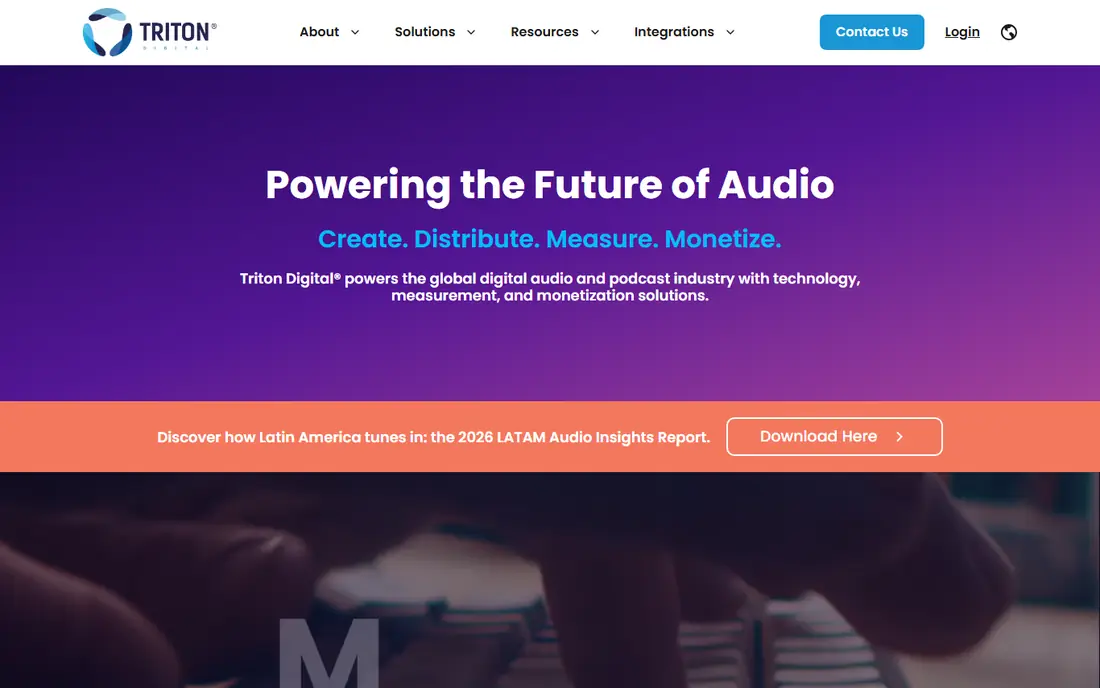
Triton Digital targets enterprise audio campaigns with measurement. The main limit is the ramp-up time and the sales-led model. Worth adding: if you are buying audio at scale and care about verified measurement, it is one of the most credible names you can buy through.
Trade-offs to know: More infrastructure than creative.
In daily use, Triton is enterprise software for publishers and serious media buyers. If you are a brand that just wants to run a podcast campaign, you will normally work with Triton indirectly through a network or agency. Triton Digital does not show a starting price in this comparison, so check the vendor site for current pricing. No free plan comes with Triton Digital.
- The Triton Ad Platform supports dynamic insertion and programmatic guaranteed deals
- Deep measurement pedigree (IAB-certified Podcast Metrics)
- Enterprise-focused with no self-serve level
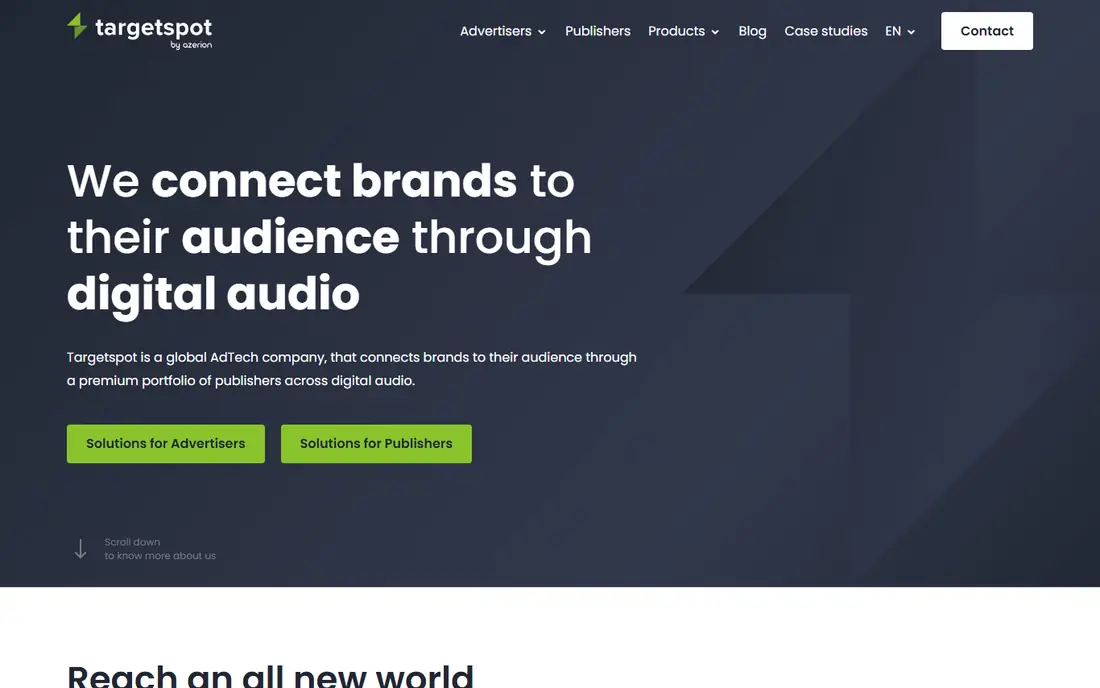
Targetspot is built with targeted digital audio campaigns across publishers in mind. It connects advertisers to more than 150 publishers and over 15,000 audio channels spanning podcasts, online radio and streaming, with targeting by demographics, listening preferences, psychographic segments and geography down to the postcode level. Its strength is digital audio as a category instead of podcast inventory specifically: podcast spots, online radio and streaming audio bought together with live reporting and dynamic creative choices like weather-based targeting.
Drawbacks to consider: Podcast coverage is part of a wider audio buy.
Worth adding: the honest catch is the model. Worth adding: Targetspot works through sales teams and custom quotes, so there is no self-serve level and no published minimums. On top of that, Podcast-specific buyers may also find the inventory skewed toward radio and streaming instead of the host-read podcast spots that drive the highest trust. Brands that already run display or video with Azerion can fold audio into the same media mix. Check the vendor site for Targetspot pricing; none is listed in this comparison. Targetspot has no free tier.
- Live reporting and analytics
- Granular targeting down to postcode level
- Not the entire story
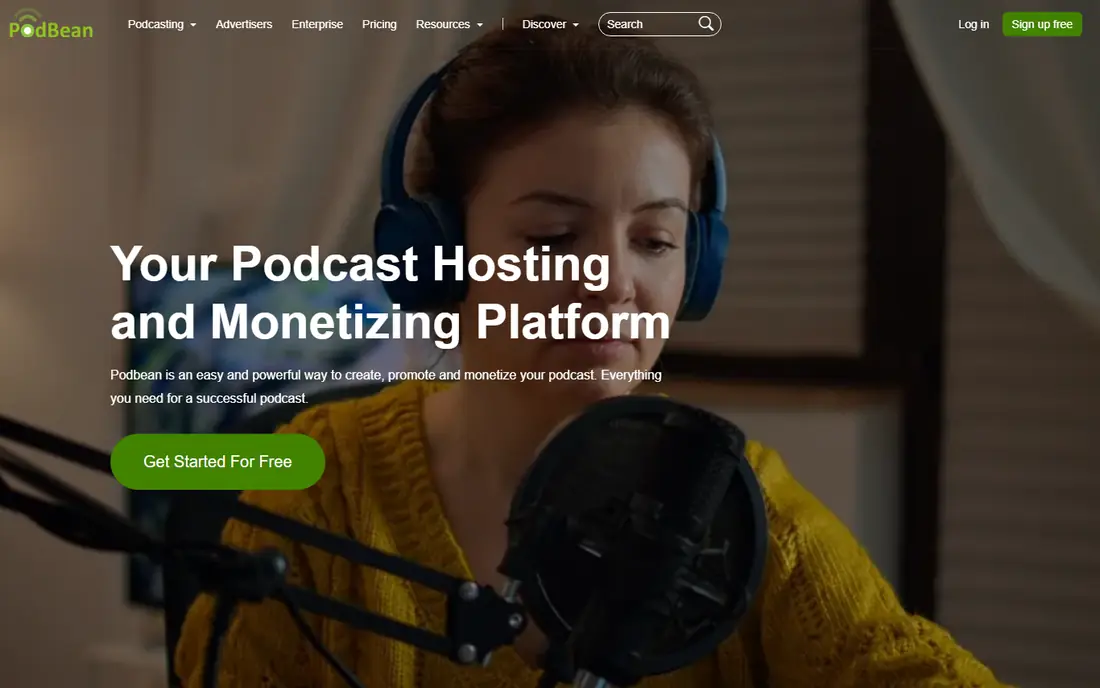
Podbean works best for low-minimum self-serve podcast campaigns. Podbean pairs podcast hosting with an advertiser-facing marketplace, and the combination keeps minimums unusually low. Also, for small firms and first-time podcast advertisers, the $200 floor is the headline feature.
What to check first: Inventory is restricted to Podbean-hosted displays.
It turns podcast advertising from a five-figure commitment into something you can test the way you would test a social ad set. The limits follow from the model. You can upload your own audio or have Podbean create an ad with AI. Worth adding: the marketplace comes with more than 12,000 podcasts across hundreds of genres, which is enough breadth to find displays in most niches. Podbean starts at: $200 minimum campaign budget. There is no free plan with Podbean.
- Access to 12,000+ hosted podcasts across genres
- Campaigns from just $200
- Smaller minimums mean less dedicated support
Choose AudioGo for straightforward self-serve audio ads for small firms. Ads run on streaming apps like Pandora, Spotify, SiriusXM, iHeartRadio, SoundCloud and TuneIn, including podcast inventory. It fills a gap the big players leave open.
Honest limits: Campaign quality relies on how carefully you target.
In practice, AudioGo is an audio advertising system, not a podcast specialist. So you are buying across streaming, radio and podcasts together instead of picking individual presents. The $10 ad production service is genuinely handy for local firms that have never made an audio ad. Used carefully, it is one of the cheapest ways to buy real audio reach. Also, AudioGo sits in between: real premium network inventory with a credit-card buy and no media buyer required. AudioGo starts at: $250 minimum campaign budget. There is no free plan with AudioGo.
- Runs on SiriusXM and AdsWizz network inventory
- Professional ad creation for $10 if you have no creative
- Broader audio (streaming, radio) instead of podcast-specific
Acast works best for scale across a global podcast marketplace. Acast is the closest thing podcast advertising has to a one-stop global shop. It runs a marketplace of more than 140,000 displays, sells both host-read partnership and dynamically inserted pre-produced ads, and lets advertisers either work with its sales team or launch campaigns themselves.
From a buyer's view, host-read partnership on Acast run roughly $25 to $40 CPM based on its own advertiser guide, and targeted programmatic-style ads cost less, but every campaign is quoted individually. The honest catch is that pricing is never published. The self-serve ad product is the most interesting part for smaller teams. Also, advertisers spending a handful of hundred dollars per month may find the product works fine but the attention from a human account team goes to larger buyers. Acast shows no starting price here, so confirm the cost on the vendor site. Acast has no free tier.
Where it is weaker: Pricing is custom and not published.
- Huge global display network
- Self-serve ad system plus managed service
- Small budgets get less hand-holding
Spotify Ad Studio is designed for self-serve ads on Spotify podcasts and music. The limitation is obvious: you are buying Spotify inventory only. As for the details, the product also added interactive podcast ads with clickable CTA cards, which provide listeners a way to tap through to your site whereas the ad plays.
As for the details, Podcast ads in Ad Studio are also restricted to the US, Canada and the UK. From a buyer's view, Ad Studio removes that barrier entirely. It is completely self-serve: pick your audience, set a budget beginning at $250, and Spotify will draft your script, record a voiceover and produce the ad at no additional charge. That production offer matters more than it sounds. Spotify Ad Studio pricing: $250 per campaign minimum. Spotify Ad Studio has no permanent free option.
Where it falls short: Canada and UK advertisers.
- One buy handles both podcasts and music
- $250 minimum per campaign with free voiceover and ad production
- Ads only run on Spotify, nowhere else
How we compared the tools
ProMapRanker used vendor pricing pages and product documentation as the base, then compared plans, free access and documented limits for 6 tools. Treat prices as a snapshot: vendors change plans often, so check the vendor site for the figure that applies today. Position on the page reflects fit for a typical buyer first, with price clarity and free access breaking ties. Treat it as a guide, not a ruling.
Before you commit
- Confirm the entry price on the vendor page. For Triton Digital, Targetspot and Acast that means a quote rather than a fixed price.
- Before choosing Triton Digital, weigh its main limit: enterprise-focused with no self-serve level.
- Test how quickly Spotify Ad Studio answers a pre-sales question; it hints at how support will feel later.
- Verify that exporting from Targetspot is possible on your plan and covers all your records.
- List the apps you already depend on and check that AudioGo supports each one on the plan you would buy.
Frequently asked questions
Does any tool for podcast advertising platform here have a free plan?
A permanent free plan is not offered by Triton Digital, Spotify Ad Studio or the other tools here. Plan a short evaluation period instead.
How are the tools for podcast advertising platform ordered?
The order follows typical fit for podcast advertising platform, with Triton Digital first and Spotify Ad Studio last, then price clarity and free access. It is editorial judgement, not a score, so another team could rank the tools differently.
Do these tools publish their prices?
Not all of them. Triton Digital, Targetspot and Acast publish no starting price, so expect a quote request for those. The rest, Podbean included, show a starting price, though seats and billing terms still change the final cost.
Can I try these tools before paying?
Not by default. None of the tools, from Triton Digital to Spotify Ad Studio, lists a free plan or a free trial here, so ask each vendor for a demo before committing.
How much does it cost to start podcast advertising?
With self-serve products you can start for $200 to $250 in total campaign budget. Start with a system whose minimum suits your test budget.
What is a good CPM for podcast ads?
Usual ranges are $25 to $40 CPM for host-read partnership, $15 to $30 for pre-recorded network spots, and lower for programmatic or run-of-network buys. Mid-roll placements cost more than post-rolls since listener attention is higher.
Sources
See where you really rank - block by block
ProMapRanker scans Google Maps across a grid of your service area. Simple monthly plans from $19, white-label on every plan.
Start freeKeep reading
 zscaler alternatives
Best Zscaler Alternatives in 2026
Looking for zscaler alternatives? We compare 9 SASE and zero trust platforms on architecture, data protection, pricing, and fit for your network and team.
Read → zapier alternatives free
Best Zapier Alternatives Free in 2026
Nine automation tools for zapier alternatives free in 2026, all with genuinely free tiers, plus free plan limits, starting prices and upgrade paths explained.
Read → which platform is best for online reputation
Which Platform Is Best for Online Reputation in 2026
Wondering which platform is best for online reputation? We compare 8 review, listing, and response tools for small and multi-location businesses and agencies.
Read →