 ProMapRanker
Best PLM Software in 2026


large complex discrete manufacturing · Pricing starts at: See website
Key takeaways
- Enterprise PLM leaders win on depth, but mid-market cloud PLM wins on deployment speed.
- CAD and ERP fit matter more than feature lists when choosing the best PLM tools.
- OpenBOM is the practical small-team start, while Teamcenter and Windchill suit complex products.
- Most enterprise PLM pricing is quote-based, so total implementation cost matters as much as licence cost.
Quick comparison
| Pick | Great for | Pricing starts at | Free tier | |
|---|---|---|---|---|
| Siemens Teamcenter | large complex discrete manufacturing | See website | No | Visit |
 PTC Windchill | manufacturers with strong CAD needs | See website | No | Visit |
 Dassault Systemes ENOVIA | design-heavy global teams on 3DEXPERIENCE | See website | No | Visit |
 PTC Arena | mid-market electronics and medical devices | See website | No | Visit |
 Propel PLM | fast-moving teams on Salesforce | See website | No | Visit |
 Autodesk Fusion Manage | small and mid-size design-led teams | See website | No | Visit |
 Aras Innovator | regulated teams needing deep customisation | See website | No | Visit |
 Oracle Fusion Cloud PLM | large Oracle ERP organisations | See website | No | Visit |
 OpenBOM | small manufacturers needing BOM collaboration | $25 per user per month | Yes | Visit |
Best PLM Software
Product lifecycle management software keeps product data, bills of material, changes and approvals in one controlled place. Without it, design, engineering, procurement and manufacturing work from different spreadsheets and file versions, and errors reach production. The best platform for PLM depends on product complexity, CAD tools and existing ERP systems.
This list covers the enterprise leaders and the practical mid-market and small-team options. Enterprise PLM suits complex, regulated products. Cloud PLM suits faster deployment. BOM-led tools suit small teams whose first problem is part and supplier data, not full lifecycle governance.
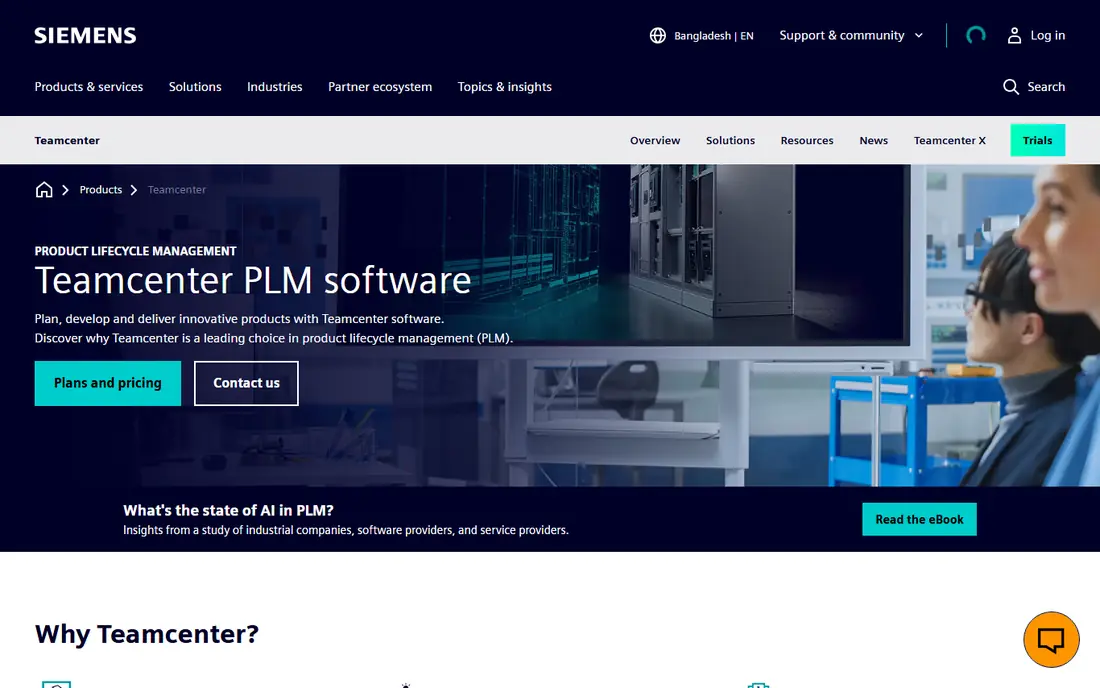
Siemens Teamcenter is the reference PLM platform for large manufacturers with complex products, especially in automotive and aerospace. It links design, engineering, manufacturing and service data in one system, so a change in a CAD model can flow through bills of material, change orders and production planning.
The cost is real, in licences, implementation and ongoing admin. Smaller teams, or teams with simple products, will likely pay for depth they do not use. Teamcenter earns its place when product complexity, regulation and global teams make a lighter tool risky.
- Deep digital thread from design to manufacturing
- Strong CAD and simulation links
- Cloud and on-premise options
- High cost and admin effort
- Smaller teams may find it heavy
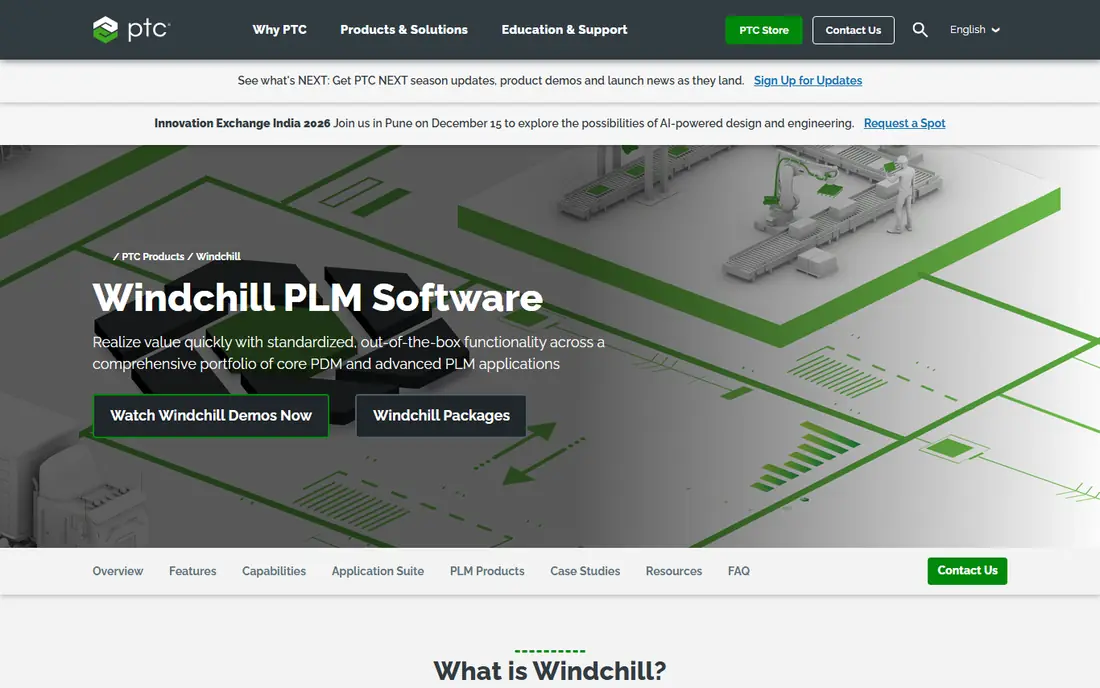
PTC Windchill suits manufacturers who design in Creo and need PLM that understands CAD data natively. It manages bills of material across design and manufacturing views, controls change, and connects product data to service and IoT use cases through the wider PTC portfolio.
The trade-off is ecosystem fit. Teams outside PTC CAD still benefit, but the deepest value comes with Creo and related tools. Pricing and implementation are enterprise-scale, so a clear business case and a phased rollout help avoid a long, costly deployment.
- Lifecycle-aware BOM management
- Deep Creo CAD integration
- IoT and service links through PTC products
- Enterprise pricing and implementation effort
- Best value inside PTC tooling
ENOVIA, part of Dassault Systemes 3DEXPERIENCE platform, fits design-heavy teams that already use CATIA and related tools. Design, simulation and governance share a common data model, which reduces translation errors between tools and helps global teams work on the same product definition.
That unity brings complexity. The platform covers a great deal, and teams need training and governance to use it well. It is best for organisations already committed to the 3DEXPERIENCE ecosystem, or willing to commit, rather than teams seeking a standalone PLM add-on.
- Unified design, simulation and governance on 3DEXPERIENCE
- Strong CATIA links
- Global collaboration
- Complex platform with a learning curve
- Pricing is quote-based
PTC Arena is the cloud PLM pick for mid-market electronics, medical device and similar teams. It covers product data, change, quality and supplier collaboration in a SaaS model, which usually means faster deployment and less infrastructure work than a large on-premise system.
The limit is depth. Very complex, multi-CAD or heavily simulated products may need Windchill or Teamcenter. Arena works best when the team needs solid PLM discipline, supplier visibility and audit trails without enterprise platform overhead.
- Cloud PLM with supplier collaboration
- Quality and change management
- Faster deployment than enterprise PLM
- Less depth than Windchill for very complex products
- Customisation limits apply
Propel PLM runs on Salesforce, which makes it a strong fit for teams already using Salesforce for sales and service. Product, quality and product information data sit close to customer data, so changes, issues and customer feedback can be linked in one place. The interface feels modern compared with older PLM tools.
Salesforce is also the constraint. Teams without Salesforce face a larger platform decision, not just a PLM purchase. Confirm user minimums, Salesforce edition needs and total platform cost before judging Propel against standalone PLM tools.
- Salesforce-native PLM, PIM and QMS in one system
- Modern interface
- Customer-focused product data
- Requires Salesforce
- Minimum user counts apply on some plans
Autodesk Fusion Manage, formerly Fusion Lifecycle, suits design-led small and mid-size teams that already use Autodesk tools. It provides cloud-based change management, bill of material handling and new product introduction templates without the infrastructure of a large PLM deployment.
The trade-off is scale. Large, regulated or multi-site programmes may need deeper PLM governance. For a design team moving from spreadsheets and shared drives to controlled product data, Fusion Manage is a practical first PLM step.
- Cloud PLM with Autodesk CAD links
- Change and NPI templates
- Easier start than enterprise PLM
- Depth is lower than enterprise PLM
- Best value with Autodesk design tools
Aras Innovator appeals to regulated and complex manufacturers that need PLM shaped to their processes, not the other way round. Its open architecture allows deep customisation of data models, workflows and integrations, which helps aerospace, defence and medical teams with strict requirements.
Flexibility is work. Customisation needs skilled staff or partners, and a heavily customised system needs ongoing care through upgrades. Teams should budget for that effort and keep customisation to genuine requirements, not preferences.
- Highly extensible architecture
- Strong change and configuration control
- Cloud and on-premise options
- Customisation needs skilled staff
- Total cost depends on implementation scope
Oracle Fusion Cloud PLM fits organisations already running Oracle ERP and supply chain systems. Product data, change and commercialisation link to procurement, manufacturing and planning without a separate integration project for every handoff. That ERP closeness is its main advantage.
Outside Oracle, that advantage fades. Pricing, deployment and admin effort are enterprise-scale, and smaller Oracle-free teams will find simpler PLM tools faster to adopt. Judge Oracle PLM on total Oracle platform cost, not on PLM alone.
- PLM linked to Oracle ERP and supply chain
- Product data and change control at enterprise scale
- Best value inside Oracle Cloud
- Pricing and deployment are enterprise-scale
OpenBOM is the lightweight pick for small manufacturers whose main pain is bill of material chaos. It gives teams real-time BOM collaboration, CAD links and supplier sharing without enterprise PLM pricing or deployment. For a team moving from spreadsheets, that focus is enough.
The limit is scope. OpenBOM does not replace full enterprise PLM for change governance, quality systems or complex configuration control. Use it when BOM accuracy and collaboration are the priority, and plan a move to fuller PLM if governance needs grow.
- Real-time BOM collaboration
- CAD integrations
- Lower starting price than enterprise PLM
- Narrower PLM scope than enterprise platforms
- Governance depth is limited
How we picked these
We compared official vendor pages and feature descriptions, and we cross-checked recent PLM buyer guides for consistency. We favoured platforms clearly operating in October 2026 that manage product data, BOMs and change as core functions. Where pricing was quote-based, we wrote See website rather than inventing a licence figure.
We also weighed CAD integration, cloud versus on-premise deployment, supplier collaboration and industry fit. That mix explains why a platform that leads for automotive may not lead for a small electronics team.
How to choose PLM software for your product and team
Map your CAD and ERP first
PLM value comes from connections. List the CAD tools, ERP system, quality system and supplier tools that must share product data. A PLM platform that links natively to those systems will deploy faster and cause fewer errors than a platform that needs custom integration for every handoff.
Start with BOM and change, then expand
Most PLM failures come from trying to control everything at once. Start with a single source for BOMs and a clear change process, prove it on one product line, then add quality, supplier and service data. That phased approach also makes training and adoption easier.
Budget for implementation, not just licences
Enterprise PLM cost includes implementation, data migration, training and admin. Ask vendors for a total first-year cost, including services, and for reference customers with similar product complexity. A lower licence price with high services cost is not a bargain.
Frequently asked questions
What is the best PLM software?
Siemens Teamcenter and PTC Windchill lead for large complex manufacturers, while PTC Arena and Propel lead for mid-market cloud deployment. The best platform for PLM for a given team depends on CAD, ERP, product complexity and deployment preference.
What are the best PLM tools for small manufacturers?
OpenBOM suits small teams focused on BOM collaboration, while Autodesk Fusion Manage suits design-led small teams. Both are faster to deploy than enterprise PLM, but both offer less governance depth.
Is PLM software cloud or on-premise?
Both options exist. Teamcenter, Windchill and Aras offer cloud and on-premise choices, while Arena, Propel and Fusion Manage are cloud-first. Cloud suits faster deployment, while on-premise suits strict data or integration rules.
How much does PLM software cost?
Most enterprise PLM pricing is quote-based and depends on users, modules and services. OpenBOM publishes a lower starting price, while enterprise platforms require a vendor quote for a realistic total. Always ask for implementation cost as well as licences.
What is the difference between PLM and PDM?
Product data management focuses on design files and documents. PLM covers the wider lifecycle, including BOMs, change, quality, suppliers and service. Many PLM platforms include PDM, but PLM adds governance across the full product life.
Sources
- https://plm.sw.siemens.com/en-US/teamcenter/
- https://www.ptc.com/en/products/windchill
- https://www.3ds.com/products/enovia
- https://www.arenasolutions.com
- https://www.propelsoftware.com
- https://www.autodesk.com/products/fusion-360-manage
- https://www.aras.com
- https://www.oracle.com/scm/product-lifecycle-management/
- https://www.openbom.com
See where you really rank - block by block
ProMapRanker scans Google Maps across a grid of your service area. Simple monthly plans from $19, white-label on every plan.
Start freeKeep reading
 zscaler alternatives
Best Zscaler Alternatives in 2026
Looking for zscaler alternatives? We compare 9 SASE and zero trust platforms on architecture, data protection, pricing, and fit for your network and team.
Read → zapier alternatives free
Best Zapier Alternatives Free in 2026
Nine automation tools for zapier alternatives free in 2026, all with genuinely free tiers, plus free plan limits, starting prices and upgrade paths explained.
Read → which platform is best for online reputation
Which Platform Is Best for Online Reputation in 2026
Wondering which platform is best for online reputation? We compare 8 review, listing, and response tools for small and multi-location businesses and agencies.
Read →