 ProMapRanker
Best Platforms to Sell Ebooks in 2026

Key takeaways
- Amazon KDP offers the largest single audience, while wide distribution tools reach Apple, Kobo, Barnes and Noble, and libraries from one dashboard.
- Direct sales platforms keep more of each sale but need your own audience, since they bring no built-in store traffic.
- Fees and royalty terms vary by platform, price, and territory, so check current terms before publishing, as they change.
- Most successful independent authors use a mix: one large store, one wide distributor, and direct sales to their own readers.
Quick comparison
| Pick | Great for | Pricing starts at | Free tier | |
|---|---|---|---|---|
 Amazon KDP | Largest single ebook audience | Free | Yes | Visit |
 Draft2Digital | Easy wide distribution | Free | Yes | Visit |
 IngramSpark | Bookstore and library distribution | See website | No | Visit |
 Kobo Writing Life | International readers | Free | Yes | Visit |
 Apple Books | Apple device readers | Free | Yes | Visit |
 Google Play Books | Android and web readers | Free | Yes | Visit |
 Payhip | Direct sales with low fees | Free | Yes | Visit |
 Gumroad | Simple direct sales of many formats | Free | Yes | Visit |
 Sellfy | Subscription store for larger catalogs | $29 per month | No | Visit |
 Smashwords | Wide distribution to retailers and libraries | Free | Yes | Visit |
The best platforms to sell ebooks
Selling an ebook is a distribution decision as much as a writing decision. Large stores bring readers but take a royalty share and set pricing rules. Aggregators distribute to many stores at once for a cut of net royalties. Direct platforms let you sell from your own site and keep more per sale, but you must bring the audience yourself. The platforms below cover all three routes, and most authors will use more than one.
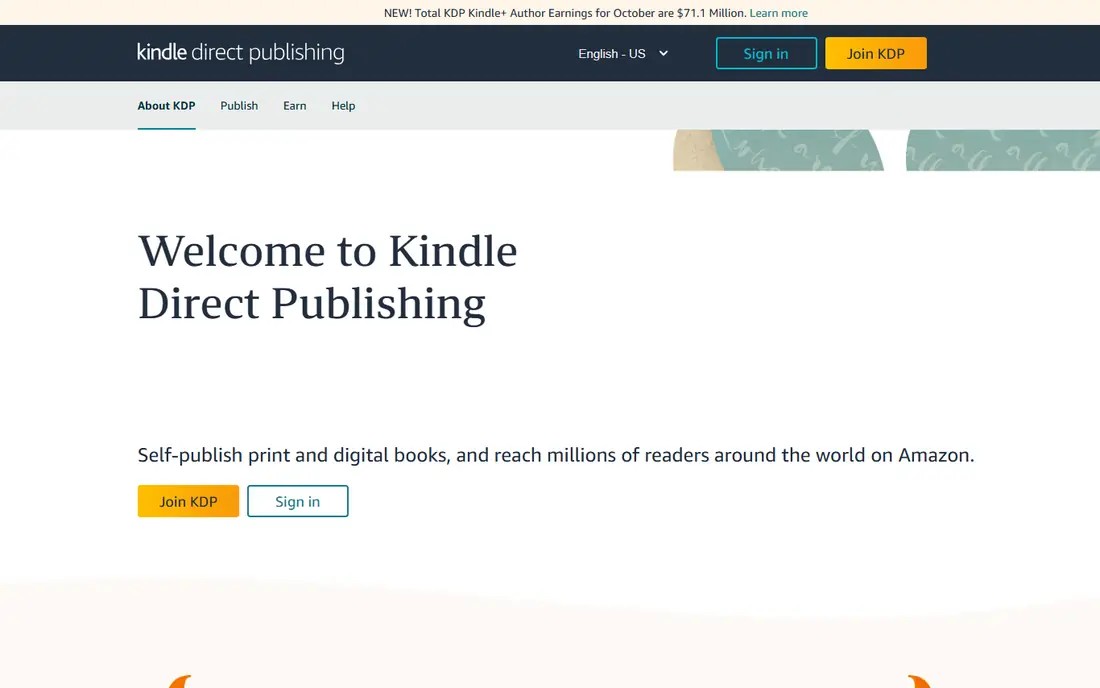
Amazon Kindle Direct Publishing is where most independent authors start, because Amazon is where most ebook buyers shop. Publishing is free, and you can publish ebooks, paperbacks, and hardcovers from one dashboard, with print-on-demand so you hold no stock. Ebook royalties are commonly 35 percent or 70 percent depending on price, territory, and delivery costs, with the higher rate applying inside a set price band.
The main trade-off is exclusivity. Enrolling in KDP Select, which gives access to Kindle Unlimited page reads and some promotional tools, requires ebook exclusivity to Amazon for 90-day periods. Many authors use KDP for Amazon and a wide distributor for other stores instead, accepting a lower Amazon royalty outside Select in exchange for wider reach. If you only publish in one place, KDP is the default.
- Free to publish
- Huge Kindle and Amazon audience
- Promotional tools and Kindle Unlimited option
- Royalty depends on price band and territory
- KDP Select requires exclusivity for its benefits

Draft2Digital is the easiest way to go wide. You upload one manuscript, and Draft2Digital formats it and distributes it to major retailers and library services, including Apple Books, Kobo, Barnes and Noble, and OverDrive. Publishing is free, and Draft2Digital takes a percentage of net royalties on sales through its distribution, so you pay only when you sell.
The cost is control and margin. You earn less per sale than publishing direct to a store, and store-specific features may be limited through an aggregator. For authors who want wide reach without managing five separate dashboards, Draft2Digital is the simplest route, and it pairs well with KDP for Amazon sales.
- Free to publish
- Distributes to Apple, Kobo, Barnes and Noble, and libraries
- Simple formatting tools
- Takes a share of net royalties
- Less control than publishing direct to each store
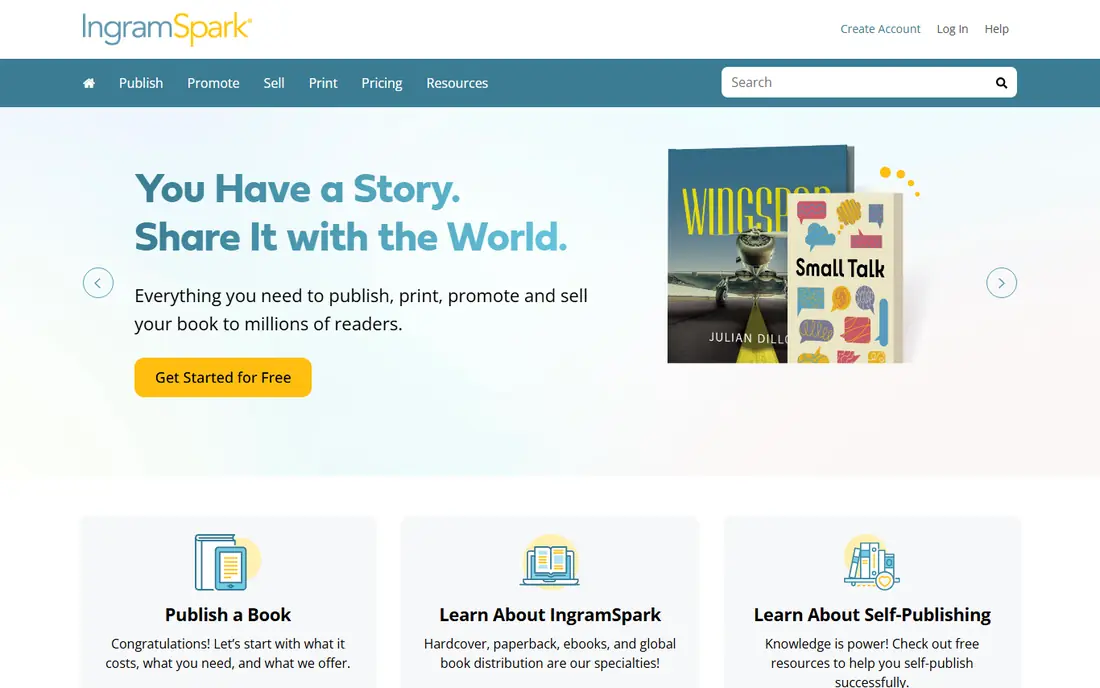
IngramSpark is the choice when bookstores and libraries matter. As part of the Ingram distribution network, it places print and ebooks where bookstores and libraries order, which KDP alone does not do well. That presence matters for authors who do events, seek library sales, or want bookstores to be able to stock their book.
Setup is more involved than KDP, and fees and royalty terms vary by format, price, and distribution channel, so check current terms before publishing. IngramSpark suits authors with a print edition and a reason to reach physical stores, while ebook-only authors may find Draft2Digital simpler for digital distribution alone.
- Distribution to bookstores and libraries worldwide
- Print and ebook options
- Professional catalogue presence
- Fees and royalty terms vary by format and channel
- Setup needs more care than KDP
Kobo Writing Life is the self-publishing dashboard for the Kobo store, and it is strongest outside the US, particularly in Canada and parts of Europe and Asia-Pacific. Publishing is free, and royalty rates vary by price and territory, commonly reaching 70 percent at higher price points. Kobo readers, apps, and devices give your book a home beyond Amazon and Apple.
The US audience is smaller than Amazon, so Kobo rarely replaces KDP as a first store. It works best as part of a wide strategy, either direct through Writing Life or through an aggregator such as Draft2Digital. If you have readers in Canada or international markets, Kobo deserves a direct listing.
- Free to publish
- Strong in Canada and international markets
- Promotional tools for Kobo readers
- Smaller US audience than Amazon
- Royalty depends on price and territory
Apple Books for Authors lets you publish directly to the Apple Books store, which reaches iPhone, iPad, and Mac readers. Publishing is free, and Apple commonly pays a 70 percent royalty on ebook sales, with the exact terms depending on price and territory. The reading experience on Apple devices is polished, and Apple Books promotions can lift a well-positioned title.
The audience is limited to Apple users, and file and account requirements are stricter than some rivals. Many authors reach Apple Books through Draft2Digital instead of direct, trading a share of royalties for simpler setup. If you already have Apple readers, or you want the full royalty rate, direct publishing through Apple Books for Authors is worth the extra setup.
- Free to publish
- 70 percent royalty on most sales
- Strong reading experience on Apple devices
- Apple-only audience
- Needs an Apple account and specific file standards
Google Play Books Partner Center lets you sell ebooks to Android users and web readers through Google Play. Publishing is free, and royalty terms vary by sale type, price, and territory, commonly in the 52 to 70 percent range reported by comparison guides. That reach matters if your readers use Android phones, tablets, or Chromebooks rather than Kindles.
Google Play offers less built-in author marketing than Amazon, so you will need your own promotion to drive sales. It works best as part of a wide mix: KDP for Amazon, an aggregator or direct listings for Apple and Kobo, and Google Play for Android reach. Check current Partner Center terms before publishing, since pricing and royalty rules change.
- Free to publish
- Large Android and web audience
- Flexible pricing options
- Royalty terms vary by sale type and territory
- Less author marketing support than Amazon
Payhip is a direct sales platform that lets you sell ebooks from your own store page without building a website. The free plan charges a transaction fee per sale, while paid plans lower or remove that fee and add features. Tools include PDF stamping to discourage sharing, discount codes, and an affiliate system so other people can promote your book for a commission.
Payhip brings no readers of its own, so it only works if you have an email list, social audience, or website traffic to send to the store. For authors with an existing audience, direct sales through Payhip can earn more per sale than any retailer. For a first book with no audience, start with a large store and add Payhip once readers know you.
- Free plan with a small transaction fee
- PDF stamping and affiliate tools
- Simple store setup
- No built-in store traffic
- You bring your own audience
Gumroad is a simple way to sell digital products directly, including ebooks in PDF, EPUB, and other formats. There is no monthly fee to start, and Gumroad charges a transaction fee per sale plus a small per-sale amount, so costs scale with sales rather than upfront. Built-in email tools let you message buyers about new releases, which helps authors who sell a series.
The fee per sale is higher than a paid store plan once volume grows, and store customisation is limited compared with a full website. Gumroad suits creators who sell ebooks alongside other digital products and want a fast, low-friction checkout. If ebook sales become your main income, compare Payhip paid plans or Sellfy for a lower per-sale cost.
- No monthly fee on the free plan
- Sells ebooks, audio, video, and courses
- Built-in email tools
- Transaction fee per sale
- Limited store customisation on lower tiers
Sellfy is a subscription store platform for creators with a catalog to sell. Plans start at $29 per month, with no transaction fees on paid plans, plus store customisation, discount tools, and email marketing. That model suits authors with several books, bundles, and companion products, where a flat monthly fee beats a per-sale cut.
The monthly cost is the catch. A single book with slow sales may not cover $29 a month, while a backlist with regular sales will. Sellfy also brings no built-in traffic, so it depends on your audience. For an author with a catalog and a mailing list, Sellfy is a clean direct store. For a first book, start free elsewhere and move to Sellfy when sales justify it.
- No transaction fees on paid plans
- Store customisation and email marketing
- Sells multiple product types
- Monthly cost from $29, so it needs steady sales to pay for itself
- No built-in audience
Smashwords is a long-running ebook distributor that sends your book to retailers and library services beyond Amazon. Publishing is free, and Smashwords takes a share of net royalties on sales through its distribution network, while sales through its own store carry different terms. It remains a useful wide option, especially for authors who want library distribution alongside retail stores.
The interface feels older than Draft2Digital, and formatting requirements need care. Many authors now choose Draft2Digital for simplicity, but Smashwords still earns a place for its library reach and its own store audience. Check current royalty terms before publishing, since they vary by channel, and compare its distribution list with Draft2Digital for your target stores.
- Free to publish
- Distributes to many retailers and libraries
- Useful for wide ebook distribution
- Takes a share of royalties on distributed sales
- Interface is older than rivals
How we picked these
We compared platforms that are live in October 2026 and offer a real route to sell ebooks, using vendor publishing pages and independent comparison guides. We kept a mix of large stores, wide distributors, and direct sales platforms, because different authors need different mixes. We weighted audience reach, royalty and fee terms, ease of publishing, distribution breadth, and whether the platform brings its own readers or needs your audience.
What to check before you publish an ebook
Read the royalty and fee terms for your price and territory before you upload, because fees and royalty terms vary and change. A 70 percent royalty at one price can fall to a lower rate outside a set price band, and aggregators take a share on top of the retailer share. Model your earnings at your actual list price, not at a headline royalty rate.
Next, decide on exclusivity. Kindle Unlimited through KDP Select can boost page reads for fiction series, but it blocks wide distribution for 90 days at a time. Going wide reaches more stores but needs more marketing, since no single store will promote your book for you. Many authors test one route for a book, measure results, and adjust for the next title.
Finally, protect your files and your rights. Use your own ISBN if you want full control of the print edition, keep your manuscript source files, and check whether the platform claims any rights beyond distribution. A platform should distribute your book, not own it, and you should be able to unpublish or move stores if terms change.
Frequently asked questions
What is the best platform to sell ebooks?
For the largest single audience, Amazon KDP is the default. For wide distribution, Draft2Digital or Smashwords reach many stores from one dashboard. For the most money per sale, a direct platform such as Payhip or Sellfy works best once you have your own audience.
How much money do authors make per ebook sale?
It depends on list price, royalty rate, territory, and platform fees, which all vary. A $4.99 ebook at a 70 percent royalty earns far more than the same book at a lower rate through an aggregator, so model your actual price and channel before you publish.
Should I publish wide or exclusive to Amazon?
Exclusive through KDP Select suits series fiction authors who benefit from Kindle Unlimited page reads. Wide distribution suits authors who want readers on Apple, Kobo, and libraries, and who are willing to market across stores. Many authors use KDP for Amazon plus a wide distributor for other stores as a middle path.
Do I need an ISBN to sell an ebook?
It depends on the platform and your goals. Many platforms assign a free identifier, but your own ISBN gives you more control and a consistent catalogue record across stores. Check each platform ISBN policy before you publish, since rules differ for ebooks and print editions.
Can I sell ebooks directly from my own website?
Yes, through platforms such as Payhip, Gumroad, and Sellfy, which provide a store page and checkout without building a full website. Direct sales keep more per sale but bring no built-in traffic, so they work best alongside a mailing list or an existing audience.
Sources
See where you really rank - block by block
ProMapRanker scans Google Maps across a grid of your service area. Simple monthly plans from $19, white-label on every plan.
Start freeKeep reading
 zscaler alternatives
Best Zscaler Alternatives in 2026
Looking for zscaler alternatives? We compare 9 SASE and zero trust platforms on architecture, data protection, pricing, and fit for your network and team.
Read → zapier alternatives free
Best Zapier Alternatives Free in 2026
Nine automation tools for zapier alternatives free in 2026, all with genuinely free tiers, plus free plan limits, starting prices and upgrade paths explained.
Read → which platform is best for online reputation
Which Platform Is Best for Online Reputation in 2026
Wondering which platform is best for online reputation? We compare 8 review, listing, and response tools for small and multi-location businesses and agencies.
Read →