 ProMapRanker
Best Platforms to Advertise Developer Vacancies in 2026

Key takeaways
- Dice and LinkedIn give the widest reach for developer roles, while Wellfound and Built In give a stronger fit for startups and city tech hubs.
- Remote boards such as Remote OK and We Work Remotely suit fully remote roles, but they will not replace a general board for hybrid roles.
- Prices range from free basic posts on some platforms to $399 for 30 days on Dice in reports we reviewed, so budget by role, not by platform alone.
- A clear post with stack, salary range and work location will outperform a vague post on any board, however large its audience.
Quick comparison
| Pick | Great for | Pricing starts at | Free tier | |
|---|---|---|---|---|
 Dice | Tech focused hiring at scale | $399 per post | No | Visit |
 LinkedIn Jobs | Widest professional reach | Free | Yes | Visit |
 Indeed | High volume general reach | Free | Yes | Visit |
 Wellfound | Startup developer hiring | Free | Yes | Visit |
 Built In | City tech hub hiring | $99 per month | No | Visit |
 Remote OK | Remote developer roles | $299 per post | No | Visit |
 We Work Remotely | Remote first roles | $299 per post | No | Visit |
 daily.dev Recruiter | Developers in a dev community | $350 per month | No | Visit |
The best platforms to advertise developer vacancies
Developers do not all look in the same place. Some search a general board, some follow a startup platform, and some only browse remote boards or a developer community. The eight below cover those routes, so a hiring team can match the board to the role.

Dice is the tech only board most US hiring teams know first. It focuses on software, cloud, security and data roles, with filters for skills, location and work type that help a recruiter shortlist faster than a general board. Reports cite $399 for a 30 day post, which makes Dice a paid choice rather than a free listing, but that cost buys a focused audience.
The catch is competition. Popular stacks draw many posts, so a vague title or missing salary range will be skipped. Dice also works best for US roles, so global hiring may need other boards. Dice fits teams hiring several developers, or a hard to fill tech role, where a focused audience justifies the post price.
- Large tech only audience
- Skills based search and filters
- Strong for contract and permanent tech roles
- $399 for 30 days in reports is a real cost per role
- Noisy for very niche stacks
- Needs a clear post to stand out

LinkedIn Jobs gives a vacancy the widest professional reach in this list. A free basic post can draw applicants, and promoted posts and Recruiter tools can widen reach further. LinkedIn is especially strong for mid career and senior developers, and for roles where a candidate work history and network matter.
The limit is noise. A popular developer post on LinkedIn can draw many applicants who do not match the stack, so screening time rises. Developers also receive a lot of outreach, so a generic message will be ignored. LinkedIn fits almost every developer vacancy as a base board, paired with a more focused board for the specific role.
- Largest professional network
- Free basic posting
- Strong for mid career and senior roles
- Response quality varies
- Promoted posts and Recruiter seats cost extra
- Developers may ignore generic outreach
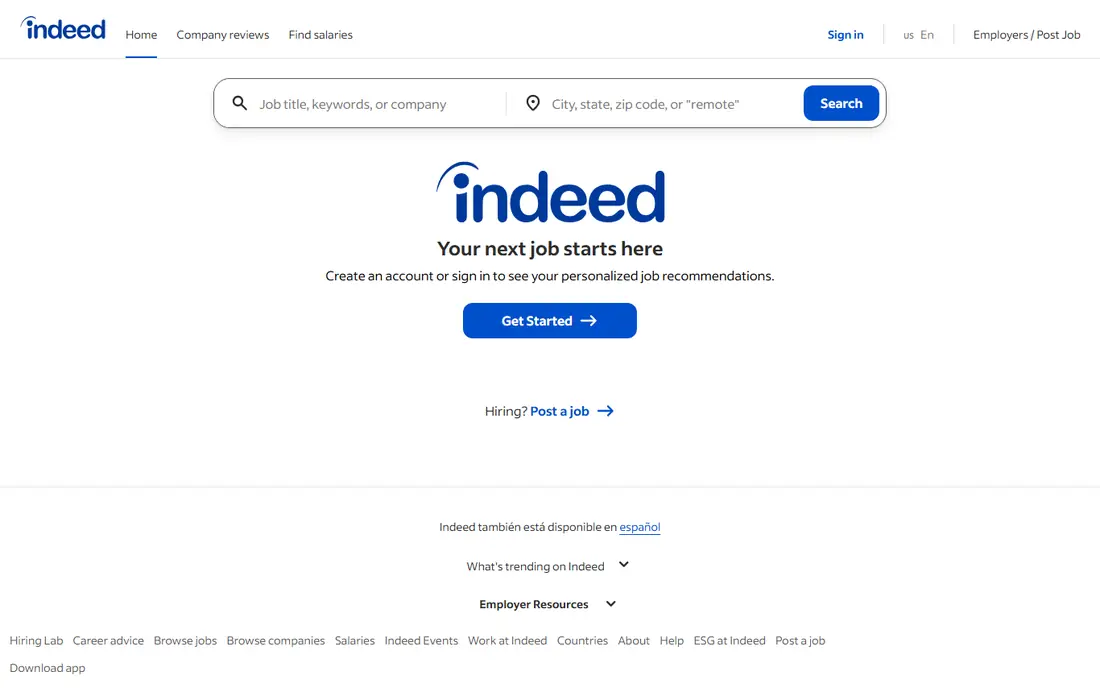
Indeed is the high volume option. Free posting gets a role in front of a very large audience, and sponsored posts can push it higher in search results. That volume helps for contract roles, support engineering and roles where many applicants are acceptable and screening is fast.
The trade off is quality. Indeed is a general board, so a niche developer role will draw applicants from outside tech unless the title and required skills are very clear. Sponsored budgets also need a cap, since clicks can use budget without a hire. Indeed fits high volume hiring and roles where reach matters more than a tight tech community.
- Free basic posting
- Very large job seeker audience
- Sponsored posts for extra reach
- Broad audience means more unqualified applicants
- Sponsored costs can rise fast
- Less tech community feel
Wellfound, formerly AngelList Talent, is built for startup hiring. Developers on Wellfound expect salary ranges and equity details, and startups can post with a free basic plan, with paid upgrades reported from $499 per month. That transparency helps a small firm compete with larger employers, since candidates can see the full offer early.
The limit is audience fit. Wellfound suits early to growth stage startups, but a large corporate hiring for a stable enterprise role may find a smaller, less relevant pool. It also works best when the post is honest about stage, funding and work style. Wellfound fits startups hiring developers who want equity, ownership and a small team.
- Free basic plan for startups
- Salary and equity transparency
- Strong startup candidate pool
- Paid upgrades from $499 per month in reports
- Startup focus limits large corporate appeal
- Smaller pool than LinkedIn
Built In runs city specific tech boards, such as for major US tech hubs, with job posts beside employer branding and company profiles. That local focus helps a firm hiring in one city, since candidates can research the company, its tech stack and its culture in the same place. Pricing is reported from $99 per month.
The catch is geography. Built In only helps in its supported cities, so a firm hiring in a smaller market will get less value. It is also a subscription model, which suits ongoing hiring more than a single vacancy. Built In fits firms hiring several developers in a supported hub and wanting local brand presence.
- City focused tech boards with employer branding
- Good for hub hiring
- Combines jobs with company profiles
- Coverage is limited to supported cities
- $99 per month is a subscription, not a single post
- Less useful outside hubs
Remote OK is a remote first board where developers actively seek fully remote work. A post for $299 reaches a global audience that already expects remote work, async communication and distributed teams. That fit saves screening time, since applicants will not ask for an office role you do not offer.
The limit is scope. Remote OK is a poor choice for a hybrid role that needs office days, since its audience filters for remote first. Competition is also high for popular stacks, so a post still needs a clear salary range, time zone and stack. Remote OK fits fully remote developer roles, especially for distributed startups and product teams.
- Remote first audience
- Global reach for remote roles
- Simple post format
- $299 per post is a fixed cost
- Not suited to hybrid or office roles
- High competition for popular remote stacks
We Work Remotely is another established remote board, with a large audience of developers and other remote workers. Its $299 per post price matches Remote OK, and optional upgrades can add visibility. The board is well known among remote job seekers, which helps a post get seen without a large employer brand.
As with Remote OK, the audience is remote first, so office or hybrid roles will draw fewer relevant applicants. A post should state time zone overlap, salary range and whether the role is open worldwide or limited to certain regions. We Work Remotely fits fully remote roles where a trusted remote board matters more than a general board.
- Large remote job seeker audience
- Trusted remote brand
- Simple posting and applicant flow
- $299 per post
- Remote only audience
- Optional upgrades add cost
daily.dev Recruiter matches jobs to developers based on their activity in the daily.dev community, where developers read tech news and follow topics. Pricing is reported at $350 per month per role. That community context can help a post reach developers who are not actively browsing a general board but are engaged with tech content daily.
The trade off is scale and track record. daily.dev Recruiter is newer as a hiring product than Dice or LinkedIn, so a hiring team should test it on one role before relying on it for a large hiring plan. It also works best for roles where the stack and product are clear to a developer audience. daily.dev fits product teams that want to reach engaged developers in a community setting.
- Reaches developers where they already read tech news
- Job matching based on activity
- Focused dev audience
- $350 per month per role in reports
- Newer hiring product than Dice or LinkedIn
- Needs a clear dev focused post
How we picked these
We compared job board pricing guides and hiring comparisons published in 2026, with a focus on platforms where an employer can actually post a developer vacancy, not only source candidates. We kept boards that are live, offer a clear posting route, and cover a distinct audience: tech focused, general, startup, city hub, remote or developer community. Where pricing differed by source, we used the most widely reported figure and noted that rates should be confirmed on the vendor site. We did not claim hiring results for any specific role.
What to check before you post
Write the post for a developer, not for HR. Lead with the role title, stack, work location and salary range, then describe the team, the product and the first project. Developers skip posts that hide salary, list every possible skill, or describe a generic rockstar role. A clear post also reduces unqualified applicants on large boards such as LinkedIn and Indeed.
Next, match the board to the role and set a budget per hire, not per board. A $399 Dice post for a hard role can be cheaper than weeks of screening on a free board, while a free Wellfound post can be the best route for a startup role. Track source of hire for each board, including time to first qualified applicant and time to hire, so the next vacancy uses data, not habit. Finally, reply fast. Developers on focused boards often apply to several roles at once, and a slow reply loses the best candidates first.
Frequently asked questions
Which platform is best for hiring developers?
Dice for tech focused scale, LinkedIn for widest reach, and Wellfound for startups. Remote OK or We Work Remotely for fully remote roles, and Built In for city hub hiring. Most teams get the best result from two boards: one broad and one focused.
How much does it cost to post a developer job?
Free on LinkedIn, Indeed and Wellfound basic plans, $99 per month on Built In, $299 per post on Remote OK and We Work Remotely, $350 per month per role on daily.dev Recruiter, and $399 for 30 days on Dice in reports we reviewed. Promoted posts and Recruiter seats cost extra.
Should I include a salary range in a developer post?
Yes. Developers filter by salary, and a missing range reduces qualified applications, especially on Wellfound and remote boards. A range also saves screening time, since candidates who need a higher salary will not apply.
Is a remote board better than LinkedIn for remote roles?
For fully remote roles, yes in terms of fit, since remote board audiences already want remote work. LinkedIn still gives wider reach, so many teams post on both and compare source of hire for the role.
How long should a developer job post run?
Thirty days is a common period on paid boards such as Dice. Review applications after the first week, and refresh the title or salary range if qualified applications are low. A post that draws no qualified applicants in two weeks usually needs a clearer title or a different board, not more time.
Can I post the same vacancy on several boards?
Yes, and most teams do. Use the same core post, but adjust the title and location wording for each board audience. Track which board each applicant came from, so you can judge cost per qualified applicant fairly.
Sources
See where you really rank - block by block
ProMapRanker scans Google Maps across a grid of your service area. Simple monthly plans from $19, white-label on every plan.
Start freeKeep reading
 zoro.to alternatives
Best Zoro.to Alternatives in 2026
We compare the best zoro.to alternatives in 2026, listing only legal licensed anime streaming services, from Crunchyroll to free options for fans today.
Read → zip alternatives
Best Zip Alternatives in 2026
We compare the best zip alternatives for buy now, pay later in 2026, covering pay-in-4 plans, fees, spending limits, and credit reporting options today.
Read → yesware alternatives
Best Yesware Alternatives in 2026
Compare the best yesware alternatives for sales email tracking, templates, and sequences, with current pricing and honest tradeoffs for small sales teams.
Read →